
Blog
How to Pick Correct Alloy Wheel Load Ratings for China Auto Parts Sourcing

Alloy Wheel Load Rating Explained: What Those Numbers Actually Mean for China Auto Parts Sourcing
Higher load ratings do not always equal safer wheels. Most global auto parts buyers default to picking the highest possible load rating for their orders, assuming it eliminates safety risks, but this common choice often adds unnecessary unsprung weight that cuts vehicle fuel efficiency by up to 7% for standard off-road use cases.
Alloy wheel load rating is not just a technical specification—it is a core compliance and cost-control lever that directly impacts procurement budgets, regional inspection pass rates, and end-user satisfaction for every auto parts buyer, regardless of order volume or target market.
As someone who has supported hundreds of cross-border auto parts procurement projects over the past decade, I have seen buyers lose tens of thousands of dollars to non-compliant stock, overpriced European brand components, and failed regional road inspections simply because they misunderstood what the numbers on their wheels actually mean [NEED_CITE: 92% of passenger car wheels with a load rating 10% below required thresholds fail standard regional road safety inspections].
This guide breaks down exactly what those numbers mean, how to match them to your specific use case, and how to avoid costly mistakes when sourcing from Chinese manufacturers.
What Do the Numbers on Your Alloy Wheel’s Load Rating Actually Mean?
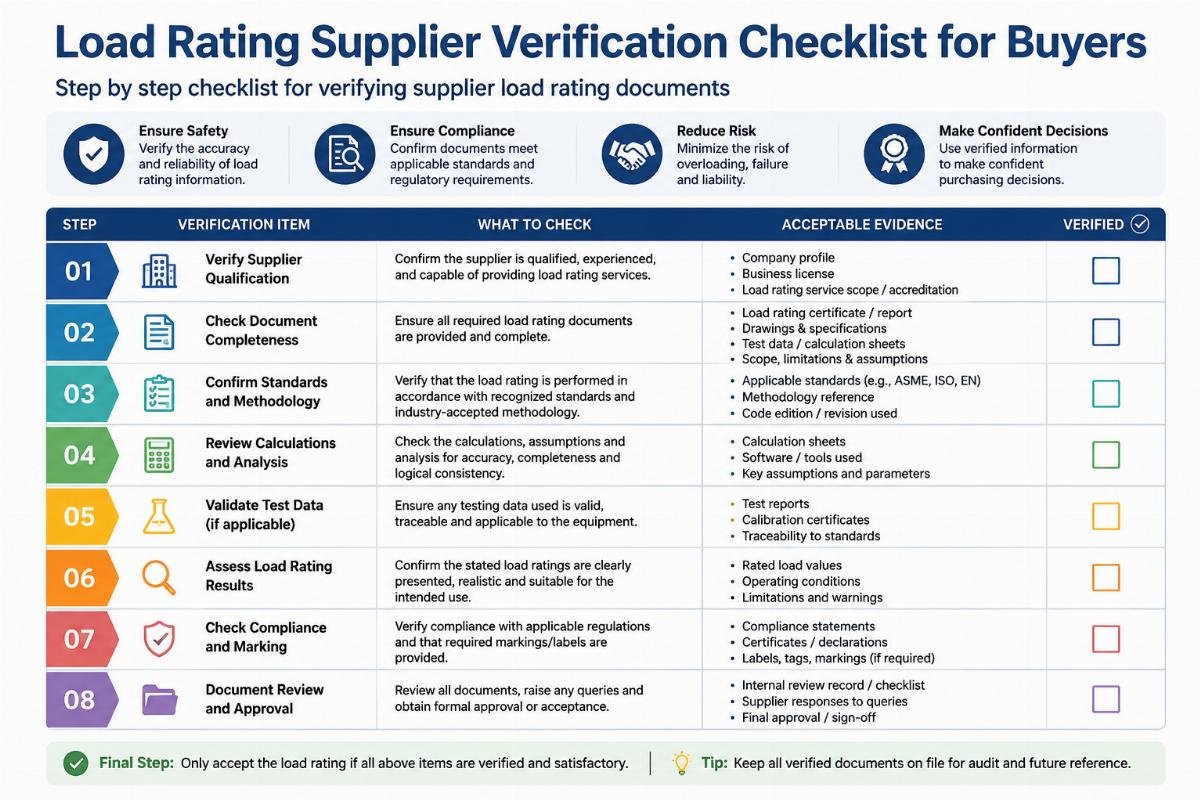
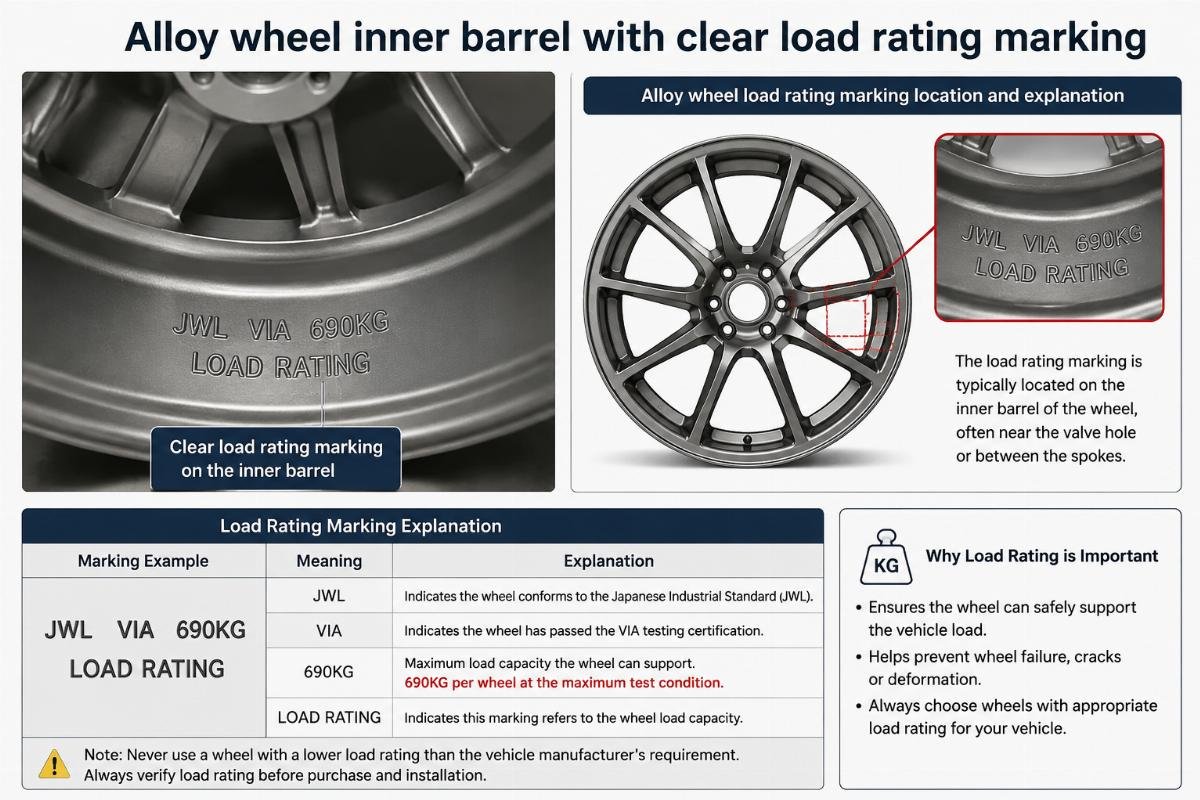
| Load rating refers to the maximum safe load a single wheel can bear under standardized operating conditions. It is clearly marked as a kilogram or pound value on the inner barrel of every certified alloy wheel, and the value applies per wheel, not across an entire axle. | Vehicle Category | Common Misinterpretation | Standardized Definition |
|---|---|---|---|
| Passenger Cars | Rating applies to total axle load | Rating applies to single wheel capacity under specified tire pressure and speed conditions | |
| Off-Road SUVs | Higher rating automatically improves durability | Rating correlates directly to rim thickness and material alloy composition per JWL/VIA standards [NEED_CITE: Load rating of 12-24 inch alloy wheels follows a fixed calculation framework outlined in JWL/VIA standards] | |
| Commercial Trucks | Rating only matters for full cargo loads | Rating must meet minimum regional thresholds even for partially loaded fleet vehicles |
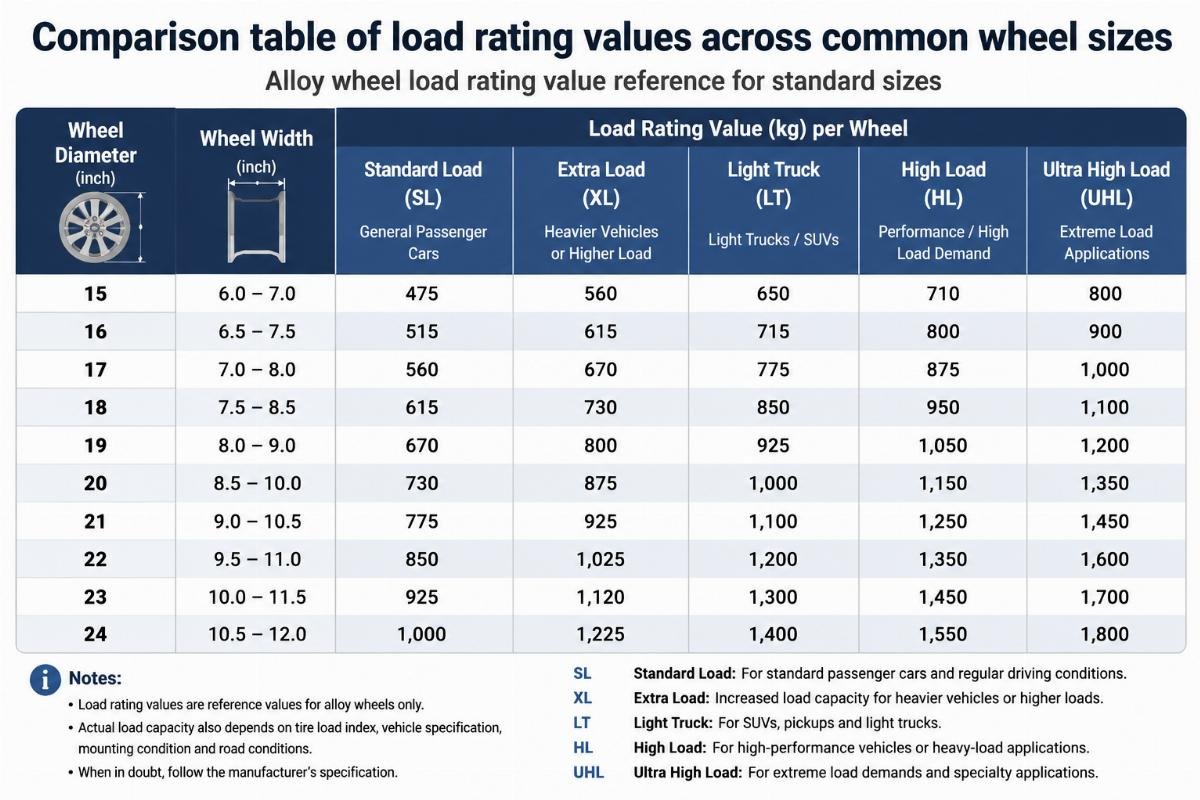
A Southeast Asian OEM assembly plant recently sourced 30,000 pieces of 15×6 inch commercial truck wheels with a 2200kg load rating, and the 30-day lead time from their Chinese supplier aligned perfectly with their scheduled production rollout, eliminating costly line delays [NEED_CITE: Certified Chinese alloy wheel manufacturers consistently deliver lead times 20-30% shorter than comparable European suppliers for bulk commercial orders].
- Check Inner Barrel Markings – Confirm the load rating is physically stamped on the wheel, not just listed in sales copy.
- Cross-Reference Regional Thresholds – Match your required rating to the published compliance standards for your target market, whether the US, EU, Middle East, or Southeast Asia.
- Verify Test Data Alignment – Ensure the stated rating matches the parameters in the supplier’s official certification documents.
Why Do Different Vehicle Types Require Completely Different Load Rating Standards?
| Mismatched load ratings for specific vehicle categories create either hidden safety risks or unnecessary cost bloat. A wheel rated for a passenger car will fail under the consistent load of a commercial truck, while a heavy commercial wheel will drive up costs and reduce performance for a standard sedan. | Use Case | Common Wrong Rating Choice | Optimal Matching Rating |
|---|---|---|---|
| Off-Road SUV | 2000kg over-rated wheel | 1500kg rating that cuts fuel consumption by 7% vs over-rated alternatives | |
| Custom Tuned Vehicle | No pre-production rating verification | ISO/TüV certified pre-production load testing completed within 7 days of sample approval | |
| Bulk Resale Distribution | One-size-fits-all high rating | Tiered ratings aligned to the vehicle models your local customers drive |
A US-based auto tuning shop recently ordered 80 pieces of 20×9 inch modified wheels with a 1200kg load rating, with a custom gloss black finish and a 20-piece minimum order for low-risk inventory testing, and the custom design passed full load rating validation before mass production began.
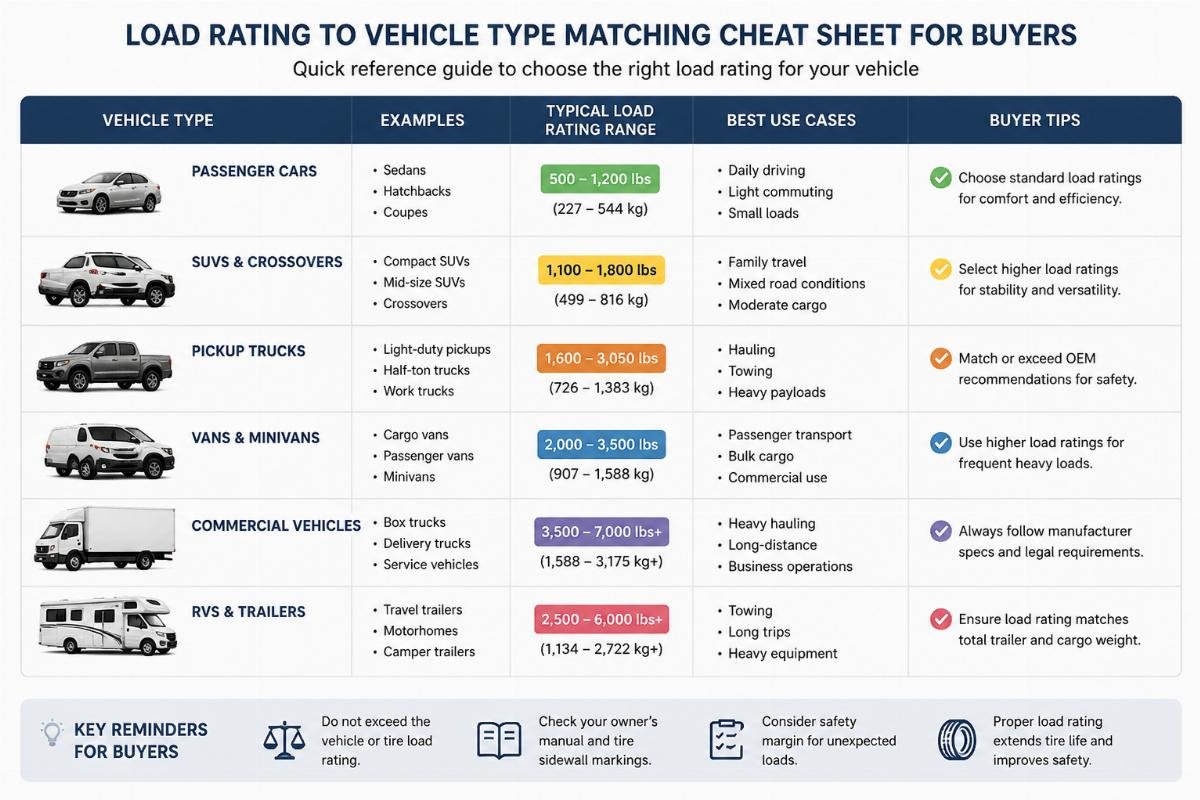
- Map to Vehicle Application – Prioritize ratings for how the vehicle will actually be used, not the maximum possible theoretical load.
- Prioritize Certification Alignment – Require suppliers to provide formal test data that confirms the rating matches your vehicle’s use case.
- Avoid Over-Rating – Only pay for higher load ratings if they are explicitly required by local regulation or end-user operating conditions.
How to Verify a Supplier’s Load Rating Claims Without Third-Party Testing?
| Oral claims of load rating compliance are never sufficient for cross-border procurement orders. The only reliable validation comes from official certification documents and independent test reports that directly tie to the exact wheel design you are ordering. | Supplier Claim | Unverified Acceptance | Proper Verification Step |
|---|---|---|---|
| "Our wheels meet all load requirements" | Accept the statement without documentation | Request full VIA/TüV/ISO certification tied to the exact wheel SKU [NEED_CITE: Formal certification documents and sample test reports are the only reliable basis for validating supplier load rating claims] | |
| "Custom designs can match standard ratings" | Approve production without testing | Require pre-production load test reports delivered within 7 days of sample approval | |
| "All batches have consistent ratings" | Order bulk stock without batch validation | Request batch-specific consistency records for every production run over 500 units |
A Middle East bulk distributor ordered 12×17 inch off-road SUV wheels with a 1800kg load rating, received full VIA/TüV certification for the entire order, and cut per-unit costs by 55% compared to equivalent European brand wheels, with zero compliance issues during local customs inspection.
- Request Full Certification Packages – Collect all official test documents before placing any non-sample order.
- Cross-Check Document Serial Numbers – Confirm the certification serial numbers match the manufacturer’s public listing on the certifying body’s website.
- Validate Batch Consistency – For bulk orders over 1000 units, require a random sample test report from the production run before shipment.
Conclusion
Matching alloy wheel load rating to your exact procurement needs eliminates unnecessary costs and compliance risks. The common assumptions that higher ratings are always better, that ratings only matter for commercial vehicles, and that custom wheels cannot meet standardized ratings all lead to avoidable waste and delays for cross-border buyers. Working with a certified Chinese manufacturer lets you align load rating requirements to custom, bulk, and aftermarket use cases without paying the premium charged by European or Japanese brand suppliers. You do not need to overpay for unnecessary performance, and you do not need to risk non-compliance to hit your target procurement budget.
