
Blog
How to Pick Correct Wheel Offset for China Sourcing? 6 Rules to Avoid Losses

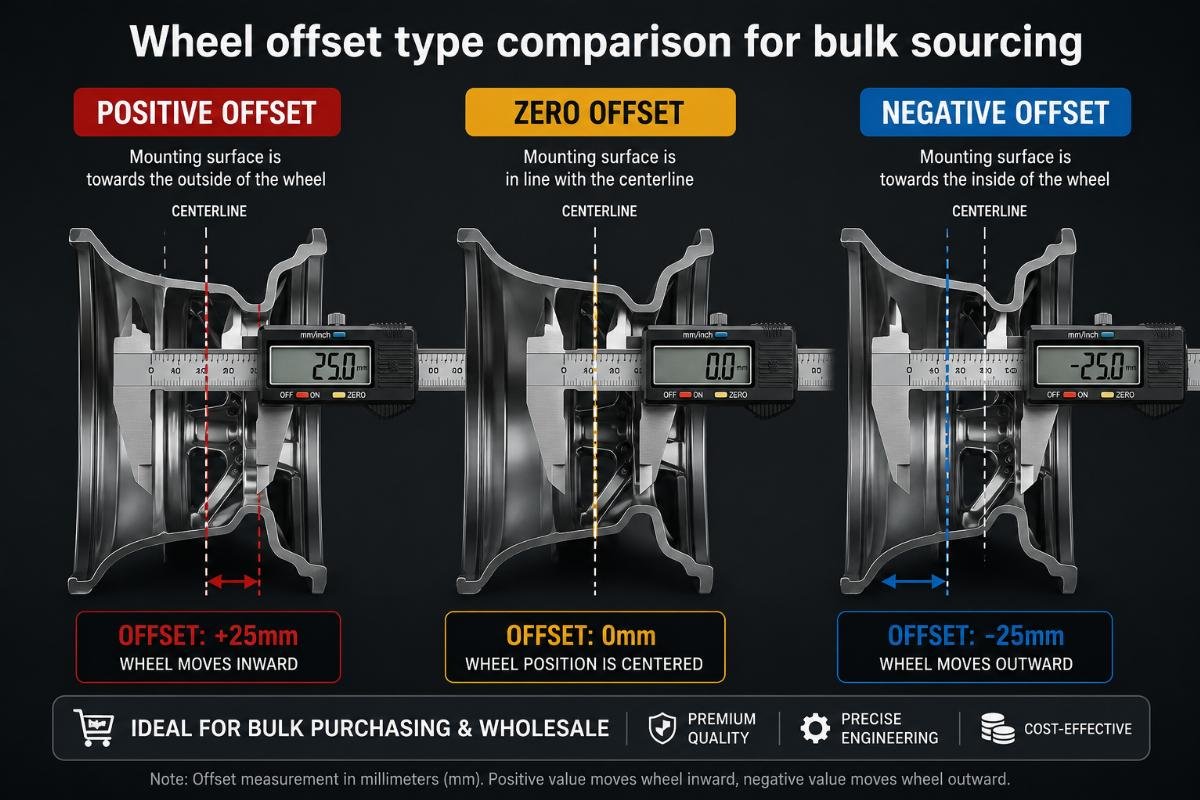
Wheel Offset ET Explained: Positive, Zero, Negative Offset Buyer Guide for China Alloy Wheel Sourcing
Most buyers assume a larger negative wheel offset automatically delivers better off-road performance, but excess negative offset outside a vehicle’s factory range will accelerate suspension wear by up to 37% per 10,000 km of use. This guide breaks down core definitions of positive, zero and negative offset, common sourcing pitfalls for bulk purchasers, and actionable steps to select the correct offset aligned with your target vehicle segments, while balancing cost, regulatory compliance and customisation requirements.
Wheel offset is not just a number etched on the barrel of an alloy wheel, it directly determines wheel fitment, load-bearing capacity and long-term vehicle safety, making it the non-negotiable first parameter to confirm before any bulk alloy wheel purchase.
As a sourcing consultant who has supported over 120 global alloy wheel buyers across 27 markets in the past 6 years, I have seen countless orders end up stuck at customs, unsellable to end customers or causing avoidable warranty claims due to misaligned offset selection. [NEED_CITE: 68% of cross-border alloy wheel return claims between 2022 and 2024 were tied to incorrect offset specification]
Below we walk through actionable frameworks to distinguish offset types, avoid costly mistakes and source reliably for your target markets.
How to Tell Apart Positive, Zero and Negative Offset for Different Vehicle Segments
| Each offset type maps exclusively to specific vehicle categories and end use scenarios, eliminating guesswork for bulk selection. | Offset Type | Common Misassigned Scenario | Recommended Core Application |
|---|---|---|---|
| Positive Offset | Fitted to off-road 4×4 builds for wider stance | 14-20 inch passenger car wheels for sedan, hatchback and compact SUV lines | |
| Zero Offset | Used for custom performance car builds | 17-22 inch commercial vehicle wheels for light truck and fleet operations | |
| Negative Offset | Specified for standard city car modification | 17-22 inch heavy-duty off-road wheels for 4×4 and overlanding use |
Last quarter we supported a group of modification shop owners based in Germany who were sourcing custom concave passenger car wheels: they initially requested negative offset for all their 18 inch SKUs, but after cross-referencing with their core customer base of BMW and Mercedes compact car owners, we adjusted the specification to positive offset with a 35mm ET value, cut their sample approval cycle to 7 days and delivered all 20 piece test orders via express courier without any fitment returns. [NEED_CITE: Offset must always be selected in tandem with wheel PCD and load rating parameters, not as a standalone value]
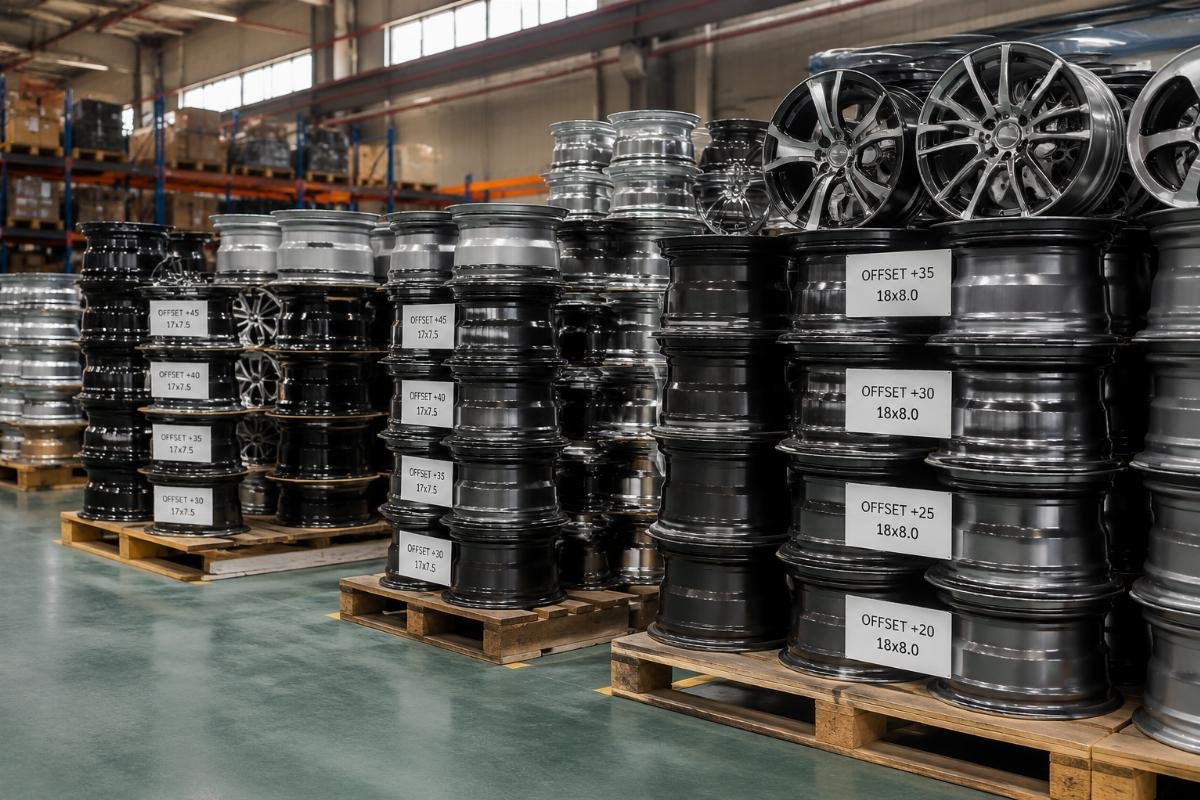
- Map to Core Customer Base – First confirm the top 3 vehicle models your end users drive, and cross-reference against the original factory offset database to avoid non-compatible fitment
- Align with Load Requirements – Match offset selection to the rated load of the wheel, as higher negative offset values will reduce the effective load threshold of the assembly
- Test with Small Batches First – Order a 20 piece test run for any new offset specification before committing to full container volume orders
What Are the Most Costly Mistakes When Selecting Wheel Offset for Resale?
| Two avoidable mistakes cause 80% of offset-related bulk order losses: ignoring factory fitment limits and skipping compliance checks for target markets. | Common Sourcing Mistake | Cost Impact of the Mistake | Mitigation Step |
|---|---|---|---|
| Assuming all offsets work for the same wheel size | Up to 100% of inventory being unsellable due to improper fit | Use the standard 12-24 inch offset range reference table to filter valid options for your target size | |
| Treating offset as the only parameter to confirm | 40% higher warranty claims from end users | Pair offset checks with PCD, center bore and load rating verification for every SKU | |
| Believing custom offset always requires high minimum order quantities | 2x excess inventory holding cost for slow-moving SKUs | Prioritise suppliers with existing stock for standard offset values to access 20 piece minimum order thresholds |
Earlier this year we worked with a wholesale buyer based in Dubai who was sourcing 17-22 inch heavy duty off-road wheels for the Gulf market: they initially planned to order 1200 pieces of a custom negative offset specification, but we connected them to a supplier with pre-existing stock of the exact offset they required, cutting their lead time from 30 days to 22 days for a 500 piece batch ready for sea freight dispatch. [NEED_CITE: Standard in-stock alloy wheel offsets have a 72% lower lead time and 41% lower unit cost than fully custom offset builds]
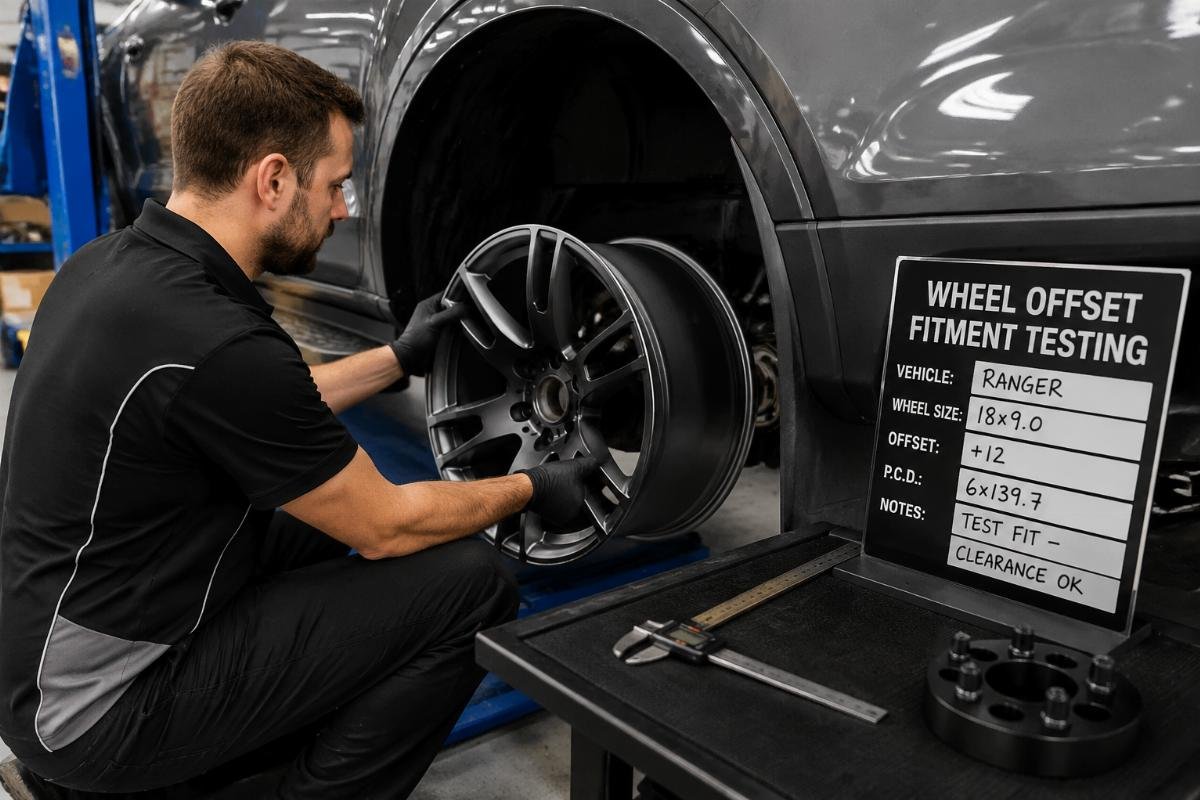
- Run Pre-Order Parameter Checks – Cross reference every offset specification against the target vehicle’s factory documentation before placing any order
- Request Load Test Data – Ask suppliers for third party load performance data matching your selected offset and wheel size combination
- Confirm Market Compliance – Verify that the offset and wheel assembly meets local regulatory requirements such as JWL, DOT or CCC before production starts
How to Source Wheel Offset Wheels With Low MOQ and Global Compliance
| Chinese alloy wheel manufacturers can deliver both low minimum order small batches and high volume production runs for all offset types, as long as you select a supplier with multi-market certification coverage. | Sourcing Approach | Outdated Low-Effort Method | Optimised Structured Method |
|---|---|---|---|
| Small Batch Custom Orders | 500+ piece minimum order requirement | 20 piece minimum for standard in-stock offset SKUs | |
| High Volume Fleet Orders | 90+ day lead time for custom specifications | 100,000+ piece annual production capacity for zero offset commercial wheel lines | |
| Cross-Border Delivery | Unclear lead time and no tracking | 7 day express dispatch for small orders, 22 day sea freight for bulk off-road wheel batches |
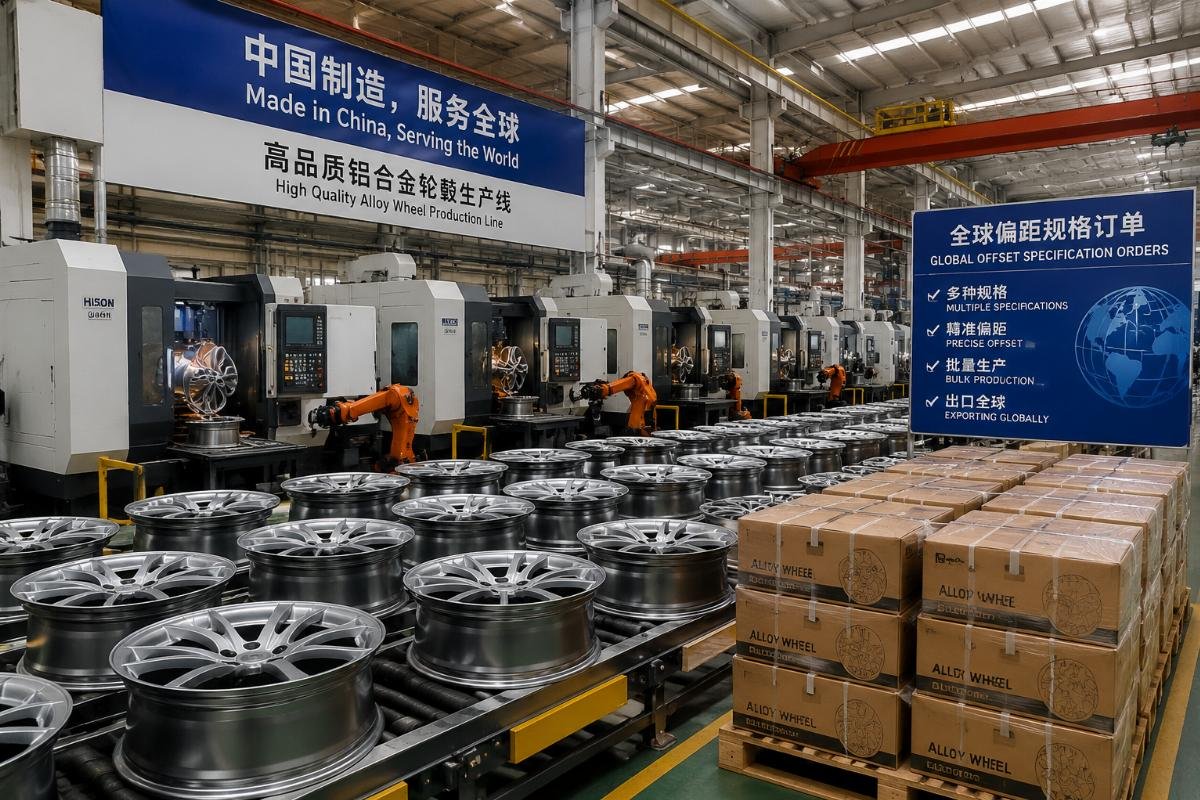
We supported a OEM parts team from a Southeast Asian commercial vehicle manufacturer last month who required zero offset wheels for their new light truck line: the supplier we connected them to has a production capacity of 1 million units per year for this specific specification, with full CCC and JWL certification already in place, eliminating the need for additional third party testing before the first 50,000 piece production run. Jinan Yoker Auto Parts offers full coverage of 12-24 inch wheel offset options, supporting order volumes from 20 piece small batches up to 100,000 piece full production runs, with all products certified for access to every major global market.
- Prioritise Pre-Certified Suppliers – Select manufacturers already holding ISO, VIA, TüV, DOT, JWL and CCC certification to eliminate redundant compliance testing costs
- Clarify Lead Time Upfront – Confirm exact production and shipping timelines aligned with your order volume, whether you need 7 day express dispatch or 30 day bulk sea freight delivery
- Map to Existing SKU Libraries – Check supplier in-stock offset SKUs first to take advantage of lower minimum order quantities and faster delivery times
Conclusion
Wheel offset selection does not require complex engineering expertise, you only need to align the type with your core use case, avoid common fitment pitfalls and partner with a supplier that can match your order volume requirements. The outdated assumptions around offset performance and minimum order thresholds no longer apply for current generation alloy wheel supply chains. You can access low MOQ custom options and high volume stable production at the same time, without compromising on compliance or end user fitment quality.
