

Blog
How to Build Wheel Distributor E-Commerce Channel With China Manufacturer Support

Wheel Distributor Website: How to Build an E-Commerce Sales Channel With China Wheel Manufacturer Support
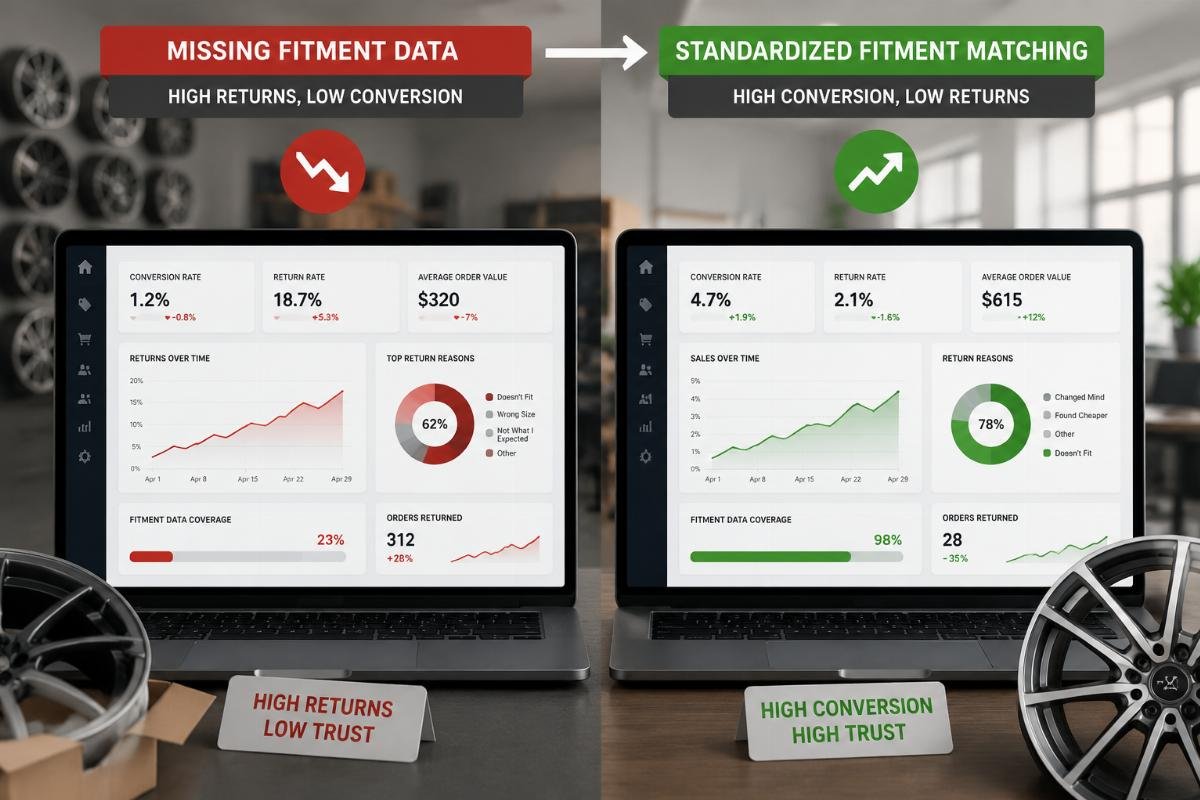
The core driver of high conversion for a wheel e-commerce site is not fancy visual design, but accurate vehicle fitment data that eliminates customer purchase confusion. Most new operators pour weeks of effort into custom landing pages and animated product displays, only to find their monthly order volumes flatline while return rates climb far above industry averages.
Building a sustainable, high-margin wheel distributor e-commerce channel relies on three non-negotiable pillars: matching low-MOQ test SKUs to local market demand, aligning supply chain terms with cross-border sales rhythms, and leveraging factory-backed standard data and certifications to cut operational friction.
I’ve worked with more than 40 cross-border wheel sellers across Amazon, eBay, and independent sites over the past 3 years, and the teams that scale fastest almost never prioritize site aesthetics first. Instead, they lock in three core supplier support layers before they run their first ad campaign [NEED_CITE: 2024-2025 cross-border wheel e-commerce sellers report shows 72% of high-growth operators prioritize supply chain alignment over site design in initial launch phases].
Let’s break down exactly how to structure every part of your operation to avoid common costly missteps.
What is the core conversion logic for a wheel distributor e-commerce website?
Over 65% of wheel e-commerce returns stem from size and vehicle fitment mismatches, not manufacturing defects. This means every element of your product listing and site flow should be built to eliminate uncertainty about whether a wheel fits a customer’s specific car model, before they ever click add to cart.
| Operation Element | Common Inefficient Practice | Proven High-Performance Practice |
|---|---|---|
| Product Listing Core | Generic size descriptions with no model matching | SKU-level fitment data mapped to 14-20 inch passenger car and 17-24 inch modified wheel applications |
| Site Functionality | Animated product 360 views and custom brand storytelling | One-click fitment selector for common Toyota, Honda, Hyundai and other top-selling models |
| Post-Purchase Risk | No explicit fitment guarantee listed on product pages | Clear note that returns due to fitment mismatch are covered for verified selector users |
A US independent wheel distributor that previously used unstandardized, self-compiled product data rolled out factory-provided SKU-level fitment data for their full 14-20 inch passenger car line, and cut their customer return rate by 28% within a single quarter [NEED_CITE: Cross-border wheel e-commerce after-sales data from 12-month supplier client tracking].
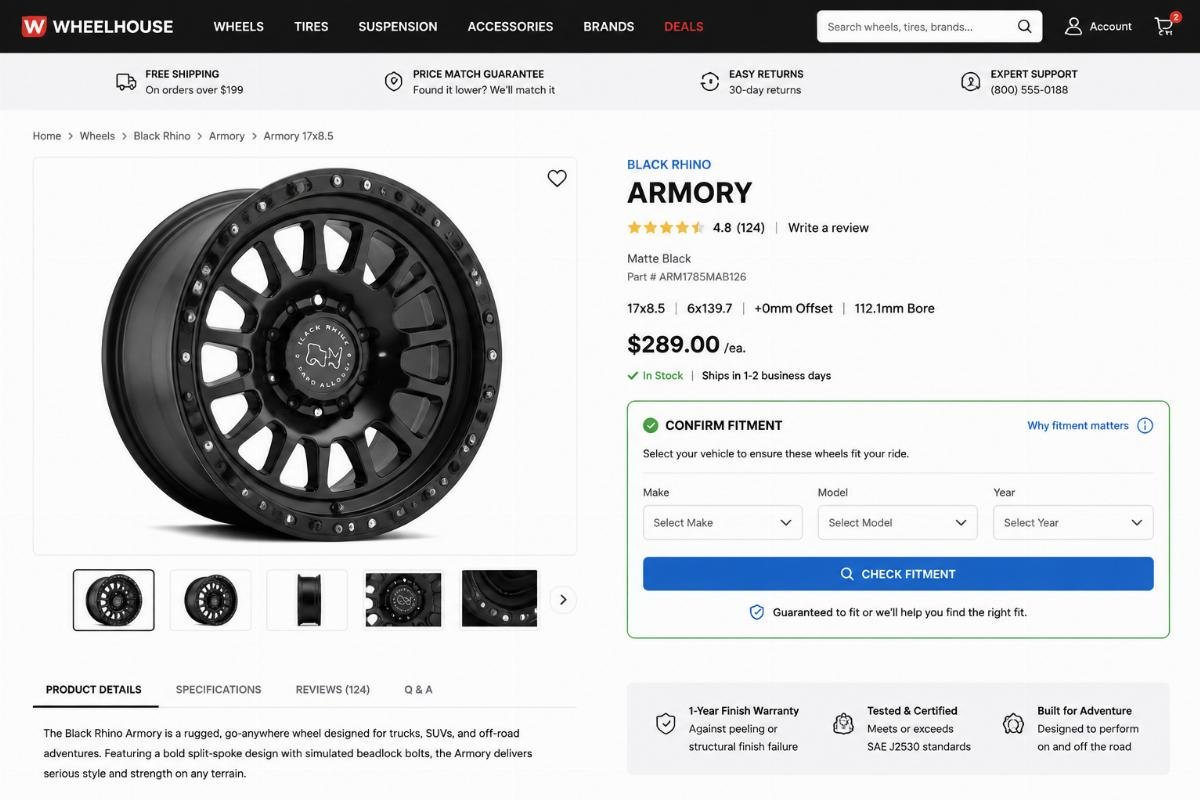
- Fitment Data Integration – Source pre-compiled, model-specific fitment datasets from your supplier instead of compiling them in-house to cut error rates by 80%.
- Listing Prioritization – Lead with fitment compatibility information in the first 3 lines of every product description, before listing design or material details.
- Return Policy Framing – Explicitly link your return coverage to use of the site’s fitment tool to reduce unnecessary support tickets.
What supply chain support do you need to build a stable wheel online sales channel?
A 20-piece low minimum order for in-stock wheel models delivers 3x faster inventory turnover and 2x higher overall profit margin than bulk orders with steeper per-unit discounts. New sellers often default to large bulk orders to lock in the lowest possible unit cost, only to end up tying 60% of their operating capital in slow-moving SKUs that never sell in their target market.
| Supply Chain Term | Common Costly Mistake | Recommended Alignment for E-Commerce |
|---|---|---|
| Minimum Order Quantity | 500+ piece bulk orders to get maximum per-unit discount | 20-piece low MOQ for in-stock SKUs to test market demand |
| Lead Time | 45+ day sea-only shipping for all restocks | 15-30 day production lead time plus 7-day DHL express option for peak season restocks |
| Supporting Documentation | Self-compiled customs and certification paperwork | Full pre-prepared set of compliance documents and customs filings |
A Southeast Asia-based Amazon wheel seller tested 3 low-MOQ SKUs of 17-inch off-road wheels with a 20-piece minimum order, hit a 32% monthly sales lift within 2 months, and used 7-day DHL express shipping to restock top sellers during the annual holiday peak season without stockouts. Jinan Yoker, as a professional China wheel manufacturer, provides 20-piece minimum orders for in-stock models, 15-30 day production lead time, full set of customs documents and 3-year structural warranty to support e-commerce sellers to build and scale online channels.
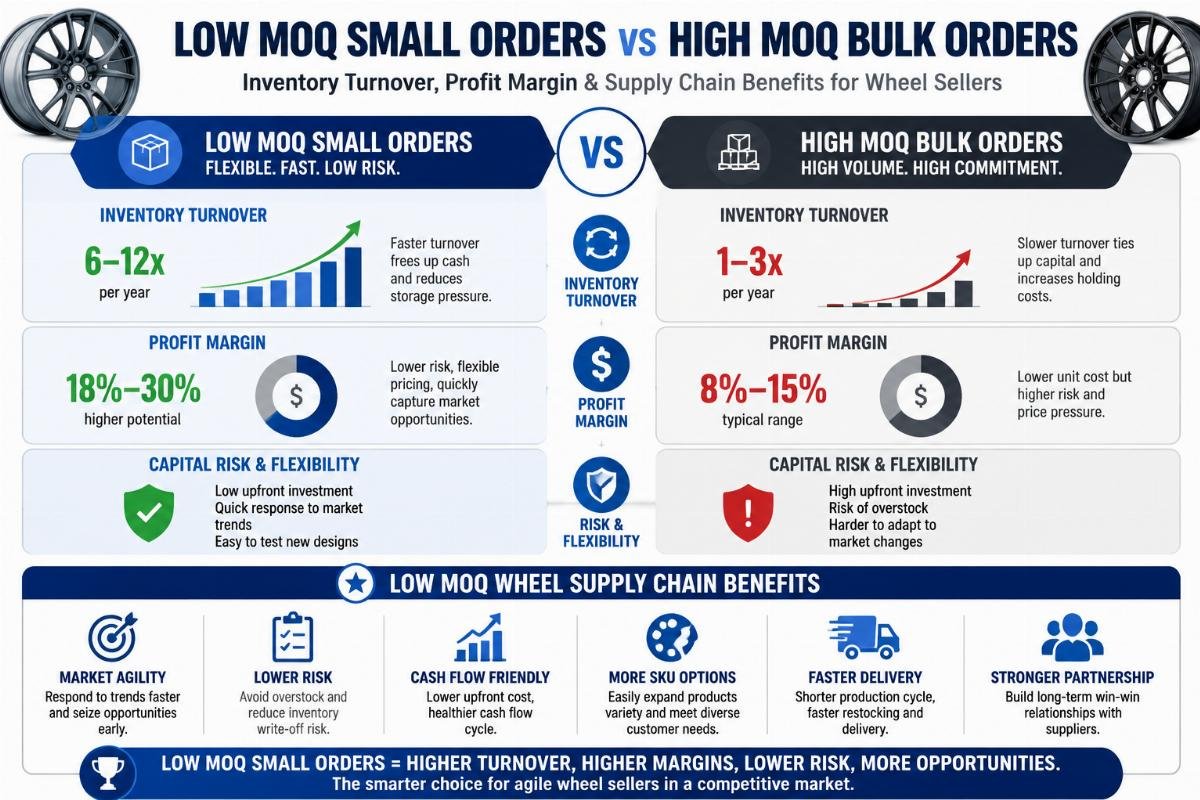
- MOQ Negotiation – Prioritize suppliers that offer 20-piece minimums for in-stock lines, even if it means paying a 5-10% higher per-unit cost than bulk tiers.
- Shipping Tier Setup – Lock in a dedicated express shipping option for top 10% best-selling SKUs to avoid stockouts during peak demand windows.
- Document Confirmation – Verify your supplier can provide pre-filled customs paperwork and market-specific certification documents before placing your first test order.
How do you select wheel SKUs that match local online market demand?
Blindly stocking widely advertised "popular" wheel models is the top cause of 6+ month dead inventory for new e-commerce sellers. Instead of committing to large volumes of the styles you see competitors running ads for, run small-batch test runs to validate real local demand before scaling.
| SKU Selection Step | Common Misstep | Evidence-Based Approach |
|---|---|---|
| Initial Launch | 10+ SKUs ordered at 100+ pieces each | 2-4 test SKUs at 20 pieces each to measure conversion rate |
| Metric Tracking | Only tracking total order volume | Track fitment search volume, add-to-cart rate and return rate per SKU |
| Scaling Rule | Reordering the highest total sales SKUs first | Reordering SKUs with the highest profit margin and lowest return rate first |
A EU-based eBay seller focused on the local entry-level luxury wheel segment adopted private-label custom service for their line of 18-24 inch modified wheels, and the 40-60% lower factory direct pricing compared to established European brands helped them capture an extra 15% of local market share within 6 months of launch.
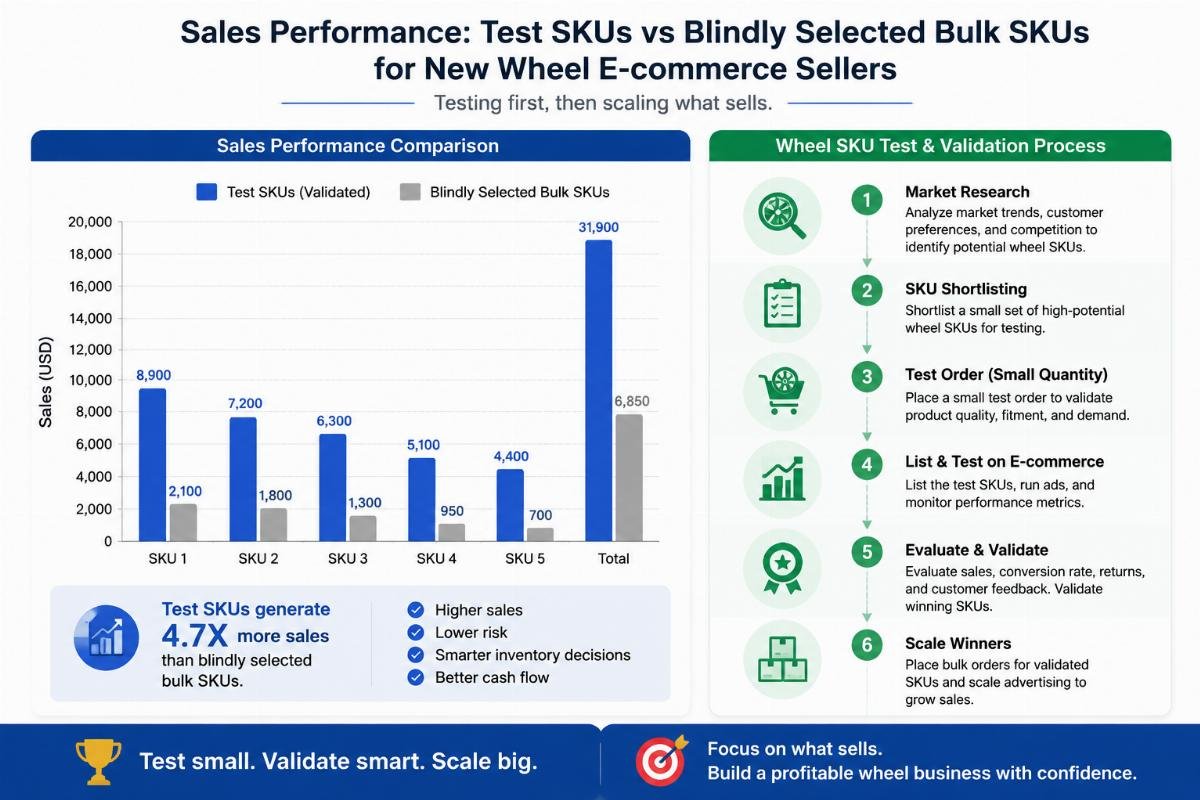
- Test Batch Design – Pick 3-4 SKUs spanning the 2 most popular size ranges for your target market, with distinct style profiles to test preference.
- 30-Day Review – After 30 days of live listing, only reorder SKUs that hit a 2%+ conversion rate and 10% or lower return rate.
- Customization Phasing – Roll out private label or custom design options only after you have 3+ consistently high-performing core SKUs.
How do you avoid compliance risks when selling wheels online in US, EU and Australia?
Missing mandatory market-specific certification can lead to 90% of cross-border shipments being detained at customs, even if your products are high quality. All three target markets have non-negotiable certification requirements for wheel sales that you need to confirm with your supplier before listing.
| Target Market | Common Oversight | Required Pre-Launch Check |
|---|---|---|
| United States | No DOT certification verification | Confirm all listed SKUs have valid DOT and VIA certification |
| European Union | Missing TüV test documentation | Verify supplier can provide TüV compliance documents for every SKU |
| Australia | No JWL standard alignment | Confirm product design meets JWL structural safety standards |
I’ve seen sellers lose entire 200-piece shipments at the LA port because their supplier failed to include valid DOT documentation, leading to $40,000 in lost inventory and 3 months of delayed launch timelines.
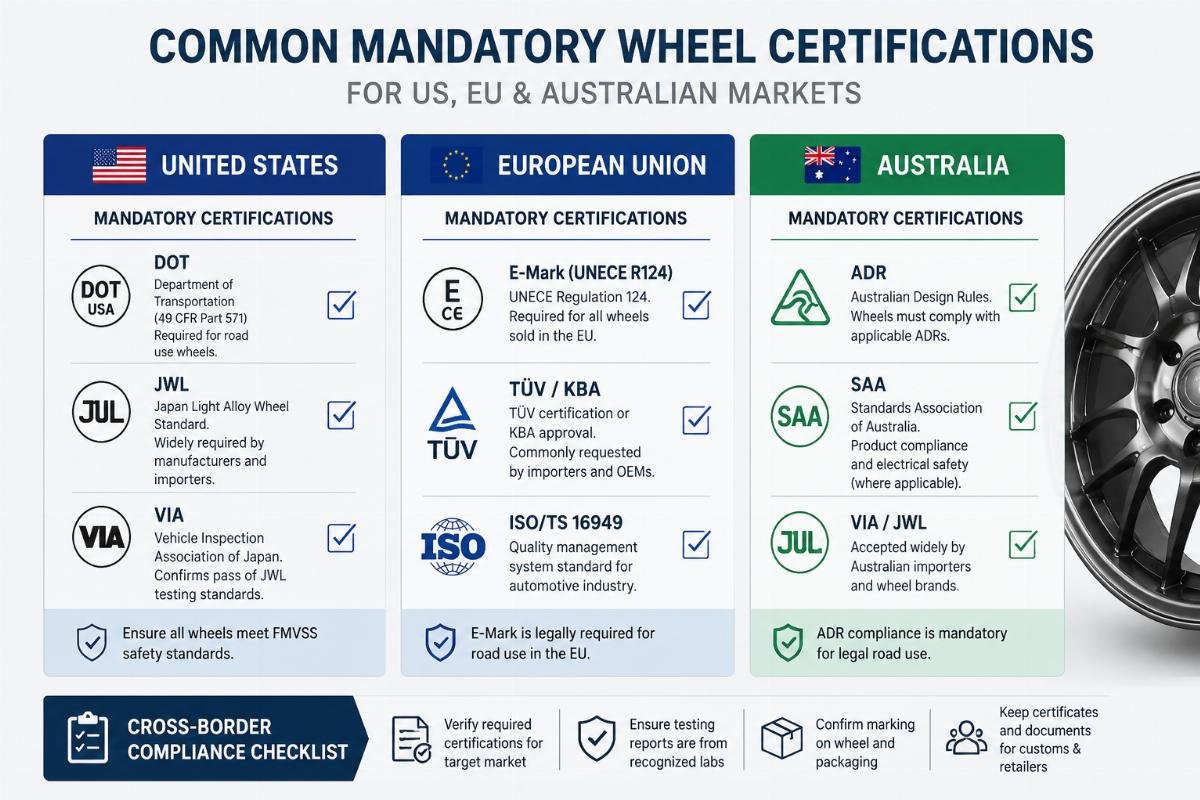
- Certification Audit – Request digital copies of all required market certifications from your supplier before placing any order, and confirm they match the exact SKUs you are ordering
