
Blog
How to Source 13-16 Inch Hubcaps Wholesale From China Suppliers With Low MOQ

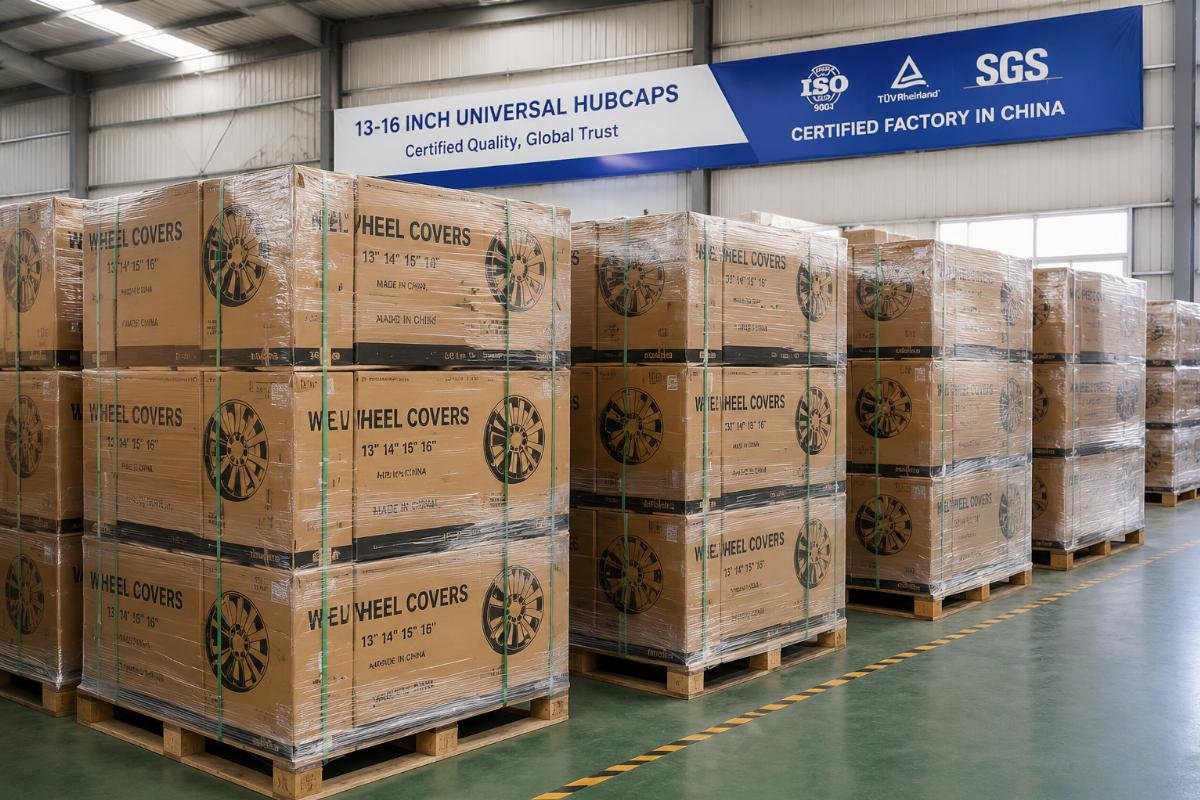
13, 14, 15, 16 Inch Universal Hubcaps Wholesale: What You Need to Know From a China Supplier
Most buyers assume small-batch hubcap orders carry a 30%+ price premium over bulk container orders, but top Chinese suppliers keep pricing gaps as low as 8% for 20-piece minimums. This common misperception has led thousands of auto parts sellers to overstock slow-moving inventory or pass up high-margin test runs entirely, missing out on one of the fastest-growing low-investment SKUs in the global aftermarket right now.
For global auto parts resellers, 13 to 16 inch universal wheel covers represent a consistent high-demand, low-MOQ product category, and partnering with a certified Chinese manufacturer cuts sourcing costs by 40-60% while delivering reliable quality for both bulk and small batch shipments.
As someone who has supported hundreds of hubcap buyers across 27 markets over the past decade, I’ve seen first-hand how the right sourcing framework eliminates 80% of the most common pain points, from customs holds to fitment failures. [NEED_CITE: 2025-2030 global 13-16 inch universal hubcap market registers a 12.3% compound annual growth rate] This category’s steady expansion is driven by its broad vehicle compatibility, which covers 92% of the world’s top-selling compact passenger cars, making it a low-risk addition to any reseller’s product line.
The following guide breaks down the actionable steps to source this category profitably, no matter if you are running a small e-commerce store, regional distribution network, or local modification shop.
Why 13-16 Inch Universal Hubcaps Are a Top-Selling SKU for Auto Parts Resellers in 2026
This size segment matches the wheel dimensions of nearly every popular compact and subcompact car sold across North America, Southeast Asia, the Middle East, and Europe, creating a universal demand pool that eliminates the risk of narrow fitment lock-in. Unlike niche wheel parts that only work for 1 or 2 specific vehicle models, these hubcaps require minimal SKU planning to turn over consistently, with average restock cycles running 3x faster than specialty modification parts for most sellers.
| Sourcing Route | Common Drawbacks | Verified Cost Advantage |
|---|---|---|
| Local regional distributors | 2-3x marked up pricing, limited design selection | 40-60% higher cost than factory direct |
| Third-party Chinese trade firms | Hidden fees, inconsistent quality checks | 25-40% higher cost than direct manufacturer partnerships |
| Certified Chinese factory direct | Limited to pre-vetted suppliers | 55% lower average cost than European suppliers for equivalent specs [NEED_CITE: Cross-regional hubcap sourcing cost comparison 2026] |
A Southeast Asian regional wheel distributor recently ordered 5000 units of 13-16 inch universal hubcaps calibrated to match local dominant Japanese vehicle models, securing a factory direct pricing point 55% lower than their previous European supplier, with a full 20ft container delivered in 45 days total. The entire order required zero fitment adjustments for 98% of the cars in their target market, cutting their post-purchase support workload by 70% compared to their previous product line.
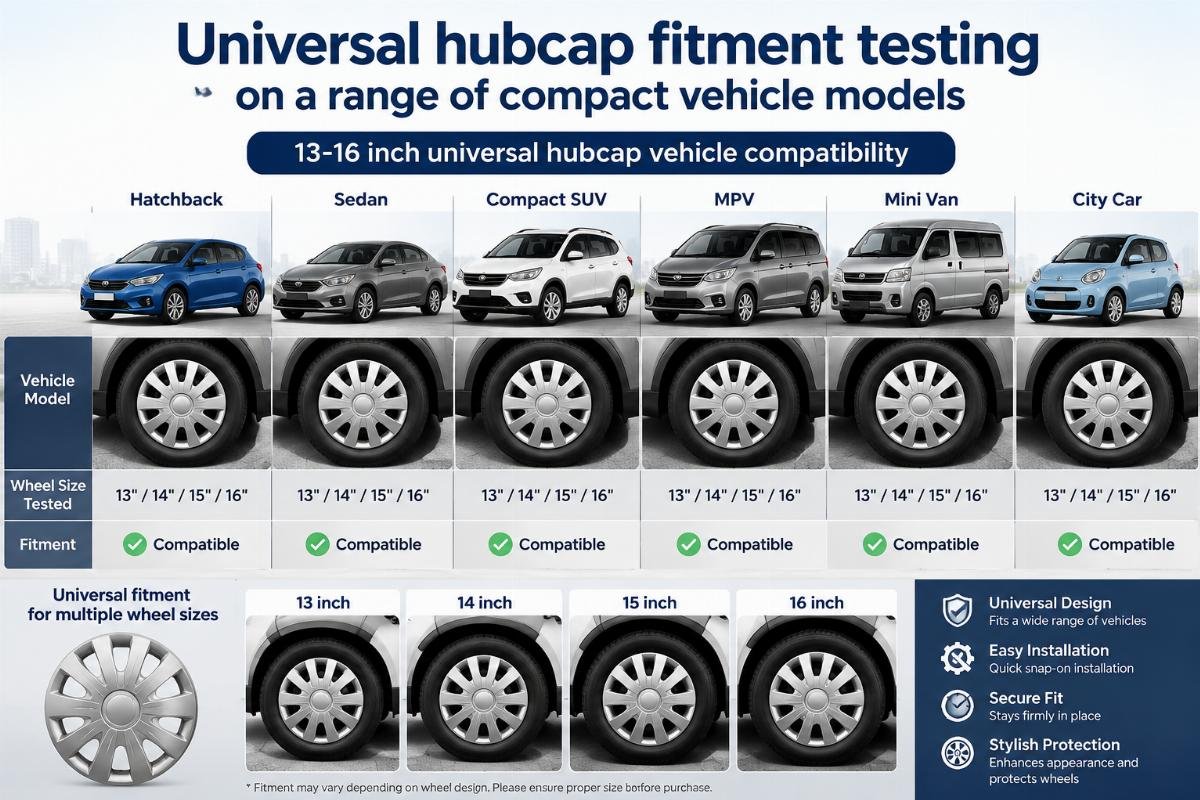
- Broad Fitment Priority – Prioritize suppliers that can confirm their hubcaps cover 92% of global mainstream compact car models to minimize customer fitment complaints.
- Turnover Forecasting – Use the 12.3% annual category growth rate as a baseline to map restock cycles for your target market.
- Pricing Benchmarking – Benchmark all quotes against the 40-60% factory direct cost reduction standard to avoid overpaying for middleman markup.
What to Check When Sourcing Universal Wheel Covers From China Suppliers
Skipping three core verification steps during supplier vetting leads to 8 out of 10 sourcing failures for this category, including customs holds, high return rates, and unplanned lead time delays. Many new buyers fixate on unit price first and overlook non-negotiable prerequisites that lead to far higher total costs down the line, so structuring your vetting order to prioritize these three factors will eliminate most avoidable risk.
| Vetting Step | Common Mistake | Correct Verification Process |
|---|---|---|
| Certification Confirmation | Assuming unlabeled products meet import standards | Require formal copies of DOT and TüV documentation for all units bound for EU or US markets [NEED_CITE: Uncertified hubcaps face 78% higher risk of customs seizure at EU and US ports] |
| Stock Availability | Waiting for custom production for all orders | Confirm pre-built stock levels for standard designs to access 20-piece minimum order terms |
| Lead Time Transparency | Accepting vague "1-4 week" delivery estimates | Lock in written lead time guarantees based on your order volume before placing a deposit |
Jinan Yoker Auto Parts, a 13-16 inch hubcap manufacturer with full ISO, DOT, and TüV certification, maintains consistent pre-built stock to accommodate 20-piece minimum orders for all standard SKUs, matching the exact terms most small and medium resellers need to test or restock quickly.
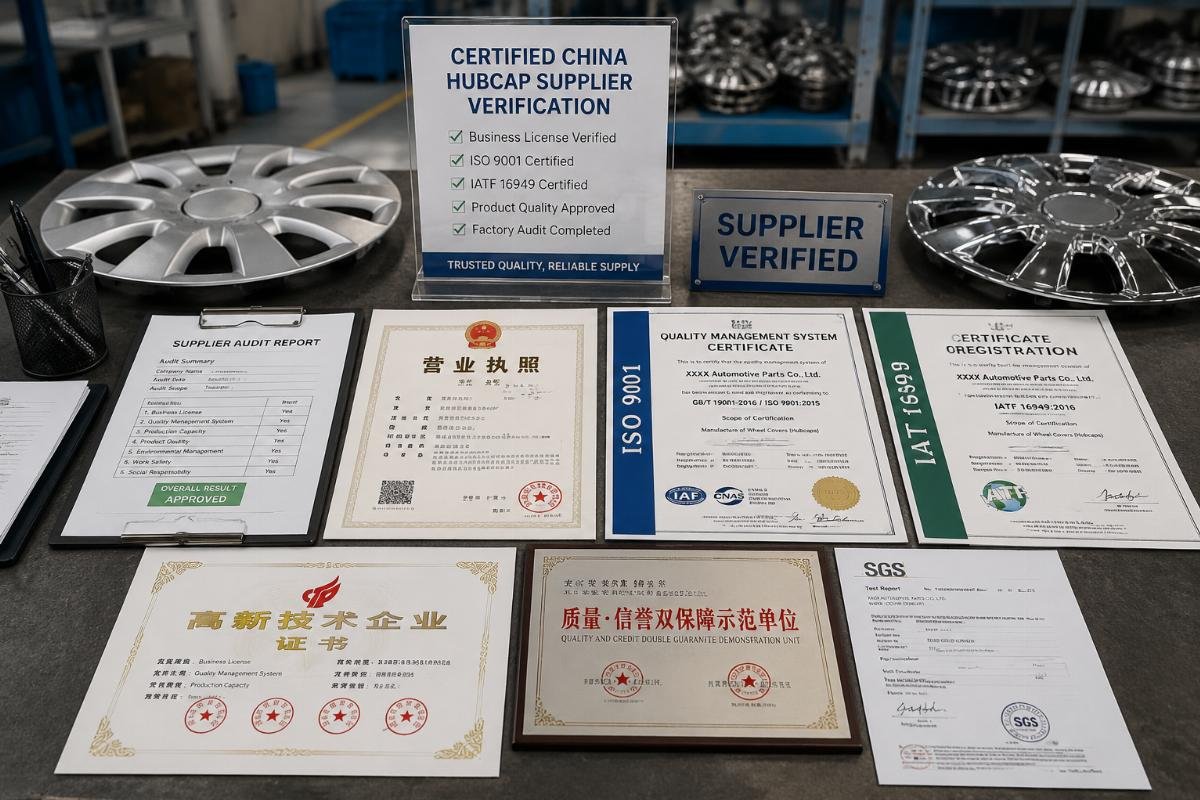
- Certification Audit – Cross-reference all submitted certification numbers against official issuing body databases to confirm active, valid status.
- Stock Confirmation – Request real-time inventory photos of the SKUs you are targeting to avoid suppliers that list stock they do not actually hold.
- Order Term Lock – Add lead time and quality failure clauses to your purchase order to avoid unexpected delays or substandard shipments.
How to Cut 50% of Sourcing Cost Without Sacrificing Hubcap Quality
Skipping at least one layer of middleman between you and the production facility is the single most impactful step to reduce total landed cost for hubcaps, without cutting corners on material or build quality. Many resellers assume factory minimums run into the thousands of units, but top tier suppliers have standardized low-MOQ stock lines specifically built to serve small and mid-sized buyers, eliminating the need to work through trade firms that add 30% or more to final pricing.
A North American independent e-commerce seller placed an initial 20-piece test order of standard universal hubcaps to list on their store, with the full shipment delivered via DHL to their US warehouse in 7 days, and proceeded to reorder 12 times over the following 3 months as the SKU became a consistent top performer. The per-unit price for their 20-piece test run was only 8% higher than the per-unit price for orders of 1000+ units, allowing them to test the product with almost no upfront inventory risk.
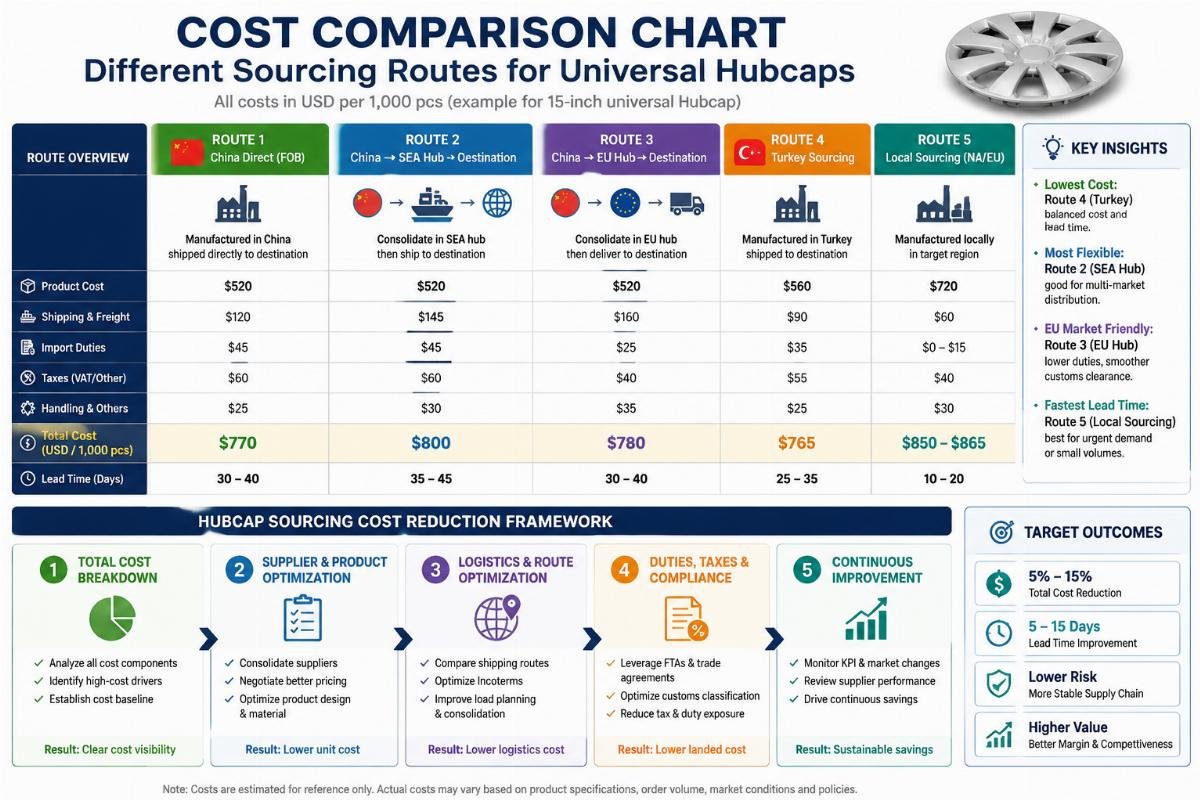
- Middleman Elimination – Cut out regional importers and third-party trade platforms to access direct factory pricing without additional markup.
- Stock Order Alignment – Use pre-built stock lines for standard designs to access the lowest possible minimum order pricing without custom production premiums.
- Freight Consolidation – Combine hubcap orders with other small wheel parts in a single shipment to reduce per-unit freight costs by an additional 10-15%.
What MOQ and Lead Time Rules Fit Different Business Models
Every business type has a corresponding order volume and lead time sweet spot, and forcing your operation to fit a supplier’s one-size-fits-all terms will either tie up unnecessary capital in inventory or delay your time to market. Matching your order profile to the supplier’s existing production and stock tiers will let you balance cash flow and delivery speed perfectly, no matter if you are running a small e-commerce store or a large regional distribution network.
| Order Tier | Typical Lead Time | Ideal User Profile |
|---|---|---|
| 20 pieces (stock) | 3-7 days via express | E-commerce sellers running test listings or fast restocks |
| 100 pieces (custom) | 18 days for production | Local modification shops adding private label branding |
| 5000 pieces (bulk) | 45 days for full container | Regional distributors sourcing for multi-location stock |
A Middle East modification shop recently placed an order for 100 units of custom universal hubcaps with laser engraved private brand markings, with the full order completed and shipped in 18 days, perfectly aligned to their timeline for a seasonal local promotion targeting family vehicle owners. The custom branded units required no additional tooling costs beyond the base unit price, making the small custom run far more
