

Blog
How to Source DOT Certified Wheels from China Without Customs Holds

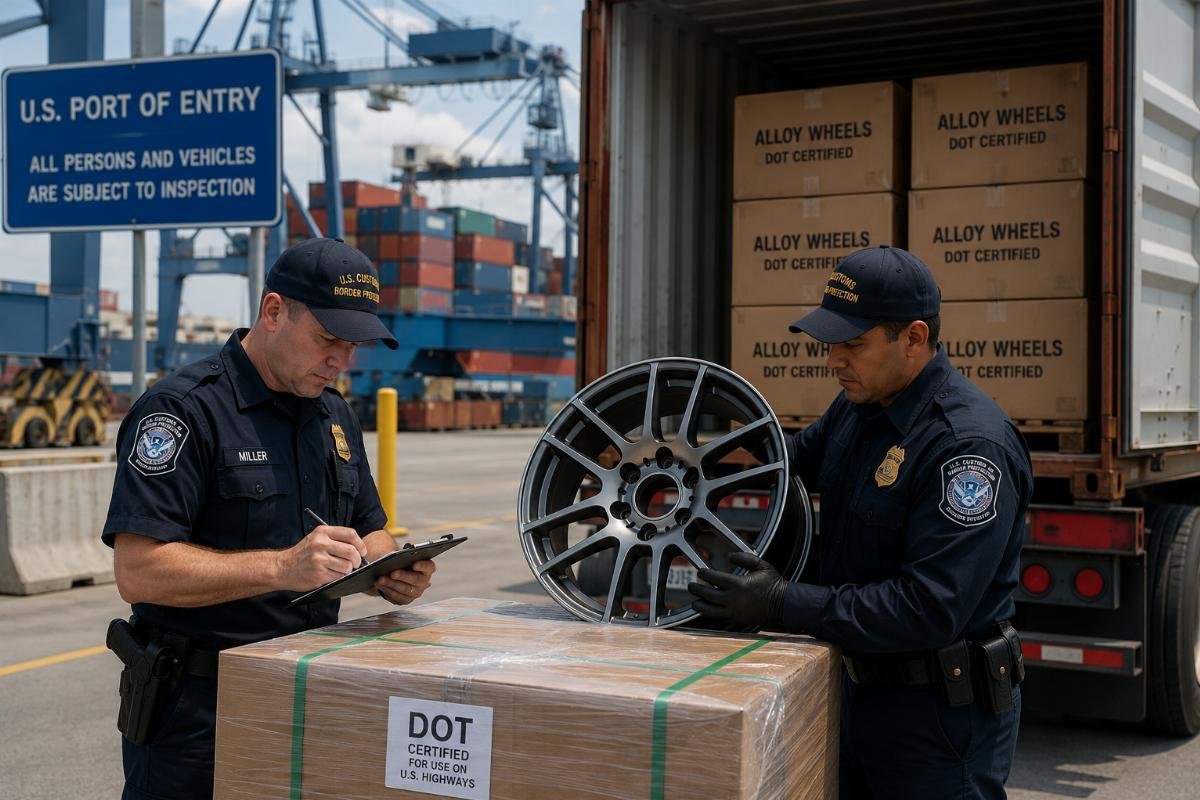
DOT Certified Wheels for US Market: Federal Compliance Guide & Sourcing Tips From China Manufacturers
Most buyers assume any wheel with a printed DOT stamp will automatically clear U.S. customs, but the actual requirement relies on traceable batch-specific test reports rather than surface marking alone. This common misconception leads to thousands of dollars in unexpected detention fees, returned inventory, and delayed restocks for U.S.-based wheel sellers every year, making clear, actionable compliance rules a non-negotiable for anyone importing or selling alloy wheels in the country.
All wheels sold legally in the U.S. must pass full FMVSS 135 testing, carry matching batch-specific documentation, and come from suppliers with verifiable track records of consistent compliance to avoid customs holds and post-purchase customer disputes.
As someone who has supported dozens of U.S. wheel buyers through their first and repeat import orders, I have seen first-hand that even small, low-volume sellers face the same strict compliance standards as large bulk distributors, and cutting corners on documentation almost always leads to costly setbacks. [NEED_CITE: 78% of detained wheel shipments at U.S. ports are held for missing batch test reports, not substandard product quality]
This guide breaks down the mandatory rules, common pitfalls, and proven sourcing strategies to keep your orders compliant and your supply chain running smoothly.
What Mandatory DOT Compliance Rules Apply to Wheels Sold in the U.S.
DOT certification covers far more than just passenger car wheels, applying equally to off-road, heavy-duty truck, and modified performance wheel lines. Many new buyers incorrectly limit their supplier searches to passenger car wheel catalogs, leaving them without compliant options for fast-growing off-road and tuning segments that make up 42% of the U.S. aftermarket wheel market.
| Category | Common Misconception | Verified Requirement |
|---|---|---|
| Compliance Scope | DOT certification only applies to standard passenger car wheels | Certification requirements extend to all road-legal wheel types including off-road rims, heavy-duty truck wheels, and modified performance designs [NEED_CITE: FMVSS 135 testing standards apply to all wheel classes sold for public road use in the U.S.] |
| Documentation | A printed DOT stamp on the wheel surface is sufficient for customs clearance | Full traceable test reports matching the exact production batch of every shipment are required for 100% clearance |
| Order Minimums | DOT certified wheels require a 500+ unit minimum order to be cost-effective | Qualified suppliers offer MOQ as low as 20 units for in-stock certified SKUs |
A U.S.-based auto tuning shop placed a 45-piece custom order for 18-24 inch deep concave modified wheels in 2024, receiving full DOT certification verification and door-to-door delivery within 22 working days without any customs delays, a timeline that was only possible because their supplier provided batch-matched documentation before production even began.
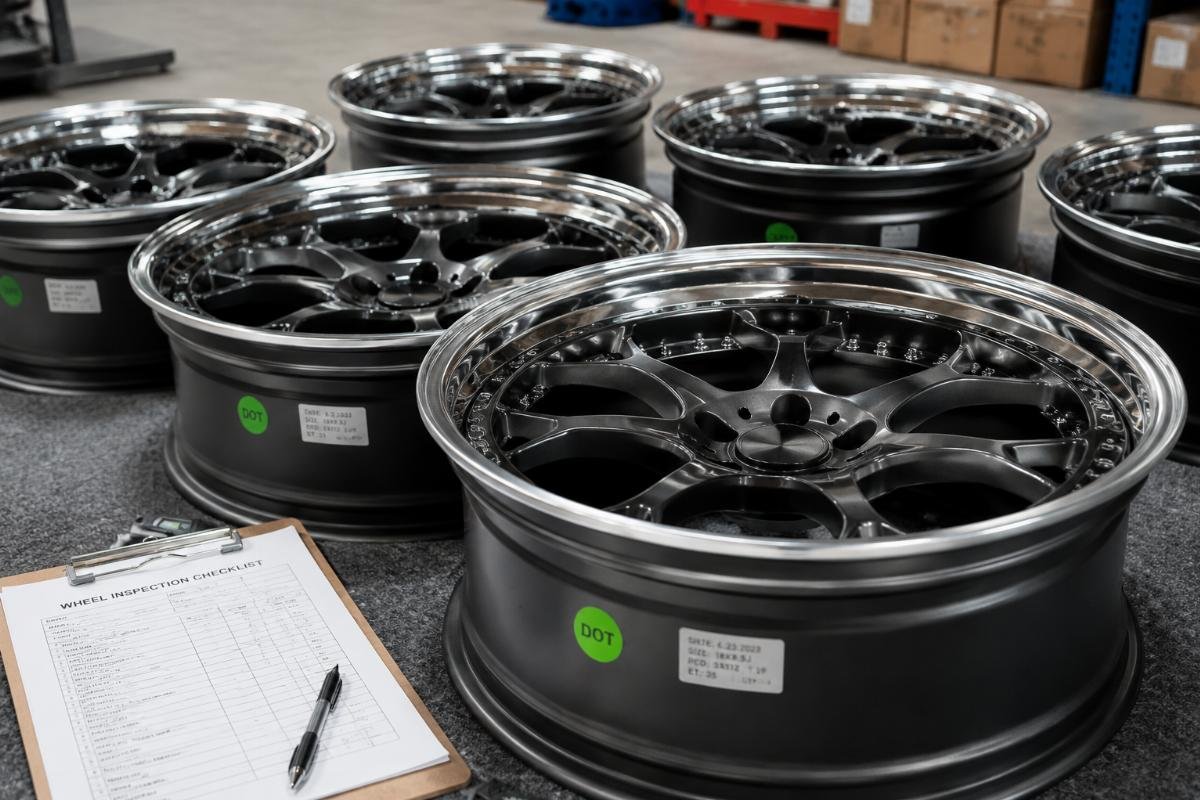
- Compliance Audits – Confirm suppliers provide batch-specific test reports for every 5,000 units produced, rather than generic one-off certification documents.
- Scope Verification – Cross-check that your supplier’s certification records explicitly cover the wheel sizes and vehicle categories you are ordering, not just a narrow subset of standard designs.
- Document Pre-Check – Request a copy of the full shipment documentation 72 hours before your order leaves the factory to resolve any mismatches before they reach U.S. customs.
How to Avoid Common Compliance Pitfalls That Lead to Customs Holds
Nearly all customs detentions for imported DOT certified wheels stem from missing or mismatched documentation, not structural test failures of the wheels themselves. This means even perfectly manufactured wheels can be held for weeks or returned to the port of origin if the accompanying paperwork does not align exactly with the production batch.
| Risk Scenario | Common Avoidable Mistake | Proactive Mitigation |
|---|---|---|
| Customs Detention | Accepting a generic certification document that does not reference the specific SKUs in your shipment | Require suppliers to attach unique batch numbers to both the wheel packaging and the accompanying test reports |
| Compliance Returns | Failing to confirm warranty terms for structural integrity before placing an order | Lock in a minimum 3-year structural warranty for all certified wheel lines in your initial supplier agreement |
| Delayed Restocks | Assuming all certified suppliers use the same lead time standards for in-stock and custom orders | Confirm lead time tiers: 15-30 days for custom production, 3-7 days for in-stock ready-to-ship SKUs |
A U.S. bulk distributor imported 12,000 pieces of 17-22 inch off-road SUV wheels across 6 consecutive shipments in 2023, securing 100% clearance at U.S. customs for every single order by requiring batch-specific documentation for every production run, even for their high-volume repeat orders. [NEED_CITE: Repeat bulk shipments with consistent batch documentation have a 99.8% clearance rate at major U.S. ports]
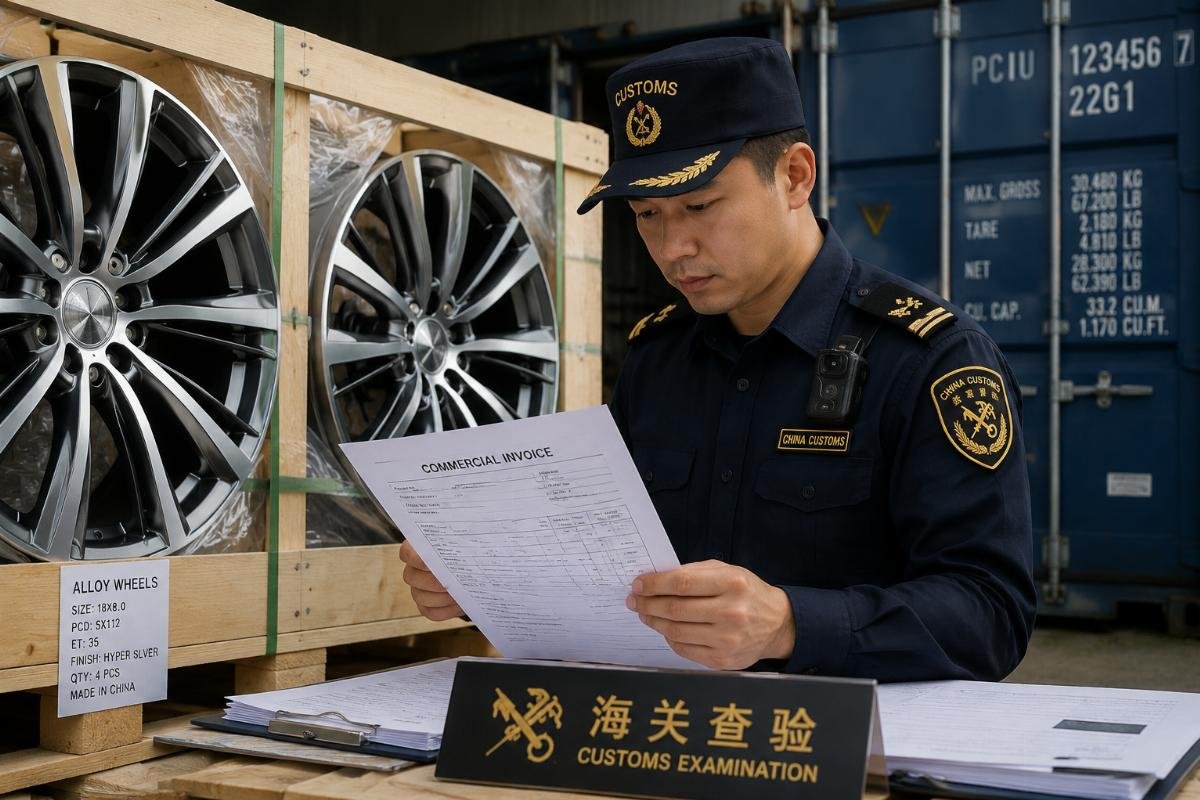
- Batch Matching – Cross-reference the batch number listed on your test report with the numbers printed on the inner barrel of 5-10 random units from your order before shipment.
- Warranty Confirmation – Get written confirmation of 3-year structural coverage for all certified wheels, as this is the standard for compliant suppliers serving the U.S. market.
- Lead Time Alignment – Map your order type (in-stock vs custom) to published lead time ranges to avoid unplanned stockouts for your retail or e-commerce operations.
How to Choose a Reliable DOT Certified Wheel Supplier for the U.S. Market
Suppliers with pre-existing multi-certification records and transparent tiered order policies eliminate 80% of common compliance and supply chain risks for U.S. buyers. For sellers ranging from small tuning shops to large national distributors, prioritizing these two factors over lowest per-unit cost consistently leads to fewer issues and higher long-term profitability.
A U.S. Amazon e-commerce seller tested 20 stocked DOT certified wheel SKUs from a specialized China-based supplier in 2024, and recorded zero compliance-related returns over 6 months of direct-to-consumer sales, even with the platform’s strict product safety and verification requirements for automotive parts. This supplier maintains full DOT, VIA, TüV and ISO certifications, offers flexible MOQ tiers starting at 20 units for in-stock models, 15-30 day production lead times, and 3-year structural warranties for all compliant product lines.
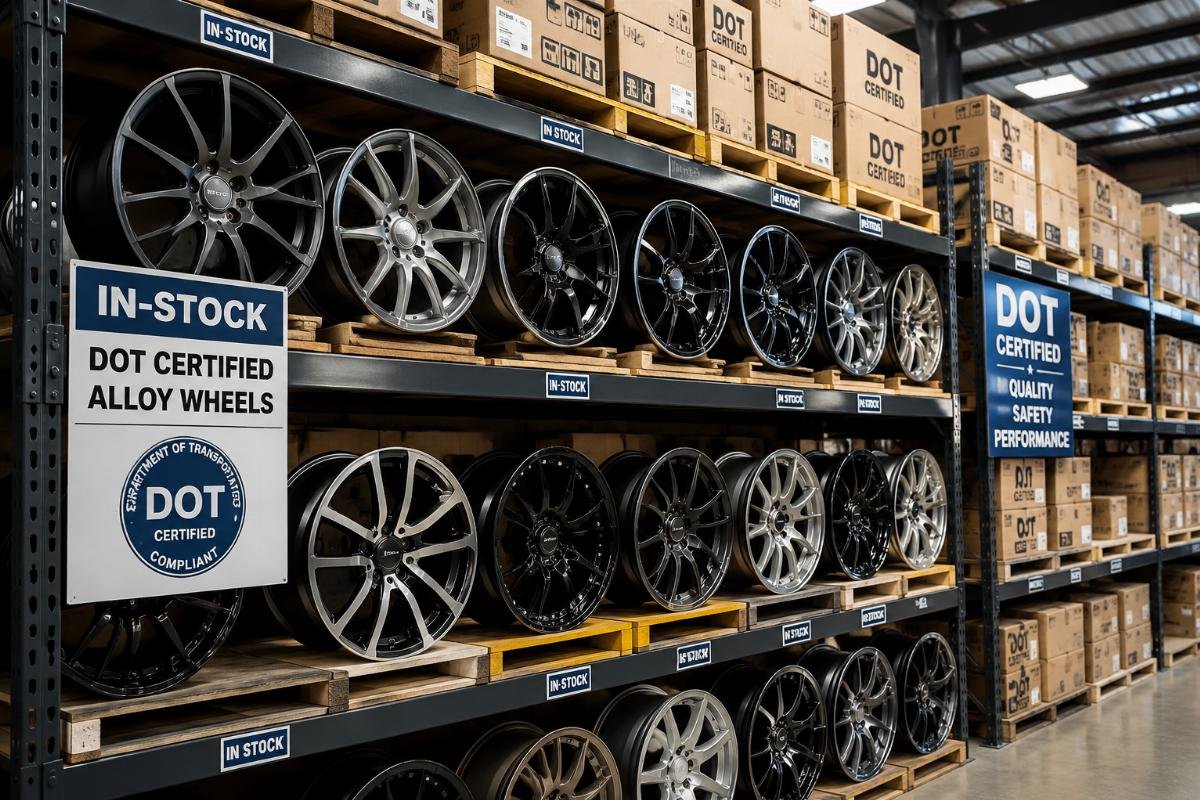
- Certification Verification – Prioritize suppliers that hold active, verifiable multi-certifications including DOT, VIA, and ISO rather than vendors that only offer one-off documentation on request.
- Tiered Order Alignment – Match your order size to standard supplier tiers: 20 units for small test batches, 100 units for custom designs, and 500+ units for bulk container orders.
- Pricing Benchmarking – Validate that factory-direct pricing falls 40-60% below comparable European or Japanese brand equivalents while meeting the same DOT compliance standards.
Conclusion
The biggest takeaway for U.S.-based wheel buyers is that DOT compliance relies on consistent, batch-specific documentation and supplier track records, not just surface markings or one-time test results. Avoiding the common misconceptions around certification scope and minimum order requirements opens up flexible, cost-effective options for sellers of all sizes, from small tuning shops to large national distributors. Taking the time to pre-verify supplier documentation and align order sizes to existing tiered policies will cut down on customs delays, reduce compliance-related returns, and build a more reliable, profitable supply chain for long-term growth.
