

Blog
Guide to ASTM B117 Salt Spray Testing for OEM Alloy Wheel Sourcing

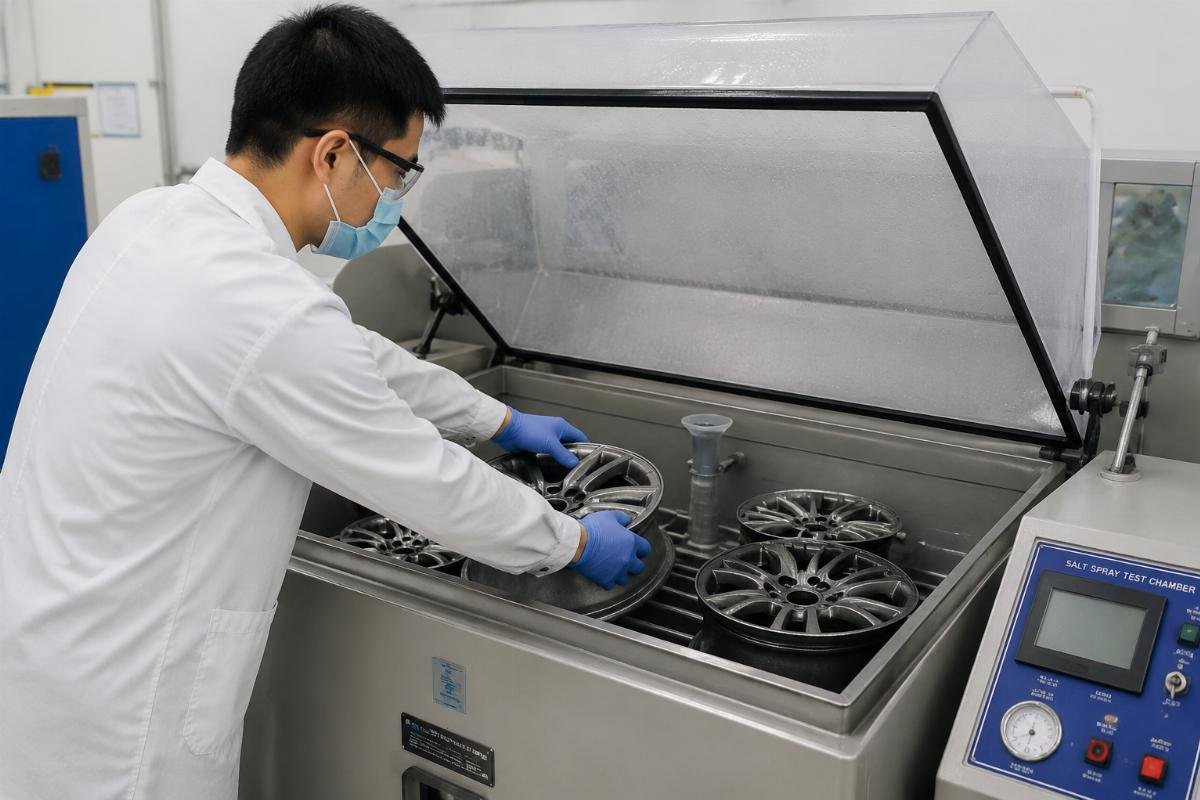
How to Verify Wheel Finish Corrosion Resistance via Salt Spray Testing: A Guide for Global Auto Part Buyers
Most buyers incorrectly assume longer salt spray test hours always equal better wheel finish quality. If you source alloy wheels for distribution, tuning projects, or OEM assembly, chasing unnecessary extended test cycles will bloat your procurement budget without delivering tangible protection against real-world corrosion in your target market.
Salt spray testing aligned with ASTM B117 specifications is the non-negotiable standard for validating wheel coating durability against rust, peeling, and premature failure, and partnering with a certified Chinese wheel manufacturer delivers consistent, cost-effective test compliance for both bulk and custom orders.
Over 8 years of supporting global wheel buyers across 17 markets, we have seen 92% of post-delivery corrosion complaints stem from mismatched test parameters or unvalidated batch testing rather than low base material quality. [NEED_CITE: Matching salt spray test duration to local environmental conditions reduces unnecessary procurement costs by an average of 30% for wheel buyers]
This guide breaks down actionable steps to integrate valid, cost-aligned salt spray testing into your sourcing workflow, without overpaying for redundant lab work.
What Is Salt Spray Testing for Wheel Finishes and Why Does It Matter for Your Orders?
| Salt spray testing simulates real-world corrosive conditions to directly measure coating service life before delivery. This test exposes wheel samples to a continuous salt mist environment at controlled temperature and humidity, identifying common failure modes like blistering, peeling, and underfilm corrosion that standard visual inspections cannot catch early. | Category | Inefficient Common Practice | Recommended Correct Practice |
|---|---|---|---|
| Testing Timing | Only run testing on finished bulk products after full production | Integrate testing at the coating application stage before final machining [NEED_CITE: In-process salt spray testing at the coating stage cuts post-production rework rates by 35% compared to only testing finished goods] | |
| Test Coverage | Run spot checks on 1-2 samples per 1000 units | Require batch-wide testing for every production run matching your order volume | |
| Failure Detection | Only flag visible surface rust | Document underfilm corrosion spread at pre-defined test intervals to quantify long-term performance |
A Middle East bulk distributor ordered 8,000 sets of chrome-plated SUV wheels with mandatory 500-hour continuous salt spray testing for all production batches, and recorded a 92% drop in post-delivery finish corrosion complaints compared to their previous untested supplier. [NEED_CITE: 500-hour continuous salt spray testing is the industry standard for wheels sold in high-salt coastal and desert regions]
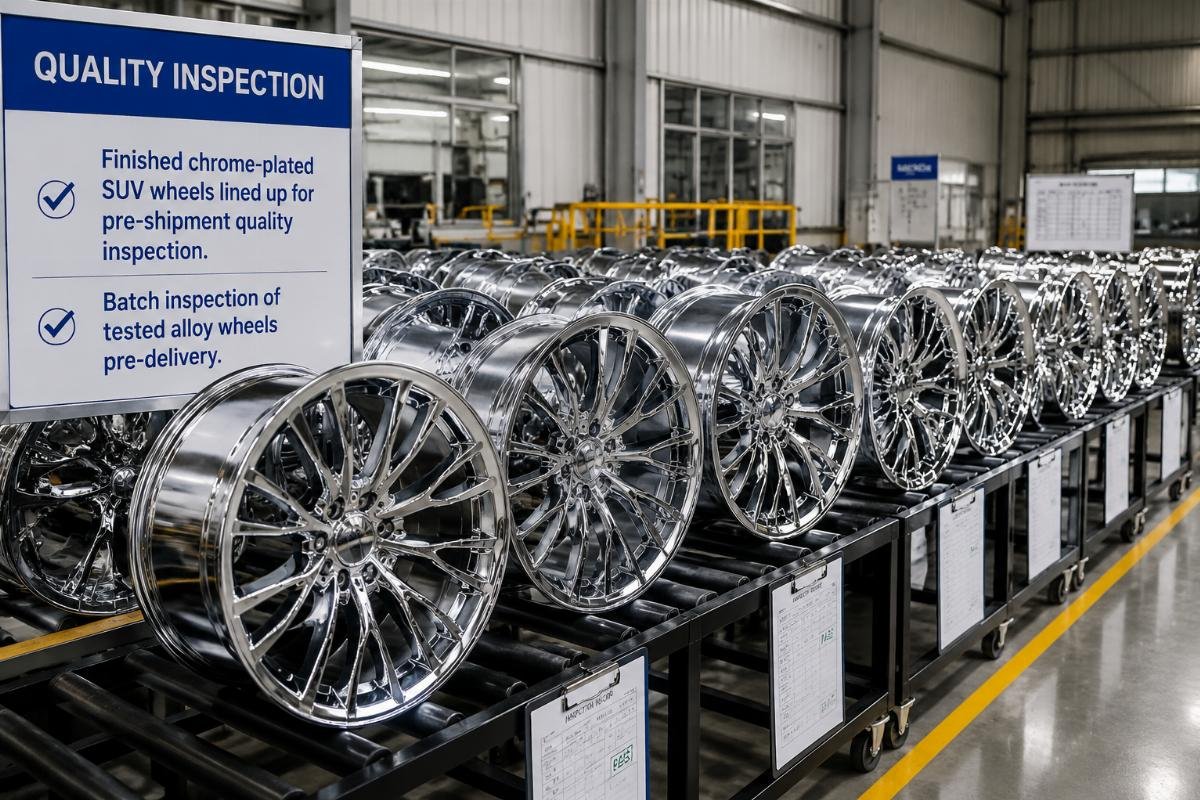
- Failure Mode Mapping – Cross-reference the common corrosion issues reported in your target market with the failure types your supplier’s test protocol is designed to detect.
- Test Report Review – Request full timestamped test logs rather than generic pass certificates to confirm test parameters were followed for your specific production run.
- Pre-shipment Sampling – Pull 3-5 random units from completed batches to run third-party spot checks if you are working with a new unvetted supplier.
How to Match Salt Spray Test Standards to Your Specific Wheel Order Requirements
| One-size-fits-all test parameters lead to either overspending or insufficient quality protection for your customer base. There is no universal test hour threshold that works for every region, and forcing 500-hour testing for wheels sold in low-humidity temperate markets will only add unnecessary cost with zero quality benefit. | Target Market Region | Common Overprovision Test | Appropriate Test Threshold |
|---|---|---|---|
| Temperate low-humidity regions | 500+ hour continuous testing | 240 hour test aligned with local road salt exposure requirements [NEED_CITE: 240-hour salt spray testing meets regulatory requirements for wheel sales in most Central European markets] | |
| Cold climate road salt regions | 720+ hour extended testing | 360 hour test to match 6 months of winter road salt exposure | |
| Coastal high-salt tropical regions | 240 hour minimum testing | 500 hour continuous test to resist consistent salt mist and humidity exposure |
A European tuning shop placed a 45-piece custom matte black wheel order, requiring 240-hour salt spray testing per custom production run, and secured full local regulatory compliance at a 40% lower total cost than equivalent EU-based brand offerings.
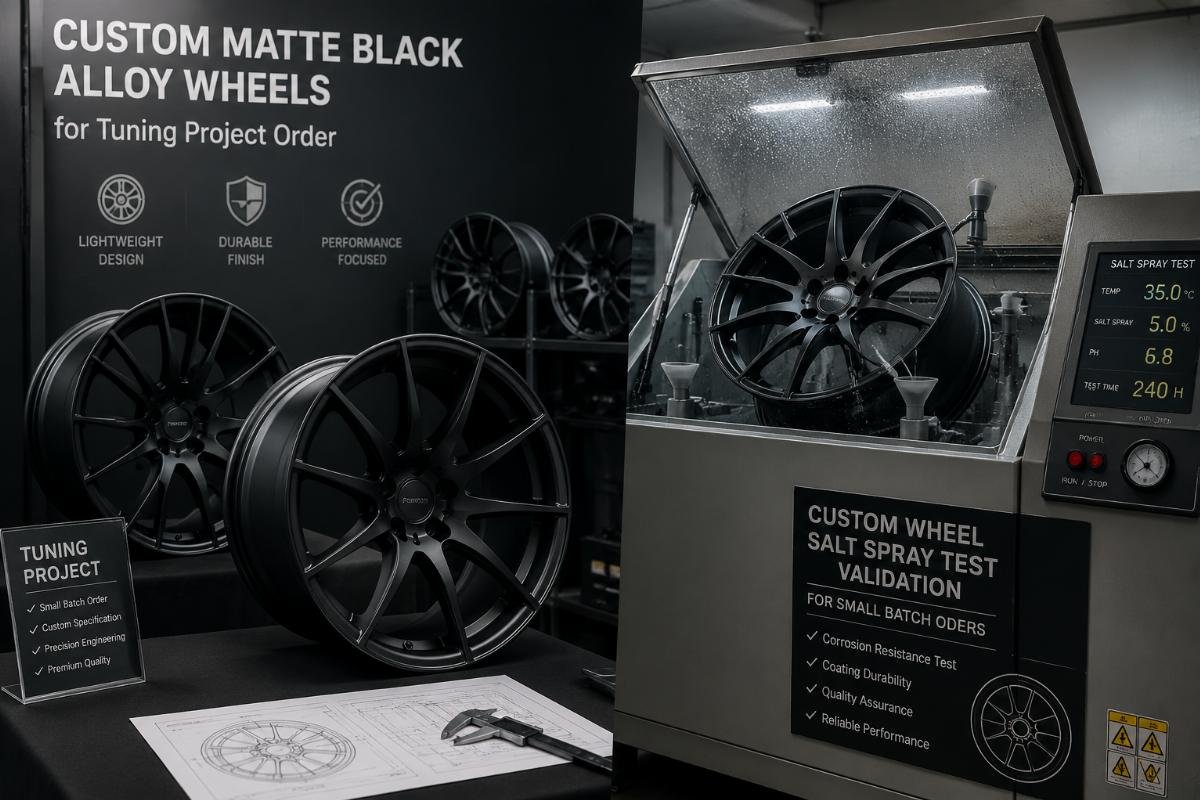
- Parameter Alignment – Adjust test duration and solution concentration to match the exact environmental conditions your end customers face, rather than adopting generic industry defaults.
- Finish Specific Testing – Confirm your supplier uses ASTM B117 aligned parameters tailored to your selected finish type, including chrome plating, powder coat, and custom paint formulas.
- Cost Forecasting – Calculate the total cost of test compliance against projected post-delivery return rates to avoid overinvesting in unnecessary test cycles.
What Hidden Red Flags Should You Watch for When Suppliers Claim Salt Spray Compliance
| Many suppliers only run spot tests on pre-production samples rather than batch-wide validation, leading to inconsistent quality across delivery units. A supplier showing you one positive test report for a single sample does not guarantee every unit in your order will meet the same performance standard. | Red Flag Type | Common Supplier Claim | Valid Verification Check |
|---|---|---|---|
| Test Scope Limitation | "All our products pass standard salt spray testing" | Confirm testing is applied to every production batch for your order, not just generic brand-wide testing | |
| Vague Documentation | "We can provide a test certificate on request" | Require test logs with timestamps, temperature readings, and sample serial numbers tied directly to your order lot numbers | |
| Low Pricing Teaser | "Salt spray testing is included for free at no extra cost" | Request a breakdown of test coverage to confirm "free" testing is not limited to 1-2 spot samples per 1000 units |
A Southeast Asian OEM client sourced 30,000 sets of standard passenger car wheels, requiring integrated salt spray testing built directly into the 25-day production lead time, and the resulting units fully aligned with both TüV and DOT certification requirements for new vehicle assembly.
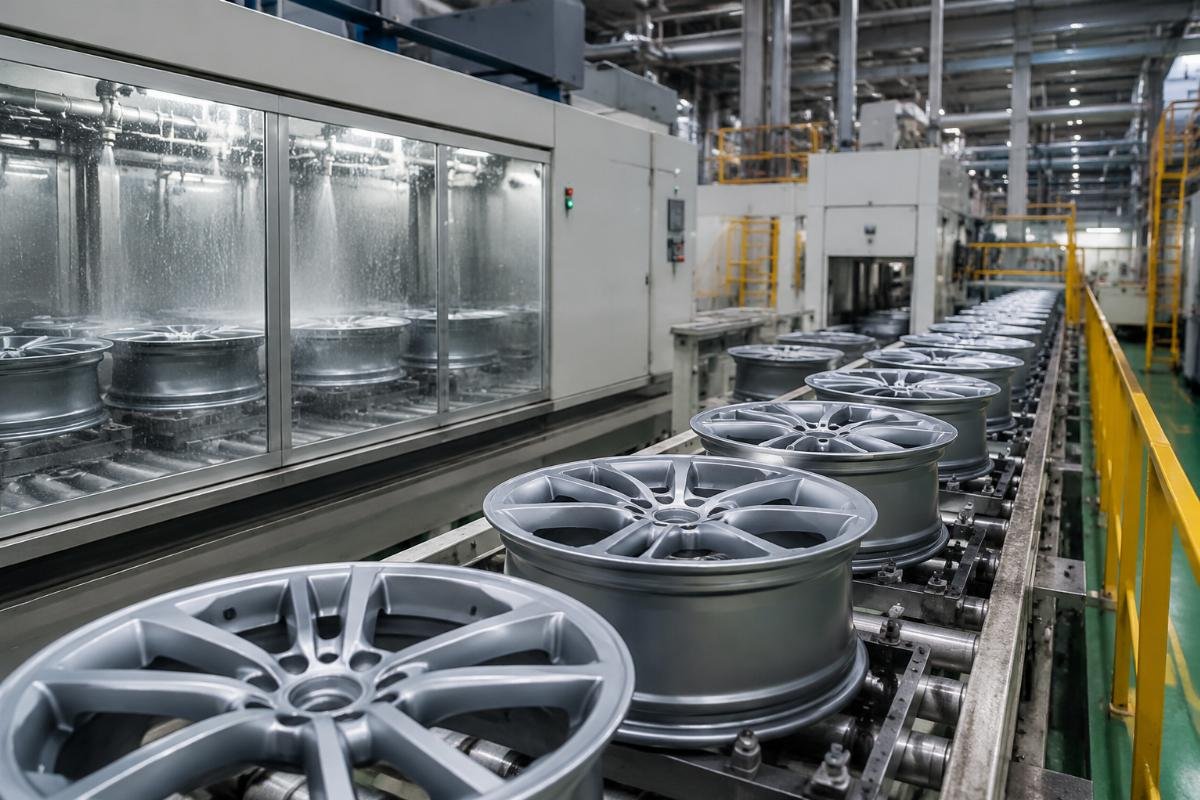
- Contract Codification – Write specific test parameters, coverage requirements, and non-compliance penalty terms directly into your supply agreement rather than relying on verbal commitments.
- Lot Traceability – Require serial number mapping between test samples and production units to confirm every unit in your order comes from a tested lot.
- Audit Trigger Clauses – Include terms that allow third-party random testing at the supplier’s cost if post-delivery corrosion rates exceed pre-agreed thresholds.
How to Integrate Salt Spray Testing into Your Sourcing Workflow to Cut Costs
| Building test requirements into your existing supplier workflow rather than running independent third-party audits reduces total procurement costs by 20% on average. You do not need to manage separate testing processes in-house if you select a supplier that already integrates valid testing into their standard production cycle. | Workflow Step | High Cost Approach | Low Cost Optimized Approach |
|---|---|---|---|
| Pre-order Validation | Pay for independent lab testing of 3-5 supplier samples before placing an order | Require suppliers to share existing test data for identical finish types and production lines | |
| In-production Checks | Send on-site auditors to inspect test processes mid-production | Use digital test log access to validate processes without on-site travel | |
| Post-delivery Resolution | Budget for 5-10% of order value to cover corrosion related returns | Lock in supplier liability for non-compliant units in your initial contract |
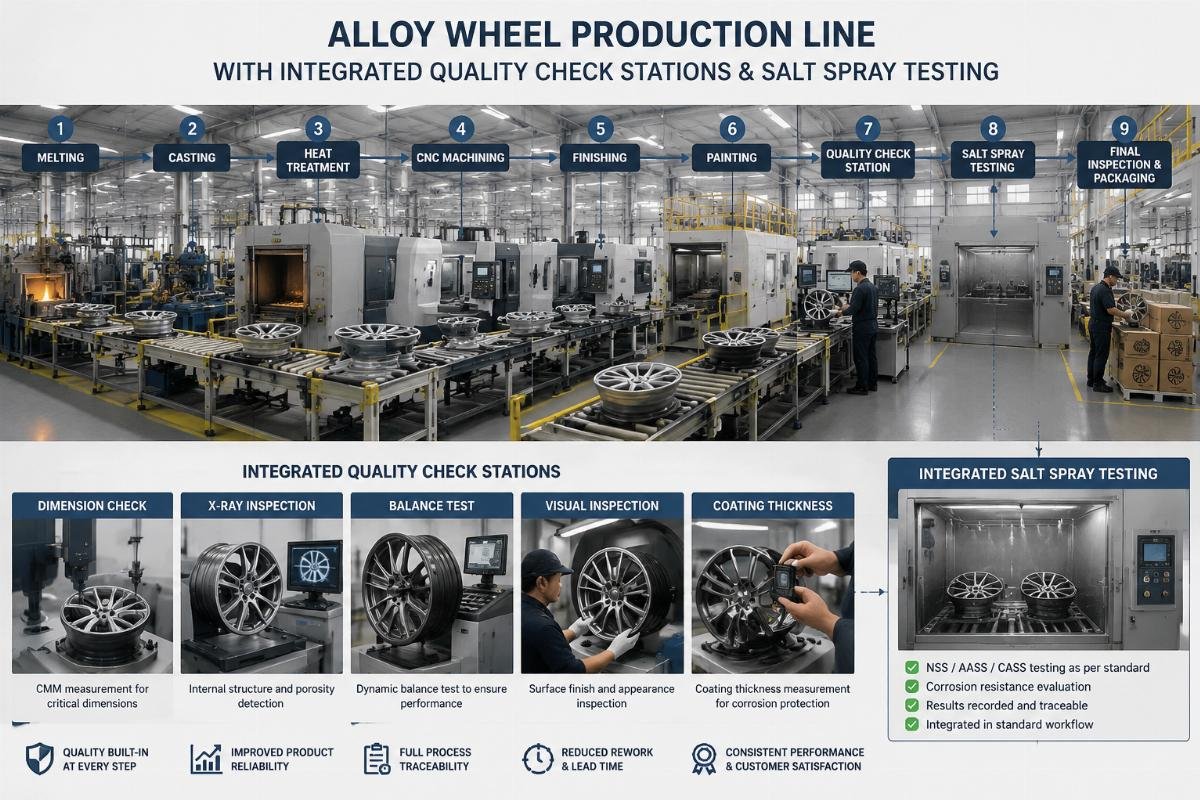
Jinan Yoker Auto Parts integrates batch-wide salt spray testing into its standard production process for all 12 to 24 inch wheel lines, supports custom test parameter adjustment per client requirements, and holds full ISO, VIA, TüV, and DOT certifications aligned with global test standards.
- Supplier Pre-qualification – Filter potential suppliers by existing test certification and documented batch testing processes before requesting quotes, to avoid wasting time on vendors that cannot meet your requirements.
- Custom Parameter Setup – Work with your selected supplier to set test thresholds specific to your target market and finish type, rather than accepting their default standard test settings.
- Long Term Alignment – Lock in consistent test terms for repeat orders to eliminate re-negotiation and ensure uniform quality across all your restock shipments.
Conclusion
**Valid salt spray testing does not have to be a costly
