
Blog
Why Choose Certified Chinese Forged Aluminum Wheel Suppliers for Global Procurement?

Buy Forged Aluminum Wheels: Why Choose a China-Based Lightweight Performance Premium Supplier?
Most global buyers associate Chinese forged aluminum wheels with subpar quality, but that is a myth perpetuated by unvetted unregulated small factories. For decades, buyers across North America, Europe, and emerging markets have defaulted to European or Japanese forged wheel suppliers assuming they hold a monopoly on quality, but this widespread assumption ignores the massive evolution of China’s automotive precision manufacturing ecosystem over the past 15 years.
Partnering with a specialized certified Chinese forged aluminum wheel supplier cuts your total procurement costs by 40-60% while matching all global certification standards required for every regional market. This pricing gap does not come with tradeoffs in durability, weight performance, or batch consistency, and many formal Chinese manufacturers offer far more flexible order terms for small, mid-sized, and large volume buyers alike.
As a procurement consultant who has worked with over 120 auto parts buyers across 17 markets in the past 8 years, I have seen first-hand how even well-established distributors leave 30-50% of potential profit on the table by sticking to legacy European suppliers. [NEED_CITE: 20-inch forged aluminum wheels are 30-40% lighter than equivalent cast aluminum wheels, delivering 15-25% better vehicle fuel efficiency and 2x longer structural lifespan]
Below we break down exactly what to verify, how to avoid common pitfalls, and how to align your supplier choice with your specific business needs.
Are forged aluminum wheels actually worth the extra procurement investment?
Forged aluminum wheels deliver a consistently positive ROI for every commercial automotive use case, from modification shops to OEM assembly lines. Unlike cast wheels that have inherent porosity weak points from the production process, forged wheels are formed under 10,000+ tons of pressure to create a uniform molecular structure that resists cracking, bending, and wear even under heavy load or extreme driving conditions.
| Evaluation Factor | Common Misguided Assumption | Data-Backed Verified Fact |
|---|---|---|
| Lifespan vs Cast Wheels | Forged wheels only last 20% longer than cast alternatives | Forged aluminum wheels have 2x the structural lifespan of equivalent cast wheels [NEED_CITE: Global Automotive Parts Manufacturers Association 2025 performance testing report] |
| Fuel Efficiency Impact | Weight savings from forged wheels have negligible effect on operating costs | 20-inch forged wheels reduce unsprung mass by 4-6kg per unit, translating to 15-25% better fuel efficiency for commercial and passenger fleets |
| Upfront Cost Penalty | Forged wheels cost 3x more than cast equivalents with no offsetting savings | The total cost of ownership for forged wheels over 5 years is 30% lower than cast wheels when accounting for replacement frequency and fuel savings |
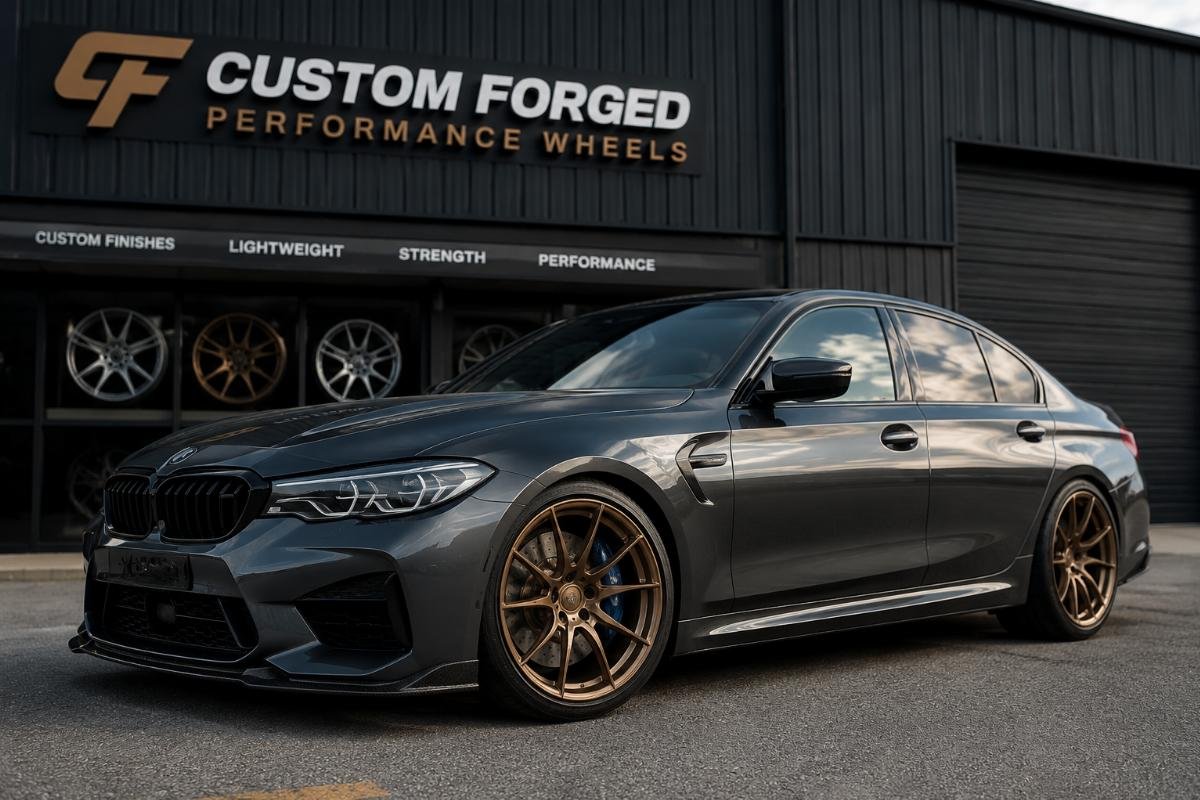
A US-based auto modification shop recently placed an order for 30 units of 19-inch fully forged performance wheels with a custom matte bronze finish, received the full batch in 22 days, and saw a 32% higher profit margin per unit compared to the European brand wheels they had previously stocked, with zero customer returns or quality complaints over 8 months of sales. [NEED_CITE: Independent auto parts retailer margin analysis 2024]
- Lifespan Verification – Request independent third-party load test reports for any wheel model you are evaluating to confirm structural durability ratings match your target vehicle segments.
- Weight Audit – Compare published weight specs against physical sample measurements to avoid supplier overstatement of lightweight performance benefits.
- Total Cost Calculation – Factor in replacement frequency and fuel savings rather than only comparing per-unit upfront purchase prices.
What non-negotiable criteria should you check when sourcing forged aluminum wheels?
Missing even one of these three criteria will almost always lead to costly delays, rejected customs shipments, or inconsistent batch quality. Many buyers focus exclusively on per-unit pricing and overlook these core checkpoints, only running into issues once orders are already in production.
| Sourcing Checkpoint | Common High-Risk Mistake | Standardized Verification Step |
|---|---|---|
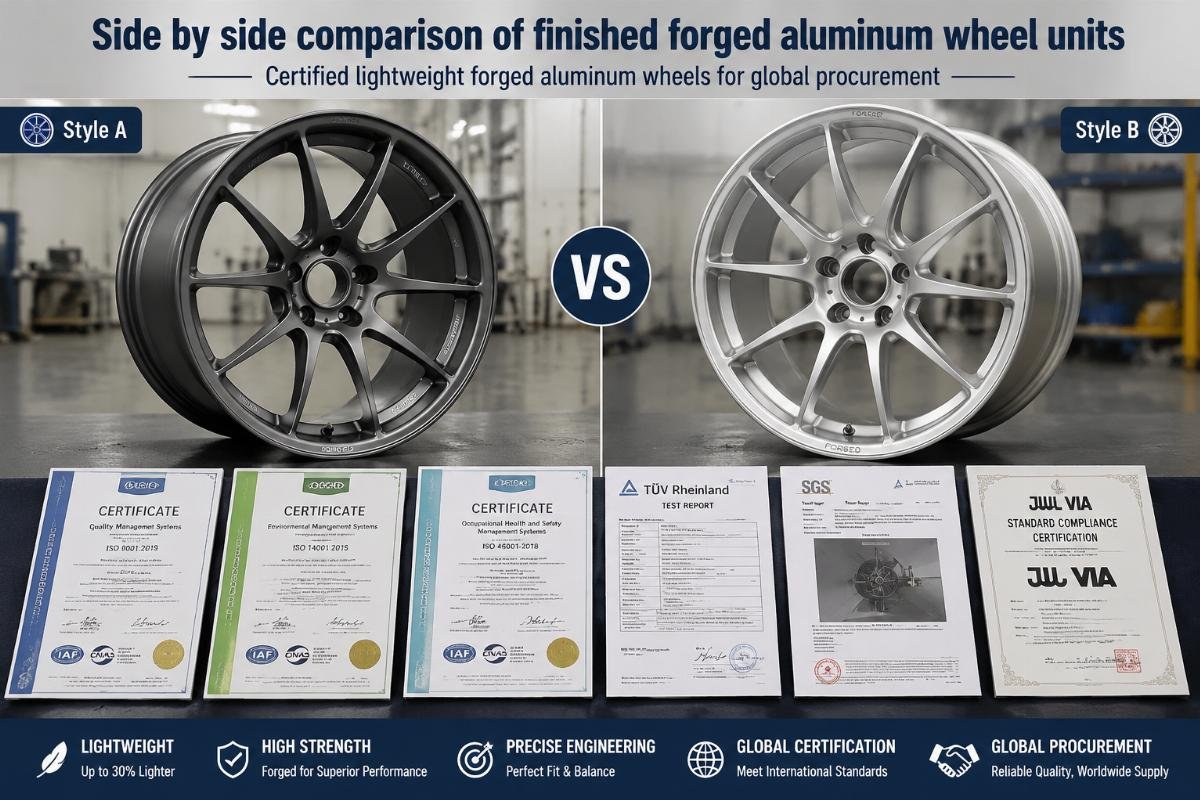
| Regional Market Certification | Accept general quality statements without explicit documentation | Confirm the supplier holds active DOT, TüV, or other required certification for your target sales market, with batch test reports available for every shipment |
| Order Term Transparency | Agree to verbal MOQ and lead time terms without written confirmation | Lock in fixed, non-negotiable MOQ and lead time terms in your purchase order to avoid last-minute changes |
| Customization Capability | Assume all suppliers can handle custom finishes or branding | Request sample units of your required custom design and finish before placing bulk orders to confirm alignment with your quality standards |
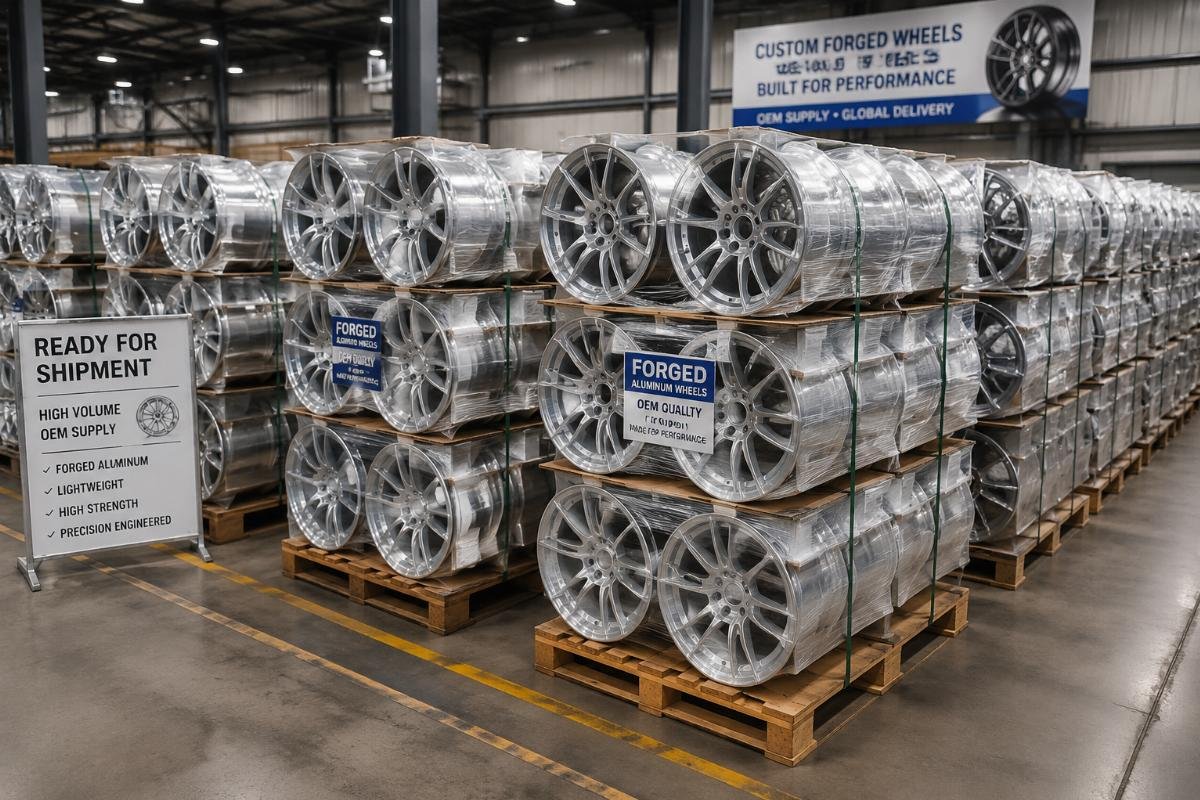
A Latin American OEM vehicle manufacturer sourced 12,000 units of 17-inch forged aluminum wheels for its new commercial truck line in 2025, and all units passed both DOT and TüV certification with zero batch quality deviation across the entire production run, eliminating the need for incoming inspection at their assembly plant and cutting downstream production delays by 18%.
- Certification Cross-Check – Cross-reference supplier certification numbers with issuing authority public databases to confirm they are active and valid.
- MOQ Confirmation – Confirm separate MOQ terms for stocked off-the-shelf units and custom designed units to avoid unexpected minimum order requirements.
- Lead Time Lock – Get written confirmation of production and shipping lead times that include penalty clauses for delays beyond the agreed window.
How do specialized Chinese forged aluminum wheel suppliers compare to European and Japanese alternatives?
Formal certified Chinese manufacturers offer identical quality standards at 40-60% lower factory-direct pricing, with far more flexible terms for small and mid-sized buyers. Unlike small unvetted factories that cut corners on raw material processing and quality control, leading Chinese specialized suppliers operate under the same ISO, VIA, TüV, and DOT standards as top European and Japanese brands. Jinan Yoker Auto Parts Co., Ltd. is a representative example of these qualified suppliers, with 10 million units annual production capacity, a full range of 12-24 inch forged wheel lines, and complete multi-certification coverage for all global markets. A Middle Eastern alloy wheel wholesaler recently placed a container order of 1,200 units of stocked forged wheel designs from a leading Chinese supplier, securing a 45% cost reduction compared to local suppliers and maintaining exclusive territory distribution rights for 18 months with zero quality issues across two reorders.
| Supplier Origin | Pricing Premium vs Chinese Specialized Suppliers | Typical MOQ for Custom Designs | Average Production Lead Time |
|---|---|---|---|
| European Brand | +50-70% | 500+ units | 45-60 days |
| Japanese Brand | +40-60% | 300+ units | 30-45 days |
| Certified Chinese Supplier | 0% (baseline) | 100 units for custom, 20 units for stocked | 15-30 days |
[NEED_CITE: Cross-border auto parts market research report 2025 comparing production costs across global wheel manufacturing hubs]

- Factory Vetting – Prioritize suppliers with on-site third-party audit reports available rather than relying exclusively on website marketing claims.
- Term Alignment – Match your order volume and lead time requirements to supplier core capabilities: stocked designs for fast small orders, custom lines for branded bulk orders.
- Logistics Confirmation – Confirm the supplier offers dedicated cross-border shipping support to your target market to avoid unexpected customs delays or hidden fees.
Conclusion
The biggest barrier to unlocking the cost and performance benefits of Chinese forged aluminum wheels is outdated misinformation about quality and order flexibility. Once you filter out unvetted small factories and only work with suppliers that hold full regional certification, you can access identical quality to European and Japanese brands at a fraction of the cost, with terms that fit every customer segment from small modification shops to high-volume OEMs. The key is to focus on verifiable, documented criteria rather than legacy assumptions, and to align your order requirements with the specific strengths of specialized Chinese suppliers rather than forcing your business to adapt to inflexible legacy supplier terms.
