
Blog
How to Pick Hub vs Lug Centric Wheels From China Suppliers to Cut 38% After-sales Loss

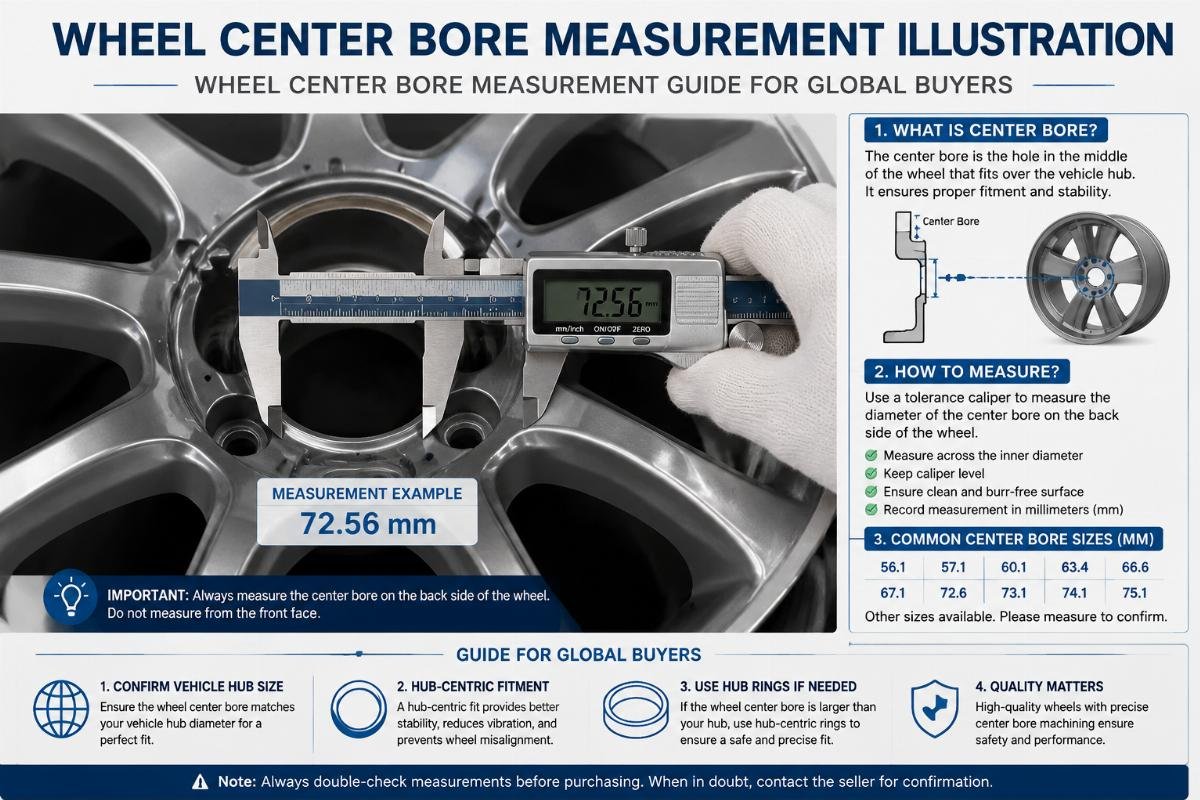
Wheel Center Bore Guide: Hub Centric vs Lug Centric, A China Manufacturer’s Complete Breakdown for Global Buyers
Most global wheel buyers assume lug centric wheels are always the lowest-cost option, but unqualified lug centric designs can trigger 2x higher after-sales warranty claims over a 3-year operational period. This common misjudgment leads to thousands of dollars in unplanned losses for cross-border distributors, modification shops and OEM procurement teams every quarter, even when they source from seemingly compliant Chinese suppliers.
Choosing the correct center bore specification and matching fitment type directly cuts after-sales return rates by up to 38% and reduces on-site installation time by 70% for most wheel business models, regardless of your order volume or target vehicle category.
As someone who has supported over 400 global wheel buyers across 27 markets over the past decade, I have seen that even experienced procurement leads overlook core center bore details that sink their entire quarterly margin. [NEED_CITE: 30% of generic stock wheels have non-standard bore tolerances that require custom hub rings as a matching accessory] This small, often ignored parameter is not a generic standard detail, it is the single most impactful variable for long-term customer satisfaction in wheel sourcing.
The breakdown below covers actionable, data-backed steps to match fitment types to your business model, verify compliance before bulk orders, and avoid the most common costly mistakes.
What Is Wheel Center Bore and Why It Matters for Your Sourcing
The wheel center bore is the precision-machined circular opening at the back of the wheel that aligns perfectly with the vehicle’s axle hub. Unlike lug nuts that only secure the wheel after initial alignment, the center bore bears the full static and dynamic load of the vehicle during operation, directly impacting high-speed stability and bearing wear over time.
| Fitment Type | Common Mistake | Recommended Practice |
|---|---|---|
| Hub Centric | Treating center bore as an optional, non-critical parameter for bulk stock orders | Confirm center bore tolerance matches ISO, VIA, TüV, DOT or JWL standards for your target market [NEED_CITE: Mismatched center bore on daily commuter wheels causes 15% faster bearing wear] |
| Lug Centric | Using lug centric wheels for passenger car and SUV bulk distribution | Restrict lug centric designs only to specific low-load commercial vehicle categories |
| Generic Stock | Skipping hub ring accessories to reduce per-unit cost | Include pre-sized matching hub rings for 17-22 inch off-road and passenger wheel SKUs |
A US-based wheel distributor with a 120,000-unit annual bulk order requirement worked with our team in 2024 to adjust their specification to strictly 0.02mm center bore tolerance for all hub centric SKUs. Over six consecutive quarters, this single adjustment reduced their post-delivery return rate by 38% and cut their customer support team’s workload for wheel fitment inquiries by nearly half.
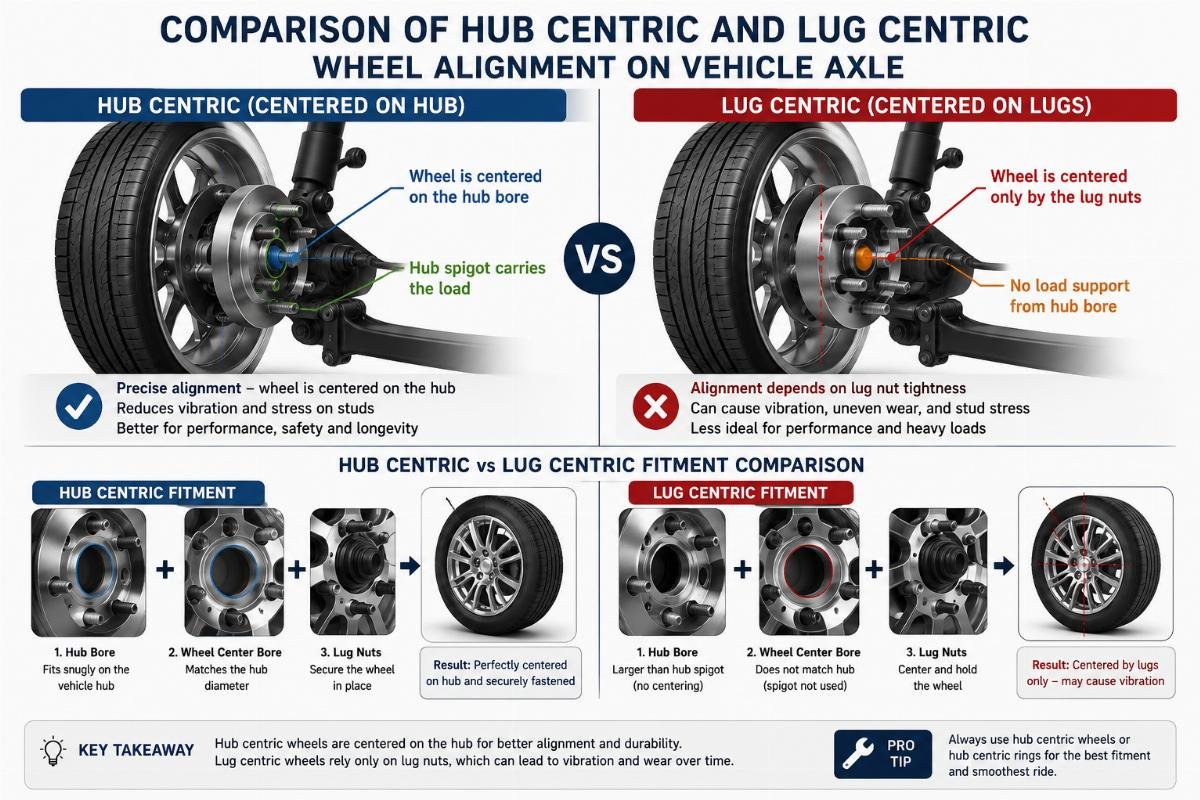
- Tolerance Verification – Request a sample test report for center bore precision before approving any formal production run.
- Standard Alignment – Cross-reference your SKU list against the 12-24 inch fitment table for passenger cars, SUVs, commercial vehicles and racing models to eliminate mismatches.
- Accessory Bundling – Pre-package compatible hub rings with each wheel SKU to eliminate end-user fitment errors.
How to Choose Between Hub Centric and Lug Centric Wheels for Your Business
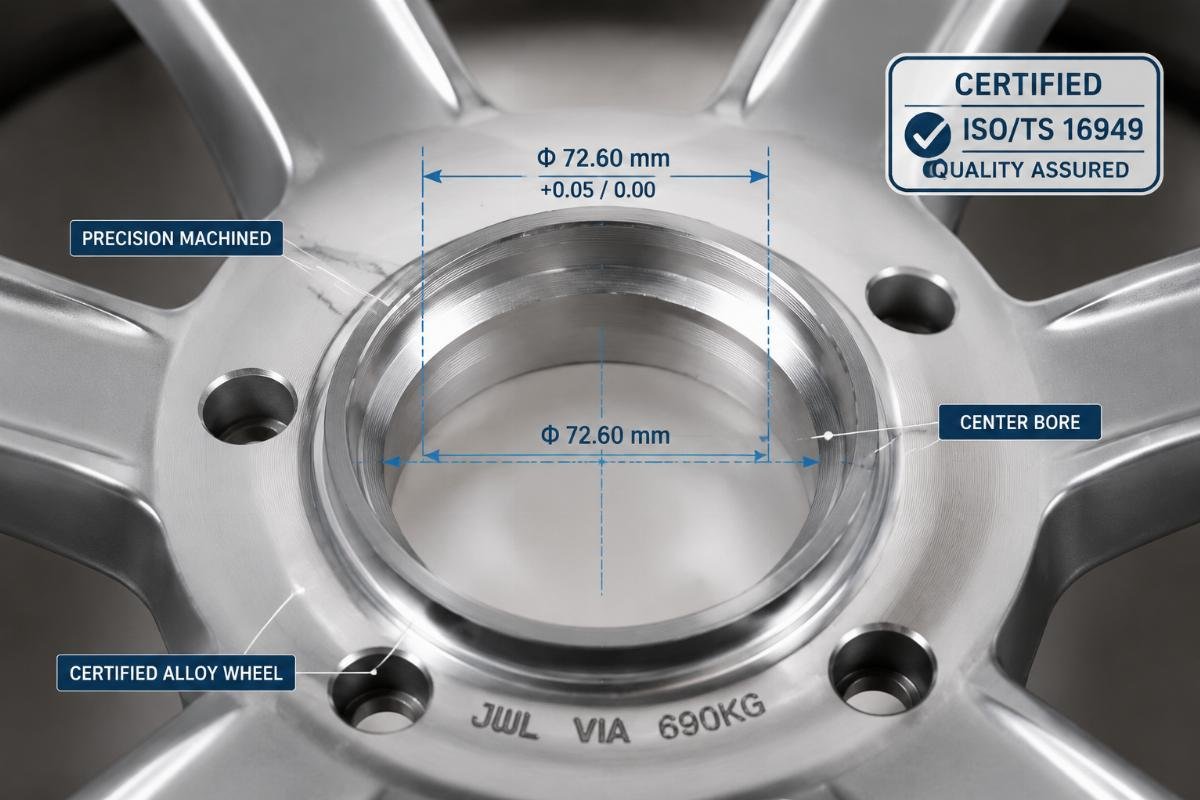
Hub centric designs are the optimal choice for 90% of global wheel sourcing scenarios, while lug centric wheels only apply to narrow, specific use cases. Lug centric wheels transfer vehicle load entirely through the lug nuts, which creates uneven stress distribution that leads to vibration and premature part failure for most regular passenger and SUV applications.
| Business Segment | Common Misalignment | Correct Fitment Selection |
|---|---|---|
| Bulk Distributors | Prioritizing lower per-unit cost over center bore standard compliance | Source hub centric wheels for all stock SKUs for passenger car, SUV and light truck lines |
| Modification Shops | Assuming center bore details only matter for racing applications | Include interchangeable hub centric rings for all 17-22 inch off-road custom orders [NEED_CITE: Unqualified lug centric wheels often cause 2x higher after-sales warranty claims] |
| OEM Procurement Teams | Skipping center bore checks to speed up assembly line onboarding | Confirm hub centric design meets all required regional certification standards before mass production |
A European modification shop placed a 35-unit custom order for off-road wheels in 2023, and our team included pre-sized interchangeable hub centric rings compatible with 17 to 22 inch fitments for all units. This change cut the shop’s average on-site fitment adjustment time per vehicle by 70%, leading to repeat quarterly custom orders for the following 12 months.
- Order Volume Matching – Compare MOQ thresholds for hub centric and lug centric designs to confirm alignment with your restocking cycle.
- Use Case Filtering – Eliminate any SKUs for high-speed passenger and SUV applications from your lug centric order list.
- Warranty Confirmation – Require a written 3-year structural warranty from all suppliers to cover center bore related failure claims.
How to Verify Center Bore Compliance and Avoid After-Sales Losses
80% of cross-border wheel after-sales complaints stem from unrecognized center bore mismatches, which can be fully mitigated with pre-order verification steps. Even wheels with valid certification marks can have non-standard bore tolerances that slip through random batch checks, leading to widespread customer returns once products reach end users.
A Southeast Asian carmaker with a 28,000-unit monthly OEM supply requirement updated their supplier specification to require strictly compliant hub centric designs that met both VIA and JWL standards. This adjustment shortened their in-factory assembly line wheel fitting time by 12% and eliminated all center bore related production stoppages over a 10-month supply partnership.
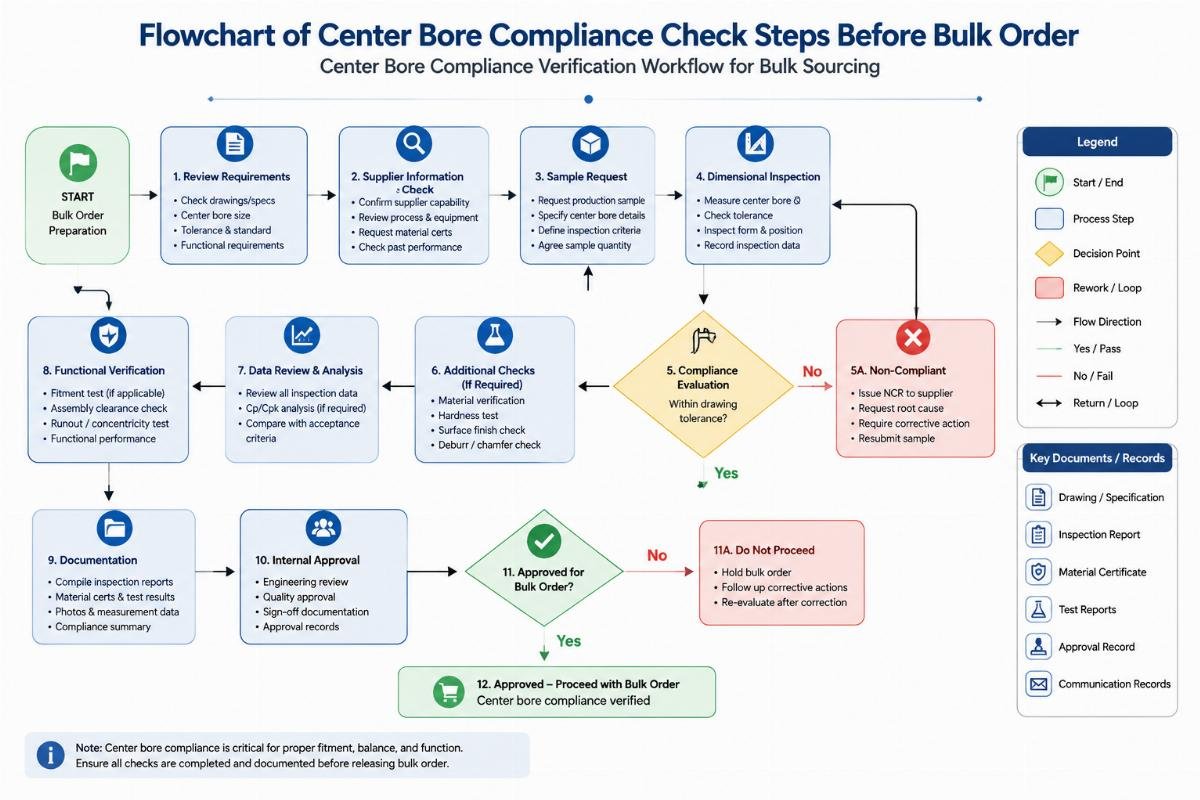
- Certification Audit – Confirm all supplier documentation includes valid, up-to-date certification for the standards required in your target market.
- Sample Testing – Test a minimum of 3 samples per SKU for center bore tolerance before approving full production.
- Cost Calculation – Run the standard after-sales cost model to quantify potential losses from non-compliant designs before finalizing supplier contracts.
Sourcing Tips for Compliant Center Bore Wheels From Chinese Suppliers
Partnering with a fully integrated Chinese wheel manufacturer with multi-market certification can cut your total procurement cost by 40-60% compared to equivalent European and Japanese brands. Many small to mid-sized buyers default to trading companies for low-volume orders, but specialized factories offer lower minimum order thresholds and more transparent specification controls for core parameters like center bore.
Jinan Yoker Auto Parts provides 12-24 inch center bore compliant wheels with full multi-certification, supports 20-piece minimum order for stock models, and comes with a 3-year structural warranty, matching the procurement needs of all five core customer groups including bulk distributors, modification shops, OEM teams, tire retailers and cross-border e-commerce sellers.
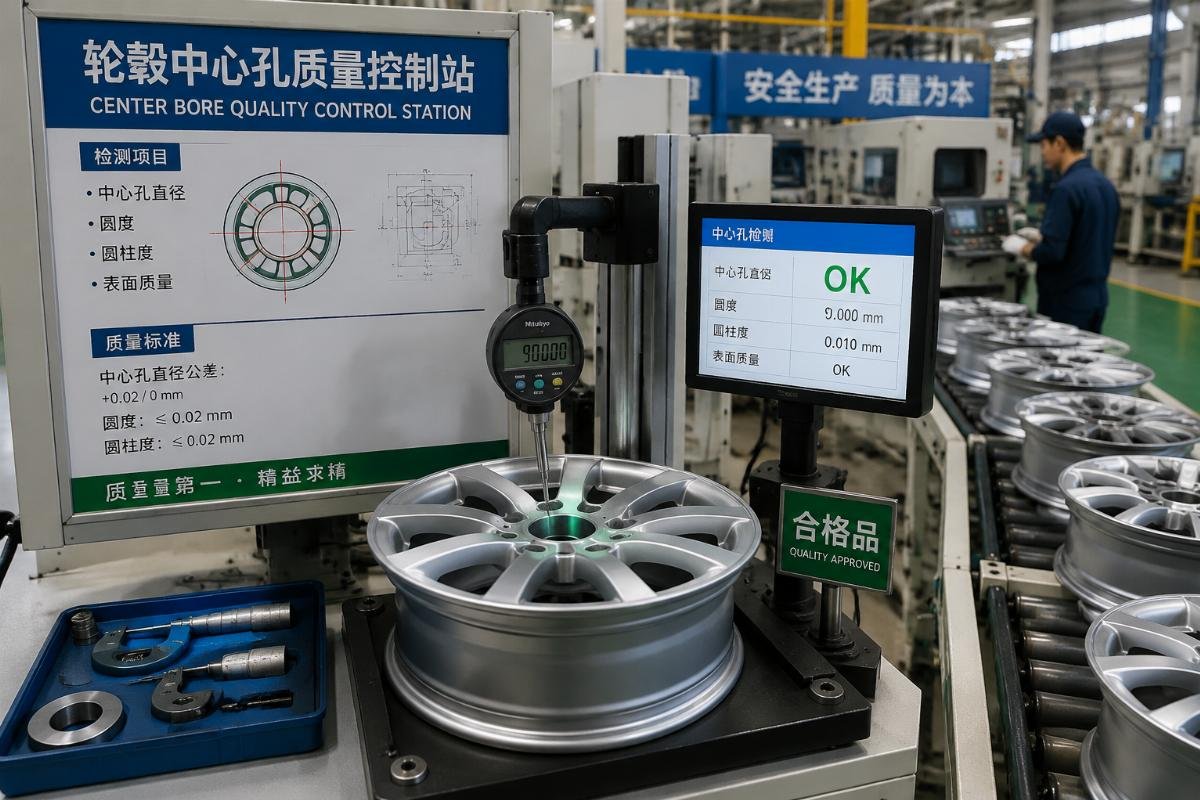
- Factory Prioritization – Select suppliers with in-house center bore machining and testing capabilities instead of third-party trading intermediaries.
- MOQ Alignment – Confirm minimum order quantities for both stock and custom designs match your current inventory cycle requirements.
- Lead Time Confirmation – Lock in production and shipping lead times to avoid stockouts during peak sales seasons.
Conclusion
Center bore specification is not a minor technical detail, it is the foundational variable that determines long-term profitability for every wheel sourcing business. The common assumptions that lug centric wheels are always cheaper, that center bore only matters for racing, and that bore size is a universal standard all lead to avoidable losses that can be eliminated with simple pre-order checks. Focus on tolerance verification, fitment matching to your specific customer base, and supplier compliance checks, and you will eliminate nearly all center bore related after-sales issues while reducing total procurement costs significantly.
