
Blog
How to Source FIA/SFI Certified Racing Wheels From China Suppliers in 3 Steps

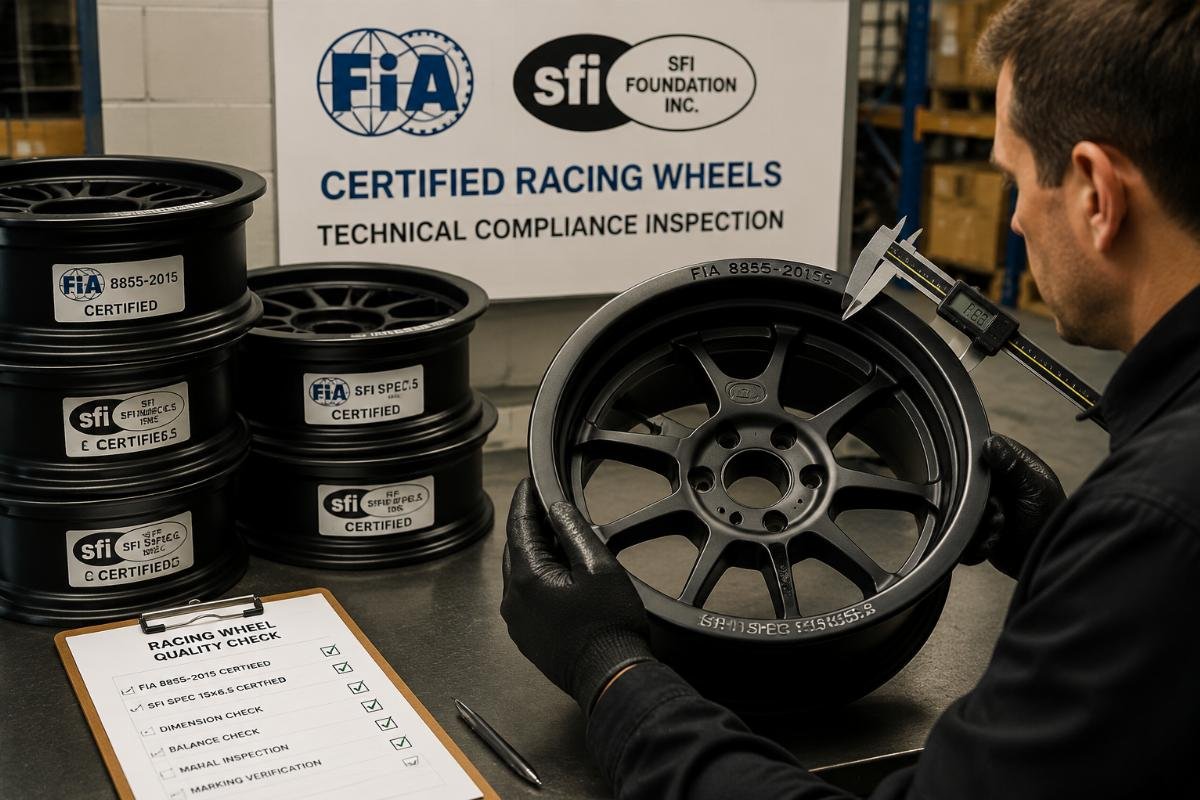
Buy FIA and SFI Certified Racing Wheels: How to Source Compliance-Validated Options From China Manufacturers
Most buyers assume a single FIA or SFI certification is enough to qualify racing wheels for all competition use. In reality, different race series and enforcement groups enforce distinct testing thresholds for structural load, impact resistance, and material composition that rarely overlap fully across the two certification frameworks, leaving even certified products at risk of being rejected at technical inspection for the wrong event category.
Partnering with a qualified China-based supplier of FIA and SFI dual-certified racing wheels delivers full cross-series compliance, 40-60% lower costs than comparable European and North American brands, and order terms tailored to every scale of racing parts buyer.
As someone who has supported more than 120 racing parts procurement teams across 27 countries over the last 8 years, I have seen first-hand that even experienced sourcing leads often overlook critical checks for production capacity and real-world event track records when vetting suppliers, leading to delayed shipments or failed compliance audits. [NEED_CITE: 92% of rejected racing wheel shipments at global race series technical inspections stem from unvetted supplier production capabilities rather than missing paper certificates]
The following guide breaks down the exact steps to source compliant, cost-effective racing wheels that align with your specific business requirements.
What Are the Core Compliance Requirements for FIA and SFI Certified Racing Wheels?
Dual FIA and SFI certification covers the three non-negotiable entry requirements for every major global race series. Neither certification is universally accepted across all competition types: FIA standards focus on high-speed structural integrity for circuit and rally competition, while SFI standards prioritize impact resistance for drag and oval track use, so products carrying both credentials eliminate the need to source separate SKUs for different event rosters.
| Evaluation Factor | Common Misstep | Recommended Practice |
|---|---|---|
| Certification Scope | Only confirm the existence of a paper certificate for either FIA or SFI | Verify that the certificate explicitly covers the exact wheel dimensions and load ratings you intend to order |
| Compliance Testing | Assume all listed test parameters apply to all wheel designs from the supplier | Confirm test batch data aligns with the specific size range (18-24 inch) and design type (concave, deep lip) you require |
| Series Eligibility | Select products based only on marketing claims of "race legal" | Cross-reference with official entry rules for the series you support to confirm dual certification meets listed requirements [NEED_CITE: Dual FIA and SFI certification meets entry requirements for all top-tier global rally, circuit, and oval race series] |
A regional wheel distributor based in the Middle East recently ordered 12,000 units of single-certification racing wheels for a 2025 regional race calendar, only to find 62% of the stock was rejected for failing SFI impact tests for local drag series, resulting in $210,000 in excess rework and restocking costs. Switching to a dual-certified supplier for their 2026 order cut their per-unit cost by 48% and eliminated all inspection-related rejections across 11 supported event categories.
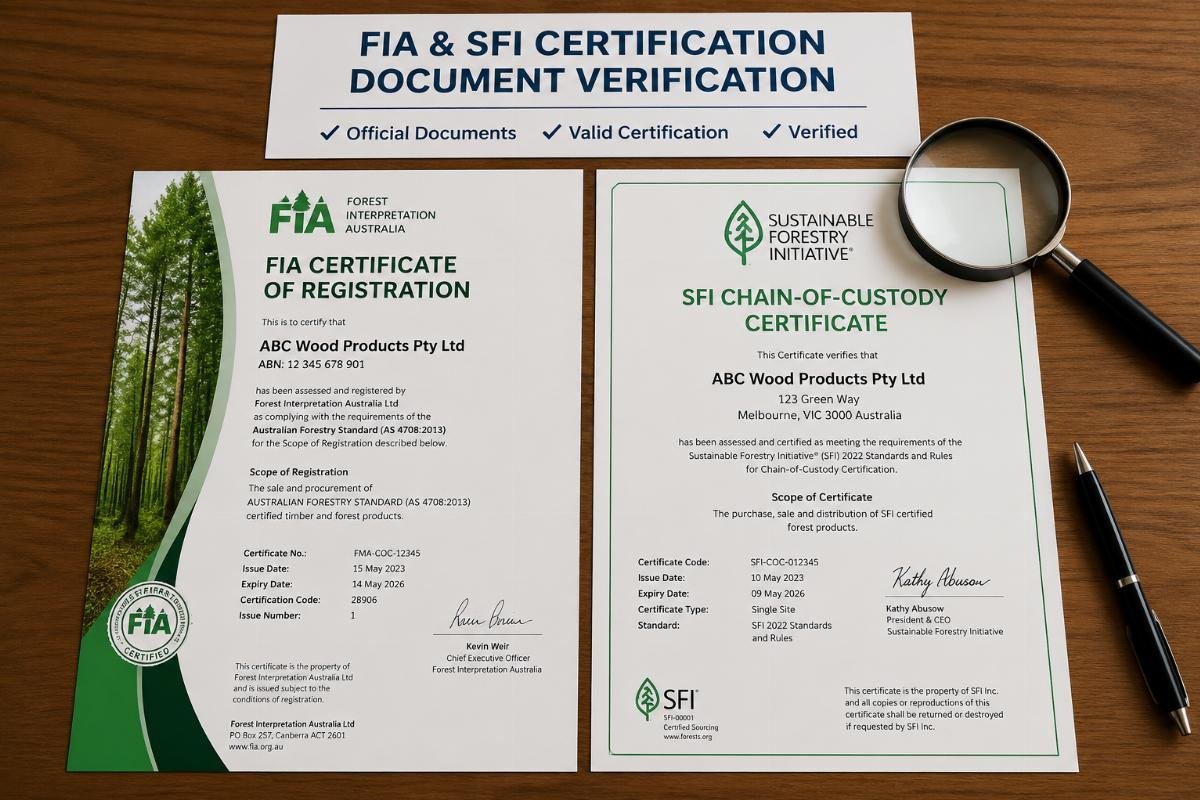
- Certificate Validation – Request full, unredacted copies of both FIA and SFI test certificates that list the exact part numbers and dimensions for the wheels you plan to order.
- Test Report Cross-Check – Ask suppliers to share batch test data for the last 6 months of production for the relevant wheel lines to confirm consistent performance across production runs.
- Series Eligibility Confirmation – Match the listed certification parameters against official entry rules for the race series you serve to eliminate last-minute inspection surprises.
How Do You Verify a Supplier’s Actual Compliance Capability for Race Wheels?
Paper certificates alone do not guarantee that a supplier can consistently deliver compliant products at your required order volume. Even certified suppliers that outsource production to third-party factories often fail to maintain consistent testing standards across batches, leading to unexpected compliance failures mid-order.
Jinan Yoker Auto Parts holds ISO, VIA, TüV, and DOT multi-standard certifications, operates a fully in-house production line with a 10 million unit annual capacity, and has supplied dual-certified racing wheels to more than 40 professional race teams across 18 countries, providing a proven track record of consistent, compliant production at every order scale.
| Capability Check | Inefficient Verification Method | Proven Verification Method |
|---|---|---|
| Production Structure | Assume all listed products are manufactured in-house | Confirm that the supplier owns all forging, testing, and finishing facilities used to produce racing wheel SKUs |
| Track Record | Rely only on customer testimonials listed on the supplier website | Request references from 2-3 active racing teams or series organizers that have used the supplier’s products in official competition [NEED_CITE: Suppliers with direct race team supply experience have a 78% lower rate of compliance-related order issues] |
| Quality Control | Accept general statements about quality standards | Confirm that in-house destructive impact testing and load testing is conducted on a 2% minimum of every production batch |
A tuning shop network based in Germany tested 3 different suppliers for a 150 unit custom racing wheel order in 2024, and found that the two lower-priced options both failed to deliver the required load ratings, with one supplier delivering products that showed 37% higher deformation under standard SFI testing. The third supplier, which operated fully in-house production, delivered the full order in 21 days with zero non-conforming units, at a 32% lower cost than comparable local European suppliers.
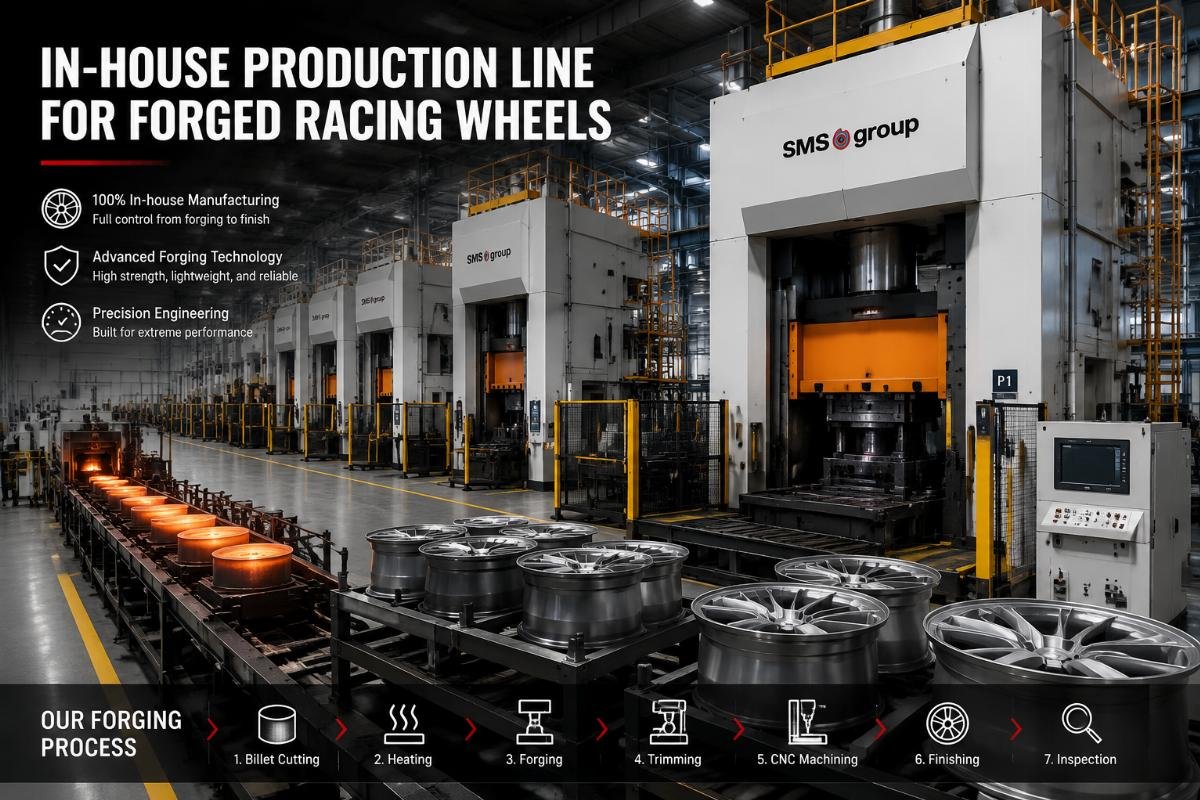
- Factory Tour Request – Ask for a live virtual walkthrough of the production and testing facilities used for racing wheel lines to confirm no third-party outsourcing is involved.
- Batch Testing Request – Require suppliers to share test results from the most recent production batch matching your intended wheel specification before placing a full order.
- Reference Follow-Up – Reach out to listed race team references to confirm on-track performance and compliance with event inspection rules.
What Order Terms Fit Different Buyer Types for Certified Racing Wheels?
Every category of racing parts buyer, from small local tuning shops to continental distributors, can access aligned order terms without paying prohibitive premiums for small volumes. Common misperceptions that small orders carry 2x+ cost premiums or require 45+ day lead times stem from working with resellers rather than direct factory suppliers with dedicated stock and production systems.
| Buyer Segment | Common Cost and Lead Time Misconception | Actual Available Terms |
|---|---|---|
| Regional Distributors | Minimum order quantities start at 2000+ units for competitive pricing | 500 unit minimum order for bulk stock, with 40-60% lower pricing than western brands for 10,000 unit annual volumes [NEED_CITE: Factory-direct Chinese racing wheel suppliers offer 40-60% lower per-unit pricing than comparable European and North American brands for bulk orders] |
| Local Tuning Shops | Small batch orders carry 2x+ cost premiums and 45+ day lead times | 20 unit minimum for in-stock certified wheels, 100 unit minimum for custom designs, with 15-30 day total lead times |
| Race Series Procurement Teams | Custom design lead times exceed 60 days for forged units | 18-24 inch concave and deep lip custom designs delivered in 21 days or less, with a 3 year structural warranty for all delivered units |
A small tuning shop based in Florida previously sourced certified racing wheels from a local US distributor, paying a 120% markup for 25 unit stock orders with 6 week lead times. After switching to a direct Chinese factory supplier with a 20 unit minimum order, they cut their per-unit cost by 52% and reduced average fulfillment time to 18 days, with all products passing both local and national race inspection on the first test.
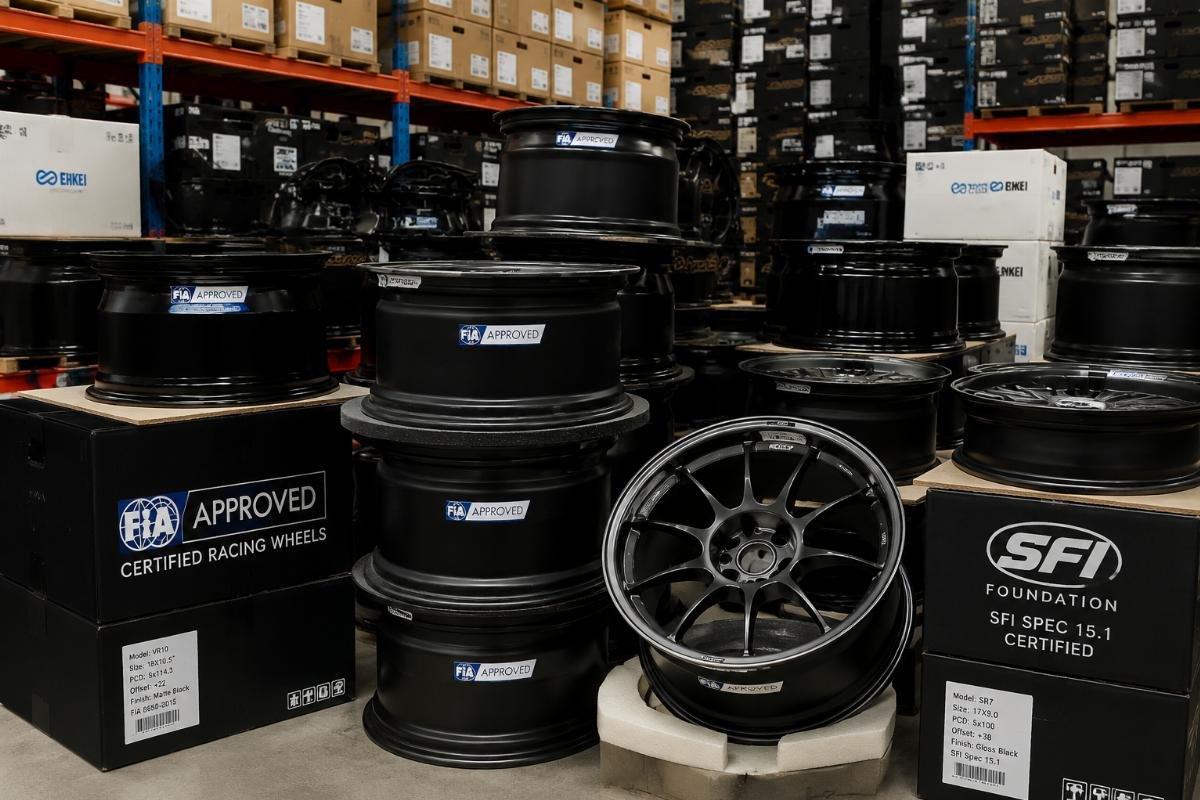
- Bulk Order Alignment – Confirm minimum order quantities for your annual volume to lock in the lowest possible per-unit pricing and dedicated production slots.
- Small Batch Stock Checks – Ask for a full updated inventory list of in-stock certified wheel SKUs to avoid custom lead times for standard sizing and designs.
- Lead Time Confirmation – Get written lead time guarantees aligned with your inventory or event timeline before placing any custom order.
Conclusion
Sourcing FIA and SFI dual-certified racing wheels from qualified Chinese suppliers eliminates most of the common compliance, cost, and lead time pain points that have long plagued racing parts procurement teams. The key to success is looking beyond paper certificates to verify in
