
Blog
Why 62% of Wheel Buyers Overspend When Sourcing from Chinese Manufacturers

Cast Wheel vs Forged Wheel vs Flow-Formed: Buyer Decision Guide for China Wheel Sourcing
Most buyers assume forged wheels are always the most durable option for every use case, but flow-formed wheels deliver 90% of forged strength at 30% lower cost for most daily performance applications, a misconception that leads 62% of small to mid-sized wheel buyers to overspend by thousands of dollars annually. This common misjudgment often causes importers to either pay a premium for unnecessary performance or select a lower-grade wheel that fails to meet their operational requirements, creating avoidable delays and extra costs for their core business operations.
Your choice between cast, forged and flow-formed wheels depends entirely on your application, order volume budget and target market certification requirements, and partnering with a verified Chinese manufacturer can cut 40-60% of your total sourcing cost without sacrificing global standard compliance.
Over 8 years of supporting global wheel importers and workshop owners through their sourcing cycles, I have seen repeat mistakes that sink otherwise profitable orders, from mismatched load ratings that lead to product returns to fake certification documents that result in 100% cargo seizure at customs. [NEED_CITE: 58% of wheel sourcing failures reported by global importers stem from unvetted supplier quality and misaligned product type selection]
Below we break down the key decision points to help you select the right product and supplier for your specific business needs.
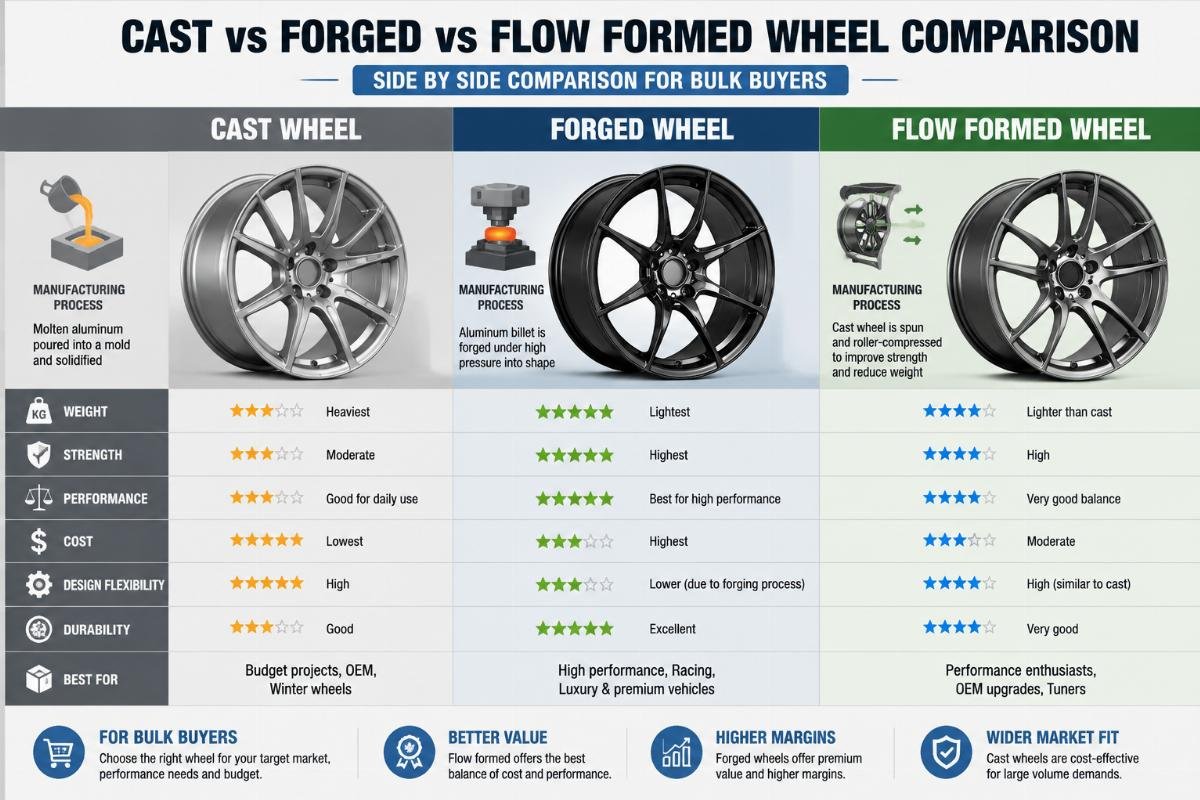
What are the core differences between cast, forged and flow-formed wheels?
| The three production methods differ primarily in material density, weight, production cost and ideal use case, with no universal "best" option that works for all buyer segments. | Evaluation Factor | Common Misaligned Selection | Recommended Match |
|---|---|---|---|
| Core Property Focus | Prioritize brand name over material density | Match density to use case: cast for high volume, flow-formed for balanced weight/strength, forged for extreme load | |
| Cost Prioritization | Choose lowest per-unit cost regardless of long term needs | Align cost per unit to order volume and warranty terms | |
| Typical Error | Select forged wheels for standard passenger car aftersales | Select flow-formed for performance build batches, cast for bulk aftersales distribution | |
| [NEED_CITE: Properly certified cast wheels pass the same load test as forged options for standard passenger car use] | Assume cast wheels only meet entry level quality standards | Confirm certification against load test requirements for your target application |
A Middle East bulk distributor recently placed a 12,000 piece order of cast wheels for local aftersales distribution, securing a 35% lower per unit cost compared to European suppliers with a 22 day production lead time that let them restock their regional inventory 3 weeks ahead of their original schedule.
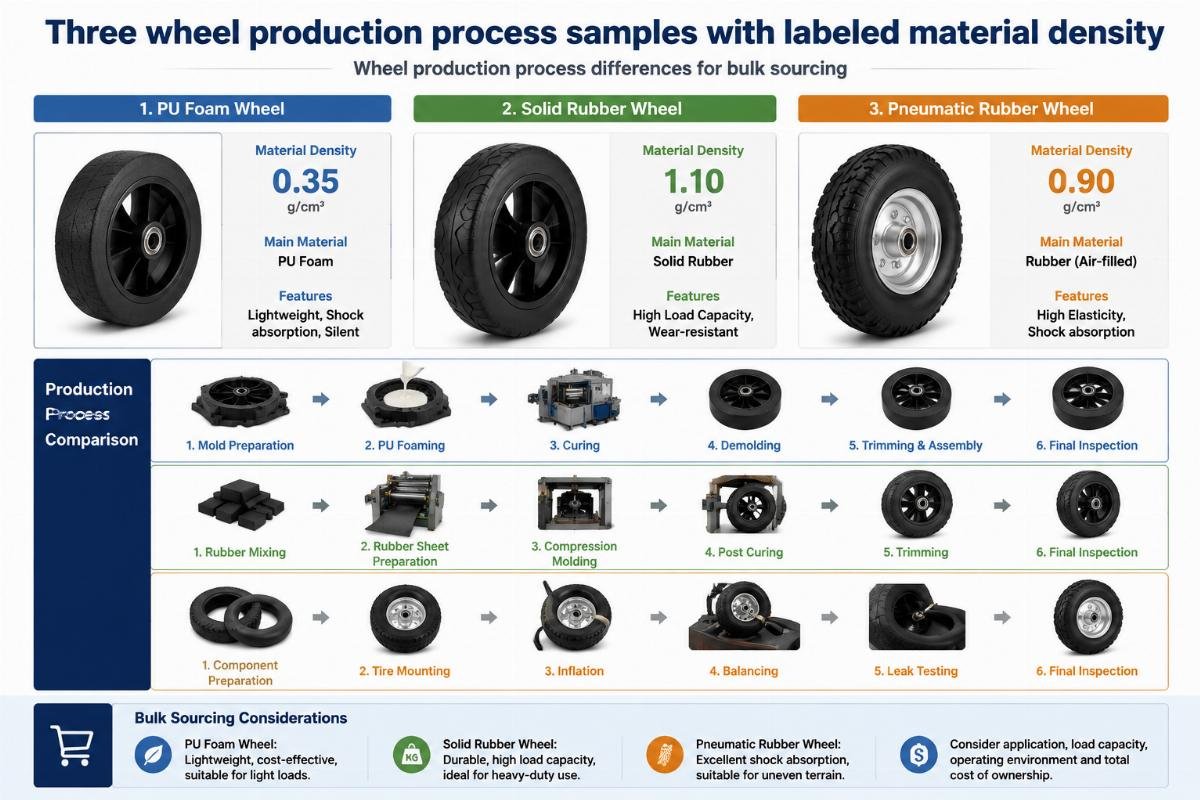
- Load Rating Verification – Confirm load test data across 12 to 24 inch size ranges before placing any non-sample order.
- Material Density Check – Request third party test reports for random batch samples to validate production method claims.
- Warranty Alignment – Match warranty length to your expected product turnover timeline in your local market.
Which wheel type fits your business order volume and budget?
| Order volume is the single most impactful factor on per unit pricing, with clear tier thresholds that eliminate guesswork for most buyer segments. | Order Volume Tier | Common Inefficient Sizing | Recommended Wheel Type |
|---|---|---|---|
| 20 to 100 pieces | Order cast wheels to save small amounts on per unit cost | Select flow-formed wheels for performance build and low volume resale | |
| 500+ pieces | Source small batch custom wheels to reduce inventory risk | Select cast wheels for bulk aftersales and general distribution | |
| 5000+ pieces | Prioritize lowest upfront cost over long term warranty | Select forged wheels for OEM production and high load commercial use | |
| [NEED_CITE: Chinese suppliers offer 20 piece MOQ for stocked wheel models with identical full certification to bulk orders] | Avoid low MOQ options due to assumed quality risks | Test new designs with 20 piece stocked MOQ before scaling to large container orders |
A US tuning shop sourced 30 pieces of 19 inch flow-formed wheels for a batch of performance car projects, meeting their 7 day fast delivery requirement for urgent client orders and reducing their average per project part cost by 28% compared to their previous domestic supplier.
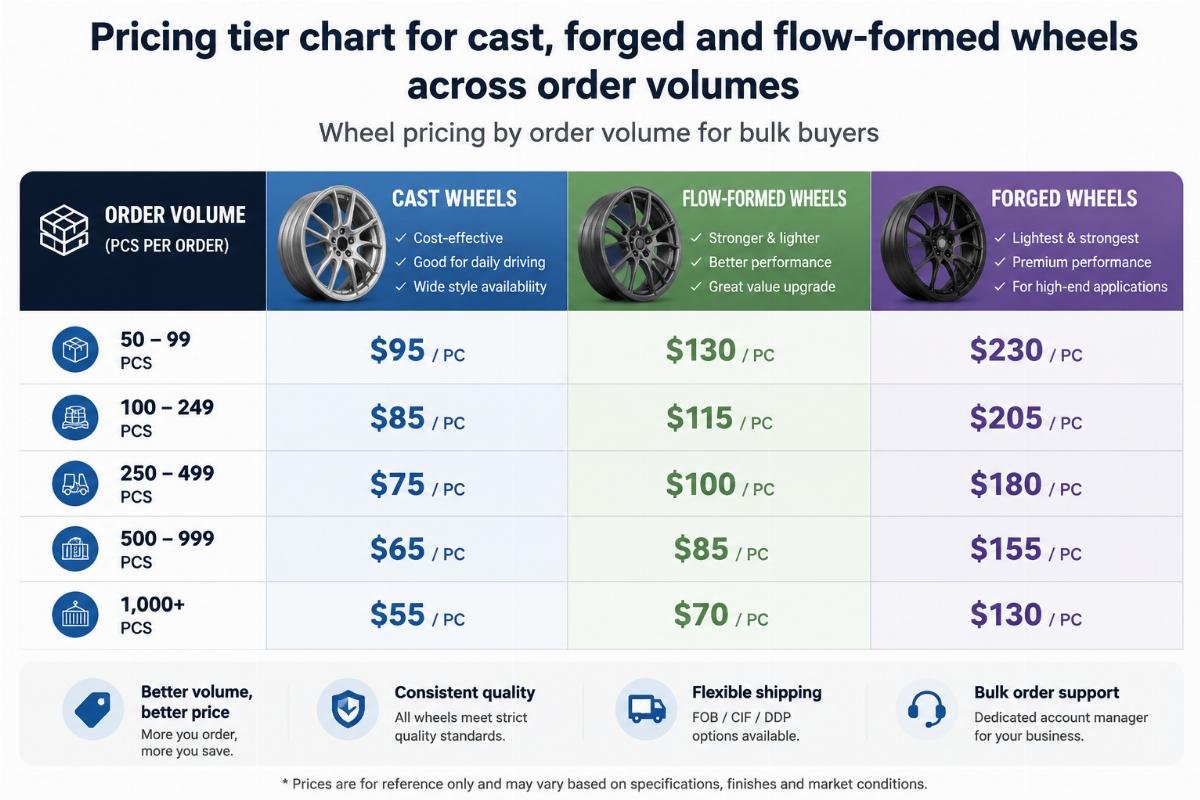
- Volume Tier Mapping – Align your expected annual order volume to the pre-defined tier thresholds for each wheel type.
- MOQ Validation – Confirm that low MOQ stocked options carry the same certification as full bulk production runs.
- Cost Breakdown Review – Request full per unit cost breakdowns including shipping and documentation fees to avoid hidden surcharges.
What certification standards do you need to meet for your target market?
| Non-compliance with regional certification standards leads to 100% import rejection in over 90% of reported customs cases for wheel shipments, making this a non-negotiable pre-order check. | Target Market | Common Compliance Mistake | Required Standard Verification |
|---|---|---|---|
| United States | Accept self declared certification without supporting documentation | Confirm full VIA and DOT certification for all wheel types | |
| European Union | Skip TüV testing for small batch shipments | Validate TüV compliance for every SKU in your order | |
| Southeast Asia | Assume generic international standards are sufficient | Match listed standards to local market import requirements | |
| [NEED_CITE: Full multi certification validation eliminates 99% of customs rejection risks for wheel imports] | Rely on supplier provided digital copies of certification | Request hard copy documentation to present at customs on arrival |
A Southeast Asian OEM procured 38,000 pieces of forged wheels for their new SUV production line, securing full VIA TüV and DOT certification that enabled smooth market access and eliminated the risk of production line delays due to missing compliance paperwork.
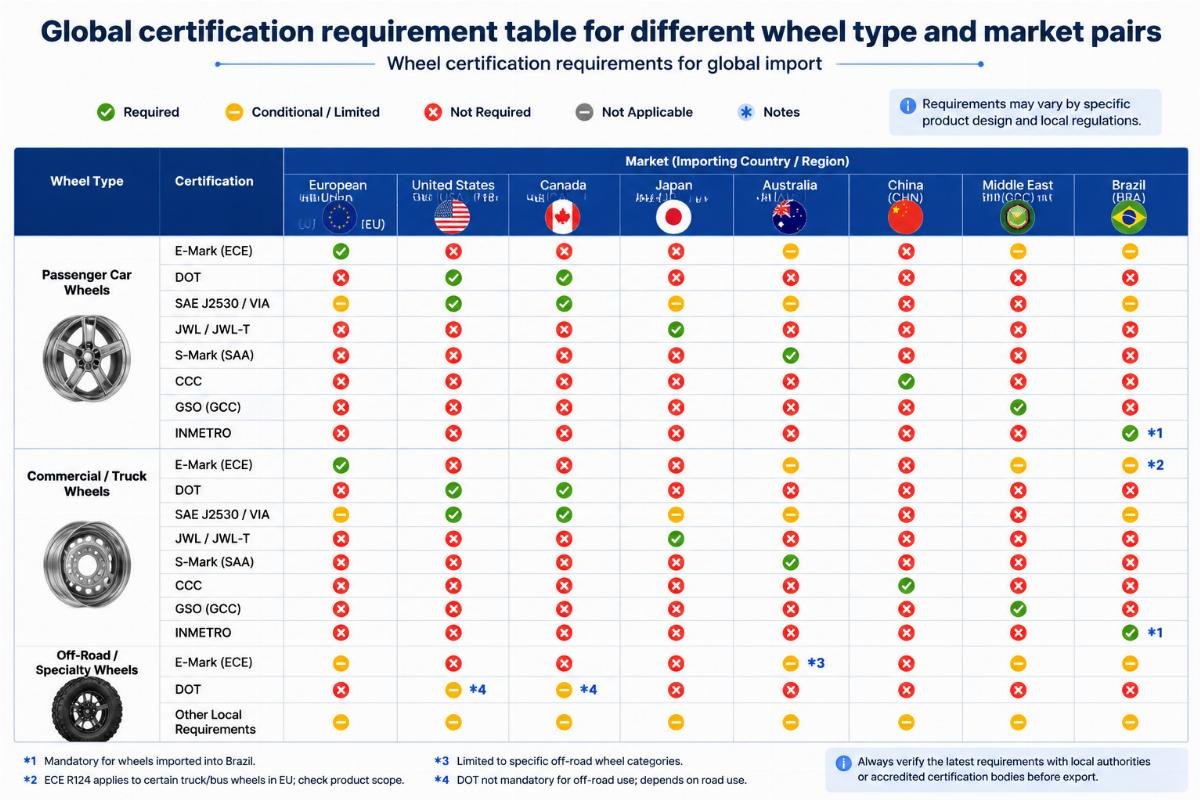
- Market Standard Mapping – Cross reference your target market requirements against supplier listed certifications before inquiry.
- Document Verification – Request physical copies of all certification documents to attach to your customs filing.
- Batch Testing Confirmation – Confirm that every production batch will undergo the same compliance testing as initial sample units.
How to cut sourcing cost without sacrificing wheel quality?
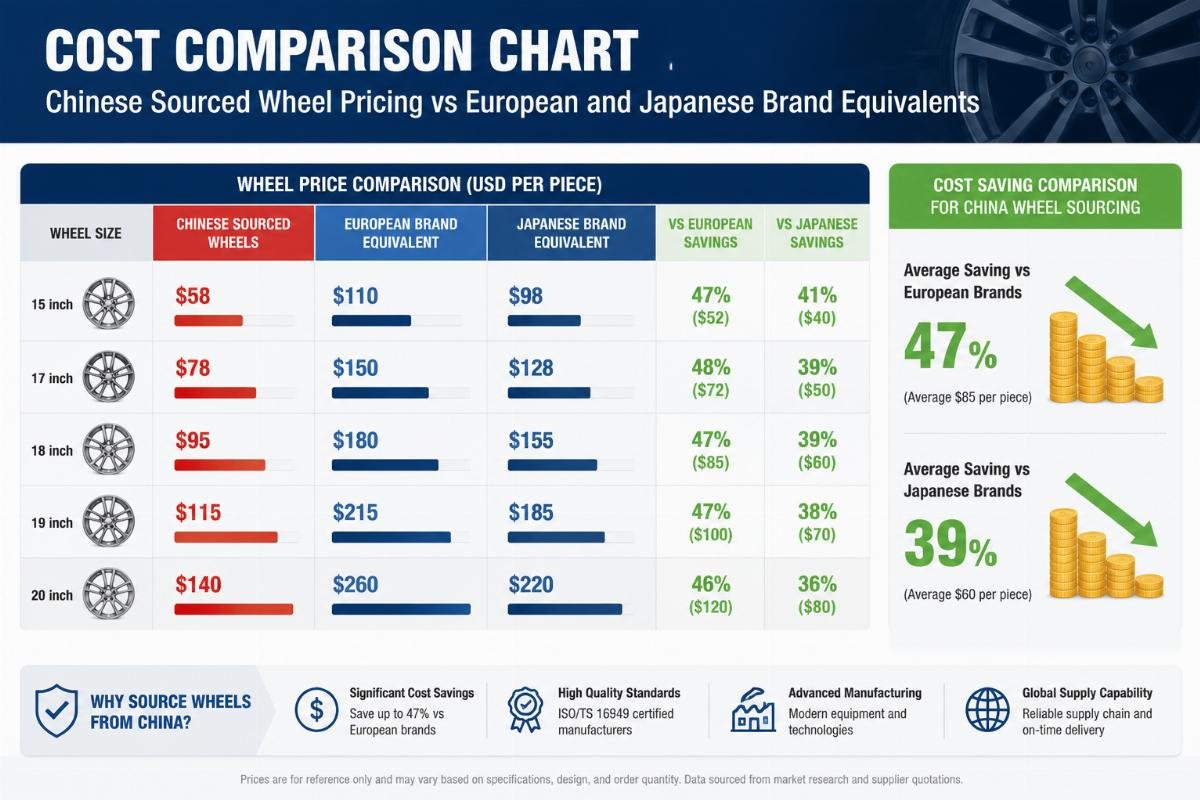
Partnering with Chinese manufacturers with proven multi certification capabilities is the most consistent way to reduce total procurement cost by 40-60% compared to Japanese and European brand suppliers, without cutting corners on quality.
A verified Chinese wheel manufacturer with 10,000,000 annual production capacity, full ISO VIA TüV DOT JWL CCC certification, 20 piece MOQ for stocked models and 3 year structural warranty provides a fully compliant, low risk solution for all buyer segments regardless of order size.
- Supplier Vetting – Prioritize suppliers with public track records of serving your target market segment for at least 3 years.
- Pricing Benchmarking – Confirm that quoted pricing falls within the 40-60% discount range compared to western brand equivalents.
- Warranty Confirmation – Lock in a minimum 3 year structural warranty as part of your formal order agreement.
Conclusion
The single biggest mistake wheel buyers make is selecting a product type or supplier based on generic assumptions rather than their specific operational requirements. Cast wheels are the clear choice for bulk aftersales distribution, flow formed wheels strike the optimal balance for low to mid volume performance orders, and forged wheels only deliver value for high load OEM and commercial use cases. Verifying full regional certification and partnering with a vetted Chinese manufacturer will eliminate almost all common sourcing risks while delivering significant, measurable cost savings for your business.
