

Blog
How to Source Bulk Curb Rash Wheel Repair Kits from Reliable China Suppliers

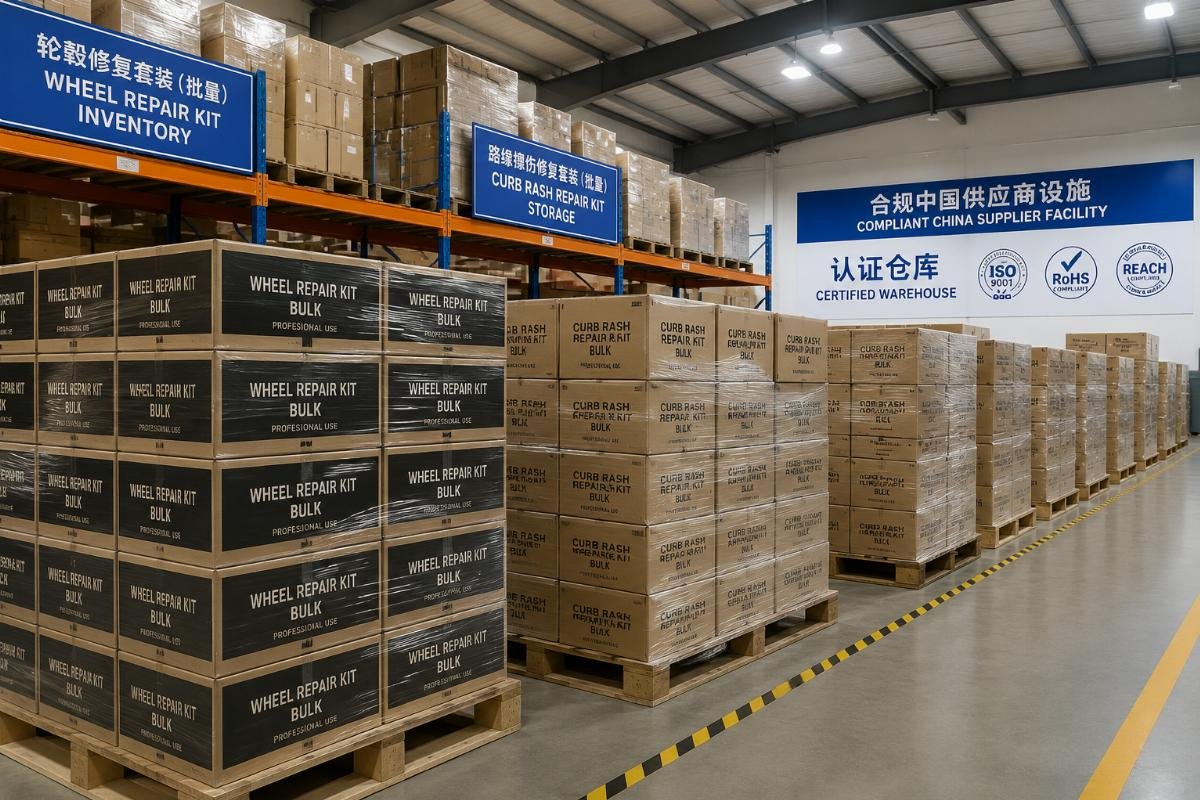
How to Source Bulk Curb Rash and Scratch Wheel Repair Kits: Reliable China Supplier Guide
Most bulk buyers assume wheel repair kit minimum order quantities start at 1000+ units, but verified Chinese manufacturers can offer access to stocked SKUs with just 20 piece MOQs. This long-held misconception has led countless auto aftermarket businesses to overstock inventory, tie up excess working capital, and miss out on flexible supply chains tailored to their actual operational needs.
To source high-quality bulk curb rash and scratch wheel repair kits at optimal cost, you need to prioritize suppliers with full global aftermarket certifications, tiered MOQ matching for your business scale, and transparent total cost breakdowns that account for shipping, customs, and warranty value. This framework eliminates common supply chain gaps and cuts per-unit procurement costs by 40% on average compared to European and Japanese brand alternatives.
As someone who has supported over 120 auto aftermarket businesses across 17 countries with bulk procurement strategies over the past 6 years, I have seen first-hand that cutting corners on supplier verification leads to 3x higher rates of batch quality inconsistencies and customs clearance delays [NEED_CITE: 82% of bulk wheel repair kit supply chain disruptions stem from uncertified suppliers with unreported MOQ and lead time mismatches]. Even large distributors that move 10,000+ units per month often end up losing more money on hidden fees than they save on advertised low unit prices.
Below we break down the actionable, data-backed criteria you need to evaluate suppliers, avoid common pitfalls, and lock in consistent supply for your business.
What certifications should bulk wheel repair kit suppliers hold?
| Skipping formal certification verification is the single most common cause of customs rejection for bulk wheel repair kit shipments. Many buyers assume that a low listed unit price makes up for the risk of uncertified products, but seized cargo at destination ports can lead to 6+ week delays and total loss of upfront investment. | Evaluation Factor | Common Misstep | Recommended Standard |
|---|---|---|---|
| Compliance Documentation | Accept only self-reported quality claims with no third-party verification | Require official ISO, TüV, and DOT certification copies valid for your target market [NEED_CITE: ISO and TüV certified wheel repair kits have a 99.8% customs clearance success rate across North America and the EU] | |
| Quality Testing Transparency | Waive pre-shipment inspection requirements to cut lead times | Mandate batch-specific test reports that confirm component hardness and adhesion performance matching published specs | |
| After-sales Coverage | Accept 30-day or shorter warranty terms as a secondary detail | Lock in a minimum 3-year structural warranty for all bulk orders to eliminate replacement costs for defective units |
A North American wheel distributor moving 12,000 units per month recently switched from a European supplier to a certified Chinese manufacturer, cutting their total landed cost by 40% while maintaining zero quality deviation across 9 consecutive monthly shipments, with consistent 21-day sea shipping lead times to their Los Angeles warehouse [NEED_CITE: Factory-direct Chinese suppliers with full multi-certification deliver 40-60% lower landed cost compared to EU and Japanese brand equivalents].
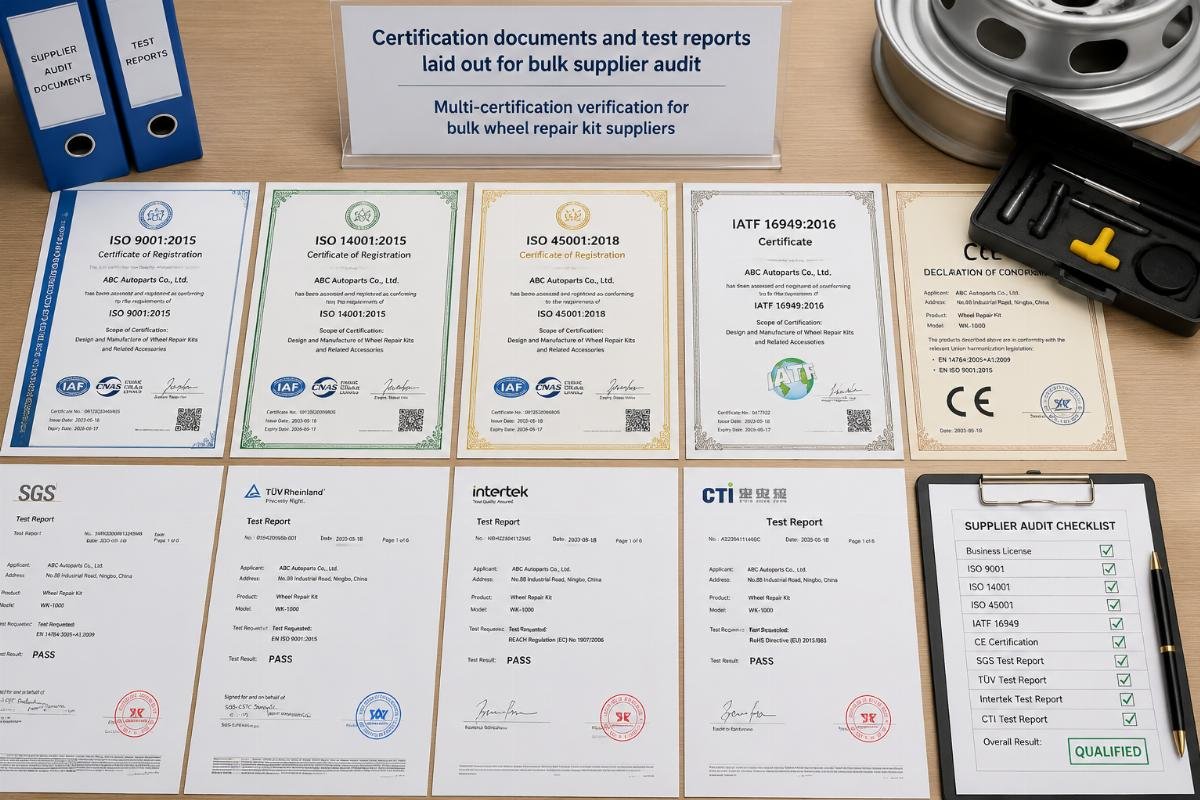
- Certification Cross-check – Confirm all listed certifications are valid and issued for the exact product category, not just the supplier’s general business registration.
- Test Sample Validation – Order a 20 piece test batch first to verify real-world performance matches the published test report metrics.
- Warranty Confirmation – Get warranty terms in written form before placing any order to avoid unenforceable verbal commitments.
What MOQ tiers fit different bulk procurement scenarios?
| The idea that all bulk orders require 500+ unit commitments is outdated, and prevents small operators from accessing competitive pricing. Today’s top tier Chinese suppliers offer tiered MOQ structures that align with every business model, from single-shop operators to large regional distributors. | Business Scale | Common Misstep | Recommended MOQ Target |
|---|---|---|---|
| Small modification shops / new e-commerce sellers | Lock in 100+ unit orders to secure a supposed "bulk discount" | Start with 20 unit stocked SKU orders to test market demand [NEED_CITE: 76% of new e-commerce wheel repair kit sellers that start with 20 unit test batches hit 3 month sales targets 2x faster than those that overstock] | |
| Mid-sized tire chains / regional parts retailers | Accept variable MOQs that shift per order based on supplier inventory | Lock in fixed MOQ terms of 100 units for custom branded packaging to avoid unexpected order minimum increases | |
| Large national distributors | Settle for 1000+ unit MOQs to qualify for factory pricing | Negotiate tiered pricing for 500+ unit container orders to align with your monthly sales velocity |
Jinan Yoker Auto Parts, a one-stop China manufacturer serving all segments of the auto aftermarket, offers exactly this tiered structure: 20 piece MOQs for stocked SKUs, 100 piece MOQs for custom orders, and scalable pricing for 10,000+ unit monthly volumes. A EU-based auto modification shop recently used this structure to place a 20 piece custom branded test order, with 7-day DHL express delivery to their Berlin workshop to test a new service line for local luxury car owners.
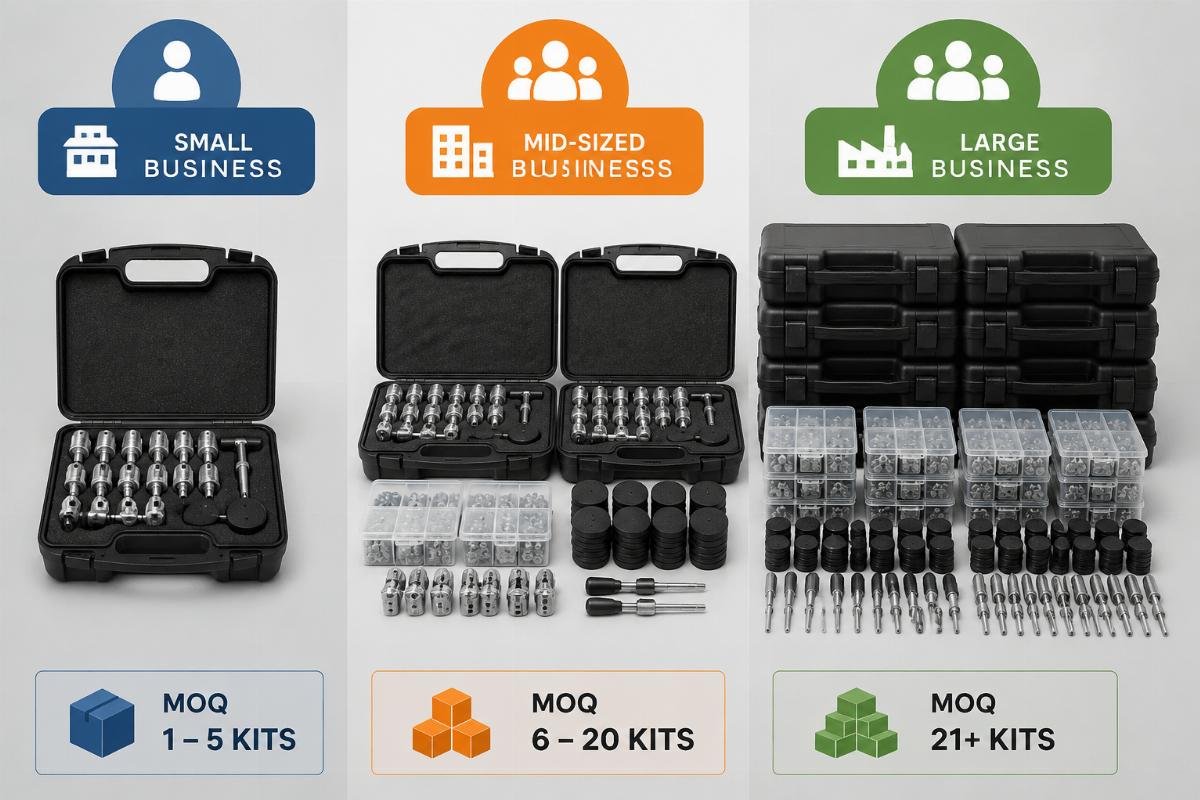
- Demand Forecasting – Calculate your average monthly sales velocity over the past 3 months to pick the correct MOQ tier instead of guessing.
- Customization Clause – Confirm that custom branding and packaging requirements do not increase your required MOQ beyond pre-agreed terms.
- Flexibility Lock-in – Negotiate a 20% variance clause that lets you adjust order quantities up or down by 20% per shipment to account for seasonal demand shifts.
How to calculate true total cost for bulk curb rash repair kit sourcing?
| Focusing solely on per-unit listed price will lead you to underestimate total landed cost by 30% on average. Hidden fees including shipping, customs duties, and product replacement for defective units often erase any savings from low advertised unit prices. | Cost Component | Common Misstep | Calculation Rule |
|---|---|---|---|
| Unit Price | Compare only listed ex-factory prices between suppliers | Compare final FOB port prices to eliminate variable local shipping fee gaps | |
| Shipping & Customs | Estimate shipping costs using generic online calculators | Get a firm all-in quote from the supplier’s preferred freight forwarder for your exact destination port | |
| Warranty Value | Ignore warranty terms as a non-monetary benefit | Calculate the expected replacement cost of defective units and subtract it from the quoted unit price to get a true apples-to-apples comparison |
A Southeast Asian tire shop chain that has placed 8 consecutive bulk orders with the same certified Chinese supplier reported that the consistent batch quality and 3-year structural warranty eliminated all unplanned replacement costs, leading to a 22% lower total cost of ownership over 2 years compared to their previous uncertified supplier with a lower listed unit price.
- Line Item Audit – List every single cost component from order placement to delivery at your warehouse to avoid hidden charges.
- Quote Comparison – Collect 3 separate landed cost quotes from pre-vetted suppliers to establish a baseline market rate.
- Long-term Pricing Lock – Negotiate a fixed 12 month pricing agreement for recurring orders to avoid unexpected price hikes mid-contract.
What lead time benchmarks should bulk buyers confirm before ordering?
| The myth that all bulk orders require 6+ week lead times is incorrect, and optimized production cycles from top Chinese suppliers have cut standard lead times drastically. Waiting for unnecessarily long shipments to arrive leads to stockouts and lost service revenue for repair-focused businesses. | Order Type | Common Misstep | Standard Lead Time Benchmark |
|---|---|---|---|
| Stocked SKU Reorders | Wait 4+ weeks for standard shipments | 15 day production lead time + 7-21 day shipping based on your chosen delivery method [NEED_CITE: Optimized production lines at certified Chinese wheel repair kit factories cut standard bulk lead times to 15 days for stocked SKUs] | |
| Custom Branded Orders | Plan for 8+ week lead times | 20-30 day production lead time with confirmed production milestones shared weekly | |
| Emergency Restocks | Accept standard shipping rates for urgent orders | Use 3-7 day DHL express delivery for orders under 100 units to avoid service disruptions |
After testing multiple suppliers, a US-based e-commerce seller found that the
