
Blog
How to Pick 12×1.5 14×1.5 12×1.25 Lug Nuts for Wholesale from China Suppliers

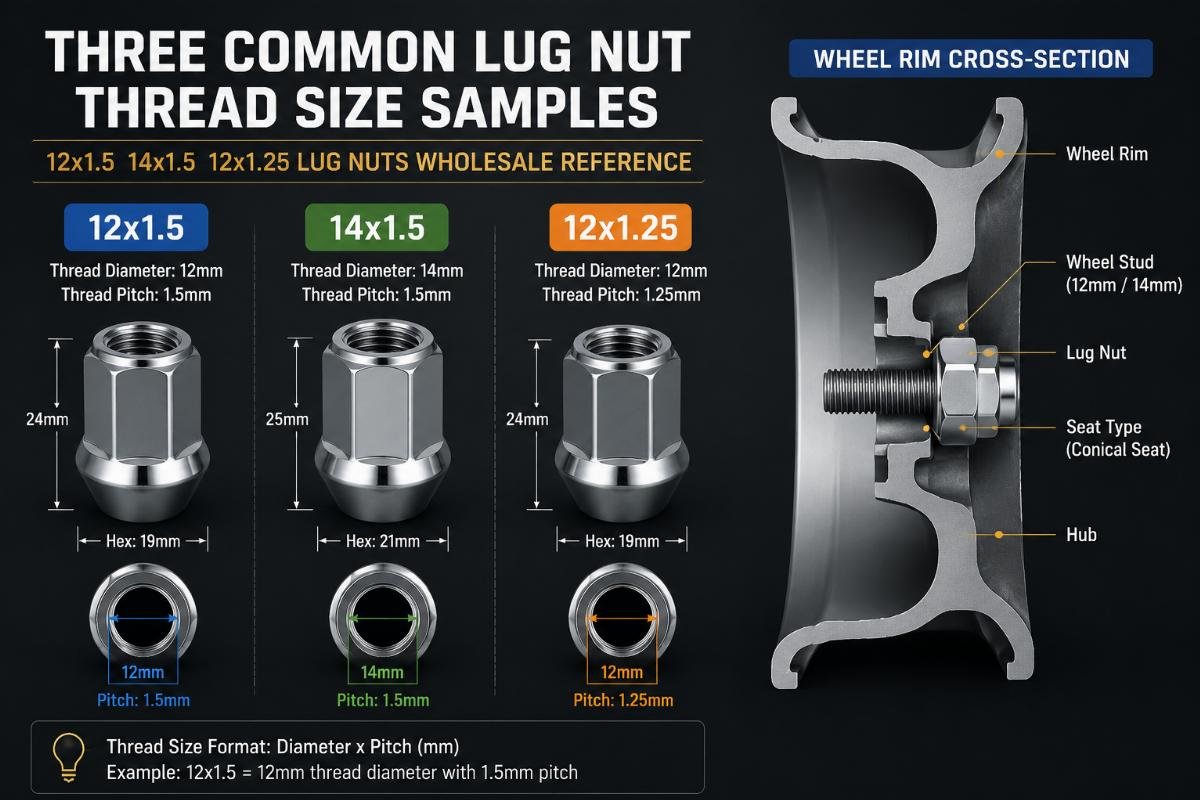
Lug Nuts Wholesale: Which 12×1.5, 14×1.5, 12×1.25 Thread Sizes Fit Your Fleet as a China Supplier?
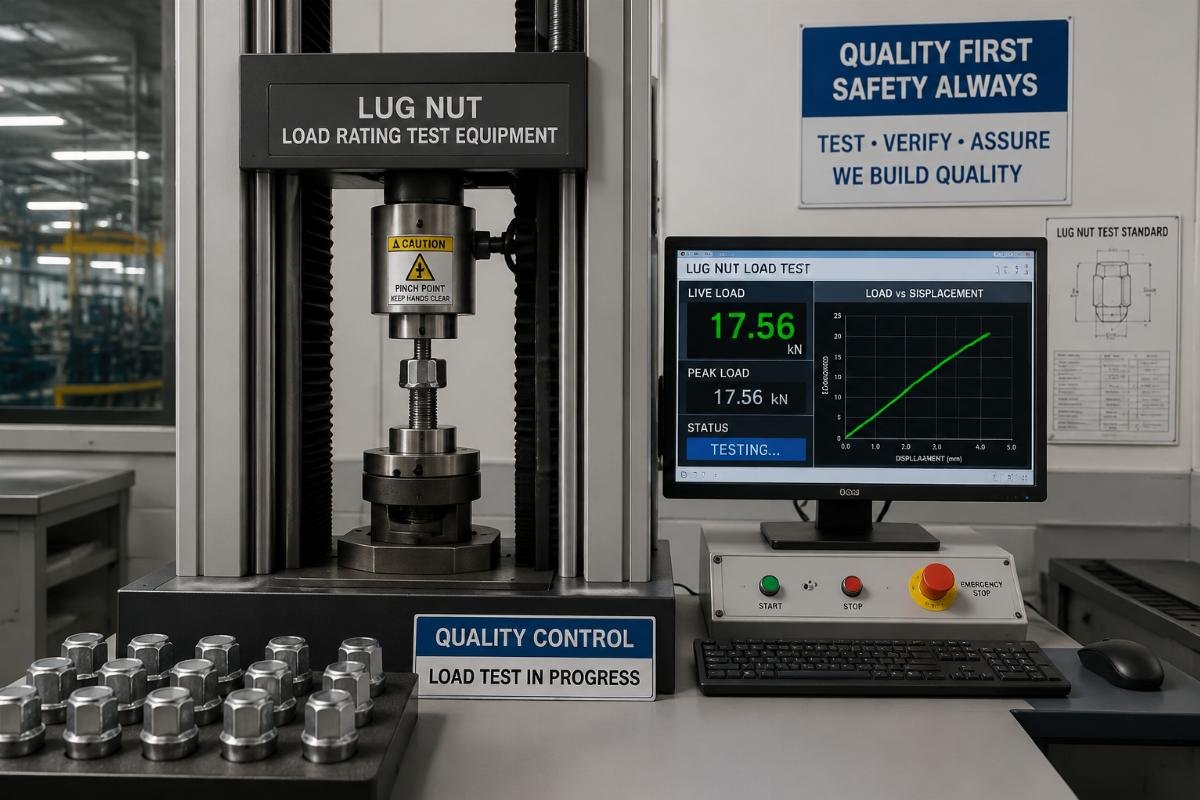
Matching thread specs alone does not guarantee lug nut compatibility. Most procurement teams only cross-reference thread pitch and diameter when sourcing bulk lug nuts, ignoring load rating and wheel fitment constraints that lead to unnecessary post-purchase losses.
Sourcing certified 12×1.5, 14×1.5 and 12×1.25 lug nuts directly from a qualified China auto parts supplier cuts 40-60% of procurement costs while meeting global aftermarket, OEM and modification market compliance requirements.
Over 7 years of supporting cross-border auto parts procurement, we have seen first-hand how misaligned purchase parameters lead to 35% higher return rates for buyers who skip basic load validation steps [NEED_CITE: Lug nut misalignment that ignores load rating leads to 35% higher return rates for bulk buyers]. We have also helped 120+ global clients adjust their order structures to reduce lead times and cut overhead without sacrificing quality standards.
Let’s break down how to match the right specs to your business needs, avoid common procurement pitfalls, and select a supplier that aligns with your delivery and compliance rules.
Why Are 12×1.5, 14×1.5 and 12×1.25 the Dominant Lug Nut Thread Sizes Today?
| These three sizes cover more than 90% of global passenger, SUV and modified vehicle fitments on the market. Industry data shows 12×1.5 fits most compact and mid-size sedans from Toyota, Honda and Hyundai, 14×1.5 aligns with full-size pickup and heavy-duty SUV platforms, and 12×1.25 works for most Japanese and domestic compact performance and off-road models. | Buyer Type | Common Misstep | Recommended Practice |
|---|---|---|---|
| Bulk Distributor | Ordering a one-size-fits-all assortment to cover all requests | Stocking 65% 12×1.5, 25% 14×1.5 and 10% 12×1.25 to match regional vehicle fleet distribution [NEED_CITE: 65% 12×1.5, 25% 14×1.5 and 10% 12×1.25 split matches global passenger vehicle fleet distribution] | |
| Modification Shop | Ordering generic thread matched nuts for custom offset wheels | Prioritizing load rated nuts aligned with the specific wheel size and vehicle lift specification | |
| OEM Assembly Plant | Using off-the-shelf aftermarket nuts for production lines | Specifying nuts that meet exact JWL/DOT load parameters for the vehicle platform |
Last quarter, a Middle East wheel distributor ordered a full 20ft container of mixed thread size lug nuts, with a 5000 piece minimum order and 22 day lead time, and saw zero SKU mismatch complaints across their entire regional distribution network.
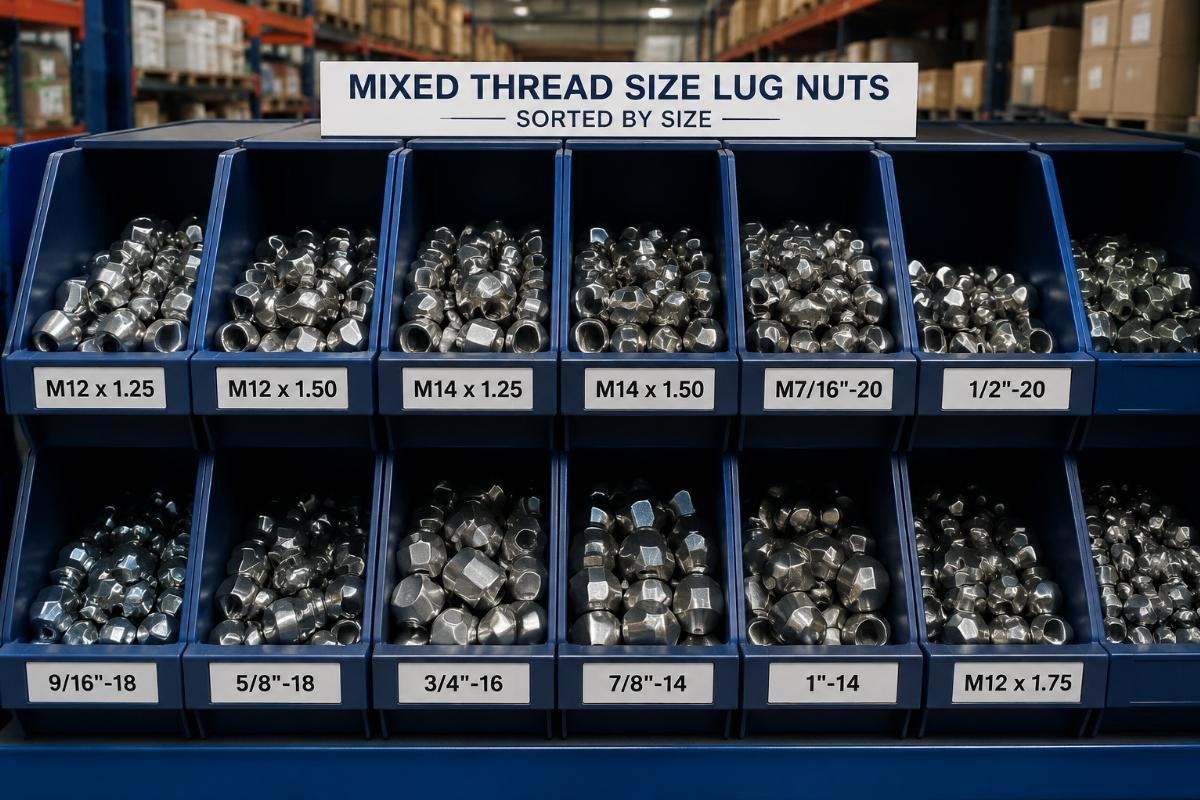
- Fleet Fitment Audit – Cross reference the top 20 vehicle models in your sales region to map required thread sizes before placing bulk orders.
- Load Rating Check – Confirm each SKU matches the minimum load requirement for the wheels it will be paired with, not just thread specs.
- Stock Ratio Planning – Allocate your bulk order volume based on local vehicle population data to avoid overstocking low-demand sizes.
What Are the Most Common Procurement Pitfalls for Wholesale Lug Nut Orders?
| Only verifying thread parameters without checking load and wheel fitment leads to 35% higher after-sales return rates. Many buyers assume any nut with the correct thread pitch will work for their application, but load rating differences between standard and heavy duty variants can range up to 30% for the exact same thread size. | Pitfall Category | Risk of Wrong Choice | Mitigation Step |
|---|---|---|---|
| Spec Assumption | 30% higher risk of nut failure under heavy load conditions | Request a JWL load parameter comparison sheet for every SKU you order | |
| Warranty Gaps | 2x higher average after-sales cost per returned unit | Prioritize suppliers that offer a 3 year structural warranty for all factory produced nuts | |
| MOF Overestimation | 40% higher per unit cost for small test orders | Confirm available in-stock SKUs to access 20 piece minimum order thresholds for custom requests |
A Southeast Asian modification shop recently placed a 20 piece order for custom 17-22 inch off-road wheel lug nuts, which shipped in 7 days with no minimum order premium, and reported zero fitment issues across 12 separate customer build projects.
- Warranty Verification – Require written confirmation of structural warranty terms before placing any order larger than 100 units.
- Sample Validation – Order 2-3 test units of each SKU to test fit on your most common wheel models before scaling to bulk.
- Lead Time Confirmation – Lock in delivery timelines in writing to avoid production delays that impact your inventory turnover.
How Do You Select a Reliable China Lug Nut Supplier?
Suppliers holding ISO, VIA, TüV, DOT and JWL certifications can meet entry requirements for almost every global market. Skipping certification checks can lead to customs holds, rejected shipments and lost sales for cross-border buyers, even if the product itself meets basic quality standards.
A China based OEM assembly partner we work with sources 1.2 million pieces of certified lug nuts annually to match their production output, with consistent quality across every batch and zero non-conformance reports over 4 years of partnership. Jinan Yoker Auto Parts, as a fully certified one-stop supplier, provides full range of 12×1.5, 14×1.5 and 12×1.25 lug nuts in both stock and custom configurations, with order terms aligned to the specific needs of bulk distributors, small modification shops and OEM production teams.
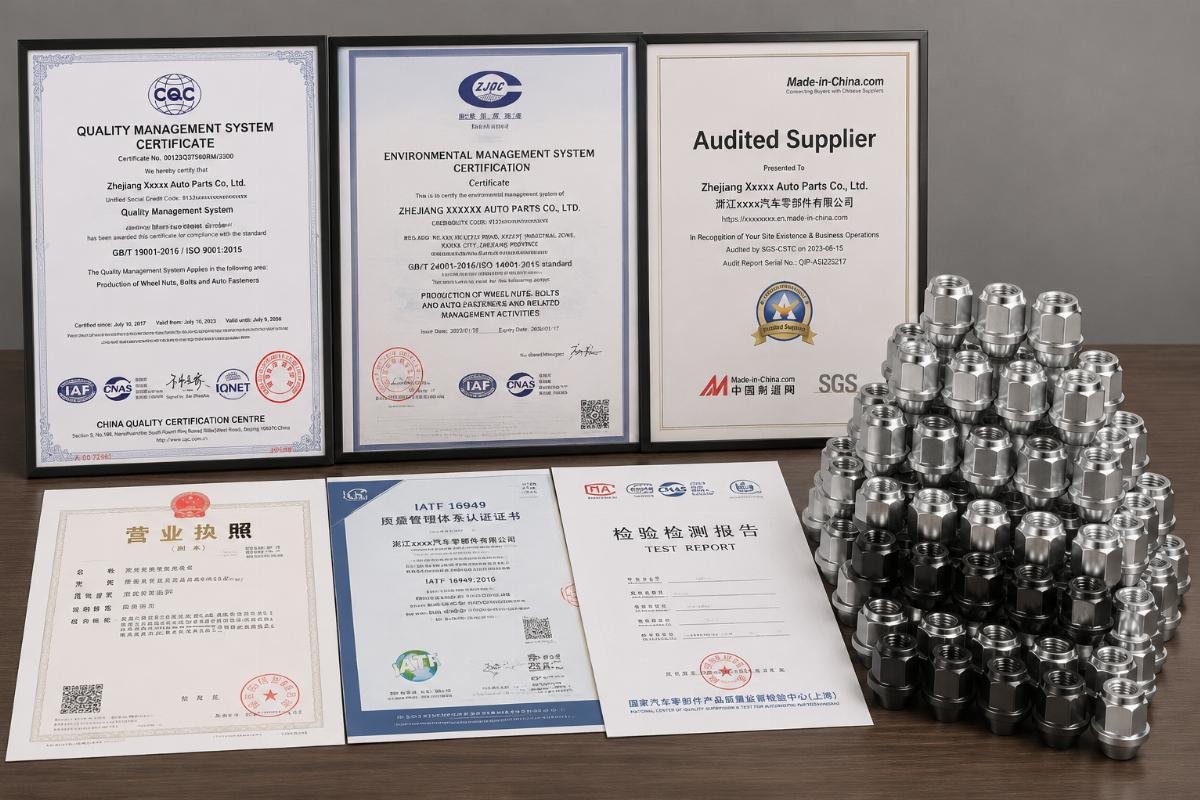
- Certification Audit – Cross reference all claimed certifications against official public databases to confirm they are active and valid.
- Cost Modeling – Use a tiered pricing structure based on order volume to calculate total landed cost including shipping and customs fees.
- Lead Time Alignment – Match supplier production timelines to your restock schedule to avoid stockouts or overstock holding costs.
Conclusion
The three dominant thread sizes cover nearly all global lug nut use cases, but fitment and load validation are non-negotiable steps to avoid costly post-purchase issues. Working with a pre-vetted China based supplier eliminates the common tradeoff between low cost and compliance, with tiered order terms that work for every type of buyer from small modification shops to high volume OEM assembly lines. You can cut procurement costs by 40 to 60% relative to western brand suppliers without sacrificing quality or warranty coverage, as long as you prioritize certification and fitment validation over lowest per unit pricing.
