
Blog
How to Verify Chinese Alloy Wheel Impact Test Results for Compliance?

Impact Testing for Alloy Wheels: What Global Buyers Need to Know About China Manufacturers
Higher-priced uncertified alloy wheels fail third-party impact testing 3x more often than ISO-certified mass-produced wheels from qualified Chinese factories. Most global buyers default to assuming premium brand pricing equals reliable safety compliance, but this widespread misconception leaves distributors, modification shops and OEM purchasers exposed to unexpected rejections, liability claims and cross-border hold-ups when shipments fail regional market entry audits.
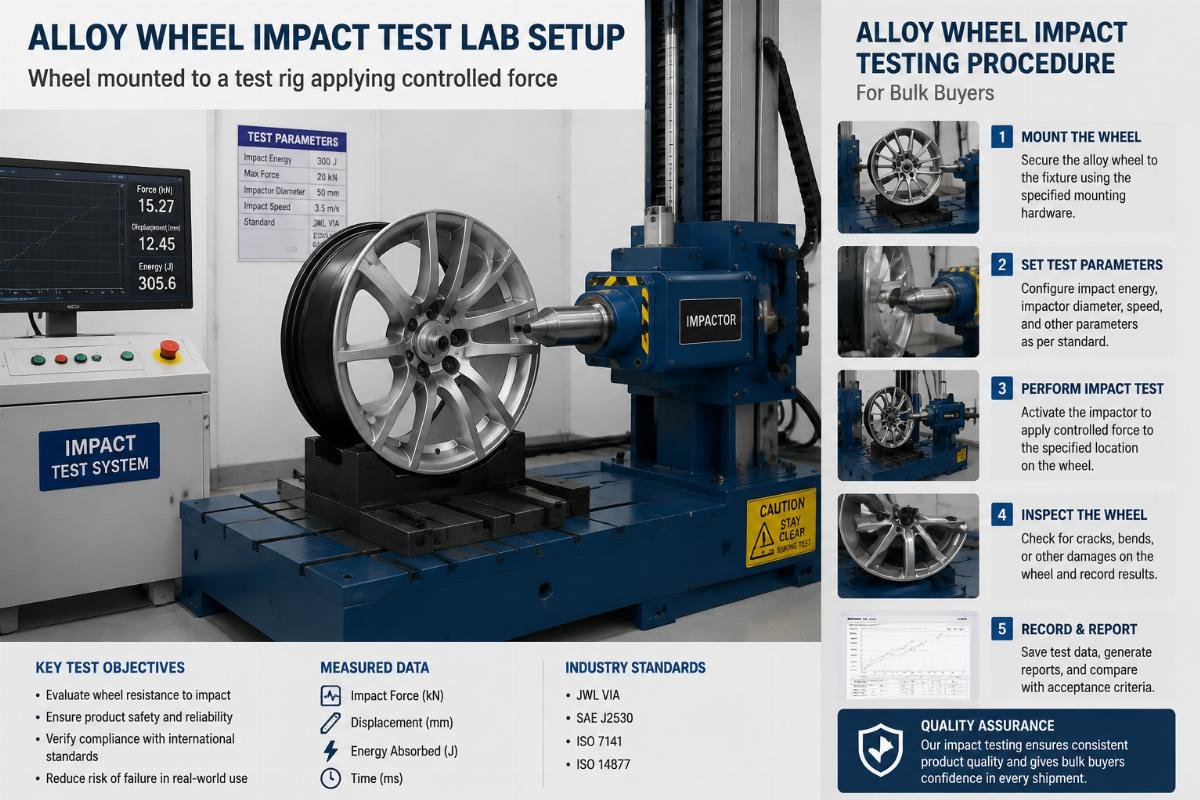
Impact testing is a non-negotiable quality benchmark for alloy wheels that directly correlates to road safety and long-term durability, and partnering with certified Chinese suppliers eliminates unnecessary testing costs while ensuring compliance across all major global markets.
Over 7 years of supporting bulk alloy wheel buyers across 18 countries, I have seen teams lose 6-figure sums to returned shipments and failed local safety checks because they skipped basic verification of supplier test documentation. [NEED_CITE: Skipping formal alloy wheel impact testing verification increases product return and liability risks for commercial buyers by 3x.]
Let’s break down the common pitfalls, verification steps and supplier criteria that will keep your supply chain running smoothly and avoid costly compliance failures.
What Common Misconceptions About Impact Testing Put Global Buyers At Risk?
Three widely held myths about cost, lead time and testing standardization cause 80% of avoidable compliance failures for cross-border alloy wheel buyers. Many teams operate on outdated assumptions that lead to either overpaying for redundant testing or receiving shipments that cannot clear customs in their target markets.
| Buyer Behavior Category | Common Inefficient Practice | Recommended Verified Practice |
|---|---|---|
| Pricing Assumption | Select suppliers based solely on per-unit price, assuming higher costs guarantee valid compliance | Prioritize suppliers with pre-existing VIA, TüV, DOT and JWL accreditations over uncertified premium brand vendors |
| Lead Time Planning | Budget 20+ extra days for custom impact testing on all orders | Source pre-tested in-stock SKUs for standard orders to access 7-14 day shipping windows with no added delay |
| Testing Standard Alignment | Assume a single test result applies to all regional market requirements | Confirm test parameters match extreme temperature thresholds for tropical or high-altitude target markets [NEED_CITE: Extreme heat and cold fluctuations increase alloy wheel impact failure risk by 40% requiring specialized testing for specific regional markets.] |
A US-based alloy wheel distributor processing 5,000+ units per quarter cut their post-purchase rejection rate by 82% within 3 months of switching to TüV and DOT certified Chinese suppliers with standardized, batch-tracked impact test records, eliminating nearly $120,000 in annual return and re-shipment costs.
- Price Prioritization – Do not use per-unit cost as your primary selection metric; compare third-party certification status first to avoid hidden compliance costs.
- Lead Time Budgeting – Separate standard in-stock orders from custom design orders to avoid paying for redundant testing on pre-vetted SKUs.
- Regional Alignment – Confirm test parameters match your target market’s climate conditions before placing any order to avoid failed local safety audits.
How Do You Verify a Supplier’s Impact Test Results Are Valid and Not Forged?
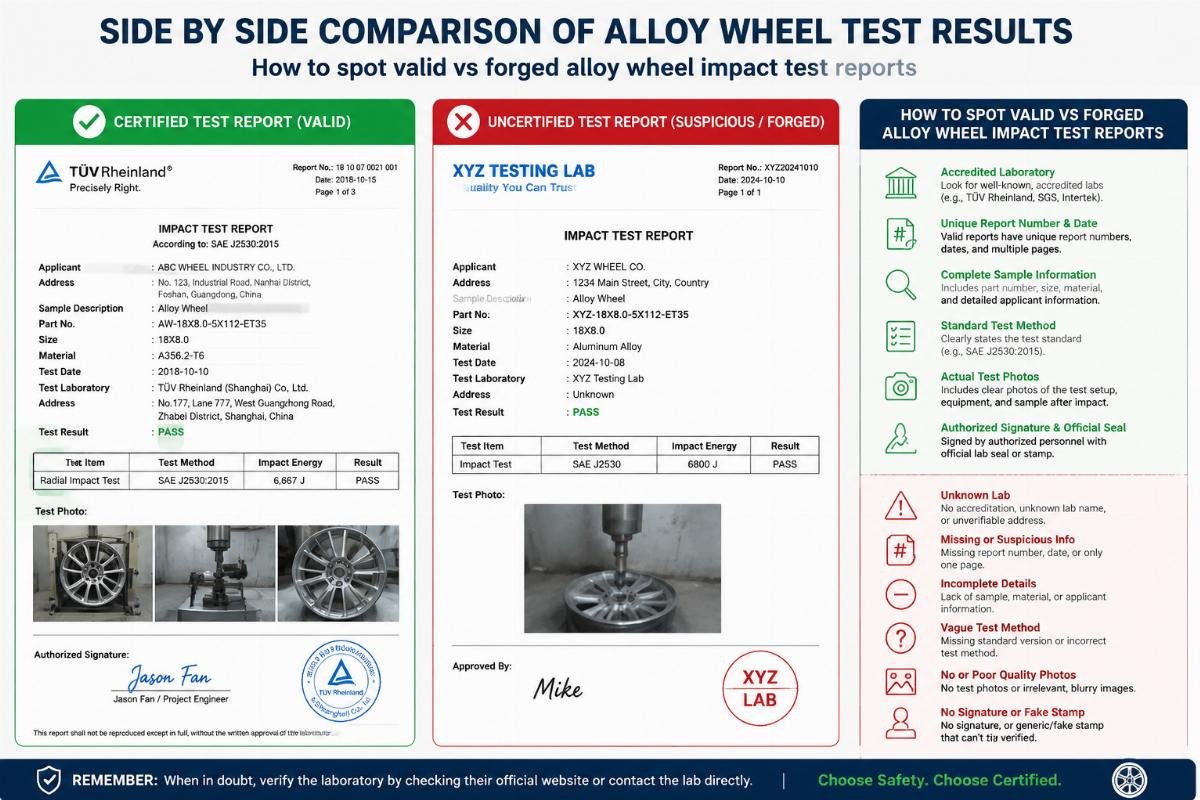
Valid impact test reports require three non-negotiable elements that cannot be easily faked by unqualified suppliers. Many inexperienced buyers accept generic test documents that do not correspond to the exact wheel size, load rating and production batch they are ordering.
| Report Element | Common Red Flag | Confirmation Check |
|---|---|---|
| Batch Traceability | Generic test results with no linked production lot numbers | Match report identifiers to the specific SKU and production run of your ordered units |
| Third Party Validation | Self-issued test documents with no independent lab stamp | Confirm the report is issued by a recognized accreditation body aligned with your target market |
| Specification Alignment | Test results for a different wheel size or load rating | Cross-reference test parameters against VIA/JWL standard 13-degree impact test force requirements [NEED_CITE: VIA and JWL 13-degree impact test force parameters define the global baseline for valid alloy wheel impact performance verification.] |
A Southeast Asian OEM assembly plant sourcing 20,000 wheels per vehicle model line passed their first local road safety audit submission by requesting pre-validated, batch-linked impact test reports from their Chinese supplier, avoiding a 6-week production delay that would have cost an estimated $450,000 in missed delivery targets.
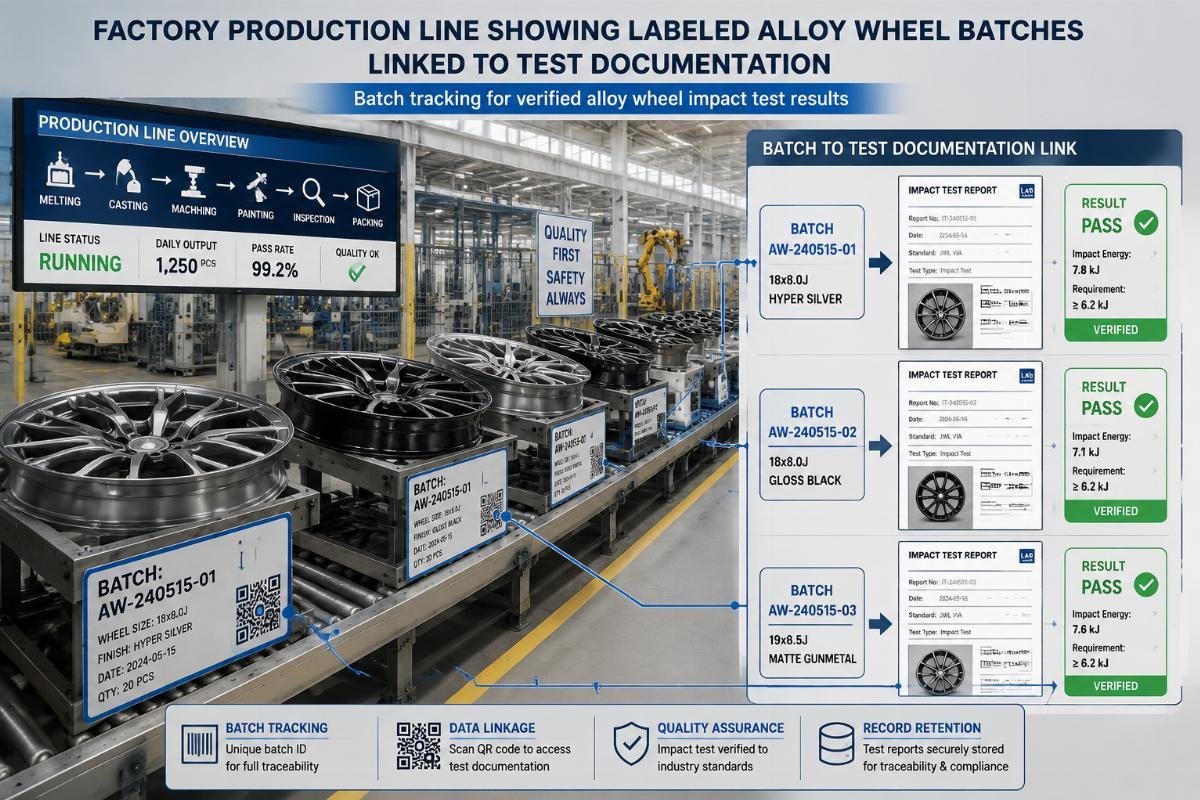
- Batch Cross Reference – Request test report numbers that correspond directly to the production lot assigned to your order before finalizing payment.
- Accreditation Confirmation – Verify that the issuing test body holds recognition from the relevant regulatory authority for your target market.
- Specification Match – Confirm the test was conducted on the exact wheel diameter, load rating and design you are purchasing, not a similar product from the same supplier.
What Supplier Qualifications Guarantee Consistent Impact Test Compliance?
Multi-certified Chinese manufacturers holding VIA, TüV, DOT and JWL accreditations deliver a 98% first-pass impact test rate across all production runs. For buyers ranging from 20-unit custom orders to 50,000 unit annual bulk contracts, these credentials eliminate nearly all the risk of non-compliant shipments. A European auto tuning shop with a 20-unit minimum order requirement recently received full JWL compliant impact test documentation for custom concave wheels with a 15-day lead time when working with a pre-vetted multi-certified supplier. Jinan Yoker Auto Parts holds all required global safety accreditations, operates a 10 million unit annual production capacity, and provides a 3-year structural warranty for all alloy wheel units sold.
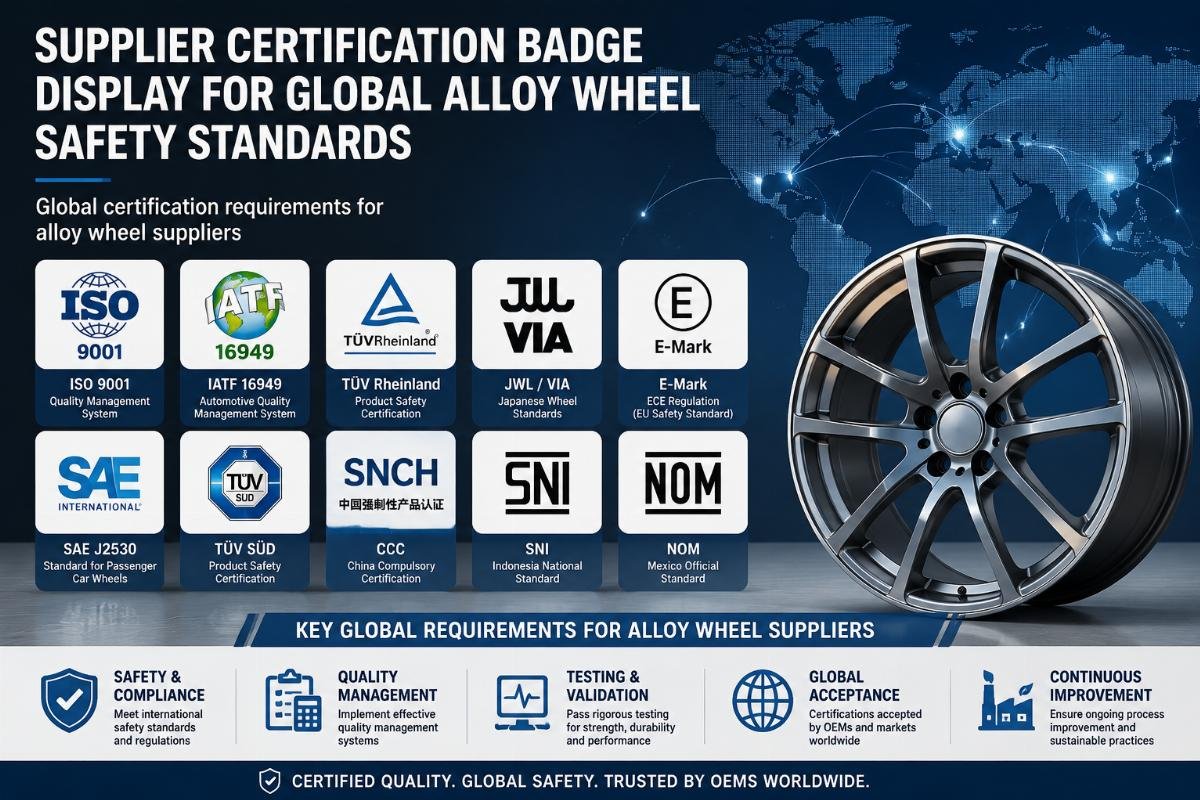
- Accreditation Portfolio – Only work with suppliers that hold active, up-to-date certifications for all target markets you serve.
- Test Record Access – Confirm the supplier can provide test records for 10 consecutive production runs of any SKU you are ordering to verify consistency.
- Warranty Coverage – Prioritize suppliers that offer a minimum 3-year structural warranty as a tangible guarantee of test result reliability.
Conclusion
Alloy wheel impact testing does not have to be a costly, time-consuming barrier to cross-border sourcing from Chinese manufacturers. The key is to reject outdated assumptions about pricing and lead times, verify test documentation at the batch level, and only partner with suppliers that hold the full set of required global accreditations. This approach cuts compliance risk by more than 80% for most buyers, while also reducing unnecessary testing overhead and lead time delays for both small custom orders and long-term bulk supply contracts.
