Buy Machined Face Alloy Wheels: China Factory Direct Wholesale Supplier
The brighter the machined face, the faster it corrodes—if the clear coat is compromised.
Sourcing machined face alloy wheels from China hinges on three verifiable checkpoints: clear coat thickness uniformity, dynamic balance tolerance per batch, and factory-level salt spray testing protocols—not unit price.
I still remember standing at Jebel Ali port, watching a container of 18-inch bright-finish wheels being unloaded. The buyer, a distributor in the Gulf, had ordered a full container of machined face alloy wheels for his tuning shop network. Within days of opening the boxes, his team flagged fine oxidation spots along the bead lip edges. The entire shipment faced rejection. The root cause was not the aluminum alloy or the CNC lathe program—it was an inconsistently applied clear coat that failed to seal the freshly cut surface against high-humidity sea transit. That incident reshaped how I evaluate every factory floor I walk. [NEED_CITE: correlation between clear coat micro-porosity and marine transit corrosion on diamond-cut alloy surfaces]
Let me walk you through what actually separates a reliable shipment from a costly return, based on real factory audits and import scenarios.
What Defines Quality in Machined Face Alloy Wheels?
Brightness is cosmetic; clear coat integrity and base alloy purity determine whether the wheel survives its first ocean crossing.
Many buyers judge machined face alloy wheels purely by how mirror-like the face looks under showroom lights. But that diamond-cut shine is achieved by a CNC lathe removing a thin layer of the painted surface, exposing raw aluminum. Without a properly cured, evenly distributed clear coat, that exposed aluminum begins oxidizing the moment it encounters salt-laden air. [NEED_CITE: ASTM B117 salt spray test methodology for painted and clear-coated aluminum automotive wheels]
The critical parameters are not visible to the naked eye:
| Quality Dimension | Top-Tier Factory | Mid-Range Factory | Unverified Source |
|---|---|---|---|
| Clear coat application environment | Dust-free spray booth, controlled humidity | Open or semi-enclosed booth | Uncontrolled workshop area |
| Salt spray endurance | Substantially extended | Moderate | Vulnerable |
| Base alloy inclusion density | Substantially lower | Standard | Uncontrolled |
| Batch-to-batch color consistency | Verifiable via spectrophotometer logs | Self-reported | Not provided |
| Dynamic balance inspection scope | Full batch-level | Sample-level | None |
A Middle East distributor once received two consecutive batches of machined face alloy wheels from different suppliers. The first batch passed a standard salt spray endurance test without blistering. The second batch, sourced from a cheaper alternative, showed edge bubbling well before the test cycle concluded. The visual difference on the shelf was zero. The structural difference was everything. [NEED_CITE: relationship between aluminum alloy inclusion density and post-machining corrosion resistance]
The takeaway: when you evaluate machined face alloy wheels, ask for the clear coat curing temperature profile and the salt spray test report—not just a glossy product photo.
How to Verify a China Factory’s Machining Capabilities?
A factory’s ability to produce consistent machined face alloy wheels depends on CNC precision, clean-room painting infrastructure, and documented full-inspection workflows—not marketing brochures.
Walking through a wheel manufacturing facility, the first thing I check is not the showroom but the CNC machining bay. Diamond-cut or machined face finishes require lathe tools that maintain micron-level precision across thousands of cycles. Worn tooling produces visible concentric ring patterns or, worse, micro-chatter marks that trap moisture beneath the clear coat. [NEED_CITE: CNC lathe tool wear impact on surface roughness Ra values in aluminum wheel machining]
The second checkpoint is the painting line. Machined face alloy wheels require a base powder coat, followed by the CNC machining step, and then a liquid clear coat application. If the clear coat booth lacks positive air pressure and humidity control, dust particles and moisture become embedded in the finish—a defect that only surfaces months later as pinhole corrosion.
Here is a practical verification checklist I use when auditing facilities that produce machined face alloy wheels:
- CNC Equipment Calibration Records — Request maintenance logs showing tool replacement intervals and spindle runout measurements.
- Spray Booth Environmental Controls — Confirm temperature, humidity, and air filtration specifications are documented and monitored.
- In-Line Dynamic Balance Testing — Every wheel should be individually tested, not sampled. Ask to see the balance grading records per production run. [NEED_CITE: ISO 1940-1 balance quality grade requirements for automotive wheel assemblies]
- Clear Coat Thickness Measurement — Verify that the factory uses eddy current or ultrasonic gauges at multiple points per wheel and logs the readings.
- Finished Goods Storage Conditions — Wheels awaiting shipment must be stored in a dry, covered environment. Stacking unprotected machined face alloy wheels on a concrete floor in a humid warehouse is a guaranteed corrosion pathway.
One facility I audited in Shandong Province demonstrated all of the above systematically. Their production infrastructure, operating under multi-certification frameworks including ISO and TÜV standards, processes high-volume annual output with traceable batch records. When I asked to pull a random wheel from a finished pallet and trace it back to its CNC program, powder coat batch number, and balance test data—the documentation was complete. That level of traceability is what separates a dependable supplier of machined face alloy wheels from a risky one.
What Are the Common Pitfalls in Wholesale Import?
Marine oxidation, batch color deviation, and dynamic balance non-compliance are the three dominant failure modes in machined face alloy wheel imports—not pricing disputes.
After years of watching containers arrive at ports from Shanghai and Qingdao to destinations across the Gulf, Southeast Asia, Latin America, and Africa, I can tell you the problems are remarkably consistent.
Pitfall One: Transit Oxidation
Machined face alloy wheels are inherently more vulnerable to corrosion than fully painted wheels because the face exposes raw aluminum. When a container sits on a vessel crossing the equator, internal temperatures and humidity spike dramatically. If the clear coat has any micro-defects—or if the factory skipped a proper curing cycle—condensation inside the container creates an accelerated corrosion environment. I have seen oxidation appear on bead edges within a single transit cycle. [NEED_CITE: container condensation dynamics and corrosion mechanisms for exposed aluminum automotive components during ocean freight]
The mitigation is twofold: the factory must validate clear coat integrity through salt spray testing, and the packaging must include desiccant and vapor-corrosion-inhibitor barriers. A manufacturer with deep export experience will engineer packaging that meets international drop-test standards while protecting the machined surface—something that adds marginal cost but prevents catastrophic losses.
Pitfall Two: Batch Color Mismatch
A tuning shop in South America ordered machined face alloy wheels in staggered sets. The first set looked perfect. The reorder, arriving weeks later, had a subtly different clear coat tint under direct sunlight. Customers noticed. The shop absorbed the replacement cost. The issue was not the paint formula—it was a different clear coat batch with slightly different resin curing characteristics. [NEED_CITE: spectrophotometric color tolerance standards for automotive wheel clear coat finishes]
The fix: require the factory to provide spectrophotometer readings per batch and retain reference panels for reorder matching.
Pitfall Three: Dynamic Balance Failures
Nothing destroys buyer confidence faster than end-users reporting steering vibration at highway speeds. Machined face alloy wheels, especially in larger diameters with aggressive offsets, must meet strict residual imbalance thresholds. Some factories test only a sample from each batch; others skip testing entirely to cut cycle time. The result is wheels that pass visual inspection but fail on the road. [NEED_CITE: acceptable residual imbalance gram thresholds for passenger car and SUV alloy wheels per industry standards]
A reliable supplier of machined face alloy wheels will perform full-piece dynamic balance testing and provide grading documentation. This is non-negotiable for any buyer who values repeat business.
How to Balance Cost and Quality for Different Markets?
Matching surface treatment specifications to your target market’s environmental and regulatory conditions is the most effective lever for optimizing landed cost without sacrificing reliability.
Not every market demands the same level of protection for machined face alloy wheels. A distributor supplying desert climates with low humidity and minimal road salt has different requirements than one serving coastal tropical zones or northern regions with heavy winter salting.
| Market Environment | Recommended Clear Coat Strategy | Packaging Priority | Balance Testing Rigor |
|---|---|---|---|
| Arid / Low humidity | Standard clear coat sufficient | Basic moisture barrier | Standard batch-level |
| Coastal / Tropical | Enhanced corrosion-resistant clear coat | Desiccant + VCI wrapping mandatory | Full-piece testing |
| Winter salt regions | Dual-layer clear coat or alternative finish consideration | Robust edge protection | Full-piece testing with tighter tolerance |
| Aftermarket tuning (show use) | High-gloss finish prioritized | Individual wheel sleeves | Sample-level acceptable |
For buyers serving the aftermarket tuning segment, where wheels may be used primarily for visual impact rather than daily abuse, a high-gloss machined face with standard clear coat is commercially viable. But for wholesale buyers supplying tire shops, fleet operators, or e-commerce platforms where end-users expect daily-driver durability, the enhanced protection tier is essential.
This is where working directly with a factory that controls the entire production chain—from casting or flow-forming through machining, painting, and packaging—creates a structural cost advantage. A vertically integrated manufacturer of machined face alloy wheels can adjust clear coat specifications, packaging configurations, and testing protocols per order without the markup layers that trading companies add. With annual production capacity in the multi-million piece range and certifications spanning ISO, VIA, TÜV, DOT, JWL, and CCC, such a facility can serve diverse market requirements from a single production base while maintaining consistent quality benchmarks.
Conclusion
Successful procurement of machined face alloy wheels from China is an exercise in process verification, not price negotiation. Clear coat integrity, full-piece dynamic balance testing, and export-grade packaging are the three non-negotiable pillars. Factories that can demonstrate traceable quality documentation across these dimensions will consistently outperform cheaper alternatives—especially when your cargo is three weeks into an ocean crossing.
Applications covered in this article
Parts mentioned
Products in this article
Each part below is supplied source-direct by Jinan Yoker, matched by OE number and checked through full-process inspection.
 01
WHEEL RIM/HUB
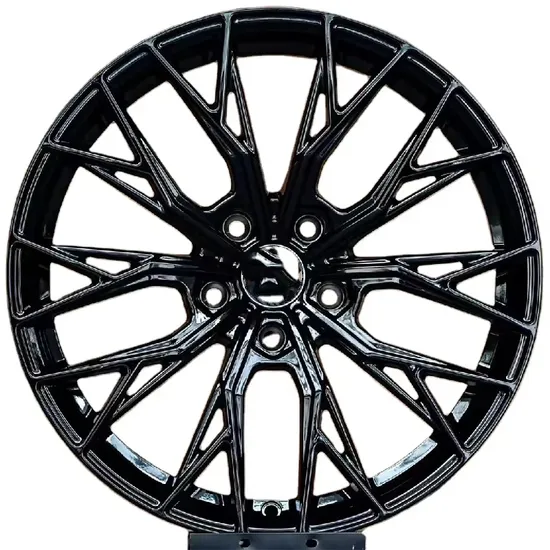
High Performance 5 Holes Machined Face Alloy Wheel for BMW
Product IntroductionHigh Performance 5 Holes Machined Face Alloy Car Wheel, specially designed to suit BMW vehicles. Crafted from premium Alloy…
View Specifications 02
WHEEL RIM/HUB
High Strength 5 Holes Black Machined Face Alloy Wheel
Product IntroductionHigh Strength Customized Black Machined Face 5 Holes Alloy Wheel for Car, made of high-quality Alloy material with Equal…
View Specifications 03
WHEEL RIM/HUB
2026 20*8.5 Black Machined Face Cast Alloy Wheels Rims
Product Introduction2026 20*8.5 Black Machined Face Cast Alloy Wheels Rims, featuring a sleek black finish and equal diameter spokes. Crafted…
View Specifications 04
WHEEL RIM/HUB
5 Holes Flow Formed Alloy Car Wheel Rims Silver Machined Face
Product IntroductionNew Design Flow Formed Alloy Car Wheel Rims with 5 Holes, featuring a silver machined face. Crafted from high-quality…
View Specifications