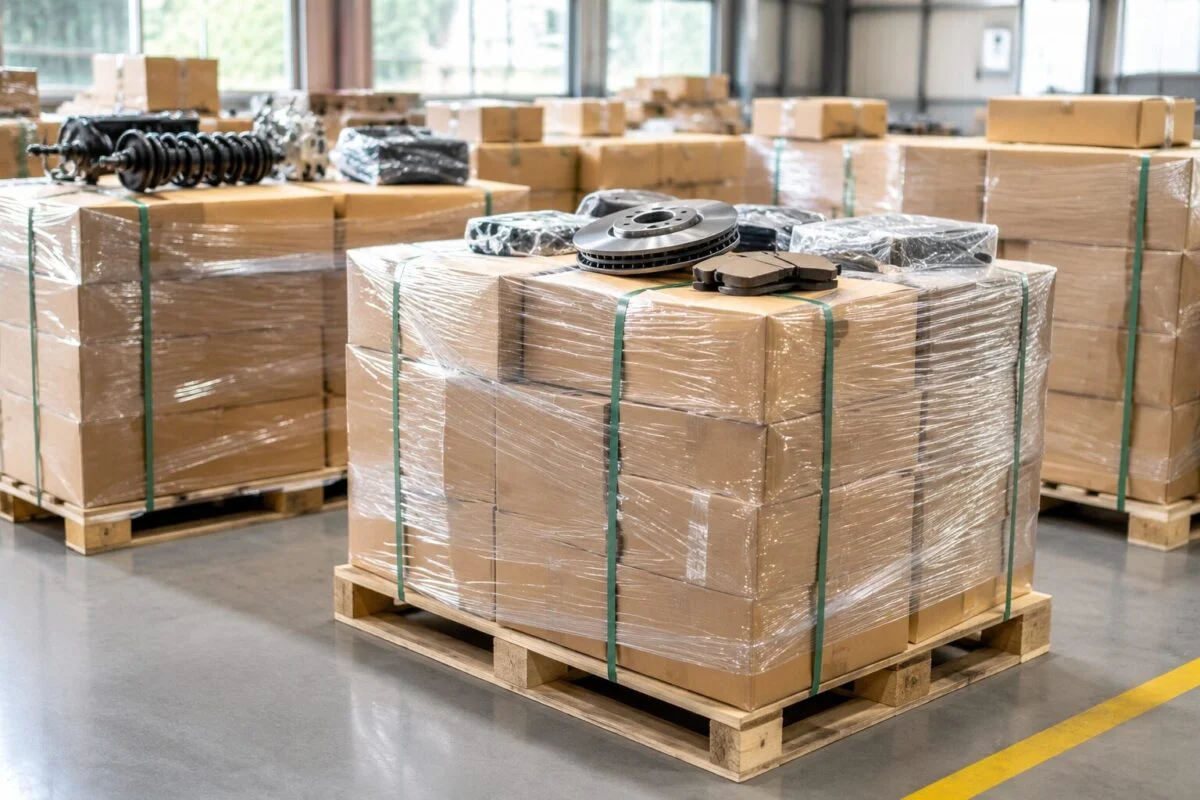
Alloy Wheel Supplier for USA: China Factory Direct
“Factory direct” on Alibaba often means a trading company layering a 25-35% markup on top of the actual Shandong manufacturer.
USA buyers can cut substantial costs sourcing alloy wheels factory-direct from certified Shandong manufacturers, provided they verify DOT/JWL documentation, understand true landed cost structures, and match supplier capabilities to their order volume. The alloy wheel supplier for USA operations choose must prove certification authenticity, not just claim it on a product listing.
I spent years sitting on the other side of the desk — sourcing wheels for American aftermarket shops, fielding complaints about mismatched PCDs and paint peeling after one salty winter. The worst batch I ever inherited came from a “factory direct” supplier that turned out to be a middleman with a nice website. The wheels looked right on spec sheets, but when they landed in Long Beach, multiple pallets had hub bore errors that no amount of reaming could fix. The customer ate the freight both ways. That headache pushed me to switch sides and join an actual production line here in Jinan, where I could see every casting and X-ray myself. Now when buyers ask me how to identify a legitimate alloy wheel supplier for USA imports, I don’t pitch — I pull up the cost breakdown, mold amortization, and the DOT stamp paperwork before we even talk finish options. [NEED_CITE: US Customs import requirements for aluminum alloy wheels under HTS 8716.90]
Let me walk you through the verification framework that separates real manufacturers from catalog traders.
What Certifications Does Your Alloy Wheel Supplier Need for the USA Market?
DOT certification is non-negotiable for US imports; JWL/VIA adds credibility but isn’t legally required; verify certs match actual production batches, not just sample approvals.
Every alloy wheel entering the United States must comply with FMVSS 110 and FMVSS 120 standards enforced by the National Highway Traffic Safety Administration. The DOT stamp isn’t optional decoration — it’s a legal requirement that Customs and Border Protection can enforce at the port of entry. I’ve watched shipments sit in bonded warehouses for weeks because the paperwork didn’t match the physical stamps on the wheels. [NEED_CITE: NHTSA FMVSS 110 and 120 compliance requirements for aftermarket wheels]
Here’s what I check when evaluating an alloy wheel supplier for USA compliance:
| Certification | US Market Requirement | Verification Method | Batch-Level Traceability |
|---|---|---|---|
| DOT (FMVSS 110/120) | Mandatory | Physical stamp + test reports | Full batch-level |
| JWL/VIA | Not required, adds value | Stamp verification + lab reports | Sample-level |
| TÜV | Not required for US | Certificate validity check | Not provided |
| ISO 9001 / IATF 16949 | Quality system baseline | Certificate audit | Verifiable |
| CCC | Required for China domestic only | N/A for US imports | Not provided |
A Midwest distributor once ordered a full container from a supplier claiming DOT compliance. When the wheels arrived, the stamps were present but the test reports referenced a different wheel model entirely. The supplier had copied certification paperwork from a similar product. The distributor faced a choice: re-export at massive cost or sell non-compliant wheels and risk liability. They chose re-export. [NEED_CITE: consequences of importing non-DOT-compliant wheels into the United States]
The verification process I follow with buyers includes requesting X-ray inspection reports, dynamic balance testing data, and radial runout specifications. A legitimate alloy wheel supplier for USA operations should provide these without hesitation. If they deflect or say “we can send certificates later,” that’s a red flag. Real manufacturers keep these records organized because their production line generates them automatically.
How Do You Verify Factory Direct vs. Trading Company Markup?
True factories provide production line access, ISO 9001/IATF 16949 certs, and transparent cost breakdowns; trading companies hide behind partner factory language and cannot explain manufacturing processes.
The difference between a real manufacturer and a trading company becomes obvious within the first technical conversation. When I ask a trading company about their casting process, they describe what they’ve read on the manufacturer’s website. When I ask an actual factory engineer, they explain the gravity casting versus low-pressure casting decision based on wheel design complexity and volume requirements. [NEED_CITE: differences between gravity casting and low-pressure casting for alloy wheels]
I evaluate an alloy wheel supplier for USA buyers using these verification checkpoints:
- Production line video access showing actual casting, machining, and painting facilities
- ISO 9001 or IATF 16949 certification with the company name matching the supplier name
- Ability to explain mold design process and amortization schedules
- Transparency on surface treatment options and their cost implications
- Willingness to provide factory audit access or third-party inspection reports
A California tuning shop needed custom staggered fitments in small quantities. They contacted a supplier advertising factory direct pricing. After weeks of communication, the supplier revealed they couldn’t do runs under five hundred pieces because their partner factory required that minimum. The actual manufacturer I connected them with offered one hundred-piece custom runs with reasonable lead times because their production line optimization targets mid-size batches, not just container loads.
The cost structure breakdown I share with buyers looks like this:
| Cost Component | Trading Company | Actual Factory |
|---|---|---|
| Base wheel price | Noticeably higher | Verifiable |
| Mold fee | Hidden or inflated | Transparent amortization |
| Certification fees | Passed through with markup | Direct cost |
| Technical support | Limited | Full batch-level |
| Custom design capability | Restricted | Full batch-level |
When you’re evaluating an alloy wheel supplier for USA imports, ask them to explain their mold amortization policy. A real factory will tell you exactly how they spread mold costs across production runs. A trading company will give you vague answers about partner factory policies they can’t control.
What’s the Real Landed Cost: FOB Price vs. Total Import Expense?
FOB is just a portion of real cost; mold fees, ocean freight, Section 301 tariffs, customs brokerage, and inland trucking add substantially to final per-piece cost.
The lowest FOB price isn’t the cheapest option. I’ve seen buyers celebrate a great FOB quote, then discover the landed cost was substantially higher than competitors who quoted higher FOB but had better logistics optimization. The alloy wheel supplier for USA operations must help buyers understand total cost, not just factory gate price. [NEED_CITE: US Section 301 tariff rates for aluminum alloy wheels from China]
Here’s the cost structure I break down for every buyer:
- Base wheel price at FOB terms
- Mold fee amortization (for custom designs)
- Surface treatment costs (machined face, chrome, custom paint)
- Packaging specifications (pallet vs. carton, Amazon-ready if needed)
- Inland freight from factory to port
- Ocean freight to US port
- Section 301 tariffs (currently applied to Chinese aluminum wheels)
- Customs brokerage fees
- Inland trucking from US port to warehouse
A buyer once compared my quote against a competitor who was substantially cheaper on FOB price. But when I walked through the full landed cost calculation including tariffs, freight, and the competitor’s hidden mold fees, the total cost difference was minimal. The competitor’s lower FOB was offset by inefficient logistics and opaque fee structures.
| Cost Factor | Transparent Supplier | Opaque Supplier |
|---|---|---|
| FOB price clarity | Verifiable | Self-reported |
| Mold fee structure | Transparent amortization | Hidden or inflated |
| Tariff documentation | Full batch-level | Not provided |
| Freight optimization | Controlled | Uncontrolled |
| Total landed cost predictability | Noticeably reduced variance | Vulnerable to surprises |
The alloy wheel supplier for USA buyers should provide a complete cost breakdown before you commit to an order. If they only quote FOB and avoid discussing tariffs and logistics, they’re either inexperienced or hiding costs.
Which MOQ and Lead Time Match Your Business Model?
Distributors need high MOQ for best pricing; tuning shops need flexibility; e-commerce sellers need SKU-level fitment data and packaging readiness.
Different business models require different supplier capabilities. The alloy wheel supplier for USA operations must match their production flexibility to your specific needs, not force you into their preferred order structure.
Here’s how I categorize buyer requirements:
| Business Model | Typical MOQ Need | Lead Time Expectation | Critical Supplier Capability |
|---|---|---|---|
| Wholesale distributor | High volume | Standard production schedule | Batch consistency, private-label OEM |
| Tuning shop | Low to mid volume | Fast turnaround | Custom fitments, staggered setups |
| E-commerce seller | Low volume per SKU | Expedited options | Amazon-ready packaging, fitment data |
| Tire retailer | Mid volume, restocking | Reliable replenishment | Popular fitment inventory |
An Amazon FBA seller once ordered wheels that arrived without proper DOT stamps. Customs held the shipment for weeks. The missing certification paperwork cost them storage fees and lost their peak sales window. They switched to a supplier who understood e-commerce requirements and provided complete documentation with every shipment.
For custom designs, mold production adds to lead time. Stock models ship faster. The alloy wheel supplier for USA buyers should clearly communicate these timelines upfront so you can plan inventory accordingly.
How Do Shandong Factories Compare to Southern China Suppliers?
Shandong specializes in heavy-duty and OEM-grade wheels with stricter quality control; Southern China focuses on aftermarket styling with faster turnover but higher defect rates.
The geographic location of your alloy wheel supplier for USA operations matters more than most buyers realize. Shandong Province, particularly the Jinan and Qingdao areas, has developed a reputation for manufacturing discipline and quality consistency. Southern China factories often compete on speed and styling variety but may sacrifice batch consistency.
I’ve worked with buyers who switched from Southern suppliers to Shandong manufacturers because they were tired of quality variations. One buyer’s return rate dropped noticeably after switching, not because the Shandong wheels were perfect, but because the batch-to-batch consistency was substantially better.
| Manufacturing Region | Quality Focus | Production Strength | Typical Buyer Fit |
|---|---|---|---|
| Shandong (Jinan/Qingdao) | OEM-grade, heavy-duty | Strict quality control | Distributors, OEM buyers |
| Southern China | Aftermarket styling | Fast turnover | Trend-focused retailers |
The alloy wheel supplier for USA buyers should be able to explain their manufacturing heritage and quality systems. Shandong factories typically have longer experience with international certification requirements because they’ve been supplying global OEM programs for extended periods.
Conclusion
Certification verification, cost transparency, and production capability matching separate legitimate factory-direct suppliers from trading company markups. USA buyers sourcing alloy wheels from China must demand DOT documentation, understand total landed cost beyond FOB pricing, and choose suppliers whose MOQ and lead time capabilities align with their business model. Shandong manufacturers offer quality consistency that justifies their position in the global supply chain, provided buyers verify claims through documentation and factory access rather than marketing materials alone.
Applications covered in this article
Parts mentioned
Products in this article
Each part below is supplied source-direct by Jinan Yoker, matched by OE number and checked through full-process inspection.
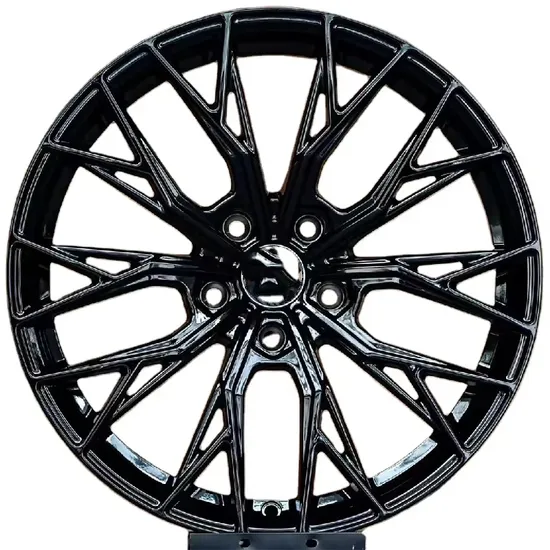 01
WHEEL RIM/HUB
20inch 5*114.3 Black Machine Face Forged Alloy Wheels
Product IntroductionCustomized 20-inch multispoke aluminum forged alloy passenger car wheels with black machine face. Features 5*114.3 PCD, available in silver/hyper…
View Specifications 02
WHEEL RIM/HUB
18 Inch 4X110 4X114 Car Alloy Wheels Rims Oy17186
Product ParametersModel NO.OY17186MaterialAluminumSize16-20 InchDescriptionFactory wholesale 18 Inch car alloy wheels rims, made of aluminum with chrome finishing. Customizable ET, PCD,…
View Specifications 03
WHEEL RIM/HUB
Red Forged 17 Inch Car Alloy Wheels Rims
Product DescriptionRed Forged Car Alloy Wheels Rims, 17 Inch, feature Aluminum material with Black Machined Face finishing. Customizable color and…
View Specifications 04
WHEEL RIM/HUB
17-19 Inch Lightweight Forged Alloy Wheels Et30/35/42 Stability
Product IntroductionLightweight forged alloy wheels with 17-19 inch sizes and multi-ET options (ET30/35/42) for enhanced stability. Customizable size (12-25"), finishing,…
View Specifications