Light Commercial Van Replacements QC Principles by Manufacturer
Visual inspections and basic static balancing are entirely insufficient for preventing catastrophic highway failures in commercial fleets.
Strict adherence to Quality Control Principles for light commercial van replacements is non-negotiable to eliminate high-speed vibrations, prevent premature bearing destruction, and avoid the financial devastation of bulk container returns.
Years ago, while handling customs documentation in Dongguan for a massive shipment of replacement rims heading to Riyadh, I focused exclusively on paperwork and ignored the production floor. We never measured the radial runout. When the cargo arrived, the client installed the wheels, and the vehicles suffered severe high-speed shimmy. The entire container was rejected, and the return freight costs eclipsed the original cargo value. That mid-six-figure loss forced a complete shift in how I evaluate manufacturing rigor. Today, I can identify dimensional deviations and coating deficiencies by touch alone, knowing that a marginal deviation in replacement parts can turn a routine长途 haul into a lethal hazard. [NEED_CITE: root cause distribution of commercial vehicle wheel failures based on international transport safety data].
Transitioning from documentation to business operations meant realizing that true Quality Control Principles for light commercial van replacements require dynamic balancing and coordinate measuring machine tolerance checks, far beyond mere visual assessments.
Why Do LCV Replacement Wheels Fail on the Highway?
Dynamic imbalance and unchecked radial runout are the primary culprits behind high-speed commercial vehicle vibrations and subsequent component failures.
Historical industry data reveals a steady increase in highway incidents linked to aftermarket wheel failures over the past decade, primarily stemming from neglected dynamic testing protocols. [NEED_CITE: longitudinal analysis of commercial vehicle suspension failures attributed to wheel assembly defects]. During a routine audit of a fleet maintenance hub, I observed a pattern of premature bearing wear across their delivery vans. The root cause was traced back to a batch of rims where the hole pattern tolerance was ignored. The slight misalignment caused uneven stress distribution, leading to a noticeable drop in mileage before catastrophic bearing failure. The fleet operator had to replace the entire fleet’s wheel hubs, incurring massive downtime costs.
The insight here is clear: cheaper wheels ultimately cost significantly more. A marginal deviation in the pitch circle diameter causes highway shimmy, which not only ruins the driving experience but destroys the brand reputation of the supplier. Implementing rigorous Quality Control Principles for light commercial van replacements ensures that dynamic balance is verified at high rotational speeds, eliminating the resonance that tears apart suspension components.
What Are the Critical Dimensional Tolerances for LCV Rims?
Precision in the pitch circle diameter, offset, and center bore is the absolute baseline for safe commercial vehicle operation.
Over the years, global transport safety authorities have continuously tightened the acceptable tolerance bands for commercial wheel assemblies to accommodate higher highway speeds and heavier loads. [NEED_CITE: evolution of dimensional tolerance standards for commercial alloy wheels in international automotive guidelines]. I once reviewed a retail upfit shop’s inventory where a batch of rims suffered from poor center bore machining. The vehicles experienced severe steering wheel oscillation at cruising speeds because the hub-centric fitment was compromised. The shop had to scrap the entire batch, realizing that a fraction of a millimeter in deviation translates to massive kinetic energy mismanagement on the road.
Buyers must understand that the Quality Control Principles for light commercial van replacements demand strict adherence to these dimensional tolerances. When a manufacturer utilizes advanced coordinate measuring machines to verify every critical dimension, the resulting product guarantees a perfect hub-centric fit. This level of precision is exactly why suppliers holding multi-certifications like ISO, TÜV, and DOT, and offering a 3-year structural warranty, are the only viable partners for serious fleet buyers.
How to Verify Surface Durability for Commercial Use?
Coating thickness and corrosion resistance testing dictate the lifespan and aesthetic retention of commercial wheels in harsh environments.
Industry association guidelines have progressively mandated more rigorous environmental testing for commercial vehicle components, reflecting the harsher operational realities these vehicles face. [NEED_CITE: updated corrosion resistance testing protocols for automotive aftermarket wheels by global industry associations]. I recall a case involving a retail upfit shop that specialized in commercial van conversions. They sourced a batch of rims with inadequate film thickness. Within a short period, the paint began peeling off due to road salt and chemical exposure. The corrosion timeline was drastically accelerated, leading to a wave of customer complaints and warranty claims that nearly bankrupted the small business.
To prevent such disasters, the Quality Control Principles for light commercial van replacements must include strict verification of surface durability. This involves measuring the coating micron range and conducting extended salt-spray endurance tests. A manufacturer that controls nitrogen infusion during the casting process and applies micron-level precision to their surface finishing ensures that the wheels remain robust and resistant to environmental degradation, thereby protecting the buyer’s investment and end-user satisfaction.
Which QC Documents Should Buyers Demand from Suppliers?
Comprehensive traceability and verifiable testing reports are the only proof of a supplier’s commitment to commercial-grade quality.
The shift towards stringent supply chain transparency has been a dominant trend in the automotive aftermarket over recent years, driven by the need to mitigate liability and ensure batch consistency. [NEED_CITE: supply chain transparency requirements for automotive aftermarket parts in global trade regulations]. A wholesale distributor in the Middle East once faced a situation where a supplier provided only self-reported quality certificates. When a batch of wheels exhibited porosity issues detected via X-ray checks, the lack of verifiable traceability meant the distributor had to absorb the entire loss. The supplier disappeared, leaving the distributor to handle the fallout with angry fleet clients.
Therefore, the Quality Control Principles for light commercial van replacements mandate that buyers demand full batch-level traceability and independent testing reports. Suppliers operating under established trademarks with full OEM and ODM customization capabilities understand this necessity. They provide complete customs documentation and maintain low minimum order quantities to allow buyers to test batch consistency before committing to massive container loads. This transparency is the bedrock of a sustainable B2B relationship in the commercial wheel sector.
Conclusion
Rigorous dimensional verification and dynamic testing are the absolute prerequisites for commercial wheel safety and profitability.
Adhering to strict Quality Control Principles for light commercial van replacements protects fleets from catastrophic highway failures and shields wholesalers from the financial ruin of bulk returns. Demanding verifiable traceability and multi-certified manufacturing ensures that every wheel delivered can withstand the relentless demands of commercial operations.
Applications covered in this article
Parts mentioned
Products in this article
Each part below is supplied source-direct by Jinan Yoker, matched by OE number and checked through full-process inspection.
 01
BRAKE DISC/DRUM
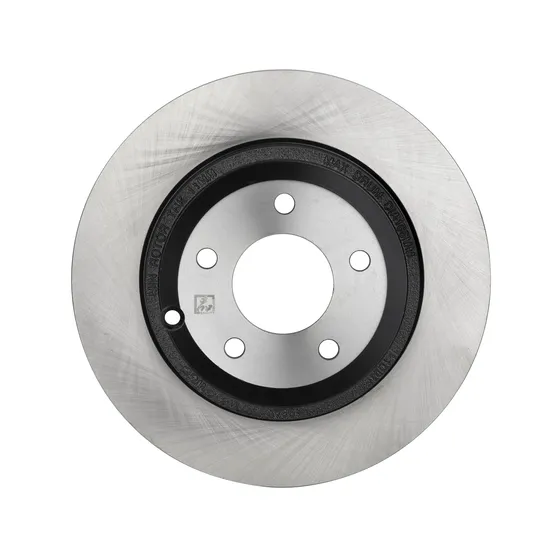
Manufacturers Price Brake Rotor Disc Pad for Series Cars
Product IntroductionManufacturers Price Brake Rotor Disc Pad for Series Cars, Chinese OEM Factory Auto Parts Wholesale. High-quality front brake disc…
View Specifications 02
BRAKE DISC/DRUM
China Car Brake Rotor Disc Pad Front Rear Wholesale Manufacturer
Product ParametersModel NO.Brake DiscMaterialIronPositionFrontIntroductionChina factory wholesale front brake rotor disc, made of iron. Certified by ISO14001, IATF-16949, ISO9001. Suitable for…
View Specifications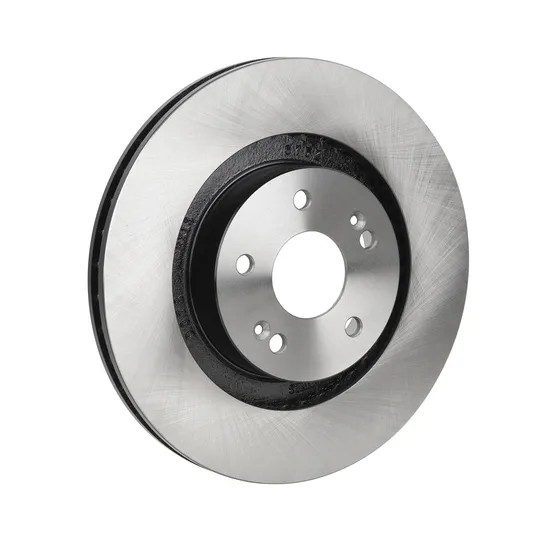 03
BRAKE DISC/DRUM
Manufacturers Price Hot Sale Disc Pad for Series Cars
Product ParametersModel NO.BD002MaterialIronPositionFrontIntroductionHot sale front disc pad (Model BD002) made of iron, certified by ISO14001, IATF-16949, ISO9001. Manufactured by Chinese…
View Specifications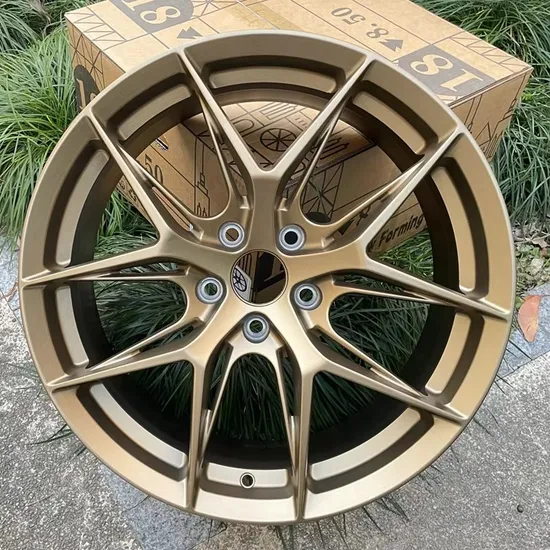 04
WHEEL RIM/HUB
20 Inch Aluminum Brozen Rim Wheels China Manufacturer
Product IntroductionHigh-quality aftermarket alloy wheel hub with chrome finishing, available in 16-20 inch diameter. Manufactured in China by Ouya, featuring…
View Specifications