How to Specify Requirements for Wheel Vibration After Replacement
Most aftermarket distributors and tuning shops mistakenly believe that wheel vibration after replacement is purely a dynamic balancing issue. In reality, the true culprit is frequently hidden in sub-millimeter hub clearance gaps or contaminated mating surfaces that ruin clamping force.
To eliminate steering shake, you must specify strict physical fitment tolerances, mandate thorough hub surface preparation, and enforce multi-pass star-pattern torque sequences, rather than relying solely on aftermarket wheel balancing specs.
When I was coordinating aftermarket wheel installations across Brazil and Mexico, a client in Sao Paulo reported severe steering shake immediately after swapping to a set of 20-inch machined rims. I flew down to inspect the setup, checked the dynamic balancing, and found the wheels were perfectly balanced on the machine. The vibration was not the wheel itself. It was a missing centering ring and a layer of rust on the hub mating surface. That specific trip reshaped how I handle technical specifications. Now, before any buyer signs off on an order, I walk them through the exact hub clearance tolerances and torque sequences required to prevent wheel vibration after replacement. [NEED_CITE: root cause distribution of post-installation steering shake per SAE standards]
Let us break down the exact specifications you need to demand from your supply chain to guarantee zero-vibration installations.
Why Do Wheels Vibrate After Replacement?
Vibration stems from fitment gaps and debris, not just unbalanced mass. When a wheel is mounted, it relies on a perfect mechanical bond with the vehicle hub. If the physical interface is compromised, no amount of lead weight or dynamic spinning will fix the issue at highway speeds.
The most common counter-intuitive reality in our industry is that over-torquing does not secure the wheel better. In fact, applying excessive force warps the hub face and induces lateral runout, which translates directly into steering shake. Similarly, assuming that a wheel vibration after replacement is a manufacturing defect of the rim often leads to unnecessary returns, when the actual failure lies in the installation environment. [NEED_CITE: impact of hub face runout on lateral vibration per TÜV testing protocols]
Consider a regional fleet operator I consulted for. They were experiencing widespread steering shake across their light truck fleet after a routine wheel upgrade. The technicians were rushing the installation, leaving brake dust and road grime on the hub mating surfaces. This debris caused uneven clamping, leading to significant torque loss once the vehicle was loaded and subjected to thermal cycles. The wheels were technically perfect, but the installation protocol was flawed.
To stop these complaints, your technical documentation must shift focus from merely listing aftermarket wheel balancing specs to defining the entire physical fitment ecosystem.
How to Specify Hub Clearance and Centering Requirements?
You must mandate exact center bore tolerances and make hub centric ring vibration fix protocols mandatory for any multi-fitment application.
When a wheel’s center bore is even slightly larger than the hub pilot diameter, the wheel relies entirely on the lug nuts or bolts to center it. This is known as lug-centric mounting. Under heavy braking or cornering, the microscopic movement between the wheel and the hub creates a harmonic resonance that drivers feel as a steering wheel shimmy.
To specify this correctly, you need to enforce the following parameters:
- Center Bore Tolerances: The machining of the center bore must adhere to strict concentricity limits. A precision-machined center bore ensures that the wheel sits perfectly true to the hub pilot.
- Mandatory Centering Rings: For any aftermarket application where the wheel center bore exceeds the vehicle hub diameter, high-quality polycarbonate or aluminum centering rings are not optional accessories; they are critical structural components.
- Clearance Gap Elimination: The goal is a zero-gap interface. Specifying a hub centric ring vibration fix means ensuring the ring’s outer diameter matches the wheel bore exactly, and the inner diameter matches the vehicle hub exactly. [NEED_CITE: hub-centric clearance tolerance limits defined by SEMA engineering guidelines]
In my early days dealing with a Latin American tuning shop, they were facing massive return rates on a popular deep concave wheel style. The issue was traced back to a sub-millimeter hub clearance gap because they were using cheap, compressible plastic rings that deformed under the vehicle’s weight. By switching to precision-machined aluminum centering rings included in our comprehensive fitment data packages, the hub centric ring vibration fix was permanently resolved.
What Are the Correct Hub Preparation and Torque Steps?
Require clean mating surfaces and multi-pass star-pattern torque sequences to ensure even clamping force.
Even the most perfectly machined alloy wheel will vibrate if the clamping force is uneven. The hub preparation phase is where most installation failures occur. Technicians must use a wire brush or abrasive pad to remove all rust, paint, and debris from the hub mounting surface and the wheel’s mounting pad.
Once the surfaces are bare and clean, the wheel torque sequence vibration prevention protocol must be strictly followed. Hand-thread all lug nuts or bolts to ensure proper engagement. Then, use a calibrated torque wrench to tighten the fasteners in a star or criss-cross pattern.
The correct specification involves multiple incremental passes:
- Pass One: Tighten each fastener in the star pattern to a preliminary low torque value to seat the wheel evenly against the hub.
- Pass Two: Repeat the star pattern, increasing the torque to the midpoint of the vehicle manufacturer’s specification.
- Final Pass: Complete the star pattern one last time, reaching the exact final torque specification.
This multi-pass approach prevents the wheel from being pulled unevenly against the hub, which is a primary cause of wheel vibration after replacement. [NEED_CITE: star-pattern torque sequence effectiveness on lateral runout per ISO mechanical assembly standards]
An e-commerce seller I partnered with was struggling with a high return rate for a specific staggered fitment kit. Their customers were using impact guns to zip the lug nuts on in a circular sequence. This warped the wheel mounting pad. By mandating that their installation guide include a strict star-pattern torque sequence with multiple passes to reach the final torque, their return rate dropped noticeably.
How to Verify Balancing and Runout Specs?
Set strict road-force balancing limits and lateral/runout thresholds before the wheel leaves the mounting bay.
Once the physical fitment and torque sequences are verified, the final step is dynamic verification. Standard dynamic balancing is often insufficient for low-profile tires and large diameter aftermarket wheels. You must specify road force balancing.
Road force balancing simulates the weight of the vehicle pressing the tire against the road, identifying stiffness variations in the tire sidewall and matching the tire’s high spot with the wheel’s low spot.
Your specifications should include:
- Road Force Variation Limits: Set a maximum acceptable road force variation threshold. If the variation exceeds this limit, the tire must be demounted, rotated on the rim, and remeasured.
- Lateral and Radial Runout Thresholds: Use a dial indicator to measure the lateral (side-to-side) and radial (up-and-down) runout of both the wheel and the tire assembly. The combined runout must fall within strict limits. [NEED_CITE: acceptable lateral and radial runout thresholds for aftermarket alloy wheels per JWL standards]
- Hub Surface Verification: Ensure the balancing machine’s cone or collet is pressing against the precision-machined center bore of the wheel, not the lug holes, to guarantee the wheel is spinning true to its actual mounting axis.
By integrating these verification steps into your technical support materials, you provide your buyers with a complete troubleshooting framework. This level of detail, backed by comprehensive fitment data and included hub-centric accessories, transforms a simple parts transaction into a guaranteed zero-vibration installation.
Conclusion
Eliminating steering shake requires a holistic approach to wheel fitment and installation. By mandating strict hub clearance tolerances, enforcing rigorous surface preparation, and executing precise multi-pass torque sequences, distributors and tuning shops can eradicate the root causes of wheel vibration after replacement. True quality control extends far beyond the balancing machine; it begins with the micron-level precision of the center bore and ends with the calibrated click of a torque wrench.
Applications covered in this article
Parts mentioned
Products in this article
Each part below is supplied source-direct by Jinan Yoker, matched by OE number and checked through full-process inspection.
 01
WHEEL RIM/HUB
17-19 Inch OEM Replacement Alloy Wheels Rims Oy17101 New
Product IntroductionOEM replacement alloy wheels with 17-19 inch size, made of carbon fiber material and chrome finishing. Customizable ET, PCD,…
View Specifications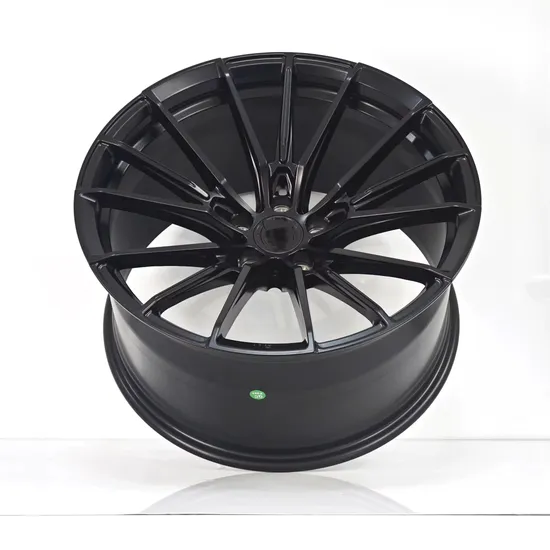 02
WHEEL RIM/HUB
17-19inch Classic Car Passenger Wheel Rim Replacement
Product IntroductionClassic Car Passenger Wheel Rim for replacement, available in 17-19inch, made of high-quality Aluminum. Features Equal Diameter Spoke design,…
View Specifications 03
WHEEL RIM/HUB
OEM 5X120 Mag Wheel Replacement Car Rim Auto Wheels
Product IntroductionOEM Replacement Car Rim Auto Wheels 5X120 Mag Wheel, made of Aluminum with Black finishing. Customizable style, suitable for…
View Specifications 04
WHEEL RIM/HUB
China Factory 17-21inch Alloy Rim Wheel Hub Replacement
Product IntroductionChina Factory Alloy Rim Wheel Hub, available in 17-21inch (customizable up to 12-24"), made of high-quality Aluminum. Features Equal…
View Specifications