Engineering Considerations for Wheel Offset Rubbing Issues – Wholesale
Most wheel rubbing is blamed on tire width, but the real culprit is often incorrect offset pushing the tire into suspension components.
Preventing wheel offset rubbing issues requires precise calculation of suspension geometry, steering limits, and fender clearance, not just matching bolt patterns.
Running the SEMA show in Las Vegas for years, I learned the hard way. I once pushed a batch of large negative offset wheels to a California client. We only looked at the basic data and ignored the steering limits. After installation, when the client turned the steering wheel at a large angle, the tire directly rubbed and blew out the inner fender liner. That entire batch was dead stock, and the claim forms are still a mid-six-figure memory. In our line of work, a millimeter difference in offset drastically increases the rubbing risk. Engineering considerations are never just paper theory; they dictate whether a setup survives the street [NEED_CITE: relationship between scrub radius and steering geometry per SAE standards].
Understanding these dynamics is the first step toward avoiding costly fitment failures.
What Causes Wheel Offset Rubbing?
Rubbing stems from ignoring the relationship between offset, backspacing, and suspension travel.
Many assume that if a wheel clears the brake caliper, it will clear everything else. This is a fatal flaw. When dealing with wheel offset rubbing issues, the inner clearance is just as critical as the outer lip.
Consider a scenario where an aftermarket shop installs large negative offset wheels. The focus is often on achieving a deep concave look or aggressive stance. However, pushing the wheel outward changes the scrub radius. When the steering is turned to its limit, the inner edge of the tire swings in a wider arc. If the inner fender liner or the lower control arm cannot accommodate this arc, the tire will tear through the liner [NEED_CITE: steering angle limits and inner fender clearance dynamics in modified vehicles].
Conversely, a distributor supplying staggered setups for heavy SUVs might face outer fender lip rubbing. This happens during full compression suspension travel. The offset pushes the tire outward, but the suspension articulation causes the wheel to move upward and inward relative to the fender. If the outer lip lacks the necessary clearance, the tire will chew through the paint and metal [NEED_CITE: suspension articulation and fender clearance calculations].
| Factor | Standard Fitment | Aggressive Negative Offset |
|---|---|---|
| Scrub Radius | Controlled | Noticeably increased |
| Steering Arc | Standard | Substantially wider |
| Inner Liner Risk | Resistant | Vulnerable |
| Outer Lip Risk | Resistant | Vulnerable under compression |
The root cause is rarely the tire itself; it is the geometric mismatch caused by the offset.
How to Calculate the Correct Offset for Your Vehicle?
Use the backspacing formula and measure strut clearance to determine the safe offset range.
Calculating the correct offset is a mathematical necessity, not a guessing game. To resolve wheel offset rubbing issues, you must understand the difference between offset and backspacing. Offset is the distance from the wheel’s centerline to the mounting surface. Backspacing is the distance from the mounting surface to the inner edge of the wheel.
The calculation requires measuring the available space between the strut body and the inner fender line. You must account for the width of the tire and the desired stance. If the calculated offset pushes the tire too far inward, it will contact the strut or sway link. If it pushes too far outward, it violates the fender line [NEED_CITE: backspacing calculation methods and strut clearance measurements].
Here is the systematic approach to determining the safe range:
- Measure the available inner clearance from the strut to the inner fender lip at rest.
- Measure the outer clearance from the hub face to the outer fender lip.
- Determine the maximum tire width intended for the setup.
- Calculate the required backspacing to center the tire or achieve the desired poke.
- Convert the backspacing to offset using the wheel width.
- Verify the new scrub radius impact on steering effort and return-to-center feel [NEED_CITE: converting backspacing to offset and evaluating scrub radius impact].
A common mistake is using spacers to fix a minor offset mismatch without recalculating the geometry. Spacers effectively reduce the backspacing, pushing the wheel outward. While this might solve inner rubbing, it increases the scrub radius, which worsens steering geometry and places extra stress on wheel bearings [NEED_CITE: impact of wheel spacers on scrub radius and bearing load].
What Engineering Modifications Prevent Rubbing?
Adjusting camber, using spacers, or rolling fenders must be done with precise mathematical backing.
When the calculated offset still results in minor contact, engineering modifications are required. However, these are not magic fixes; they are geometric compromises that must be managed carefully to prevent new wheel offset rubbing issues.
Adjusting the camber is the most common solution for inner rubbing. By tilting the top of the wheel inward, you pull the inner edge of the tire away from the strut or control arm. This is highly effective for static clearance. However, negative camber reduces the contact patch during straight-line braking and accelerates wear on the inner shoulder of the tire [NEED_CITE: effects of negative camber on tire contact patch and wear patterns].
Rolling or pulling the fender lips addresses outer rubbing. This physical modification creates more space for the tire during suspension compression. It is essential for staggered SUV setups or wide-body builds. Yet, if the offset is drastically incorrect, rolling the fender will not be enough to prevent the tire from contacting the inner liner during full steering lock.
Using spacers is a double-edged sword. As mentioned, they solve inner clearance by moving the wheel outward. But they must be hub-centric. If an e-commerce seller faces returns due to minor offset mismatches and tries to use non-hub-centric spacers, the result is vibration-induced lateral shift. This shift destroys the centering force, leading to severe vibrations and eventual stud failure [NEED_CITE: hub-centric ring thickness and vibration-induced lateral shift].
| Modification | Primary Benefit | Secondary Risk |
|---|---|---|
| Camber Adjustment | Clears inner strut | Unstable tire wear |
| Fender Rolling | Clears outer lip | Reduced structural rigidity |
| Hub-Centric Spacers | Clears inner components | Increased bearing load |
Every modification changes the vehicle’s dynamics. The goal is to balance clearance with drivability.
How to Verify Fitment Before Mass Production?
Always conduct physical mock-ups and full-lock steering tests before finalizing wheel specs.
Theoretical calculations are only half the battle. Physical verification is the ultimate safeguard against wheel offset rubbing issues. Before committing to mass production or a large wholesale order, the setup must be validated in the real world.
The first step is a physical mock-up. Mount the tire on the wheel, install it on the vehicle, and check the clearances at rest. Use a feeler gauge to measure the exact gap between the tire and the strut, as well as the tire and the fender lip.
Next, perform a full-lock steering test. Turn the steering wheel to its absolute mechanical limit in both directions. Observe the tire’s movement. Does it touch the inner liner? Does it rub against the lower control arm? This test reveals dynamic clearance issues that static measurements miss [NEED_CITE: physical mock-up and full-lock steering test protocols].
Finally, simulate suspension articulation. Use a hydraulic lift or a ramp to compress the suspension fully. Check if the outer lip of the tire contacts the fender. This is crucial for vehicles that will carry heavy loads or be driven off-road.
This is where a reliable manufacturing partner becomes invaluable. At Ouya, our OEM/ODM customization capability goes beyond just casting the wheel. Our engineering team calculates exact offsets based on your specific vehicle data. We provide comprehensive 3D fitment data to prevent rubbing for global buyers. By validating the design digitally and physically before production, we ensure that every wheel leaving our facility meets strict fitment standards, eliminating the guesswork and protecting your reputation [NEED_CITE: 3D fitment data and engineering validation in wheel manufacturing].
Conclusion
Wheel fitment is a science of geometry, not just aesthetics.
Preventing wheel offset rubbing issues demands a rigorous approach to suspension travel, steering limits, and precise offset calculations. By combining mathematical validation with physical mock-ups, distributors and shops can eliminate fitment failures and deliver setups that perform flawlessly on the street.
Applications covered in this article
Parts mentioned
Products in this article
Each part below is supplied source-direct by Jinan Yoker, matched by OE number and checked through full-process inspection.
 01
WHEEL RIM/HUB
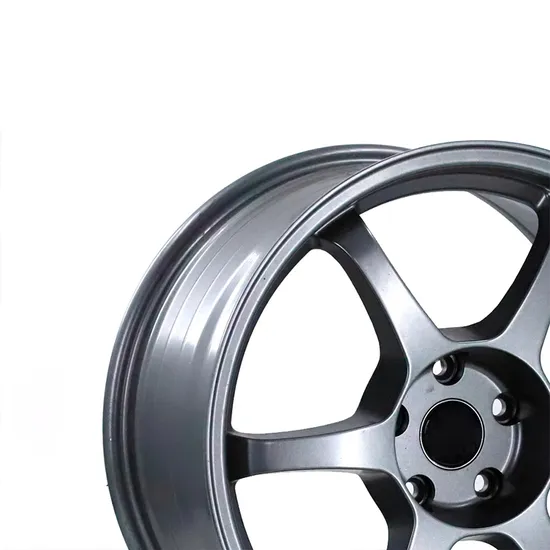
4 Holes Aluminium Car Wheels Performance Rims Positive Offset
Product ParametersMaterialAlloyWheel Hub Diameter16-20"FinishingChromeIntroductionHot Sale 4 Holes Aluminium Car Wheels Performance Rims with Positive Offset. Made of high-quality alloy, available…
View Specifications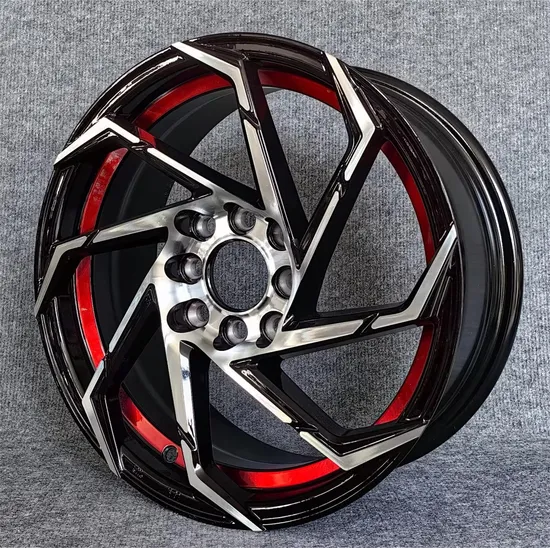 02
WHEEL RIM/HUB
15*6.5 PCD8*100*114.3 35mm Offset Alloy Car Wheels
Product ParametersSize15*6.5PCD8*100*114.3Offset35mmIntroductionFactory best-selling 15*6.5 alloy car wheels with 8*100*114.3 PCD and 35mm offset. Made of high-quality aluminum, customizable finishing and…
View Specifications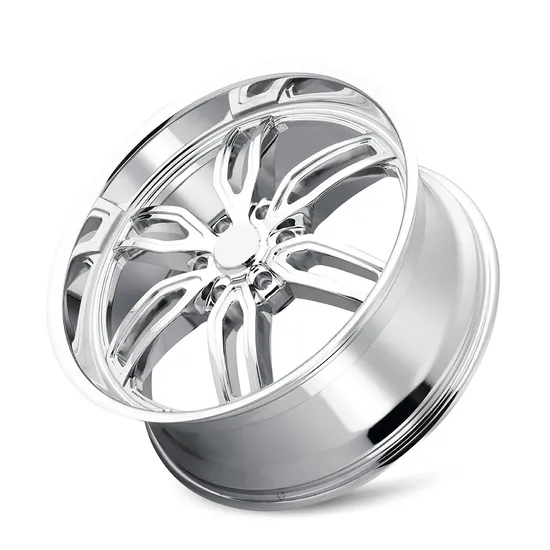 03
WHEEL RIM/HUB
20-Inch Concave Alloy Wheels Custom Offsets Colors High-End
Product ParametersModel NO.OYT179MaterialAluminumSize12-25" CustomizableIntroductionThis high-end 20-inch concave alloy wheel features customizable offsets and colors, crafted from premium aluminum. With a…
View Specifications 04
WHEEL RIM/HUB
15-20 Inch 5 Hole Offset Concave Alloy Aluminum Wheels Rims
Product IntroductionThese 5-hole offset concave alloy wheels are premium aluminum rims designed for 4WD vehicles. With customizable style and color…
View Specifications