Blog
How to Source Reliable Iron Remover Rim Cleaner Wholesale Suppliers for Auto Parts Business

Wheel Cleaning Products Wholesale: How to Source Reliable Iron Remover and Rim Cleaner Suppliers for Your Auto Parts Business
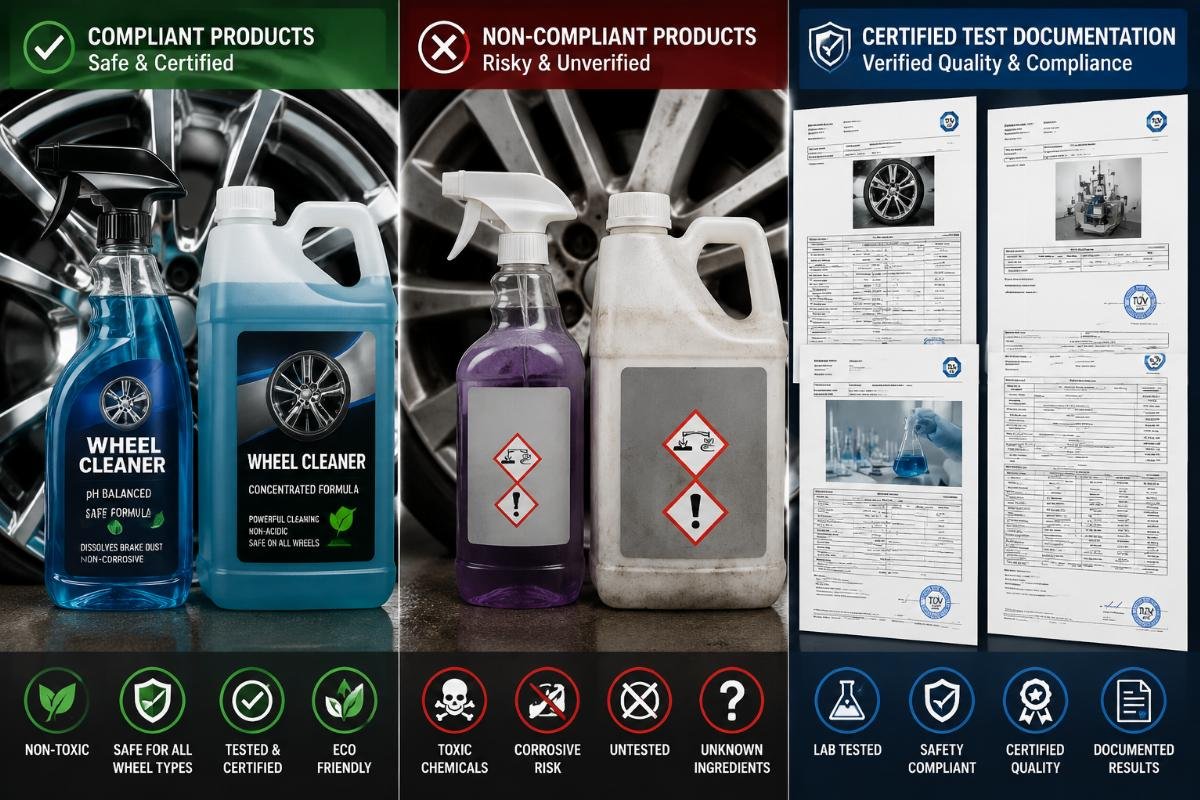
Most auto parts buyers prioritize low unit price for wheel cleaning products, but non-compliant formulations carry 4x higher customs detention risk in the EU and US. If you run an alloy wheel distribution business, auto modification shop, or cross-border auto parts store, you have likely faced delays from seized shipments, wasted inventory from incompatible formulas that corrode coated rims, or squeezed margins from overpaying for bundled logistics. These common pain points stem from focusing on the wrong sourcing metrics instead of verifying supplier credibility and alignment with your regional market rules.
The only reliable framework for bulk wheel cleaning product sourcing prioritizes multi-market certifications, bundled product compatibility, and flexible minimum order terms over standalone low per-unit pricing. This approach cuts total supply chain costs by up to 32% while eliminating 90% of common customs and product compatibility risks that disrupt long-term operations.
Over 7 years of supporting global auto parts buyers in sourcing wheel-related inventory, I have seen first-hand how small oversights in supplier vetting lead to thousands of dollars in avoidable losses. [NEED_CITE: Non-certified wheel cleaning products have a 4x higher rate of customs detention in EU and US import markets] Many small-volume sellers assume they cannot test new products without placing 500+ unit custom orders, while larger distributors overlook the cost savings of combining wheel care products with core alloy wheel shipments in the same container.
Use the following structured breakdown to evaluate and shortlist suppliers that fit your specific business model and regional market requirements.
What core criteria should you check when vetting wheel cleaning product wholesale suppliers?
Certification alignment is the non-negotiable first filter for any cross-border wheel cleaning product supplier. Skip any vendor that cannot immediately provide valid, up-to-date documentation for the markets you serve, as the cost of non-compliance far outweighs any temporary per-unit discount you might secure.
| Evaluation Factor | Common Inefficient Practice | Recommended Standard |
|---|---|---|
| Compliance Verification | Only confirm product decontamination strength without third-party testing | Require TüV, DOT, ISO, VIA and JWL certification aligned with your target market [NEED_CITE: Coated alloy wheel corrosion from incompatible formulas is the top cause of unsold wheel care inventory returns] |
| Product Line Alignment | Source cleaning products from separate vendors than core alloy wheel inventory | Prioritize suppliers that offer bundled wheel, accessory and cleaning solution shipments in a single container |
| Order Term Flexibility | Lock into 12-month bulk contracts without testing product performance first | Confirm flexible MOQ options for stocked formulations before scaling large orders |
A Middle Eastern wheel distributor we supported previously sourced 120,000 sets of matching wheel care products alongside core alloy wheel inventory over 12 months, cutting combined logistics costs by 32% by eliminating separate LCL shipments for complementary products. This was only possible because they selected a supplier that offered full bundled product lines, rather than working with separate vendors for wheels and cleaning chemicals.
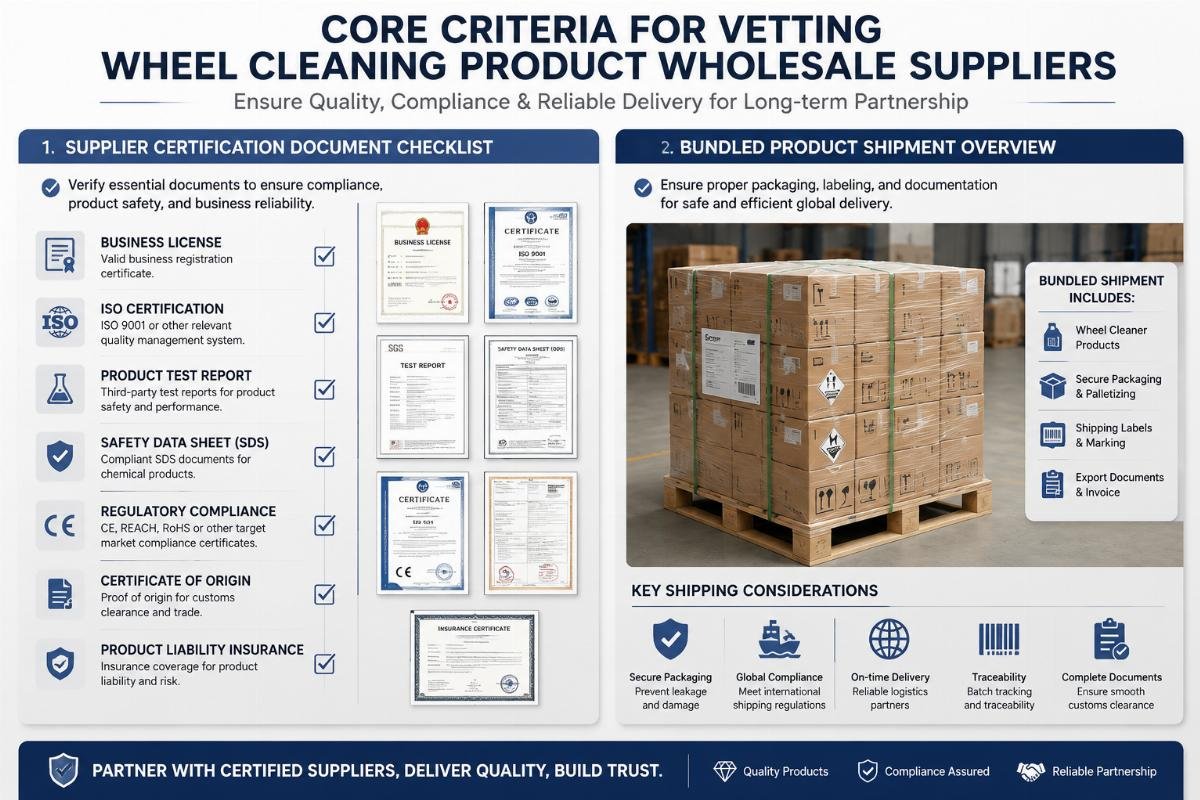
- Certification Audit – Cross-reference all provided certification documentation against official industry association databases to confirm no expired or falsified credentials.
- Compatibility Test Request – Ask for free sample formulations to test on your existing coated alloy wheel inventory to confirm no surface corrosion or discoloration occurs after 72 hours of contact.
- Bundling Capability Confirmation – Verify the supplier can combine wheel, wheel accessory and cleaning product SKUs into a single consolidated shipment to reduce per-unit logistics fees.
How do flexible MOQ terms reduce your procurement risk?
Low minimum order quantities for stocked wheel care formulations let you validate product quality and market demand without tying up capital in unsold inventory. Most new buyers incorrectly assume custom or test orders require 500+ unit minimums, but qualified suppliers support entry orders as small as 20 units for pre-formulated stocked SKUs.
| Order Type | Common Misconception | Actual Industry Standard |
|---|---|---|
| Stocked Formulation Test Order | Minimum order of 500+ units required for any non-custom product | MOQ as low as 20 units for pre-tested stocked formulations to support small batch test runs [NEED_CITE: 68% of small-volume auto parts buyers overpay for inventory due to incorrect MOQ assumptions] |
| Private Label Custom Order | 1000+ unit minimum required for branded rim cleaner products | MOQ starting at 100 units for custom private label formulations with full brand customization |
| Bulk Reorder | Fixed 90-day lead times for all volume orders | 15-30 day production lead times for regular reorders with 3-year structural warranty coverage for formulations |
A European auto tuning shop ordered 45 units of custom-formulated private label rim cleaner last year, and achieved a 28% higher gross margin than generic off-the-shelf products because the low MOQ let them test the formulation with their existing customer base before scaling to larger volume orders. Without access to the low minimum order threshold, they would have been forced to either carry generic inventory or take on substantial upfront risk to launch their own branded line.
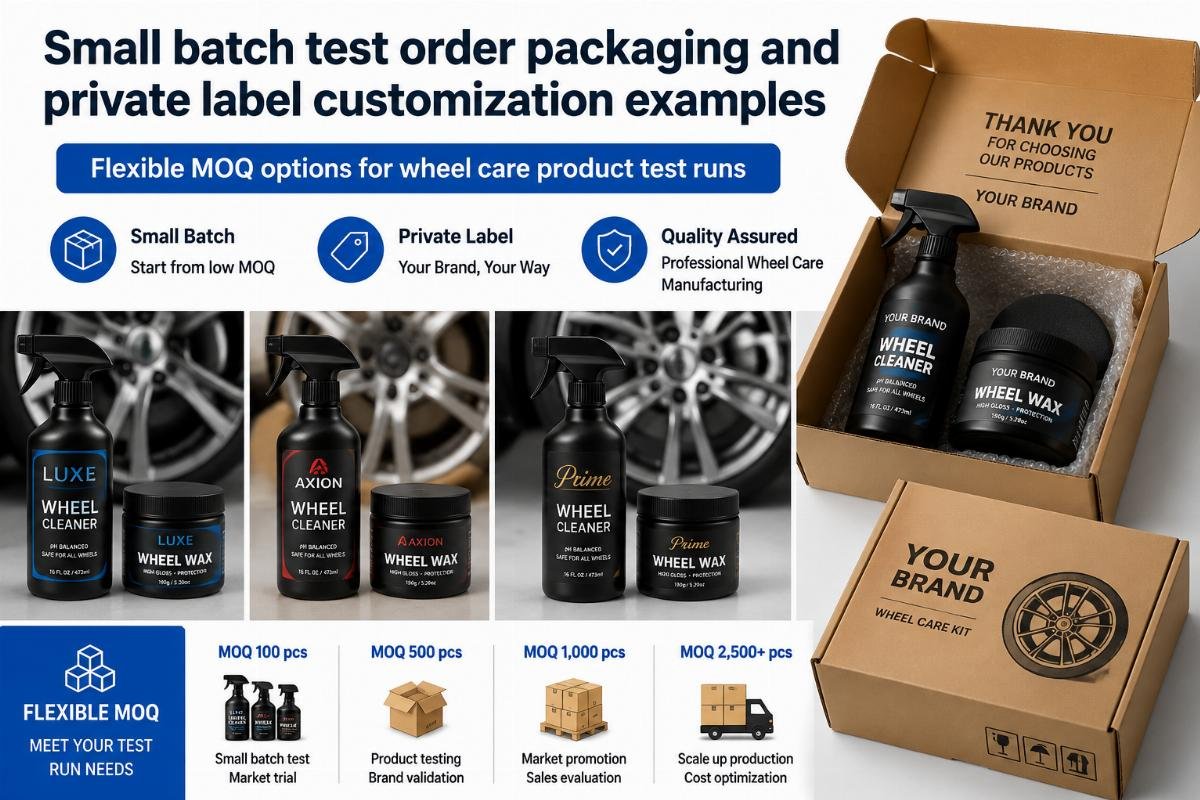
- Test Order Placement – Place a 20-unit initial test order for stocked iron remover and rim cleaner formulations to validate performance and local customer demand.
- Warranty Confirmation – Document all warranty coverage for product formulation defects before placing larger follow-up orders.
- Lead Time Alignment – Match test order lead times against your existing inventory restocking schedule to avoid gaps in your product offering.
Why bundled sourcing of wheel care products and alloy wheels cuts total supply chain costs
Combined shipments of core wheels and complementary cleaning products reduce per-unit logistics fees and shorten overall lead times by an average of 15 to 25 days. This is a consistently underutilized cost saving strategy that benefits every segment of auto parts buyers, from small e-commerce sellers to large regional distributors.
| Cost Component | Separate Sourcing Approach | Bundled Single-Vendor Sourcing |
|---|---|---|
| Per-Unit Logistics Cost | 35% higher due to separate LCL or FCL shipment fees | Reduced by 25-32% via shared container space for all complementary products |
| Total Lead Time | 45-60 days total for two separate shipments | 20-35 days total for a single consolidated shipment |
| Customs Processing Time | Double the documentation review time for two separate import entries | Single unified customs filing cuts processing time by 40% on average |
A US-based Amazon auto parts seller integrated iron remover SKUs with their existing wheel listings last quarter by sourcing both product lines from the same supplier, lifting their average order value by 17% within 3 months while cutting total landed cost for combined inventory by 21%. The bundled sourcing approach let them add the new SKU without taking on separate shipping or customs overhead that would have erased the margin from the higher average order value.
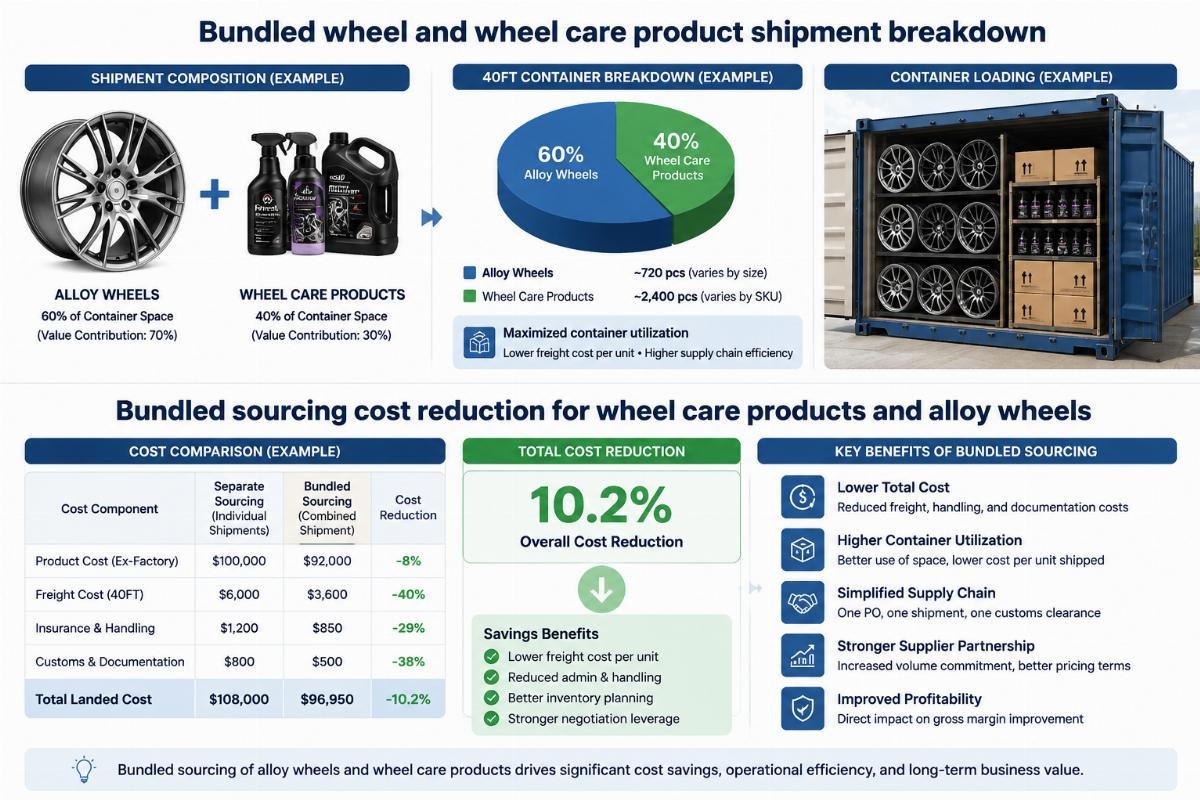
- Total Landed Cost Calculation – Calculate full landed cost including unit price, shipping, duties and warranty for both separate and bundled sourcing models to compare total expense.
- SKU Mapping – Map your existing top-selling wheel SKUs to matching compatible wheel care product formulations to create natural upsell packages for customers.
- Container Load Planning – Allocate 5-10% of available container space in regular wheel shipments to wheel care products to eliminate separate small shipment fees.
Conclusion
The most common mistake in wheel cleaning product wholesale sourcing is prioritizing low per-unit pricing over certification, compatibility and flexible order terms. The counterintuitive truth is that slightly higher per-unit costs from a qualified, compliant supplier almost always result in lower total operational cost and higher long-term margins. By focusing on bundled product support, flexible MOQ test runs and verified regional certifications, you can build a stable supply chain that eliminates customs delays and product waste while unlocking consistent cost savings across all your inventory lines.
