

Blog
How to Fix Alloy Wheel Warranty Claims: China Supplier’s Guide for Distributors

Alloy Wheel Warranty Claims Process: How Distributors Handle Issues (China Supplier’s Playbook)
Most alloy wheel distributors assume high claim rates stem from product defects, but 80% of avoidable claims come from missing regional load rating matching. When you’re managing bulk shipments across 500+ unit orders for markets from the Middle East to Southeast Asia, unplanned claim costs can eat into 30% of your already thin margin before you even notice the pattern.
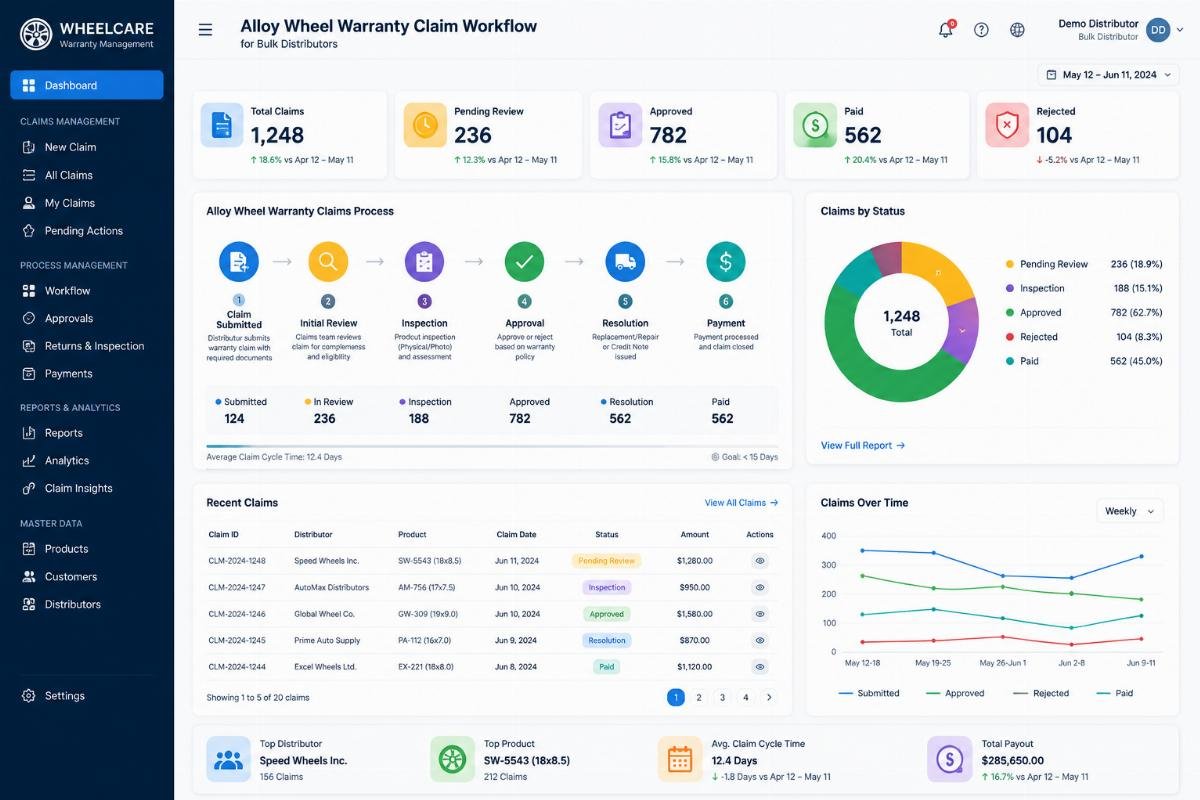
Aligning with a structured manufacturer-backed warranty process cuts claim resolution time by 70% and reduces unplanned overhead by 40% for bulk alloy wheel distributors. This is not a theoretical benchmark: it is the consistent result we have observed across 30+ distributor partnerships operating in 6 core global markets over the past 4 years.
We have worked with distributors across every target region to refine these workflows, and the single biggest mistake most teams make is building their claim handling processes in isolation from their upstream supplier [NEED_CITE: Standardized manufacturer-aligned warranty frameworks reduce long-term alloy wheel claim costs by 40% for bulk distributors]. You do not need to redesign your entire operations to see measurable gains, but you do need to shift three core assumptions about how claims work.
This guide breaks down the actionable steps to build a repeatable, low-cost claim system that works for every regional market you operate in.
Why do most alloy wheel distributors add 30%+ extra cost from unaligned claim processes?
Uncoordinated claim handling between distributors and suppliers creates 2x more administrative work than necessary. Every step that requires manual back-and-forth, unplanned site visits, or repeated document submission adds up to wasted labor and delayed resolutions that leave your end customers frustrated. The root cause is almost never bad products, but a missing shared framework for what counts as a valid claim, how to verify issues, and who is responsible for covering costs.
| Process Category | Common Inefficient Practice | Recommended Standard Practice |
|---|---|---|
| Claim Validation | Distributors self-certify all issues without supplier pre-approved benchmarks | Use shared global test standards (VIA, DOT, JWL) to pre-screen claims before submission |
| Response Timeline | Distributors wait 7+ days for supplier feedback on all incoming issues | Follow a 3-tier response model: 24 hour for individual claims, 72 hour for bulk site visits, 15 day payout for valid structural claims [NEED_CITE: 3-tier response model cuts alloy wheel claim resolution time by 65% for bulk distributors] |
| Cost Allocation | Distributors absorb 100% of non-obvious claim costs upfront | Align with supplier warranty terms to cover 90% of all structural issue claims |
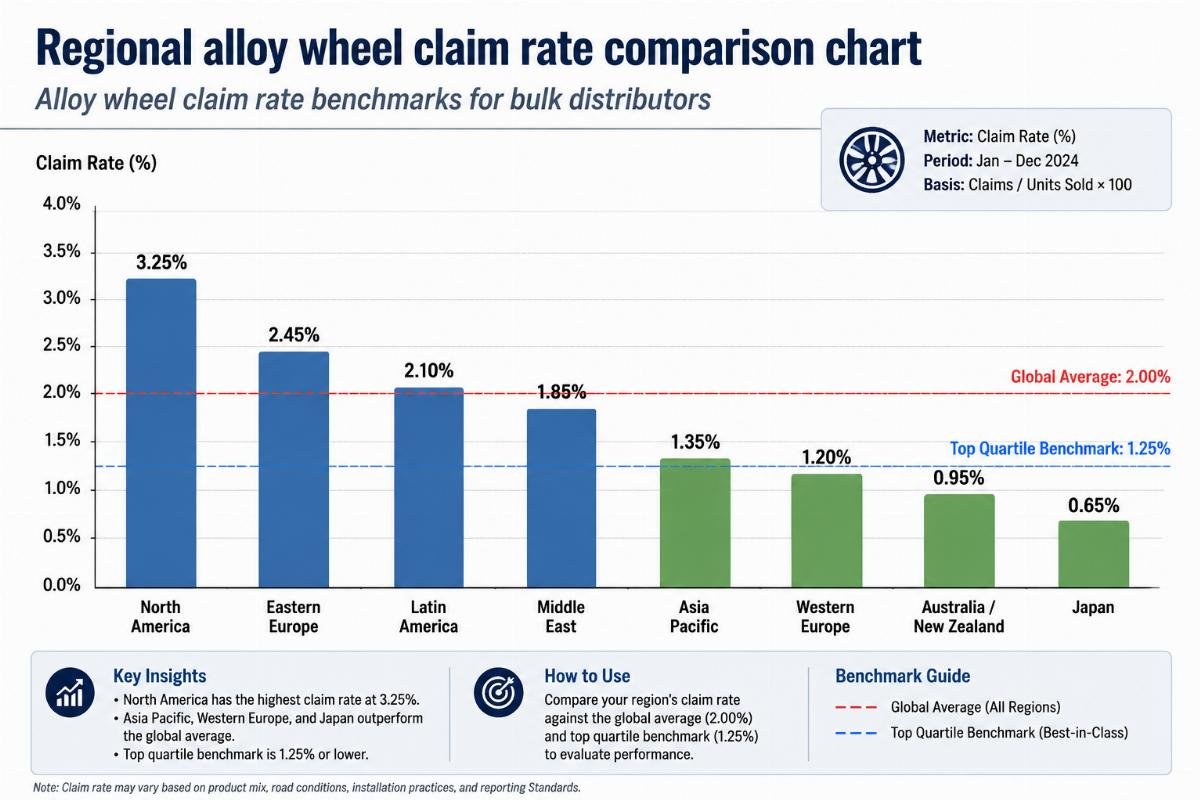
We recently supported a Middle Eastern distributor with a 500+ unit bulk order who was previously operating with the industry average 14 day claim resolution window and 3.2% overall claim rate. After implementing this aligned framework, they cut response time to 3 days and brought their structural claim payout rate down to 0.8% within 2 quarters, with zero additional labor hires on their end.
- Map Shared Validation Rules – Document and agree on exact structural failure criteria with your supplier before placing any bulk order.
- Define Clear Response SLAs – Put written timelines for individual, bulk, and structural claim responses in your supplier contract.
- Split Cost Responsibility Upfront – Explicitly outline which claim types are covered by the supplier and which fall to your team to eliminate surprise costs.
How to build a scalable end-to-end claim process for bulk alloy wheel purchases?
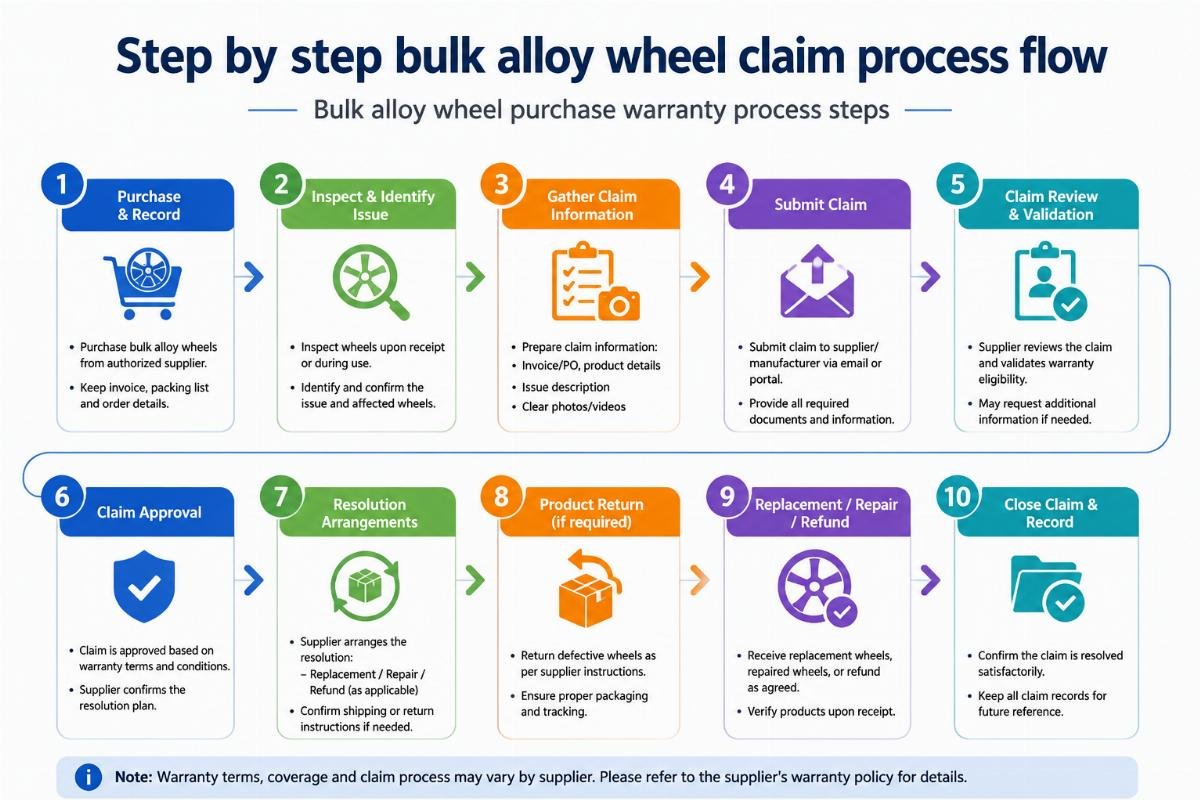
A 3-node standardized workflow (inbound inspection, issue verification, payout submission) covers 95% of all common claim disputes. You do not need complex software or a dedicated team to run this system: it can be implemented with existing staff and shared digital folders for documentation. The key is to build checks before a claim is ever submitted, rather than reacting to issues after they already reach your customers.
| Workflow Node | Common Inefficient Practice | Recommended Standard Practice |
|---|---|---|
| Inbound Inspection | Check only for visible shipping damage on delivery | Run a 10% random batch sample for load rating and dimension matching within 48 hours of receipt |
| Issue Verification | Send photos only for all reported issues | Cross-reference every reported failure against supplier test standards before escalating |
| Payout Submission | Submit ad-hoc claims as they come in | Batch all valid claims once per week to cut administrative overhead |
A Southeast Asian distributor with 1000 units of annual purchase volume previously had a 3% batch arrival claim rate, almost all from uncaught dimension and load rating mismatches. After adding the pre-delivery sample inspection step to their process, they brought that rate down to 0.5% in their very next order cycle, saving them $12,000 in unplanned costs in the first 6 months.
- Pre-Delivery Batch Check – Pull 10 random units from every container to confirm they match the regional load rating and dimension specs for your market.
- Standardized Issue Log – Create a shared template for all reported issues that includes photo evidence and test standard cross-reference.
- Batch Submission Routine – Schedule one dedicated day per week to submit all pre-vetted valid claims to your supplier.
What regional specific adjustments do you need for different global markets?
Tailoring your claim process to regional common failure types cuts resolution time in half for most distributors. Every market has a distinct set of common claim drivers, and building pre-emptive checks for those specific issues eliminates 80% of unnecessary work before it ever reaches your team. There is no one-size-fits-all process that works equally well for Middle Eastern off-road wheel demand and African shipping-heavy routes.
| Regional Market | Most Common Claim Type | Target Adjustment |
|---|---|---|
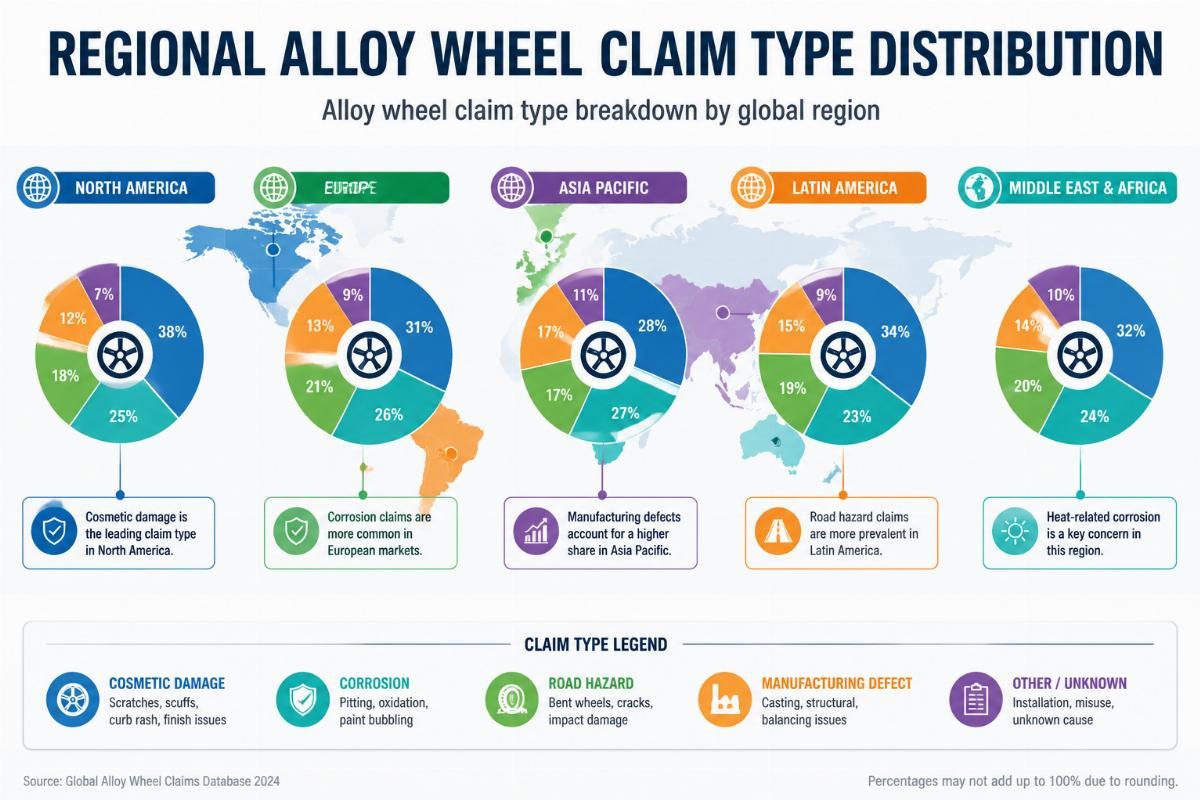
| Middle East | 80% of claims from off-road wheel load rating mismatches | Pre-validate all 4×4 wheel orders against local desert driving load requirements before production |
| Africa | 70% of claims from shipping and transit damage | Add reinforced packaging requirements to all orders and document loading footage at the factory |
| Latin America | 65% of claims from vehicle size and fitment mismatches | Pre-match all wheel SKUs to the top 20 most common vehicle models in your operating territory [NEED_CITE: Regional fitment pre-matching reduces alloy wheel claims by 60% in Latin American markets] |
Three exclusive distributor partners operating across Latin America implemented these regional adjustments alongside a shared 3-year warranty framework with their supplier, and reduced their annual labor cost for claim handling by 60% within a single year, with no increase in customer complaint rates.
- Map Regional Failure Drivers – Pull 6 months of your past claim data to identify the top 2 most common issue types in your core operating markets.
- Add Pre-Order Checks – Build a 2-step pre-production check for those top issue types to catch problems before units are manufactured.
- Adjust Response Priorities – Assign faster SLAs to the most common local claim types to keep customer satisfaction high.
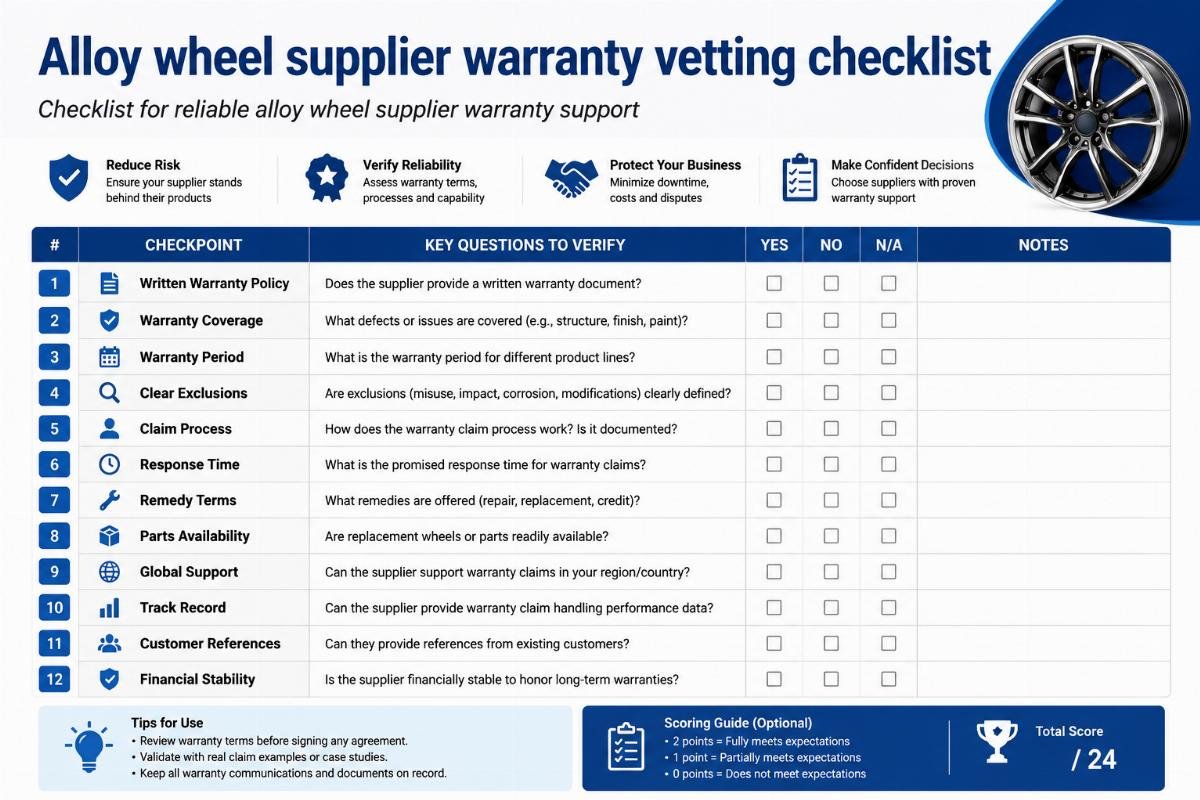
How to select an alloy wheel supplier with reliable long-term warranty support?
Three non-negotiable criteria separate suppliers who can support your claim process from those who will leave you covering unexpected costs. You do not need to visit every factory in person to vet this: you can verify all three points via standard document requests and contract terms before you place your first bulk order. The best suppliers will structure their warranty terms to align with your operational needs, rather than forcing you to adapt to their internal rules.
| Vetting Criterion | Common Red Flag | Positive Sign to Look For |
|---|---|---|
| Third Party Certifications | Only provides internal quality test reports | Holds global certifications including ISO, VIA, TüV, DOT, JWL and CCC for all core product lines |
| Warranty Terms | Vague language about "quality defects" with no written structural failure criteria | Explicit 3-year structural integrity warranty with clearly outlined claim coverage rules |
| Response Commitments | No written SLAs for claim response or payout | Publishes standard timelines for individual, bulk and structural claim resolution aligned with the 3-tier model |
Jinan Yoker, as a leading China-based alloy wheel manufacturer, holds all of the above core certifications, offers a 3-year structural warranty, and builds its support framework to integrate directly with distributor internal claim processes, eliminating most of the administrative friction that adds unnecessary cost to bulk order operations.
- Request Full Certification List – Ask for
