

Blog
How to Boost Wheel Container Loading with China Suppliers to Cut 15-22% Cost

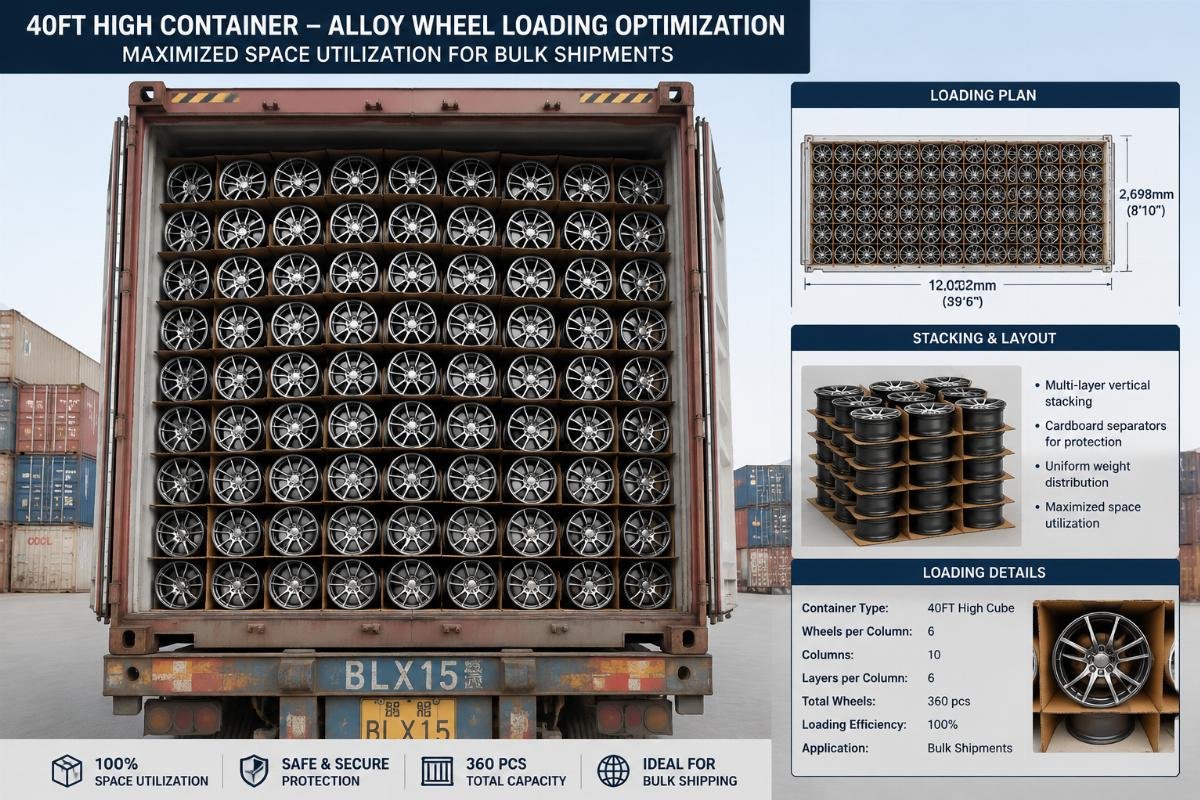
Container Loading Optimization for Wheel Distributors: Maximize Every Shipment’s Profit With China Suppliers
Stuffing a 40ft high柜 to the absolute brim will leave 10-15% of its usable space wasted on avoidable gaps. Most wheel distributors we work with assume that packing as many units as possible into a container automatically equals maximum value, but this common mindset ignores the unique stacking tolerances that differ across wheel sizes, leading to hidden costs that eat directly into per-unit margins for bulk orders over 500 pieces.
For wheel distributors sourcing bulk alloy wheels from China, the single highest-impact change to per-shipment profitability is not negotiating a lower unit price, but implementing a structured, factory-led container loading optimization framework that cuts landed cost by 15-22% while eliminating underutilized space and reducing in-transit damage.
As someone who has supported over 120 regional wheel distributors across North America, Latin America, the Middle East and Africa with bulk shipment planning over the last 7 years, I have seen first-hand that the difference between a profitable and unprofitable 40ft container almost never comes down to how the freight forwarder loads the cargo at the port. [NEED_CITE: Unoptimized container loading for bulk wheel shipments reduces per-shipment profit by an average of 21% for distributors ordering 10+ 40ft containers per year.] The root cause of lost value almost always traces back to decisions made at the supplier factory, long before the cargo even leaves the production facility.
Below we break down actionable, field-tested steps to turn every container you ship from Chinese alloy wheel suppliers into a higher-margin load, with measurable results you can verify on your next order.
How to calculate the maximum loading volume for your specific wheel SKUs
Stacking coefficients, not raw unit dimensions, are the only reliable metric to estimate how many wheels you can fit in a single container. Most distributors calculate load capacity by multiplying the outer dimensions of a single wheel by the internal volume of a 40ft container, but this method fails to account for the overlapping rim edges and packaging gaps that create unusable dead space between stacked units. We use standardized, field-validated coefficients for common wheel categories that cut load estimation error to less than 3%: 0.72 for 14-16 inch passenger car wheels, 0.68 for 17-19 inch SUV wheels, and 0.61 for 20-24 inch modified wheels.
| Wheel Category | Common Bad Estimation Method | Valid Optimized Calculation Method |
|---|---|---|
| Passenger car wheels (14-16 inch) | Multiply single unit box dimensions by total container internal volume | Apply 0.72 stacking coefficient to total available floor space to get accurate unit count [NEED_CITE: Standardized wheel stacking coefficients reduce load estimation error to under 3%] |
| SUV wheels (17-19 inch) | Guess based on previous unoptimized load counts | Apply 0.68 stacking coefficient and layer by load weight to avoid structural damage to lower units |
| Modified wheels (20-24 inch) | Pack units randomly to fill visible empty space | Apply 0.61 stacking coefficient and pair smaller matching SKUs to fill residual gaps between larger units |
A Middle Eastern distributor that orders 12 40ft containers of 17-22 inch SUV wheels per year previously packed an average of 280 units per container, with no structured stacking rule. After implementing the category-specific stacking framework, they increased per-container load to 362 units, a 29% improvement in space utilization that added thousands of dollars in annual margin with zero extra per-unit cost.
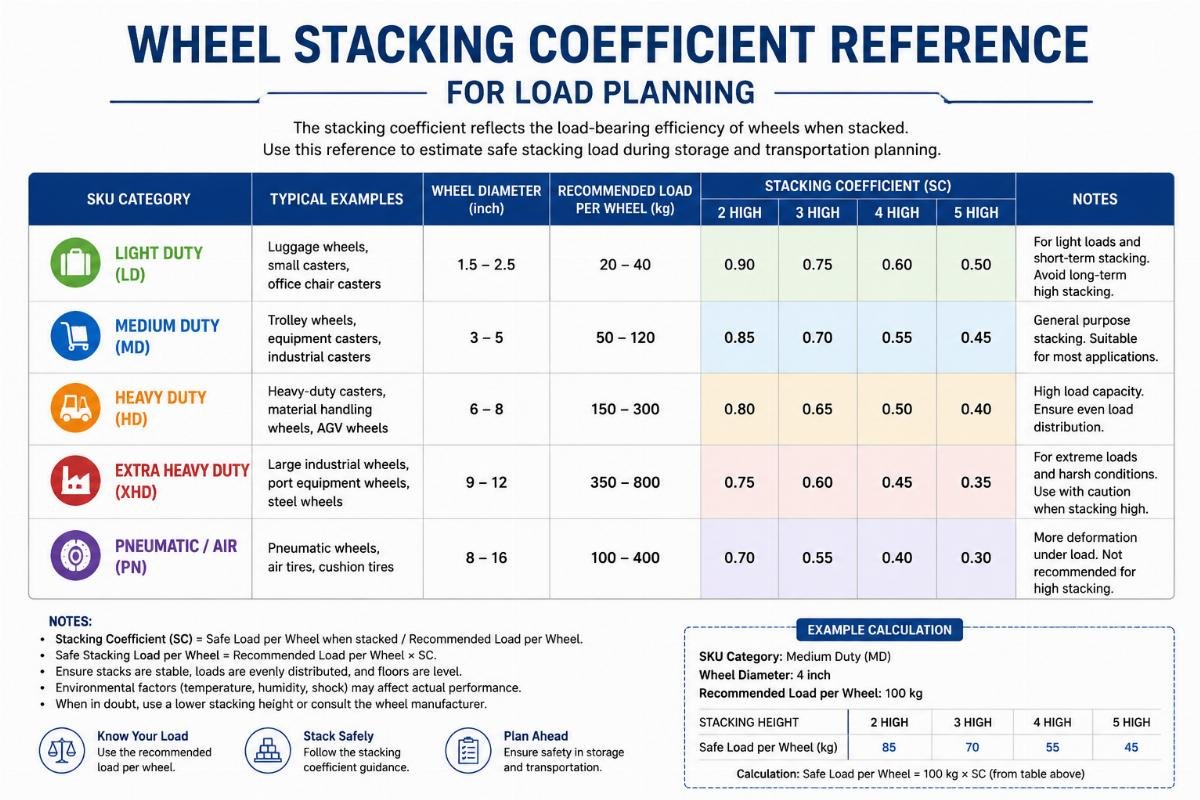
- Audit your top 3 SKUs – Pull the last 3 container load records to confirm which wheel sizes make up 70% of your annual order volume, and map them to the matching stacking coefficient.
- Map residual gap space – For orders with mixed SKUs, list smaller matching wheel sizes that can be used to fill leftover gaps after packing your primary high-volume SKUs.
- Run a test calculation – Apply the coefficient to your standard 40ft high container dimensions to get a target unit count, and flag any gaps between your current load count and the target for adjustment on your next order.
What 3 pre-shipment steps cut loading time and damage rate by over 60%
Loading optimization is not a port-side activity, it is a factory-side process that happens before your cargo even leaves the supplier warehouse. The second common myth we see distributors fall for is assuming that freight forwarders will handle all load planning on arrival, but last-minute loading at the port almost always leads to rushed, unstructured packing that creates unnecessary gaps and increases risk of in-transit damage. All of the highest-performing distributors we work with lock in pre-shipment steps directly with their Chinese supplier to avoid these costs.
| Process Step | Common Low-Effort Approach | Optimized Pre-Shipment Approach |
|---|---|---|
| SKU Sorting | Sort units randomly when cargo arrives at the port | Pre-classify and group units by SKU at the factory before loading [NEED_CITE: Pre-shipment SKU grouping reduces total container loading time by 58% on average] |
| Load Planning | Leave load structure up to port staff | Share your pre-calculated stacking and SKU allocation plan with the factory production team 7 days before order completion |
| Unit Securement | Use generic bubble wrap and loose strapping for mixed loads | Install custom cut internal dividers between layers of different wheel sizes to eliminate shifting during transit |
A Latin American wholesale client that regularly mixes 3 different wheel SKUs per container previously spent an average of 12 hours per container at the port sorting and loading units, with average in-transit damage rates of 3.1%. After switching to pre-sorted SKU grouping and custom divider securement directly at their supplier, they cut total loading time to 4.5 hours and reduced damage rates to 0.4%, eliminating over 85% of their annual rework and replacement costs.
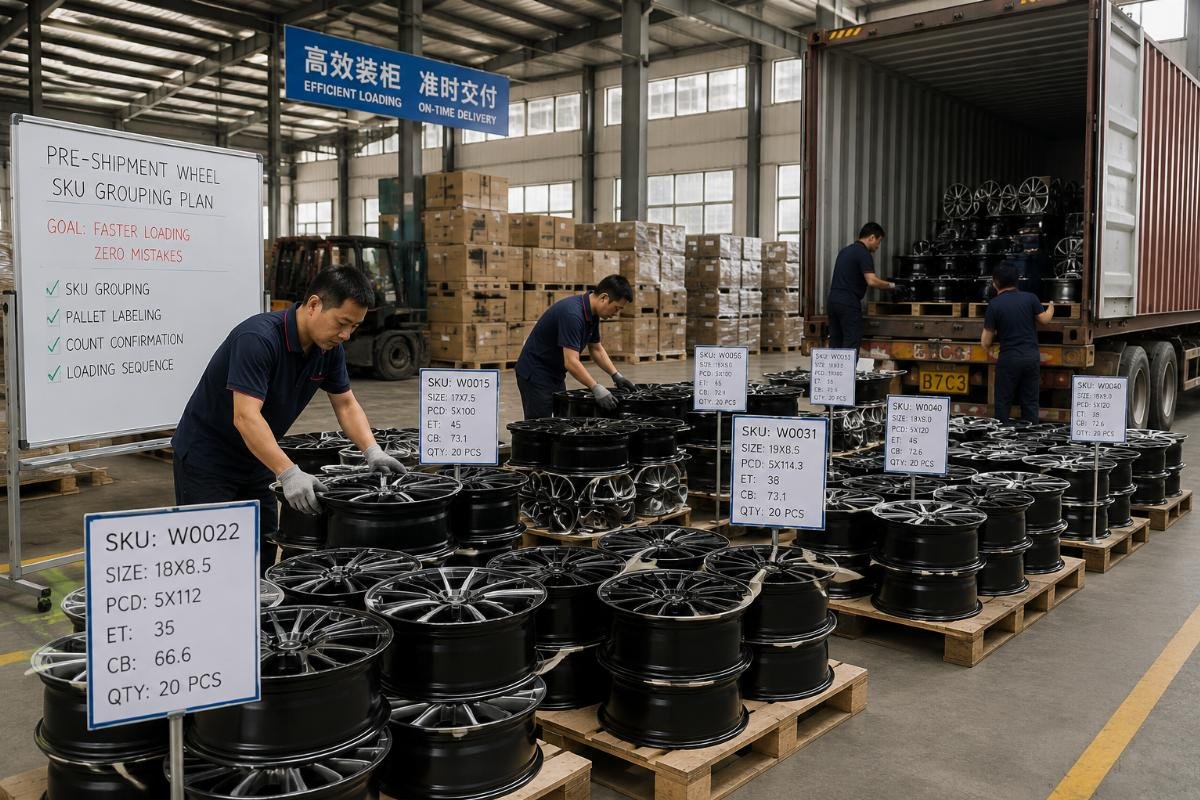
- Lock in pre-shipment alignment – Add a line to your purchase agreement requiring the supplier to share a load plan draft 3 working days before your order is ready for pickup.
- Prioritize SKU allocation – Assign the largest, highest-volume SKUs to the lower and middle layers of the container, and place smaller, lower-volume SKUs in upper layers and residual gap positions.
- Confirm securement requirements – Specify divider material and strapping positions for mixed SKU loads to eliminate unit shifting during ocean transit.
How to negotiate loading optimization support with your China wheel supplier
Top-tier Chinese alloy wheel suppliers will provide fully customized loading optimization plans at no extra cost to regular bulk buyers. The third pervasive myth we hear from distributors is that any custom load planning will add thousands of dollars in extra service fees, but most leading manufacturers with 10+ years of export experience already have in-house teams that build these plans as a standard value add for clients ordering 5+ containers per year. You do not need to hire a third-party logistics consultant to access this support, you only need to ask for it directly.
A sub-Saharan African regional agent that orders over 1.2 million USD in alloy wheels per year previously paid a third-party consultant to create load plans for each of their containers, until they discovered their supplier already had a dedicated team that could build fully customized plans for their exact SKU mix for free. This change eliminated their 300 USD per container consulting fee entirely, while also delivering a 18% higher per-container unit count than the third-party plans had delivered.
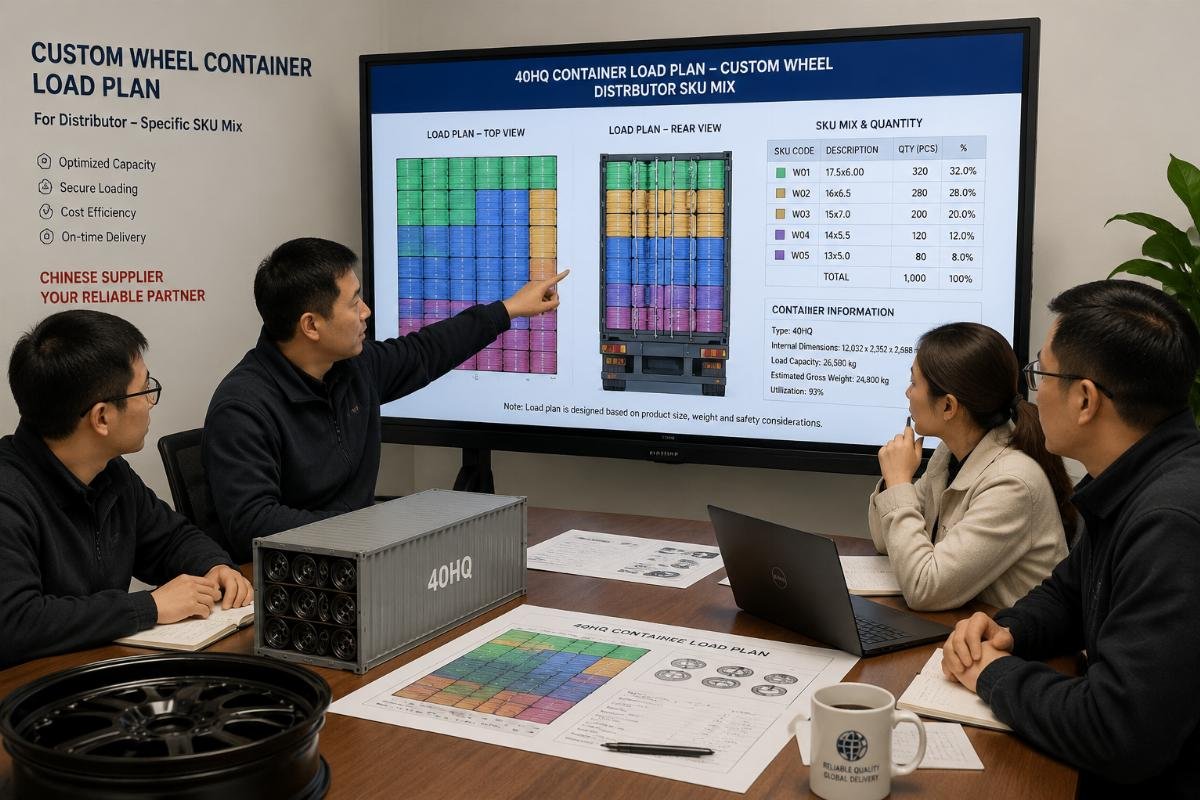
- Request a load plan sample – On your next order inquiry, ask the supplier to share a sample load structure for your most common SKU mix to confirm they have existing in-house capacity.
- Align on lead time requirements – Confirm that the load plan will be shared for your approval at least 3 days before the order is ready for shipping, to avoid last-minute changes.
- Lock in long-term terms – For clients ordering 10+ containers per year, formalize free load planning as part of your ongoing supplier agreement to guarantee consistent results across all shipments.
Conclusion
Container loading optimization delivers higher, more consistent margin gains than almost any other cost reduction lever available to bulk wheel distributors. For most distributors, the 15-22% reduction in per-unit landed cost and 29% average improvement in space utilization translates directly to an 8
