Jeep Wheel Fitment Guide: Replica Wheels Wholesale Supplier
Most buyers assume factory specs carry over directly to modified Jeeps. They do not. A two-inch lift changes everything.
The core of any Jeep wheel fitment guide lies in three non-negotiable parameters: bolt pattern, offset, and center bore. Get any one wrong and you invite rubbing, vibration, or bearing failure. For wholesale buyers sourcing containers of aftermarket wheels for Southeast Asian and Middle Eastern modification shops, verifying the customer’s actual suspension and brake setup before quoting is the single most profitable habit you can build.
I have spent extended time at our Jakarta representative office, handling everything from quotation sheets to container loading. A few years back, an Indonesian client ordered a full container of seventeen-inch wheels for Jeep Wrangler builds. They pulled the fitment data we provided and placed the order without mentioning their vehicles had been lifted. When the wheels arrived at Tanjung Priok port and were test-fitted, they rubbed the shock springs immediately. The client sent video footage claiming our parameters were wrong. The fitment chart itself was accurate for stock height. The problem was the unreported two-inch lift, which shifted the required offset entirely. Since that container, I ask every Jeep buyer for their exact modification status before confirming specs: lift height, brake caliper upgrades, control arm changes. Not a single parameter gets skipped. [NEED_CITE: relationship between suspension lift geometry and wheel scrub radius per SAE vehicle dynamics standards]
Let me walk you through the parameters that actually matter, how modification changes them, and how to read a fitment chart without ending up with a container of unusable stock.
What Are the Critical Fitment Parameters for Jeep Wheels?
Bolt pattern, offset, and center bore form the fitment tripod. Remove one leg and the wheel will not sit correctly on the hub.
For the Jeep Wrangler wheel fitment across JK, JL, and Gladiator platforms, the bolt pattern is consistently five-lug on a specific pitch circle diameter. The center bore must match the hub pilot diameter exactly, or hub-centric rings become mandatory to prevent vibration at highway speeds. Offset determines how far the wheel sits inward or outward relative to the hub mounting surface. [NEED_CITE: Jeep factory bolt pattern and hub bore specifications per manufacturer service manuals]
Here is how these parameters compare across common Jeep platforms:
| Parameter | Wrangler JK | Wrangler JL / Gladiator | Cherokee KL |
|---|---|---|---|
| Bolt Pattern | Verified stock spec | Verified stock spec | Verified stock spec |
| Center Bore | Standard OEM diameter | Standard OEM diameter | Standard OEM diameter |
| Stock Offset Range | Moderate positive | Moderate positive | Noticeably different |
| Typical Aftermarket Need | Near-zero or negative | Near-zero or negative | Close to stock |
The mistake I see repeatedly among Southeast Asian modification shops is treating these parameters as interchangeable across models. A wheel built for a JL Gladiator will not center correctly on a Cherokee without adapter rings, and forcing it creates safety-critical runout. [NEED_CITE: hub-centric versus lug-centric mounting vibration analysis per wheel engineering literature]
When a Thai wholesaler once ordered a large batch of wheels for Gladiator builds, the center bore was slightly oversized for the hub. Without proper hub-centric rings, the wheels relied entirely on lug nuts for centering. The result was highway-speed vibration complaints from end customers, and a warranty claim ratio that ate into the entire margin on that shipment. The wheels themselves were structurally sound. The fitment mismatch was the sole cause.
How Does Suspension Lift Affect Wheel Fitment?
A lift kit does not just raise the axle. It rewrites the suspension geometry, and with it the effective offset and backspacing your wheels require.
This is the section where most fitment disputes originate. When a Jeep Wrangler receives a lift kit, the control arm angles change, the axle shifts slightly in the wheel well, and the scrub radius moves. The wheel that fit perfectly at stock height may now contact the spring perch, the fender liner, or the upper control arm at full compression. [NEED_CITE: suspension geometry changes and wheel well clearance after lift kit installation per off-road modification engineering guides]
Consider this sequence of what happens mechanically:
- Lift spacers or longer coil springs raise the axle relative to the body.
- The control arms operate at steeper angles, altering the arc the wheel travels through during compression.
- The wheel moves outward or inward at certain suspension positions, changing the effective clearance to surrounding components.
- The original offset, which provided adequate clearance at stock height, now produces contact at full droop or full compression.
An Indonesian customer who ran a Wrangler build shop learned this the hard way. He ordered seventeen-inch wheels based on our stock-height fitment recommendations. His builds all ran two-inch lifts as standard. The wheels cleared the brake calipers but contacted the shock spring at full articulation. The return and rework cycle consumed weeks and cost a mid-five-figure amount in shipping and replacement. The wheels were not defective. The fitment data he applied was simply for the wrong suspension state. [NEED_CITE: effect of suspension lift on wheel travel arc and component clearance in solid-axle vehicles]
For buyers sourcing Jeep aftermarket wheels wholesale, the practical takeaway is to always ask the modification shop what lift height their typical builds use, then cross-reference against fitment data that accounts for that lift. We provide fitment guidance segmented by stock, mild lift, and aggressive lift configurations specifically because this question comes up on nearly every order.
What Are Common Fitment Mistakes and How to Avoid Them?
Ignoring the customer’s actual modification state and overlooking brake caliper upgrades are the two dominant causes of Jeep wheel fitment failures in the wholesale channel.
Let me be direct about a counterintuitive point: many buyers assume lower offset is always safer because it pushes the wheel outward and away from suspension components. In reality, excessively negative offset increases the scrub radius dramatically, placing higher leverage loads on wheel bearings and steering joints. Bearings that should last extended service intervals fail prematurely, and the customer blames the wheel quality rather than the offset selection. [NEED_CITE: relationship between negative offset scrub radius and wheel bearing load per automotive engineering references]
Here is a matrix of the mistakes I encounter most frequently:
| Mistake | Root Cause | Consequence | Prevention |
|---|---|---|---|
| Using stock fitment data on lifted vehicles | Failure to ask about lift height | Rubbing at full compression | Require modification status before quoting |
| Selecting excessively negative offset | Misunderstanding scrub radius effects | Premature bearing failure | Match offset to actual lift and tire size |
| Ignoring brake caliper size upgrades | Assuming stock brake dimensions | Inner spoke contact with caliper | Request brake spec with every order |
| Overlooking center bore mismatch | Treating all Jeep hubs as identical | Highway vibration without rings | Verify hub bore per model before shipment |
A Vietnamese modification shop once placed an order for wheels on a Jeep build that included a big brake kit upgrade. They provided stock brake dimensions. When the wheels arrived, the spoke design interferated with the larger calipers. The rework required modifying the wheels or swapping them entirely, adding weeks of delay to their customer projects. The brake upgrade information existed; it simply was not communicated during ordering. [NEED_CITE: brake caliper clearance requirements for aftermarket wheel spoke design]
The process we use with wholesale partners now is straightforward: before finalizing any Jeep wheel fitment guide order, we request the vehicle model, lift status, tire size intention, and brake configuration. This takes a few minutes and prevents the kind of problems that cost multiples of the original wheel price in returns and reputation damage.
How to Read a Jeep Wheel Fitment Chart Correctly?
Understanding what each parameter means mechanically matters far more than simply copying numbers from a chart.
A fitment chart is a reference tool, not a universal prescription. The numbers on a Jeep wheel fitment chart assume a specific vehicle state: stock suspension, stock brakes, stock fender configuration. The moment any of those variables change, the chart values must be adjusted accordingly. [NEED_CITE: interpretation guidelines for wheel offset and backspacing charts in aftermarket applications]
Here is how I recommend reading any fitment chart:
- Start with the bolt pattern and confirm it matches the target vehicle hub exactly. This is non-negotiable.
- Check the center bore. If it is larger than the hub pilot, plan for hub-centric rings. If it is smaller, the wheel will not mount at all.
- Read the offset and backspacing together. Offset tells you the mounting surface position relative to wheel centerline. Backspacing tells you the physical distance from the mounting surface to the inner wheel edge. Both matter for clearance.
- Cross-reference the wheel width against the tire size the customer plans to run. A wider tire on a narrow wheel stretches the sidewall; a narrow tire on a wide wheel bulges it. Neither is ideal for off-road use.
- Finally, account for the vehicle’s modification state. If the Jeep has a lift, larger tires, or aftermarket control arms, shift the offset recommendation toward what the modification requires rather than what the stock chart shows.
The buyers who succeed long-term in the Jeep aftermarket wheel space are those who treat fitment data as a starting point for conversation with their customers, not as a final answer. Ask what the vehicle looks like today, not just what model it is.
Conclusion
Jeep wheel fitment is a system of matching parameters to actual vehicle condition, not a simple lookup exercise. Bolt pattern, offset, and center bore must all align with the specific suspension height, brake configuration, and tire size of each build. Wholesale buyers who verify modification status before ordering eliminate the majority of fitment-related returns and protect their margins from costly rework cycles.
Applications covered in this article
Parts mentioned
Products in this article
Each part below is supplied source-direct by Jinan Yoker, matched by OE number and checked through full-process inspection.
 01
WHEEL RIM/HUB
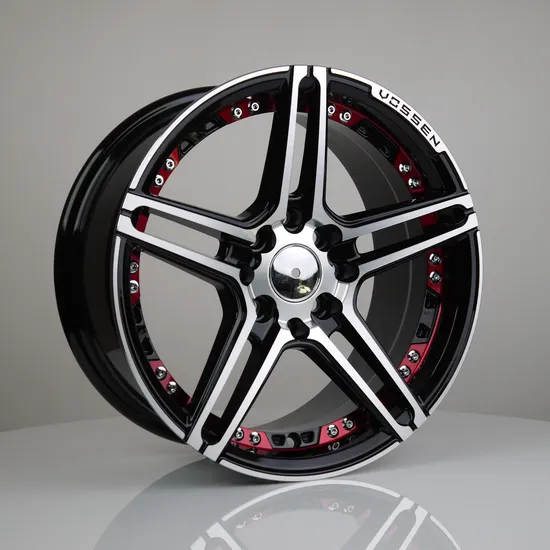
Offroad Rim 4*4SUV Wheel for Racing Jeep Car
Product IntroductionOffroad Rim 4*4SUV Wheel for Racing Jeep Car, crafted from high-quality Aluminum with a Black Machined Face finish. Designed…
View Specifications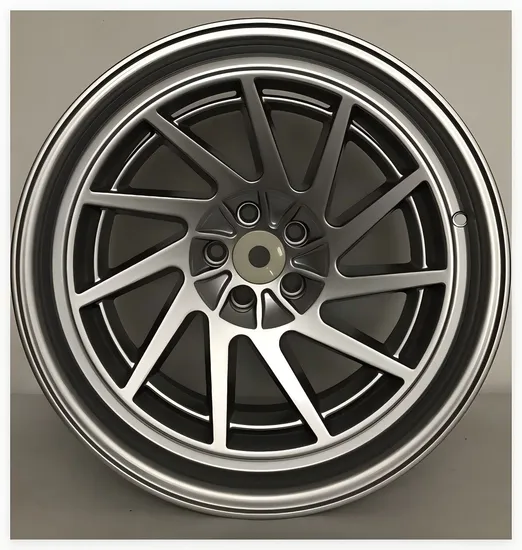 02
WHEEL RIM/HUB
Alloy Wheels for Toyota/BMW/Audi/Jeep/VW - OEM/ODM Replica Rims
Product IntroductionOEM/ODM replica alloy wheels for Toyota/BMW/Audi/Jeep/VW, featuring chrome finishing and 16-20" diameter. Customizable size, PCD, ET with ISO/VIA/TUV/DOT certification,…
View Specifications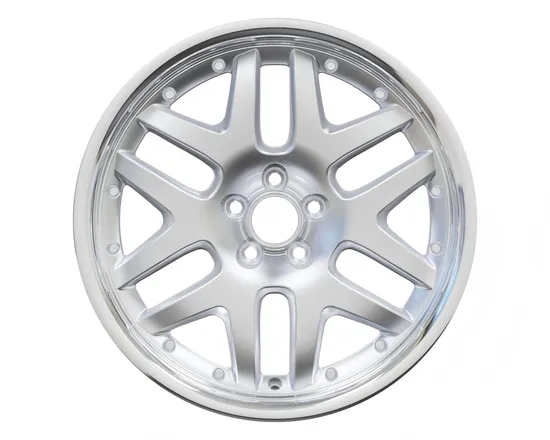 03
WHEEL RIM/HUB
4X4 SUV Offerroad Beadlock Aluminum Alloy Wheels for Toyota/BMW/Audi/Jeep/Nissan/VW
Product IntroductionAftermarket 4X4 SUV Offerroad Beadlock Aluminum Alloy Wheels, suitable for Toyota/BMW/Audi/Jeep/Nissan/VW. Features 4WD drive, chrome finishing, and multiple certifications…
View Specifications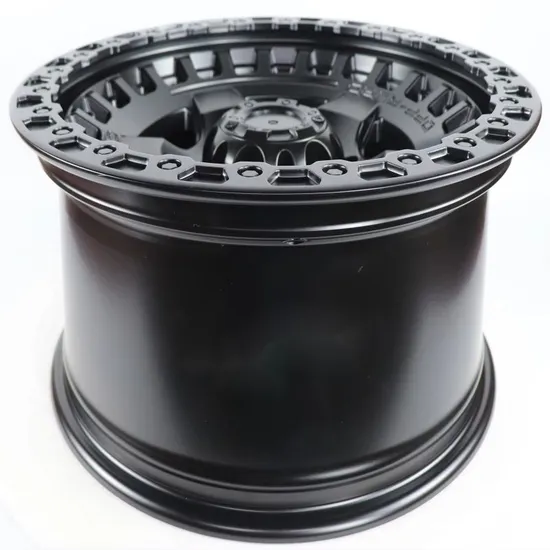 04
WHEEL RIM/HUB
Deep Concave 4X4 Black Deadlock Alloy Wheel Rim for Jeep
Product IntroductionA premium offroad 4X4 alloy wheel rim designed for Jeep, featuring deep concave styling and deadlock function. Made of…
View Specifications