Pickup Wheels Wholesale: Bulk Order from China
The cheapest per-piece quote on a bulk order is rarely the cheapest landed cost once you factor in warranty claims, freight damage, and batch rejections. When sourcing pickup wheels wholesale, the real decision matrix must weigh manufacturing process, load rating certification, and verifiable quality documentation—not just the unit price on a spreadsheet. Buyers who lock in orders based on price alone routinely discover that structural failures in the field cost multiples of the initial savings.
Having spent years inspecting wheel internals under X-ray and running radial runout checks before moving into cross-border sales, I have watched entire container loads get written off because a buyer skipped the step of verifying load rating alignment with their target vehicle platforms. [NEED_CITE: load rating mismatch as a leading cause of aftermarket wheel warranty claims] The lesson repeated across Southeast Asian, Middle Eastern, and Latin American markets is identical: pickup wheels wholesale procurement demands a spec-first approach, with工艺路线 (process route) and certified test reports written into the purchase contract before a single deposit is transferred.
Let me walk you through the actual comparison framework I use when a new buyer contacts me about a trial order.
Gravity Casting vs Flow-Forming: Which Fits Your Market?
The manufacturing process determines grain density, fatigue life, and weight—not just the price tag. Many buyers assume that two pickup wheels of the same diameter and bolt pattern carry the same load capacity. They do not. The internal crystalline structure produced by gravity casting versus flow-forming (also called flow-forging or roll-forging) creates fundamentally different mechanical properties, and choosing the wrong one for your end-market is the single most expensive mistake in pickup wheels wholesale sourcing.
| Parameter | Gravity Casting | Low-Pressure Casting | Flow-Forming |
|---|---|---|---|
| Grain Structure | Coarse, porous rim barrel | Moderate density | Fine, radially aligned |
| Rim Barrel Thickness | Noticeably thicker | Standard | Substantially thinner |
| Weight (same spec) | Heaviest baseline | Moderate | Noticeably reduced |
| Fatigue Crack Resistance | Vulnerable | Standard | Robust |
| Typical Price Tier | Entry-level | Mid-range | Premium |
| Suitable End-Use | Economy replacement | General aftermarket | Performance / modified |
[NEED_CITE: metallurgical comparison of cast versus flow-formed aluminum alloy wheel structures]
A Southeast Asian modification shop once ordered a full container of 17-inch pickup wheels at the lowest quoted tier. The wheels looked correct on the outside—proper bolt pattern, acceptable offset, clean machined face finish. After roughly two thousand kilometers of mixed urban and rural driving, spoke roots began cracking on multiple units. The returned wheels were sectioned and examined: cold shut defects inside the rim barrel, invisible externally, had created stress concentration points. The root cause was gravity casting with insufficient quality gates, not a design flaw. The buyer’s warranty payout and replacement freight cost several times the per-piece savings they had celebrated at order placement.
By contrast, a Middle East distributor sourcing the same 18-inch specification chose flow-forming with mandatory X-ray inspection on every unit. Over multiple years of field use, structural complaints remained at zero. The per-piece price was higher, but the total cost of ownership—including logistics for replacements, customer goodwill, and labor for warranty swaps—favored the flow-formed wheel decisively.
For pickup wheels wholesale buyers, the rule is straightforward: if your customers drive modified pickups on rough terrain or carry heavy payloads, flow-forming is non-negotiable. If you serve budget replacement channels where price sensitivity dominates and load demands are moderate, gravity casting with rigorous batch-level X-ray sampling can be acceptable—but only with documented proof of internal soundness.
What Specs Must Appear in Your Bulk Order Contract?
Dimensions and bolt patterns are the easy part; load rating, center bore tolerance, and certification validity are where bulk orders succeed or fail. A surprising number of first-time buyers specify wheel diameter, width, offset, and PCD, then leave load rating as an afterthought. For pickup applications—where vehicles routinely carry payloads exceeding passenger car norms—this omission is dangerous and commercially reckless.
The contract must explicitly state:
- Load rating per wheel matched to the heaviest gross axle weight rating (GAWR) of the target vehicle platform, with a safety margin. [NEED_CITE: load rating calculation methodology for aftermarket pickup wheels per SAE or equivalent standard]
- Center bore diameter with tolerance band—too loose causes vibration, too tight prevents mounting.
- Certification scope: confirm whether VIA, JWL, TÜV, or DOT markings are included in the quoted price or charged separately, and whether the certificate covers the exact SKU being ordered.
- X-ray inspection level: full-batch versus sample-per-heat, with reports delivered before shipment.
- Radial and lateral runout limits with measurement methodology specified.
A Latin American OEM buyer required VIA and JWL certifications plus metallographic sampling reports for every heat lot. The first trial order included full documentation, and the buyer locked in an annual framework contract based on that transparency. The certifications were not decorative—they were legal prerequisites for the buyer’s own vehicle homologation process. Without them, the wheels could not be mounted on registered vehicles in the destination market.
How to Verify Quality Before Shipment?
Trust the process documentation, not the showroom sample. Every supplier can produce a flawless sample. The discipline lies in whether the bulk production matches that sample, heat after heat. When I evaluate a pickup wheels wholesale order, I insist on a three-stage verification chain that the buyer should either witness or receive documented proof of.
Stage One: First Article Confirmation
Before bulk production begins, a first article wheel is produced, measured, X-rayed, and photographed. The buyer receives the full dimensional report, surface finish reference photos, and X-ray images of critical zones—spoke roots, rim barrel, and bead seat area. Approval at this stage locks the production baseline.
Stage Two: Heat-Level Metallographic Sampling
Each melt heat produces a sacrificial coupon that is sectioned, polished, etched, and examined under magnification for grain structure, porosity, and inclusion content. [NEED_CITE: metallographic examination standards for cast aluminum alloy wheels] The resulting report is heat-specific and traceable to the production batch. If a buyer receives only a generic “quality certificate” without heat-level traceability, the document is essentially meaningless for batch verification.
Stage Three: Finished-Good Inspection
Before packing, every wheel—or a statistically valid sample, depending on agreement—undergoes X-ray inspection for internal defects, radial and lateral runout measurement on a calibrated fixture, and dynamic balance check. Results are logged per serial number or batch code.
A buyer who skips Stage Two and relies solely on visual inspection of finished goods is gambling that internal defects will not surface after mounting. The consequences—field failures, warranty claims, brand reputation damage—fall entirely on the buyer, not the supplier.
What Is the Real Landed Cost Beyond the FOB Quote?
The unit price on a proforma invoice is the starting point of cost analysis, not the finish line. Buyers new to pickup wheels wholesale often fixate on the per-piece FOB figure and treat everything else as a secondary detail. This approach consistently produces unpleasant surprises when the first container arrives and the actual per-unit cost is reconstructed.
The complete landed cost stack includes:
- Mold or tooling fees for custom designs, amortized across the order quantity. Low MOQ orders spread this cost over fewer units, raising the effective per-piece price substantially.
- Certification fees if the buyer requires market-specific marks (VIA for Japan-influenced markets, TÜV for Europe, DOT compliance documentation for the Americas). These are often quoted separately.
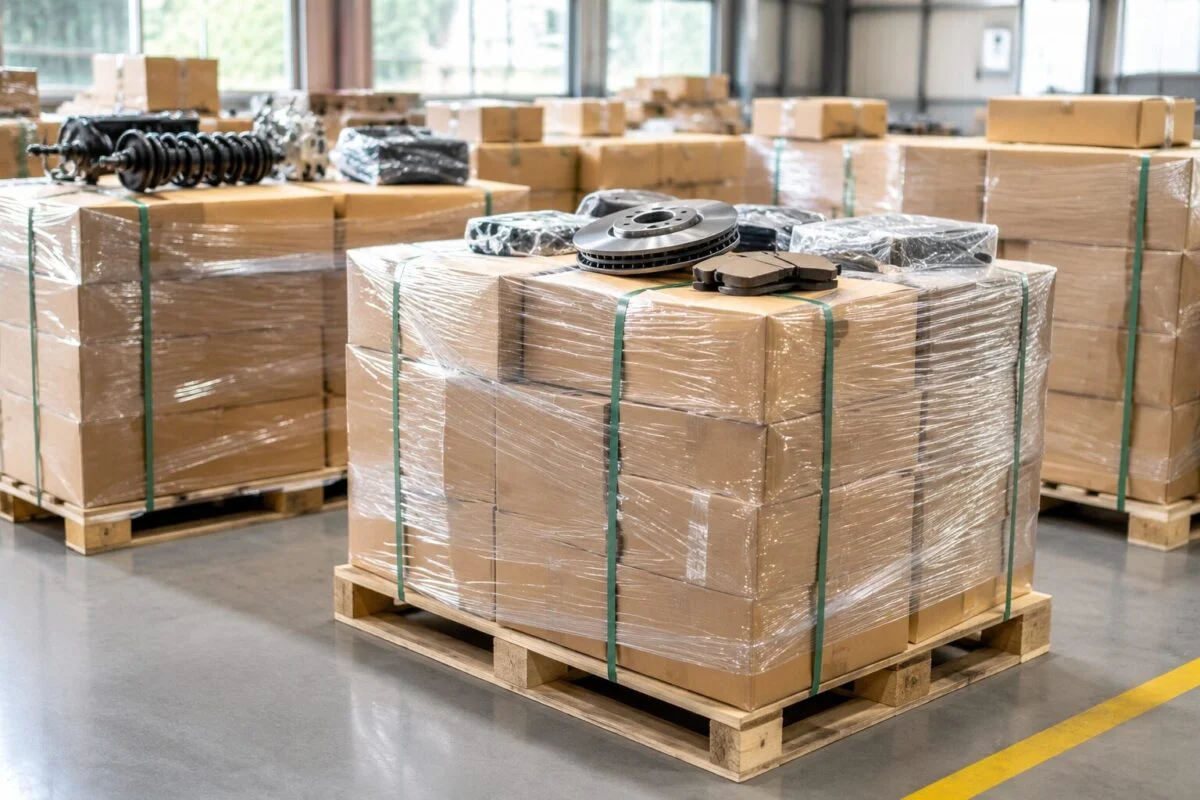
- Packaging and palletizing standards that meet the destination market’s retail or warehouse requirements—stackable pallets, corner protectors, individual box labeling with SKU and fitment data.
- Freight and insurance variations between FOB, CFR, and CIF terms, plus the reality that wheels are dense cargo and container weight limits often bind before volume limits.
- Customs documentation completeness—certificate of origin, packing list alignment, HS code accuracy—which affects clearance speed and duty assessment at destination.
When a buyer requests a very small trial quantity below the supplier’s economic batch threshold, the per-piece allocation of setup, sampling, and documentation costs rises noticeably. The MOQ is not an arbitrary barrier; it reflects the point at which fixed costs per unit reach a reasonable level. Buyers who negotiate MOQs below that threshold without understanding the cost structure will find the quoted “discount” evaporates in practice.
How to Evaluate a China Pickup Wheel Supplier for Long-Term Partnership?
Certification coverage, inspection transparency, and warranty structure reveal more about a supplier than their marketing brochure. The pickup wheels wholesale market includes manufacturers, trading companies, and hybrid operations. Distinguishing between them requires asking specific, verifiable questions rather than accepting general claims.
A reliable supplier will demonstrate:
- Multi-standard certification portfolio covering the buyer’s target markets—VIA, JWL, TÜV, DOT, and CCC at minimum for a supplier serving diverse regions. [NEED_CITE: international wheel certification body requirements and audit frequency]
- Documented in-process inspection protocols with heat-level traceability, not just final random sampling.
- Structural warranty terms that are specific in duration and scope, with clear exclusions and claim procedures. A supplier confident in their process will offer meaningful warranty coverage; one relying on price competition will avoid commitment.
- Export documentation capability that is complete and accurate on every shipment, reducing the buyer’s customs clearance friction.
When I structure a long-term supply discussion, I present the flow-forming production capability, the multi-certification coverage, the per-heat metallographic sampling protocol, and a multi-year structural warranty as standard elements—not as premium add-ons. Buyers who compare these elements across suppliers quickly identify which operations invest in process control and which compete solely on unit price.
Conclusion
Spec-first sourcing, not price-first sourcing, determines whether a pickup wheels wholesale order becomes a profitable partnership or a costly lesson. Process selection, load rating alignment, verifiable inspection documentation, and full landed cost calculation form the non-negotiable framework for any serious bulk procurement. Suppliers who welcome scrutiny of their process controls and certification coverage are the ones worth building long-term volume relationships with.
Applications covered in this article
Parts mentioned
Products in this article
Each part below is supplied source-direct by Jinan Yoker, matched by OE number and checked through full-process inspection.
 01
WHEEL RIM/HUB
15-18 Inch 4X4 Pickup Off-Road Alloy Wheel Rims High Quality
Product IntroductionHigh-quality 4X4 off-road alloy wheel rims for pickups, available in 15-18 inch sizes, with silver/hyper black finish. Suitable for…
View Specifications 02
WHEEL RIM/HUB
Replica Alloy Wheels for Pickup Trucks Van OEM ODM Racing Rims
Product IntroductionReplica alloy wheels designed for pickup trucks, vans, and racing passenger cars, offering OEM/ODM/customization services. High-quality aluminum construction with…
View Specifications 03
WHEEL RIM/HUB
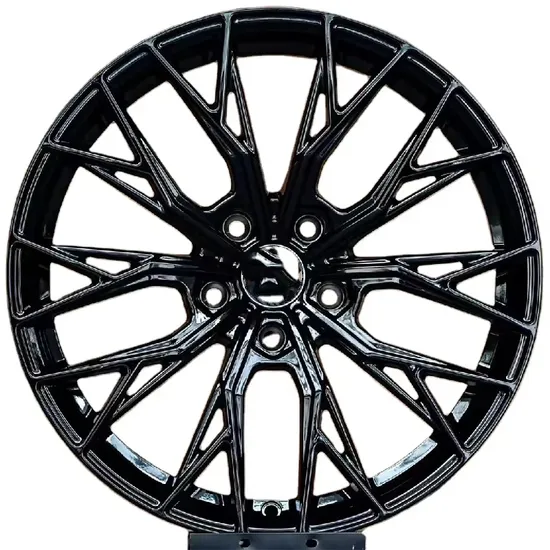
5 Holes Durable Black Aluminum Alloy Car Wheel Wholesale
Product IntroductionFactory wholesale durable black painting aluminum alloy car wheel, suitable for 4WD vehicles with customizable size (12-24 inch) and…
View Specifications 04
WHEEL RIM/HUB
Te35 15 Inch 6 Spoke 4 Holes Alloy Rim Wheels Wholesale
Product IntroductionHot-selling 2024 Te35 15-inch alloy rim wheels with 6 spokes and 4 holes, available in stock for wholesale. Customized…
View Specifications