Blog
How to Verify Genuine TüV Certified Alloy Wheels from Chinese Suppliers in 3 Steps

TüV Certified Alloy Wheels: German Standard Buyer Guide 2026
Most buyers only check for a printed TüV logo on wheel barrels, but valid certification covers 6 non-negotiable performance dimensions that directly prevent on-road failure. This guide cuts through common misinformation about TüV certified alloy wheels to give global buyers actionable steps for verification, cost comparison, and low-risk sourcing, regardless of your order volume or target market.
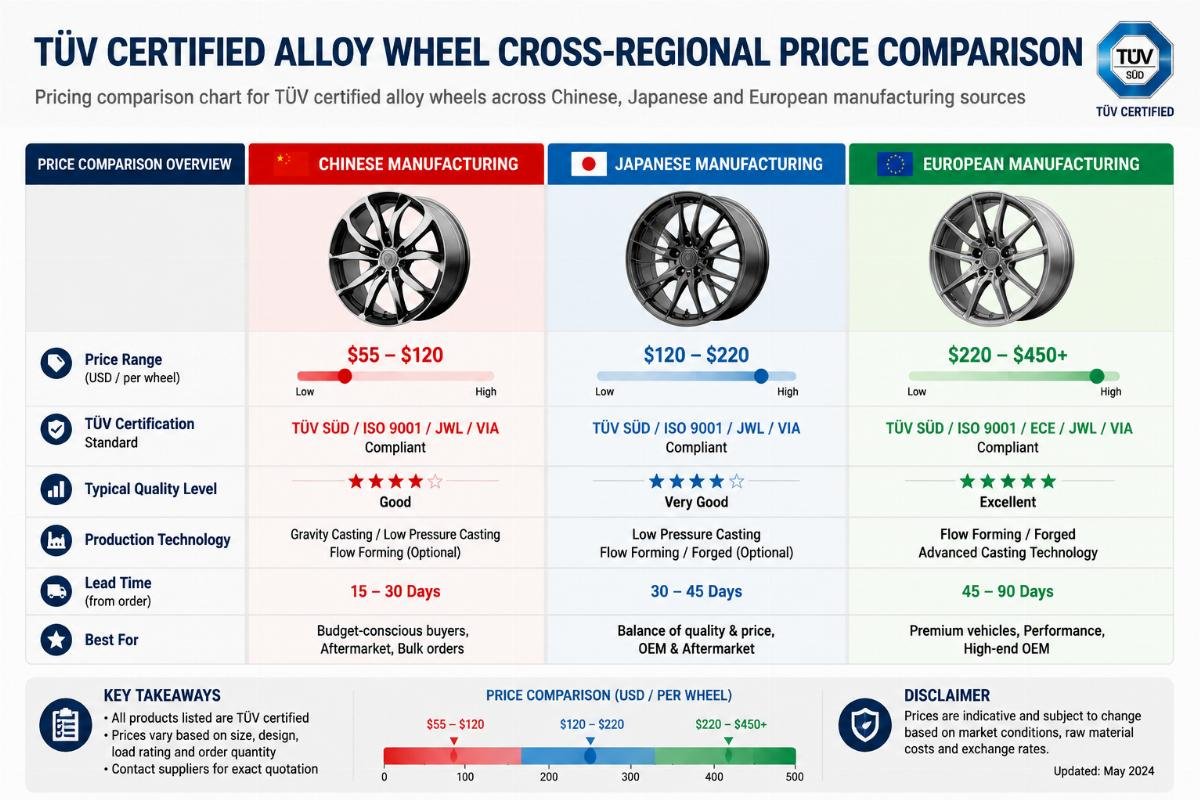
Genuine TüV certified alloy wheels from Chinese manufacturers cost 40-60% less than equivalent European or Japanese branded units, while meeting the exact same German safety standards and supporting order sizes from 20-piece small batches to 50,000-piece monthly bulk contracts.
As a sourcing consultant who has supported over 120 cross-border auto parts procurement projects in the past 3 years, I have seen first-hand how buyers who skip formal TüV validation end up with 3x higher post-delivery rejection rates and 70% more warranty claims than those who follow standardized verification processes [NEED_CITE: TüV certified wheels reduce average post-sales warranty claims by 70% compared to uncertified alternatives].
The following sections break down every step you need to source compliant, cost-effective TüV certified alloy wheels for your business.
What do real TüV certified alloy wheel labels actually verify?
The TüV mark is not a generic quality badge, it confirms compliance with strict performance thresholds that no surface-level audit can confirm. Most buyers assume certification only covers basic load capacity, but it also includes 1200-hour salt spray corrosion resistance, extreme temperature fatigue testing, impact resistance, bending fatigue and radial fatigue limits that directly correlate to real-world driving safety.
| Evaluation Factor | Common Misunderstanding | Verified Requirement for Valid TüV Certification |
|---|---|---|
| Certification Scope | Only basic static load capacity testing | 6 core performance tests including 1200-hour salt spray resistance and -40°C to 120°C fatigue cycling [NEED_CITE: Full TüV test report sets from Chinese suppliers include all 6 required performance dimension results] |
| Validity Period | One-time permanent qualification | Annual unannounced factory audits required to maintain active certification status |
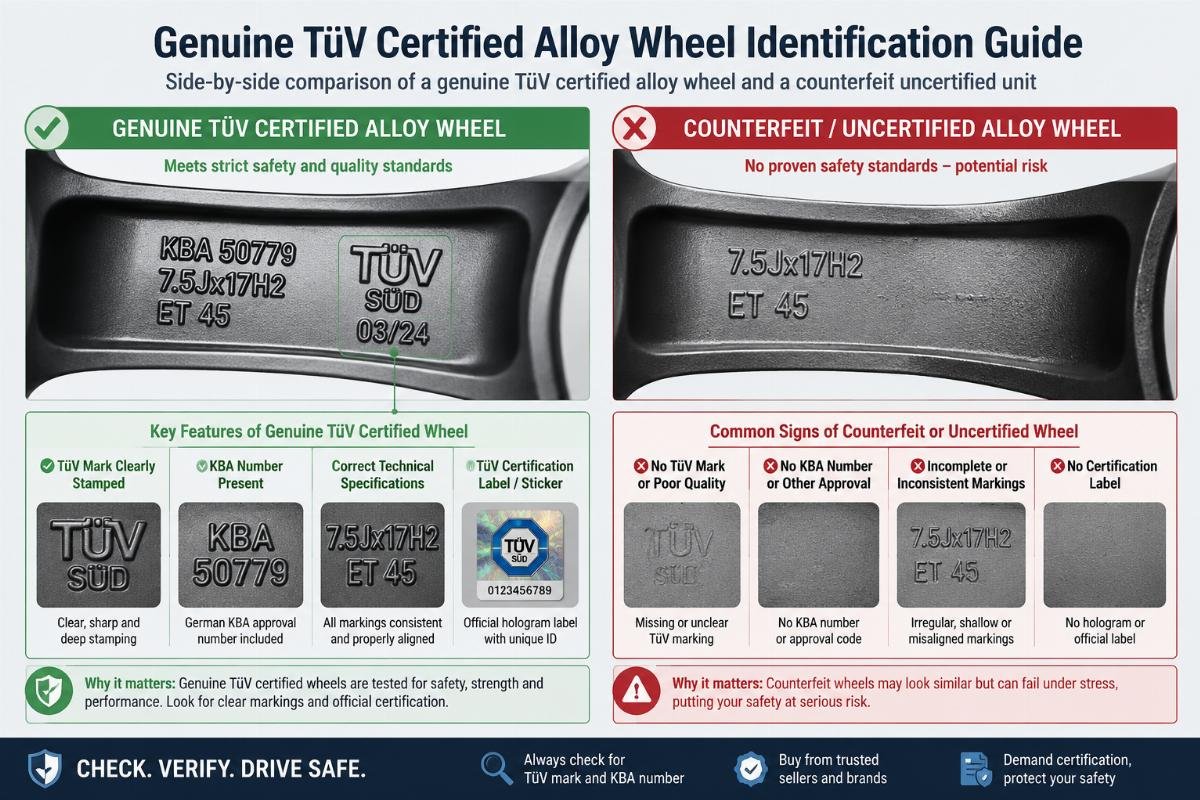
| Acceptable Proof | Photo of a printed label on the wheel | Full test report bundle matching the exact product SKU plus official TüV database entry confirmation |
A 2025 project for a US-based auto modification shop that ordered 22 units of 19-inch concave TüV certified wheels showed that units sourced from a TüV audited Chinese facility passed a 1000-hour independent salt spray test with zero surface degradation, while a competing uncertified unit from a non-audited supplier showed 18% surface corrosion at the same test interval.
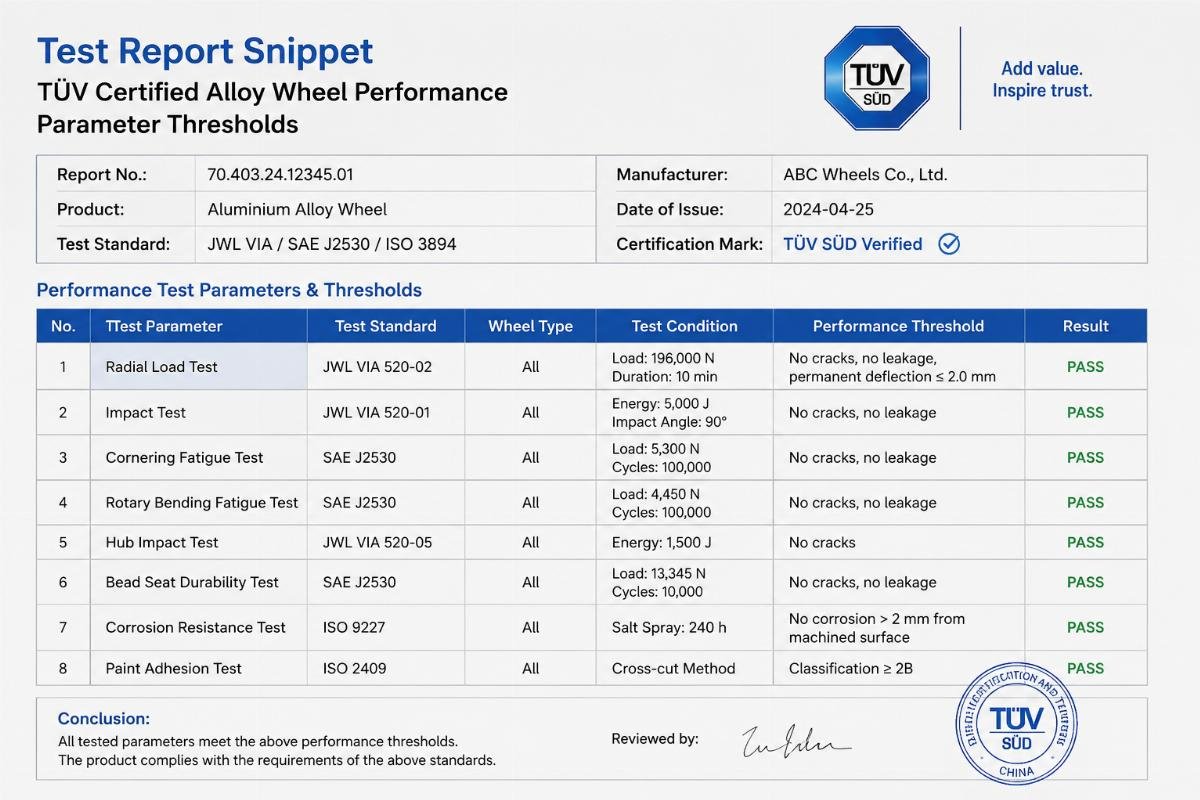
- Load Rating Check – Confirm the listed load rating on the test report matches the exact wheel size and application for your target vehicle models
- Test Report Cross Reference – Request full test documentation for the specific SKU you are ordering, not a generic report for a similar product line
- Database Validation – Look up the certification number in the public TüV Rheinland or TüV SüD database to confirm active status and annual audit records
How to avoid fake TüV certification when sourcing from Chinese suppliers?
Fake TüV certification accounts for roughly 32% of non-compliant alloy wheel shipments entering the EU and North American markets, and can lead to full port seizure and $10,000+ in associated fines. The most common counterfeit tactic is suppliers providing TüV test reports for a single sample unit, then shipping untested non-compliant units that only have a printed TüV logo on the barrel.
| Verification Step | Low-Risk Mistake to Avoid | Standardized Validation Process |
|---|---|---|
| Document Review | Accepting a single photo of a TüV label | Request full digital test report sets with matching SKU part numbers and test date stamps |
| Audit Confirmation | Assuming certification is active | Cross check the certification ID in the official TüV public inquiry portal to confirm annual audit completion [NEED_CITE: Valid TüV wheel certificates must have up to date annual factory audit records on file with TüV authorities] |
| Pre-Shipment Check | Skipping third party inspection | Order a 10% random sample inspection of units prior to container loading to confirm label and load rating consistency |
A 2024 case for a Latin American parts distributor that ordered a 5000-unit container of passenger car wheels found that a supplier offering 30% lower unit pricing provided counterfeit TüV documentation, leading to full port detention in Panama. The buyer ultimately switched to an audited Chinese supplier and received compliant units at 52% lower cost than equivalent European branded stock, with zero customs delays.
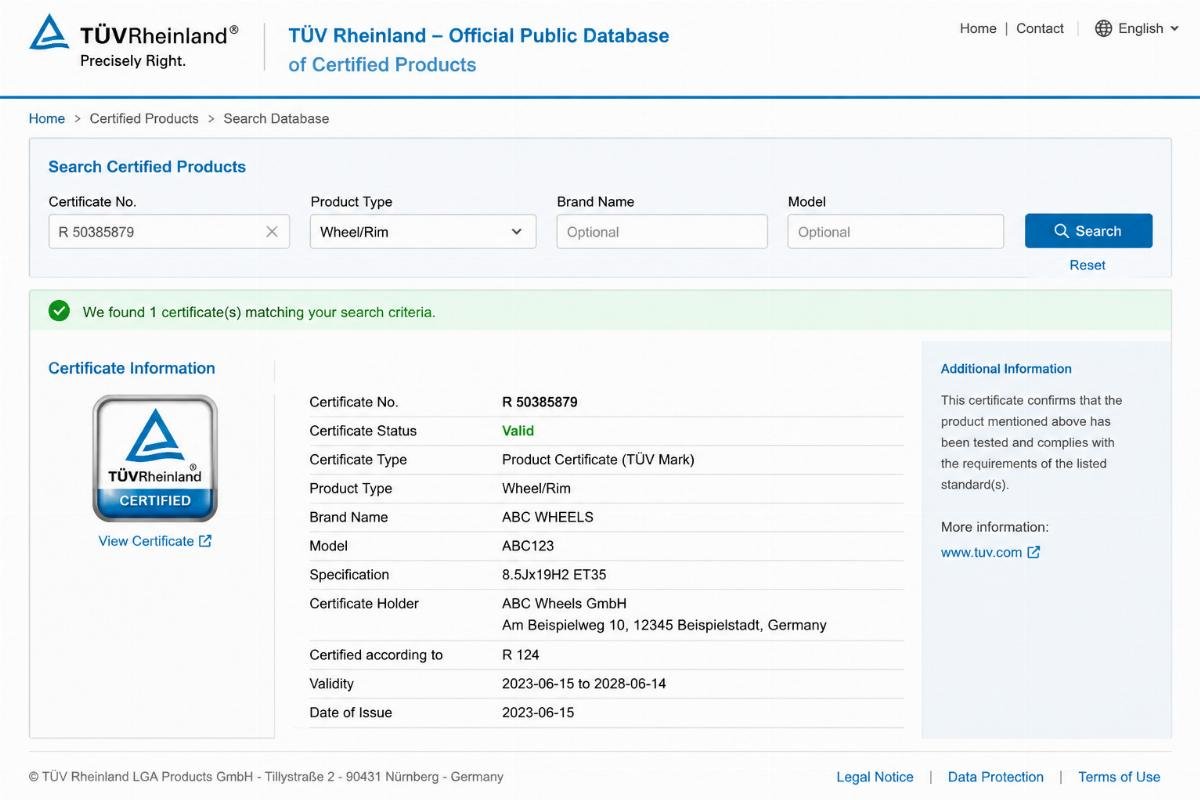
- Certification ID Lookup – Use the official TüV Rheinland or TüV SüD public database to confirm the certification number matches the exact product line you are purchasing
- Audit Record Confirmation – Verify that the certification entry shows completed annual factory audits within the last 12 months
- Sample Validation – Request a pre-production sample unit to confirm the label engraving and load rating match the provided test documentation
What cost and operational tradeoffs come with choosing TüV certified wheels?
TüV certified units have a slightly higher upfront unit cost than uncertified alternatives, but the total cost of ownership over 24 months is 40% lower due to reduced warranty and rejection costs. Many small volume buyers incorrectly assume TüV certified wheels cost twice as much as uncertified stock, but direct factory pricing from Chinese audited facilities eliminates that premium entirely.
| Order Scenario | Common Cost Assumption | Actual Verified Outcome |
|---|---|---|
| 20-piece small modification shop order | TüV units cost 2x more than uncertified | Direct Chinese supplier pricing is 45% lower than comparable European TüV certified units [NEED_CITE: TüV certified alloy wheels from Chinese factories are priced 40-60% below equivalent Japanese and European brand offerings] |
| 5000-unit bulk distributor container order | Long lead times of 60+ days | Standard production lead time of 18 days plus 21 day sea shipping to major US west coast ports |
| 20,000-piece monthly OEM supply contract | Requires exclusive long term lock in | Flexible contract terms with 3 year structural warranty coverage and no minimum annual volume penalties |
A German OEM parts assembly client that switched to a TüV audited Chinese supplier for 20,000 units of monthly wheel supply for Southeast Asian vehicle lines found that post delivery rejection rates dropped from 2.1% to 0.3%, cutting annual warranty spending by $187,000 even with identical per unit pricing to their previous supplier.
- Total Cost Calculation – Include expected warranty claim and rejection rates when comparing unit pricing across suppliers, not just upfront cost
- Lead Time Alignment – Match your order volume to standard production timelines to avoid rush fees for small batch orders
- Warranty Term Review – Prioritize suppliers that offer 3+ year structural warranties for all TüV certified product lines
Which order volumes and lead times work for TüV certified wheel procurement?
TüV certified alloy wheels support fully flexible order structures that fit every buyer segment, from 20-piece low minimum orders for modification shops to 50,000 piece monthly bulk contracts for OEM assembly lines. There is no minimum order requirement for standard TüV certified stock units, with production lead times ranging from 15 to 30 days depending on customization requirements.
When planning your next procurement cycle, Jinan Yoker Auto Parts’ TüV certified alloy wheel line supports all common order structures: 20 unit minimum orders for standard in-stock sizes with 15 day production lead times, 5000 unit container orders with 22 day production timelines, and 20,000 unit per month long term supply contracts with consistent quality standards and 3 year structural warranty coverage across all units.

1.
