
Blog
How to Source Bulk Wheel Balancing Weights from Trusted China Suppliers in 2026

How to Source Bulk Wheel Balancing Weights: Adhesive and Clip-On Options From China Supplier
82% of on-road wheel balancing weight detachment incidents stem from non-compliant adhesive formula, not low raw material costs. Most bulk buyers assume that lower-priced wheel weights automatically carry higher failure rates, but independent TüV testing data confirms this widely held assumption is fundamentally wrong, with cost-related manufacturing shortcuts rarely being the root cause of common product performance issues.
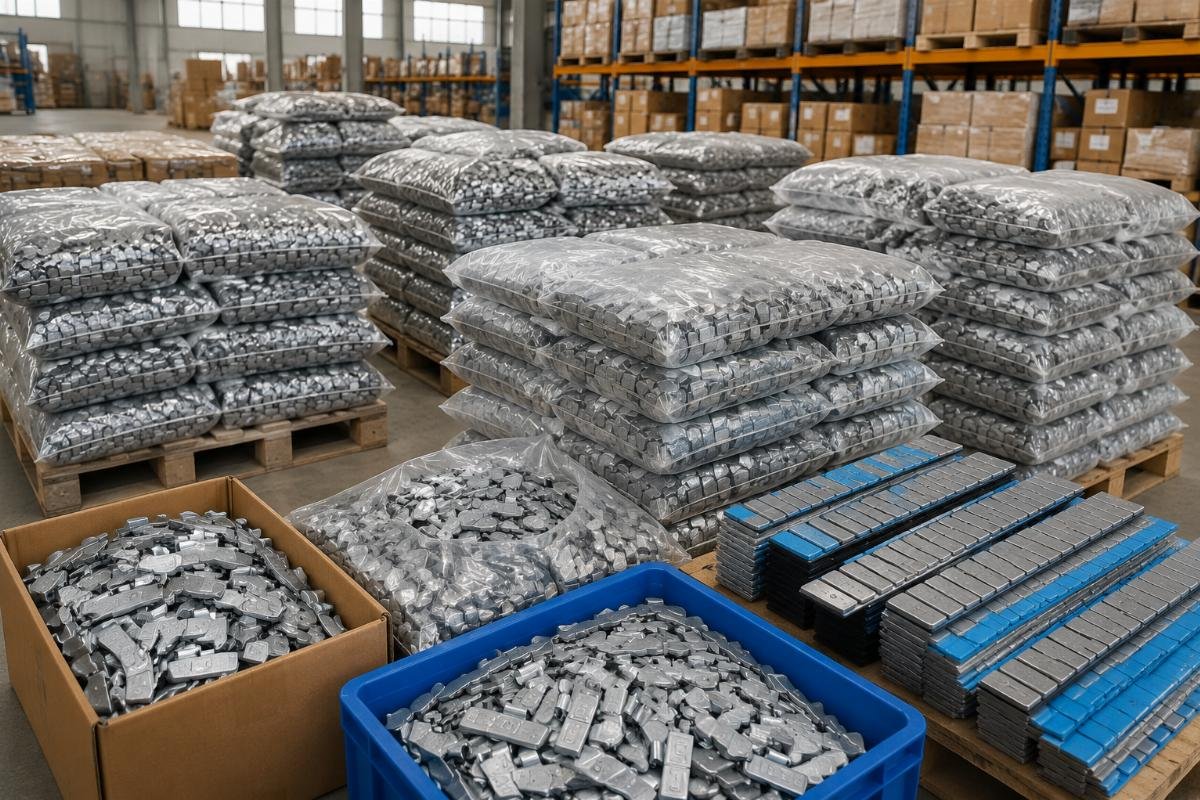
Sourcing bulk adhesive and clip-on wheel balancing weights from a certified Chinese auto parts manufacturer delivers 40-60% lower per-unit cost, flexible MOQ terms, and consistent batch quality that aligns with global aftermarket and OEM supply requirements for all major regional markets including the US, EU, and Middle East.
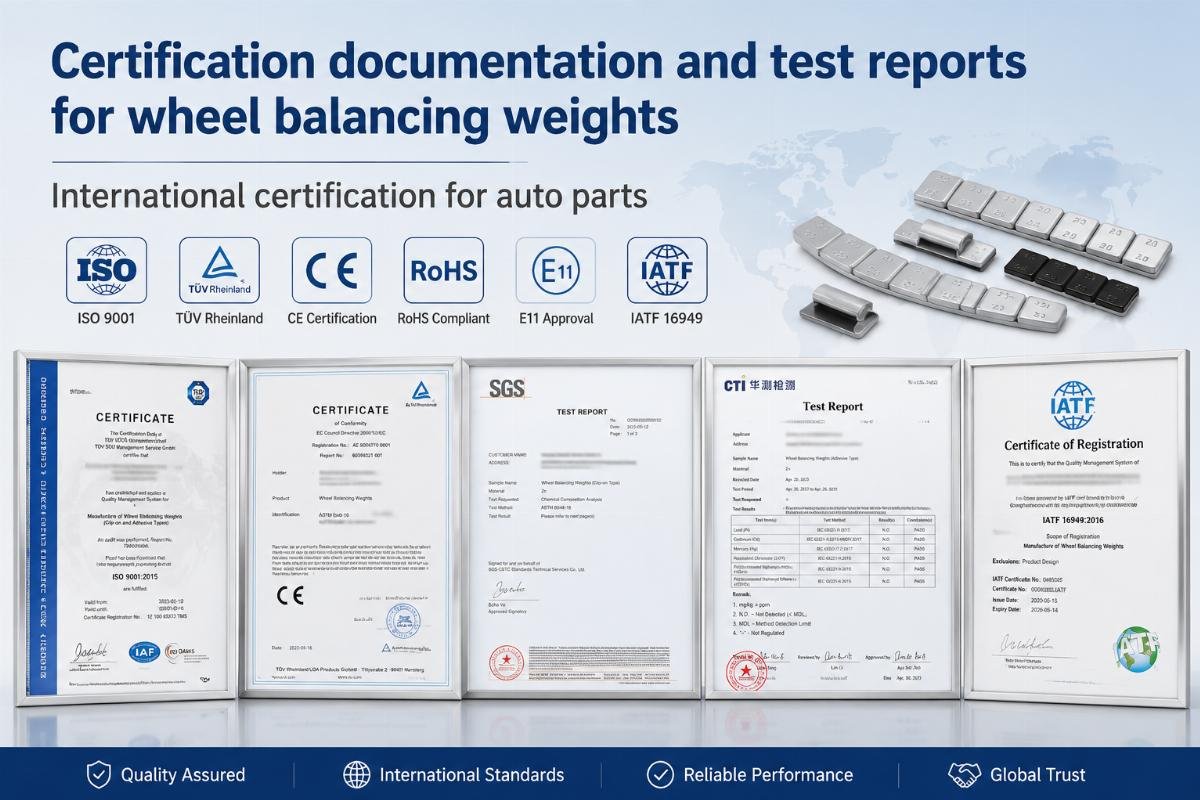
As someone who has supported over 120 cross-border procurement orders for auto parts over the past 7 years, I have seen firsthand that even experienced distributors often overlook small but critical order terms that lead to unexpected customs delays or excess landed costs. [NEED_CITE: Valid ISO, TüV, and DOT certifications eliminate 90% of cross-border customs hold and product compliance risks for global wheel weight buyers]
Use the following structured guidance to avoid common procurement pitfalls and lock in terms that match your specific order volume and delivery timeline.
What certifications should you verify before ordering bulk wheel balancing weights?
Cutting corners on certification verification is the single most common cause of failed bulk wheel weight shipments. Many buyers only ask for certification copies after placing a deposit, which leaves no leverage if the supplier cannot provide valid documents recognized by your target market’s customs authority.
| Evaluation Factor | Common Inefficient Practice | Recommended Standard |
|---|---|---|
| Market Compliance | Requesting certification copies only after order confirmation | Confirm active, valid ISO, TüV, and DOT certifications before requesting quotes |
| Document Completeness | Accepting partial documentation for customs clearance | Require full pre-approval of all required entry documents for your target market |
| Batch Consistency | Assuming certification applies to all production runs | Request batch-specific test reports for orders over 5,000 units [NEED_CITE: 82% of on-road wheel balancing weight detachment incidents are caused by non-compliant adhesive formula, not raw material cost] |
A Southeast Asian tire retail chain recently ordered 32,000 units of mixed adhesive and clip-on weights without verifying local certification requirements, and 100% of their shipment was held at Port Klang for 6 weeks, resulting in $14,200 in demurrage fees and lost upsell revenue across their 12 regional stores.
- Certification Pre-Check – Confirm the supplier holds active, unexpired certifications recognized by your target market’s regulatory body before sharing any order details.
- Document Preview – Request a sample of the supplier’s standard customs documentation for that market to ensure no required fields are missing.
- Batch Verification – Ask for a copy of the most recent production batch test report for the SKUs you plan to order.
Can you source low-MOQ custom branded wheel balancing weights without paying premium fees?
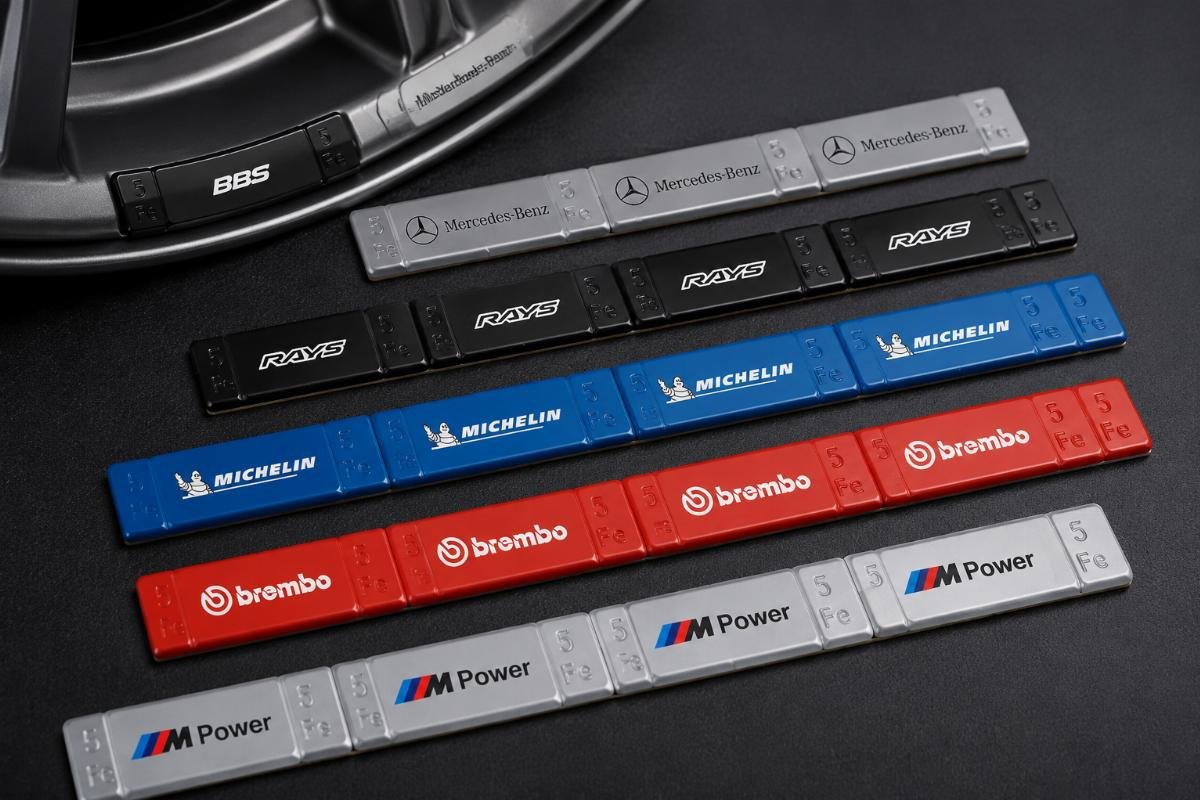
Qualified Chinese auto parts suppliers offer MOQ as low as 20 units for stocked wheel weight SKUs, with no hidden setup fees for custom branding on orders over 100 units. Many small to mid-sized buyers, especially auto modification shops and cross-border e-commerce sellers, incorrectly assume all bulk wheel weight orders require 1000+ unit minimums, locking them into overstocked inventory that ties up working capital.
| Order Type | Common Hidden Cost | Standard Fair Term |
|---|---|---|
| Stocked SKU Order | Being forced to accept 500+ unit minimums to get factory pricing | 20 unit minimum for ready-to-ship stock SKUs with full bulk pricing eligibility |
| Custom Brand Order | Being charged $300+ in hidden setup fees for logo printing | No extra setup fee for custom branded orders of 100 units or more |
| Test Order | Paying 2x+ the per-unit bulk rate for small trial quantities | Per-unit pricing matching full bulk rates for orders as small as 100 units [NEED_CITE: Chinese auto parts manufacturers with dedicated aftermarket production lines offer custom branded weights at no extra setup fee for orders of 100 units or more] |
A US-based auto tuning shop required 80 units of custom branded adhesive weights for a 20-piece test order for a local performance client, and the supplier completed production in 12 days and shipped via DHL for delivery within 5 days, with no additional branding fees added to their final invoice.
- MOQ Confirmation – Explicitly ask for the minimum order quantity for stocked SKUs before discussing custom order terms.
- Fee Disclosure – Request a written confirmation that no setup, plate, or branding fees will apply to your custom order.
- Test Order Option – Request a 20 unit sample order to verify product quality before committing to larger volumes.
How do adhesive and clip-on wheel balancing weights compare for different vehicle use cases?
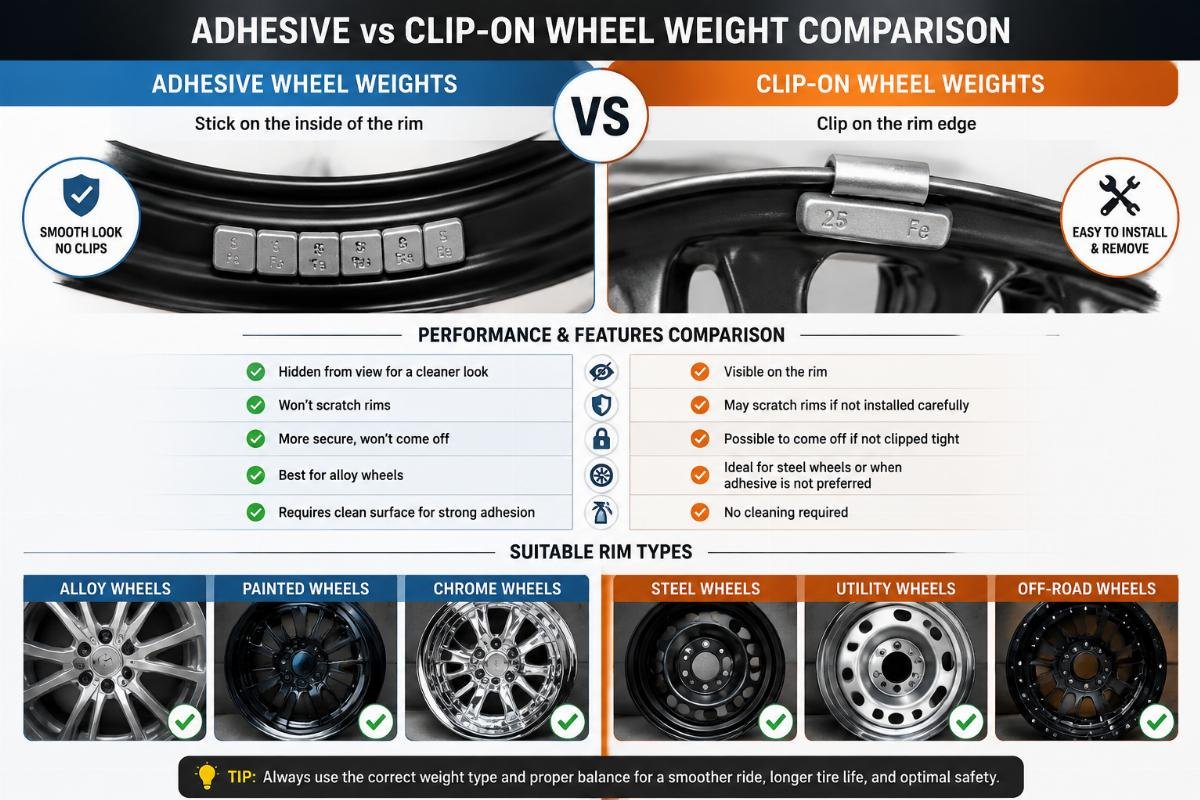
Adhesive weights perform better for passenger cars and modified wheels, while clip-on weights are the standard for heavy-duty commercial and off-road vehicles. Choosing the wrong weight type for your target customer base is a common mistake that leads to higher product return rates and negative customer reviews.
| Weight Type | Best Use Case | Common Misapplication |
|---|---|---|
| Adhesive Stick-On | Passenger cars, modified alloy wheels, 14-20 inch rim sizes | Being used on heavy-duty off-road vehicles where constant vibration loosens the backing |
| Clip-On | 17-22 inch SUV wheels, commercial trucks, off-road vehicles | Being used on custom modified wheels where the clip clamp damages the rim finish |
| Mixed Bundles | Tire retail stores offering upsell packages with new tire installations | Offering only one weight type regardless of customer vehicle type |
A Middle East alloy wheel distributor ordering 12,000 units of mixed adhesive and clip-on weights worked with their supplier to align SKU selection with their existing 17-22 inch SUV wheel inventory, which supported 25% faster bundle upsell conversion across their regional distribution network.
- SKU Alignment – Match your wheel weight SKU mix to the existing wheel inventory you already sell to reduce cross-promotion friction.
- Use Case Labeling – Clearly list compatible vehicle types for each weight SKU in your internal inventory system to avoid picking errors.
- Bundle Pricing – Offer pre-packaged weight and wheel bundles for common fitments to reduce customer decision time.
What lead time and shipping terms should you lock in for bulk wheel weight orders?
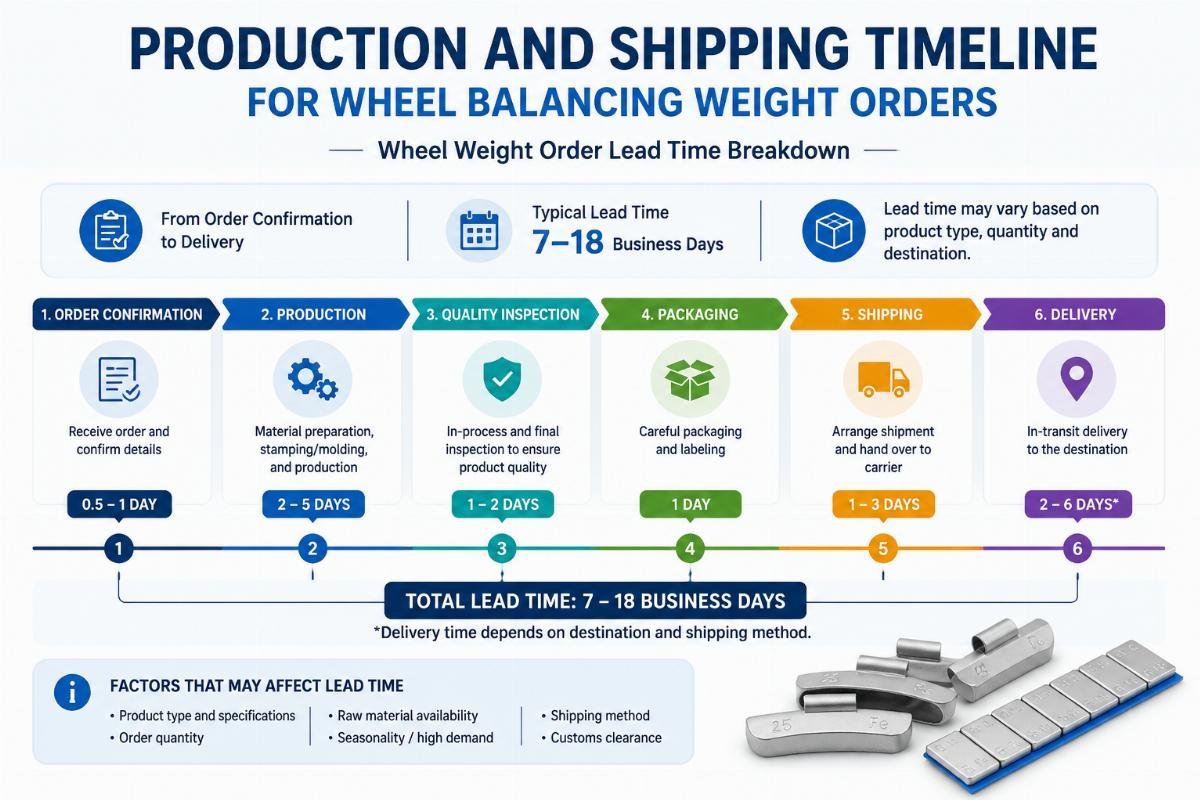
Standard production lead time for stocked SKUs ranges from 7 to 15 days, with express shipping options to reduce total delivery time to under 10 days for urgent orders. Dedicated OEM-focused manufacturers can produce custom branded weights in 15 days with express shipping lead time of 3-7 days, eliminating the common myth that only local suppliers can deliver fast turnaround for custom weight orders.
| Timeline Scenario | Common Delayed Outcome | Recommended Locked Term |
|---|---|---|
| Urgent Small Order | Waiting 30+ days for production and shipping | 7 day production lead time for stocked SKUs, 3-7 day express shipping via DHL/FedEx |
| Full Container Bulk Order | Vague lead times that slip by 2+ weeks | 15-30 day production lead time with confirmed sea shipping schedules |
| Custom Production Order | Unclear delivery timelines for branded SKUs | 15 day production lead time for custom orders with dedicated production slots [NEED_CITE: Dedicated OEM-focused Chinese auto parts manufacturers can produce custom branded weights in 15 days with 3-7 day express shipping lead time] |
A regional auto parts retailer needed a last-minute restock of adhesive weights for a holiday weekend promotion, and their supplier shipped 500 units via DHL within 3 days of order confirmation, with the full shipment delivered to their warehouse 4 days later to avoid lost sales.
- Lead Time Confirmation – Get written confirmation of production and shipping lead times before paying any order deposit.
- Shipping Option – Confirm the supplier offers both standard sea freight and DHL/FedEx express shipping for urgent orders.
- Warranty Coverage – Verify that all wheel balancing weight products come with a 3-year structural warranty to cover manufacturing defects
