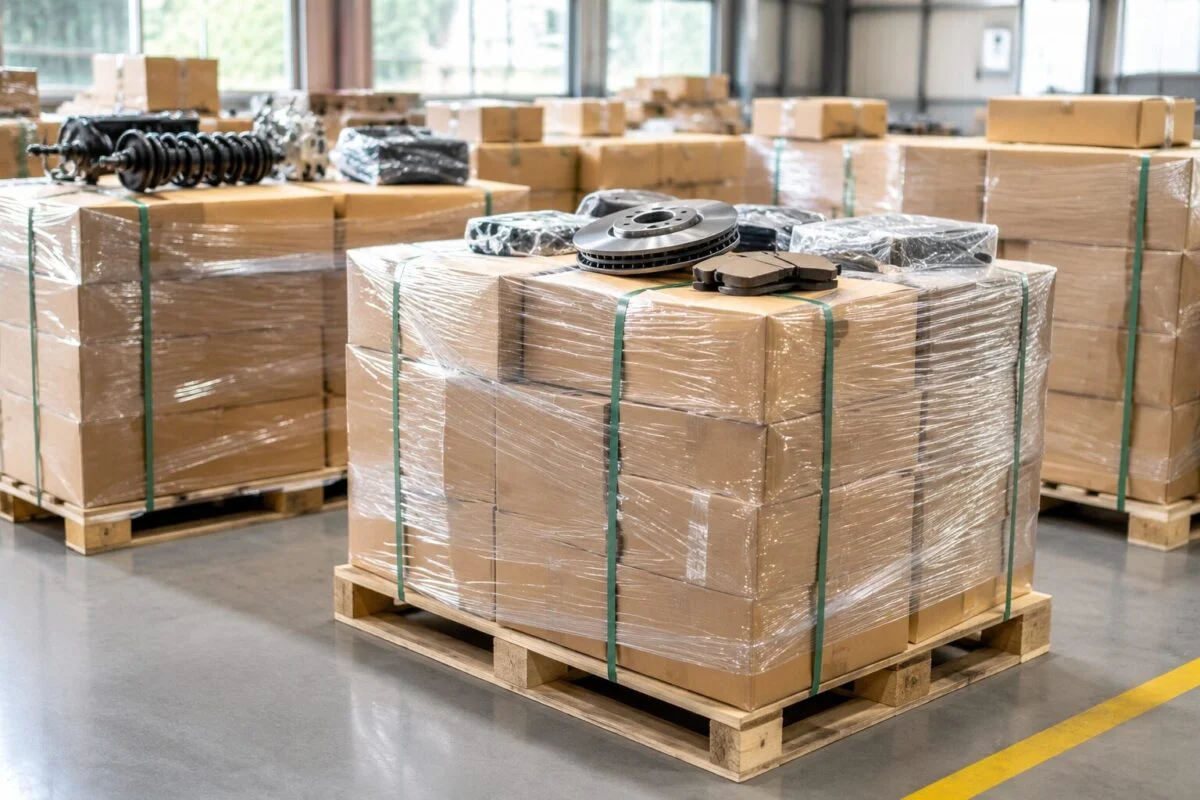
FOB Qingdao Alloy Wheels Manufacturer & Wholesale Supplier
CIF looks cheaper on the invoice. FOB almost always costs less when the wheels hit your warehouse floor.
For alloy wheel imports, choosing between FOB Qingdao and CIF is not about picking the lower unit price—it is about understanding where risk transfers, which hidden fees appear at destination, and who controls the freight leverage. In most bulk purchasing scenarios, FOB Qingdao delivers a lower total landed cost for alloy wheels because buyers who consolidate shipments through their own forwarders avoid inflated destination surcharges and gain real-time visibility over transit.
I spent years loading wheels onto containers at Qingdao port, watching buyers sign CIF contracts thinking they locked in a clean deal, only to get hit with destination charges that wiped out the per-piece savings. A Southeast Asian modification shop once told me their CIF quote to Jakarta looked competitive until the port agent billed them for terminal handling, documentation, and customs brokerage add-ons that pushed the real cost well past what a self-arranged FOB shipment would have been. The factory price was identical. The freight terms were the difference. [NEED_CITE: Incoterms 2020 cost allocation boundaries between FOB and CIF]
Let me walk you through exactly where the money goes under each term, who should pick which, and how to avoid the destination port traps that catch first-time importers off guard.
FOB Qingdao and CIF: Where Does the Money Actually Go?
The gap between FOB and CIF is never the wheel itself—it is ocean freight, insurance, and destination port charges.
Under FOB Qingdao, the seller covers everything from production through loading onto the vessel at Qingdao port. Once the wheels cross the ship rail, cost and risk transfer to the buyer. The buyer then pays ocean freight, marine insurance, and all charges at the destination port. [NEED_CITE: Incoterms 2020 official definition of FOB risk transfer point]
Under CIF, the seller adds ocean freight and minimum insurance coverage to the FOB price. The buyer still assumes risk once goods are loaded on the vessel, but the seller arranges and pays for the main carriage. [NEED_CITE: Incoterms 2020 official definition of CIF cost and risk separation]
Here is how the cost layers break down qualitatively:
| Cost Component | FOB Qingdao | CIF Destination Port |
|---|---|---|
| Factory unit price | Buyer pays | Buyer pays |
| Inland transport to Qingdao port | Seller covers | Seller covers |
| Origin port handling and documentation | Seller covers | Seller covers |
| Ocean freight | Buyer controls rate | Seller arranges, rate embedded |
| Marine insurance | Buyer arranges coverage | Seller arranges minimum cover |
| Destination THC and terminal fees | Buyer pays directly | Buyer pays, often marked up |
| Destination documentation and clearance | Buyer controls agent | Buyer pays, agent selected by seller’s forwarder |
The critical issue: under CIF, the seller’s forwarder controls the destination agent. That agent has no incentive to offer competitive local charges because the buyer did not select them. [NEED_CITE: FIATA guidelines on forwarder selection and destination charge transparency]
I have seen destination terminal charges under CIF run substantially higher than what buyers pay when they nominate their own forwarder under FOB. The ocean freight rate embedded in a CIF quote might look attractive, but the destination surcharges offset the savings entirely.
Who Should Choose FOB: Three Scenarios Where Self-Arranged Freight Wins
Buyers with established freight relationships, full container volume, and destination clearance capability consistently achieve lower total costs under FOB Qingdao.
Scenario one: You have a trusted freight forwarder. A Middle East wholesale buyer I worked with ships multiple containers of alloy wheels per quarter. By nominating their own forwarder for FOB Qingdao shipments, they locked in contract rates that remained stable across seasonal peaks. Their forwarder handled destination clearance through a local partner they had vetted for years. No surprise invoices. No unknown agents demanding cash before release.
Scenario two: You are ordering full container loads. Alloy wheels are dense, heavy cargo. A full container maximizes per-piece freight efficiency. When you control the booking under FOB, you choose the sailing schedule, the carrier, and the transit time. A Latin American distributor running e-commerce operations told me they shifted from CIF to FOB after their first container. Under CIF, the transit took substantially longer because the seller’s forwarder consolidated with other cargo. Under FOB with their own booking, they controlled the routing and cut transit variability noticeably. [NEED_CITE: Qingdao port published freight rate structures and carrier scheduling]
Scenario three: Your destination port has complex clearance requirements. Some countries require specific import licenses, pre-shipment inspections, or local agent registrations. When you control the freight under FOB, your clearance agent works for you. Under CIF, the seller’s forwarder appoints the destination agent, and coordination delays become your problem.
The common thread: FOB gives you control. Control over freight cost, control over transit time, control over who handles your cargo at destination. For alloy wheels—where a single container represents significant inventory value—that control translates directly to cost predictability.
When CIF Makes Sense: Convenience Has a Price Tag
CIF works for small trial orders, first-time importers testing the process, or buyers without logistics infrastructure—but the destination charges must be verified before signing.
A tuning shop in Southeast Asia ordered their first batch of alloy wheels on CIF terms. The unit price plus freight looked reasonable. What they did not anticipate: the destination agent charged handling fees, documentation fees, and terminal surcharges that were not disclosed in the original quote. By the time the wheels cleared customs, the total landed cost had climbed noticeably beyond what a comparable FOB shipment would have delivered.
CIF is not inherently bad. It simplifies the process for buyers who lack freight experience. The seller handles carrier selection, documentation, and freight payment. For a first order of a few dozen wheels to test fitment and market response, CIF removes logistical complexity.
But here is what every buyer must do before accepting a CIF quote: request a complete breakdown of estimated destination charges from the seller’s forwarder. Ask for terminal handling charges, documentation fees, delivery order fees, and any other local surcharges at your port. [NEED_CITE: International chamber of commerce guidance on destination charge disclosure under CIF]
If the seller cannot provide this breakdown—or if the destination agent’s charges look inflated compared to published port tariff schedules—that is your signal to switch to FOB and nominate your own forwarder. The “convenience” of CIF is not worth paying a premium on every destination charge line item.
I have also seen CIF shipments where the seller’s forwarder selected slower transit routes or accepted transshipment delays to minimize their freight cost. The seller meets their CIF obligation—the wheels arrive—but the buyer absorbs the inventory holding cost and market timing loss. Under FOB, the buyer chooses the carrier and the schedule.
How to Audit Destination Hidden Charges Before You Commit
Request a complete destination charge schedule from the forwarding agent before you sign the purchase contract—not after the wheels are on the water.
This is the single most important step buyers skip. The process is straightforward:
Step one: Ask the seller for the name and contact of their designated destination agent at your port.
Step two: Contact that agent directly and request a written breakdown of all local charges applicable to an alloy wheel shipment. Specifically ask for terminal handling charges, documentation fees, delivery order issuance fees, customs clearance fees if included, and any warehouse or storage fees that apply if cargo is not picked up within the free period. [NEED_CITE: Standard destination port charge categories per international freight forwarding practice]
Step three: Compare those charges against published tariff schedules from your port authority. Most major ports publish standard terminal handling rates. If the agent’s quote runs substantially above published tariffs, you have identified a markup that will not exist under FOB.
Step four: Calculate the total landed cost under both CIF and FOB scenarios. Include the FOB unit price, your forwarder’s ocean freight quote, your insurance cost, and your known destination charges. Then compare against the CIF all-in price plus the destination charges you just verified.
A buyer in Latin America running e-commerce operations shared their experience: under CIF, the destination charges for a less-than-container load shipment were so elevated that the total cost exceeded a comparable FOB shipment by a significant margin. After switching to FOB and consolidating with their forwarder, the per-piece landed cost dropped noticeably—and they gained control over transit timing.
The key insight: hidden charges are not hidden if you ask for the breakdown before committing. The difference between an informed CIF decision and a costly surprise is one email to the destination agent.
What a Qingdao-Based Wheel Factory Handles on the Logistics Side
Whether you choose FOB or CIF, a manufacturer located near Qingdao port can coordinate origin-side logistics to reduce documentation errors, loading delays, and compliance issues.
Jinan Yoker operates production facilities within practical distance of Qingdao port. That geographic positioning means we handle inland transport, port booking coordination, container loading supervision, and export documentation as standard process—not as exceptions we scramble to manage.
When a buyer selects FOB Qingdao, we prepare the commercial invoice, packing list, certificate of origin, and any required conformity documentation. We supervise container loading, photograph the stowage pattern, and verify seal numbers before the container departs. The buyer’s forwarder receives complete documentation packages aligned with their clearance requirements.
When a buyer selects CIF, we coordinate with the nominated carrier, ensure freight documentation matches the bill of lading requirements, and confirm insurance coverage aligns with the shipment value. The same loading supervision and documentation preparation applies.
The practical benefit: origin-side coordination by the manufacturer reduces the risk of documentation mismatches that cause destination clearance delays. A missing certificate of origin or an incorrect packing list can hold a container at the port for days—incurring storage fees that no freight term covers.
We also support buyers who want to start with CIF for their first order and transition to FOB as they build their logistics network. The switch does not require changing manufacturers or renegotiating product terms. The wheel specifications, pricing, and production timeline remain constant. Only the freight arrangement changes.
Conclusion
FOB Qingdao and CIF are not pricing options—they are risk allocation and cost control frameworks. For alloy wheel buyers ordering in volume with established freight partners, FOB consistently delivers lower total landed cost by eliminating destination charge markups and giving the buyer direct control over transit. CIF serves a purpose for small trial shipments or buyers building logistics capability, but only if destination charges are verified upfront. The difference between a profitable import cycle and a costly surprise is not the wheel price—it is the freight term you choose and the due diligence you complete before signing.
Applications covered in this article
Parts mentioned
Products in this article
Each part below is supplied source-direct by Jinan Yoker, matched by OE number and checked through full-process inspection.
 01
WHEEL RIM/HUB
Black Chrome Forged Alloy Rim Wheels 15-19inch 5X100 5X112
Product IntroductionHigh quality forged aluminum alloy car wheels with customizable size (12-24"), finishing, color and style. Features equal diameter spokes,…
View Specifications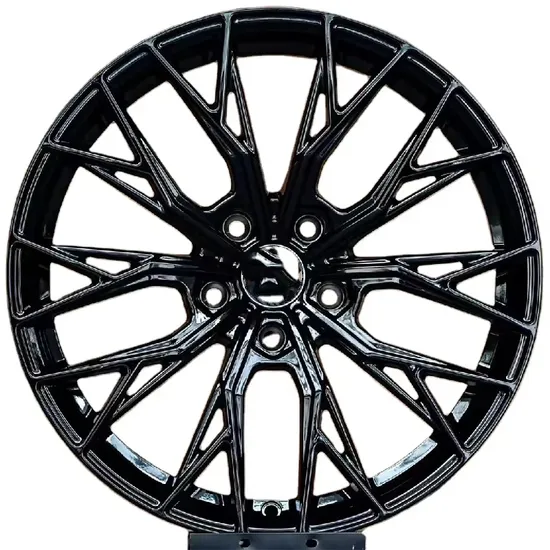 02
WHEEL RIM/HUB
20inch 5*114.3 Black Machine Face Forged Alloy Wheels
Product IntroductionCustomized 20-inch multispoke aluminum forged alloy passenger car wheels with black machine face. Features 5*114.3 PCD, available in silver/hyper…
View Specifications 03
WHEEL RIM/HUB
Hot Sell Brand Car Wheel 14-24inch Rim 5-10 Hole PCD 5*112/120/139.7
Product IntroductionHot Sell Brand Car Wheel Hub with 14-24inch size, available in 5/6/8/10 holes and PCD options like 5*112, 5*120,…
View Specifications 04
WHEEL RIM/HUB
18 Inch 4X110 4X114 Car Alloy Wheels Rims Oy17186
Product ParametersModel NO.OY17186MaterialAluminumSize16-20 InchDescriptionFactory wholesale 18 Inch car alloy wheels rims, made of aluminum with chrome finishing. Customizable ET, PCD,…
View Specifications