Wheel Rims Price in Kenya: 2026 Wholesale Supplier Guide
The lowest FOB quote rarely means the lowest landed cost at your warehouse in Nairobi.
Wheel rims price in Kenya is built from four stacked layers: factory FOB price, ocean freight to Mombasa, KRA import duty at twenty-five percent, plus VAT and port handling charges. A wholesale buyer comparing suppliers on sticker price alone routinely ends up paying substantially more per piece than a buyer who calculates the full CIF Mombasa landed cost before placing an order.
Back when I was sourcing alloy wheels for改装 shops in the Midwest, a Japanese supplier quoted me a per-piece price that looked unbeatable on paper. Three weeks later the container hit Mombasa, and after KRA duty, VAT, clearing agent fees, and inland transport to Nairobi, the actual cost per rim had climbed by nearly a third. The buyer walked away. I learned the hard way that the number on the invoice is only the beginning of the story. Since switching to the supplier side, I have helped East African distributors rebuild their pricing models from the ground up, and the pattern is always the same: the real competition happens at the landed-cost level, not the FOB level. [NEED_CITE: EAC Common External Tariff schedule for alloy wheels under HS 8716.90]
Let me walk you through how each layer works, what the current price tiers look like by size and finish, and where the hidden savings actually sit.
What Determines Wheel Rims Price in Kenya?
Four cost components stack on top of each other before a single rim reaches your showroom floor, and misunderstanding any one of them will distort your entire pricing strategy.
The first layer is the FOB factory price. This is what the manufacturer charges at their dock in China, Japan, or Turkey. It covers raw aluminum alloy, casting or forging, machining, surface treatment, and packaging. Factory prices vary widely depending on production scale, certification overhead, and whether the supplier runs dedicated aftermarket lines or shares capacity with OEM contracts. [NEED_CITE: Global aluminum alloy A356 ingot pricing trends and their impact on wheel manufacturing costs]
The second layer is ocean freight. A twenty-foot container from Shanghai to Mombasa carries roughly three hundred to four hundred pieces of fifteen-inch rims, depending on packing density. Freight rates fluctuate with bunker fuel surcharges, peak-season premiums, and carrier space availability. Shipping from Yokohama or Osaka tends to cost noticeably more per cubic meter than from Chinese ports, largely because Japanese exporters often ship in smaller, less densely packed containers to protect finish quality.
The third layer is KRA import duty. Alloy wheels fall under the East African Community Common External Tariff, and the standard import duty rate is twenty-five percent of the CIF value. On top of that, VAT at sixteen percent is applied to the sum of CIF value plus duty. There is also a Railway Development Levy and an Import Declaration Fee, each adding small but compounding percentages. [NEED_CITE: Kenya Revenue Authority tariff classification and duty rates for HS code 8708.70 wheel components]
The fourth layer is port handling and inland logistics. Mombasa port charges include terminal handling, wharfage, customs clearance agent fees, and inland trucking to Nairobi or beyond. These costs are largely fixed per container regardless of rim value, meaning they hit low-priced rims proportionally harder than premium ones.
A distributor I worked with in Nairobi once compared a Japanese-sourced eighteen-inch rim against a Chinese-sourced rim of identical specification. The Japanese FOB price was higher, but the real shock came when we ran the full landed cost: the Chinese rim, even after adding freight and all duties, came in substantially lower per piece because the FOB gap was wide enough to absorb every additional charge and still leave a meaningful margin. [NEED_CITE: Comparative landed cost analysis methodology for automotive wheel imports into Kenya]
Wheel Rims Price by Size and Finish: 2026 Matrix
Size and manufacturing process are the two variables that move wheel rims price in Kenya more than any other factor, and the pricing tiers follow a consistent pattern across suppliers.
The table below maps typical FOB price ranges by diameter and process type. These are qualitative tiers based on current market positioning, not exact quotes, because final pricing depends on order volume, finish customization, and packaging requirements.
| Diameter | MAT Cast | Flow Formed | Forged |
|---|---|---|---|
| 15″-16″ | Entry tier | Mid tier | Premium tier |
| 17″-18″ | Mid tier | Mid-high tier | Premium tier |
| 19″-20″ | Mid-high tier | High tier | Top tier |
| 21″-22″ | High tier | Top tier | Top tier |
| 23″-24″ | Specialty tier | Specialty tier | Specialty tier |
Surface finish adds another pricing dimension. Machined face with gloss clear coat sits at the baseline. Matte black or gunmetal powder coat adds a modest increment. Chrome plating or multi-layer custom paint finishes push the price noticeably higher due to additional processing steps and higher rejection rates during quality control.
Here is what catches most buyers off guard: fifteen and sixteen-inch rims, despite being the cheapest per piece at FOB level, often carry the thinnest profit margin per unit for the distributor. The landed cost per piece is low, but the street selling price in Nairobi is also compressed by intense competition. Nineteen and twenty-inch flow-formed rims, by contrast, command a significantly wider gap between landed cost and retail price, even though the absolute cost per piece is higher.
A modification shop in Mombasa once asked me why their eighteen-inch flow-formed orders were more profitable than their fifteen-inch cast orders, despite the higher upfront outlay. The answer is simple: the retail buyer paying for eighteen-inch upgrade wheels is less price-sensitive than the fleet operator buying fifteen-inch replacements, and the process upgrade from MAT cast to flow formed is perceived as a meaningful quality jump that justifies the markup.
How to Calculate CIF Mombasa Landed Cost
If you cannot calculate your per-piece landed cost before placing an order, you are gambling with your margin, not managing it.
The formula is straightforward in structure but requires discipline in execution. Start with the FOB price per piece. Add the ocean freight cost per piece, which you calculate by dividing the total container freight by the number of pieces loaded. Add marine insurance, typically a small percentage of the CIF value. This gives you the CIF Mombasa value.
Next, apply the KRA import duty of twenty-five percent to the CIF value. Then apply VAT of sixteen percent to the sum of CIF value plus duty. Add the Import Declaration Fee and the Railway Development Levy, each calculated as a percentage of the CIF value. Finally, add the per-piece share of port handling charges, customs agent fees, and inland transport.
The result is your true landed cost per piece at your warehouse door.
Here is where the trap springs: many buyers compare the FOB price against their local competitor’s retail price and assume a healthy margin, only to discover after clearance that duty and VAT have consumed most of the spread. I have seen distributors walk away from orders mid-clearance because they had not budgeted for the full tax stack.
One practical approach is to build a spreadsheet model before requesting quotes. Input the FOB price, plug in current freight rates for the relevant container size, apply the fixed duty and VAT percentages, and estimate port and inland costs based on your clearing agent’s latest fee schedule. Run this model for each supplier quote side by side. The ranking often changes completely once landed cost replaces FOB price as the comparison basis.
A Nairobi-based wholesaler switched from a Japanese supplier to a Chinese manufacturer after running this exercise. The Japanese FOB price was competitive, but the freight cost per piece was higher due to lower container packing density, and the CIF value ended up substantially above the Chinese alternative even before duty was applied. The landed cost gap widened further once the twenty-five percent duty hit the higher CIF base. [NEED_CITE: Container loading density comparison for alloy wheels from East Asian ports]
China vs Japan vs Local: Which Source Wins?
The assumption that Japanese rims are inherently better value for the Kenyan market is a legacy belief that no longer holds up under landed-cost scrutiny.
Japanese alloy wheels earned their reputation through decades of consistent quality, tight dimensional control, and strong brand recognition among enthusiasts. That reputation is real. But the pricing gap between Japanese and Chinese factory-direct rims has widened to the point where, for most aftermarket applications, the Japanese source simply cannot compete on landed cost without sacrificing margin entirely.
Chinese manufacturers operating under international certifications including ISO, VIA, and TUV produce wheels that meet the same structural and dimensional standards as their Japanese counterparts. The production processes, from low-pressure casting to flow forming and forging, are fundamentally identical. What differs is the labor cost base, the scale of production runs, and the overhead structure.
For a Kenyan distributor buying container loads, this translates to a factory price that is substantially lower for the Chinese source, often by a margin wide enough to absorb higher freight costs and still land at a lower per-piece cost than the Japanese alternative. The certification paperwork is equally complete, which matters for KRA clearance and for reassuring retail buyers who ask about quality standards.
Local Kenyan manufacturing of alloy wheels remains limited. Most rims sold in the Nairobi market are imported, and the choice effectively comes down to which foreign source delivers the best combination of landed cost, certification credibility, and supply reliability.
A regional dealer in East Africa once told me they switched from Japanese to Chinese sourcing after a container of Chinese flow-formed rims arrived with full TUV documentation, passed KRA inspection without issue, and landed at a per-piece cost that allowed them to undercut their competitors while maintaining healthy margins. They had expected a quality compromise and found none. [NEED_CITE: Quality certification equivalence between Chinese and Japanese alloy wheel manufacturers for aftermarket applications]
How to Negotiate Better Pricing as a Kenyan Buyer
Volume commitment is the single most powerful lever you have, but how you structure that commitment matters more than the raw number of pieces you order.
Suppliers price wheels in tiers. A single container of mixed sizes and finishes will be priced higher per piece than a full container of a single size and finish, because production changeovers and packaging variations add cost. If you can consolidate your order around fewer SKUs in larger quantities, the per-piece FOB price drops noticeably.
Long-term supply agreements also unlock better pricing. A supplier willing to commit production capacity to your regular orders will typically offer a price reduction compared to spot purchases, because they can plan raw material procurement and production scheduling more efficiently. This is especially true for custom finishes or less common sizes where the supplier needs confidence that the production run will be repeated.
MOQ flexibility matters for buyers testing new sizes or finishes. Some suppliers require minimum orders of several hundred pieces per SKU, which ties up capital in inventory that may not move quickly. Others offer lower MOQs for stock models, allowing you to test market response before committing to larger volumes. The per-piece price on a small order will be higher, but the risk exposure is also lower.
Packaging and documentation support can also be negotiated. Custom boxing with your branding, inclusion of center caps and valve stems, and provision of complete customs documentation all add value that reduces your operational cost on the receiving end. A supplier who bundles these services into the per-piece price saves you more than a marginal FOB discount from a supplier who charges them separately.
An East African distributor I advised restructured their ordering pattern from frequent small mixed containers to quarterly full-container orders concentrated on their top-selling sizes. The per-piece FOB price dropped meaningfully, the freight cost per piece decreased due to better container utilization, and the total landed cost per piece fell enough to fund a price reduction at retail that increased their sales volume noticeably. [NEED_CITE: Container utilization optimization strategies for automotive parts importers]
Conclusion
Wheel rims price in Kenya is not a single number but a stacked calculation, and the buyer who masters the landed-cost formula wins the margin game.
Every layer from FOB factory price through ocean freight, KRA duty, VAT, and port charges compounds the final per-piece cost. Size and process tier determine your base price range, source country selection determines your FOB starting point, and order structure determines how much negotiating room you have. The suppliers who provide transparent pricing, complete certification documentation, and flexible order terms give you the tools to build a landed-cost model that protects your margin regardless of which size or finish your market demands next.
Parts mentioned
Products in this article
Each part below is supplied source-direct by Jinan Yoker, matched by OE number and checked through full-process inspection.
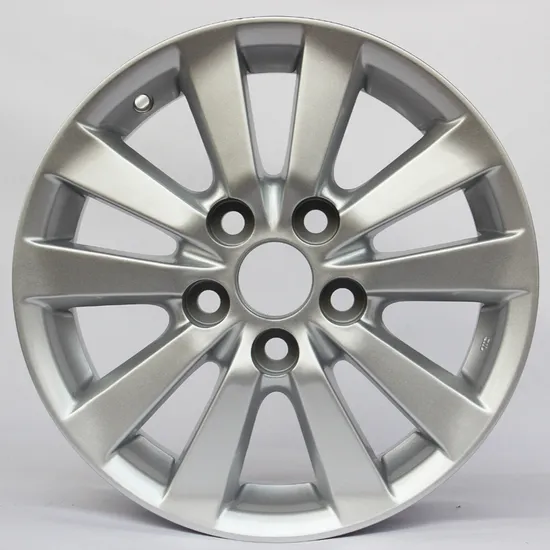 01
WHEEL RIM/HUB
Rin de aleación de aluminio SUV A356.2 de 15 pulgadas en plata personalizado
Product IntroductionThis 15-inch custom SUV alloy wheel is crafted from A356.2 aluminum, ideal for outdoor adventures. Featuring a three-section variable…
View Specifications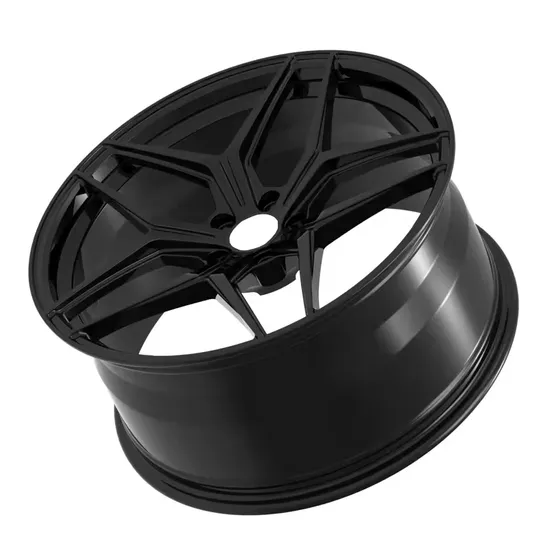 02
WHEEL RIM/HUB
15 Inch A356.2 Aluminum Beadlock Replica Car Rims
Product Introduction15 Inch Cast A356.2 Aluminum Silver Car Rims Replica Alloy Wheels with Beadlock Technology, featuring customizable finishing and high-quality…
View Specifications 03
WHEEL RIM/HUB
Merc A356 Aluminum Alloy Wheel Rims 16-22 Inch Hot Selling
Product IntroductionHot selling Merc automobile wheel rims made of high-quality material, available in 16-20 inch sizes with customizable ET, PCD,…
View Specifications 04
WHEEL RIM/HUB
15 16inch A356 Aluminum Alloy Wheel Rim Hub 15X6.5 16X6.5 for VW Ford
Product Introduction15-16 inch A356 Aluminum Alloy Wheel Rim Hub, suitable for passenger cars like VW City Golf, Jetta GTI, and…
View Specifications