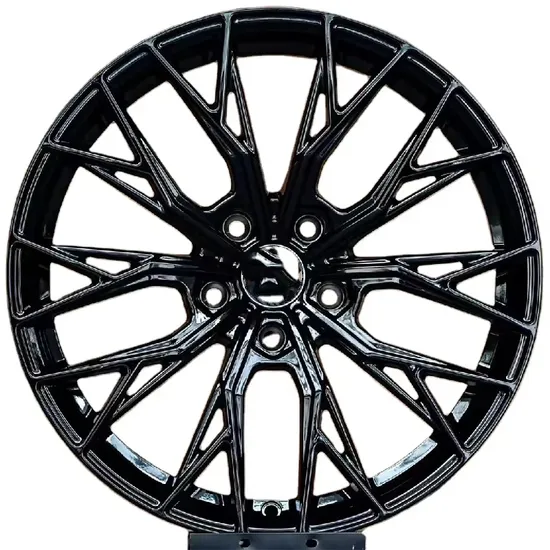
Buy 22 Inch Alloy Wheels OEM Custom Manufacturer
Most buyers think the biggest risk in ordering 22 inch rims is cosmetic finish. In reality, the real killer is a 0.3 mm deviation in center bore tolerance — and it turns an entire container into scrap.
When sourcing 22 inch alloy wheels OEM custom, the factory’s ability to hold PCD, ET, and center bore tolerances within tight limits matters far more than how pretty the product photos look. A verified OEM partner must demonstrate parameter control down to the millimeter, hold international certifications (VIA/TÜV/DOT/JWL), and support a structured sampling process before any bulk run — otherwise fitment failure and customs rejection become near-certain.
I spent years working the shop floor at a wheel plant near Beilun Port in Ningbo, then moved into after-sales and eventually sales. One shipment that still haunts me: a Middle East改装店 ordered a batch of matte black forged 22s for Toyota Land Cruisers. The photos looked stunning. The moment the containers opened, the buyer video-called me — center bore tolerance was off by 0.3 mm, and not a single wheel would seat on the hub. We ate the freight and re-machined the entire batch. That single mistake cost us a mid-five-figure sum and nearly killed the relationship. Since then, I have become almost obsessive about demanding the full parameter sheet — PCD, ET, center bore, hub depth — before I even look at a design rendering. [NEED_CITE: hub-centric fitment tolerance standards per SAE J2530]
That lesson shaped how I evaluate every 22 inch alloy wheels OEM custom inquiry today. Below is the framework I use — and the one I wish every overseas buyer had before placing their first order.
What Parameters Must You Verify Before Ordering 22 Inch OEM Wheels?
Center bore, ET value, and PCD tolerance must each be controlled within sub-millimeter precision — otherwise the entire batch will not mount, regardless of how beautiful the finish is.
The mistake I see most often: buyers send a photo of a wheel they like and ask “can you make this?” without ever sharing the vehicle’s hub data. Then the factory guesses. And guessing on 22 inch applications — especially for SUVs like the Land Cruiser, Patrol, or Range Rover — is how you end up with a container full of paperweights.
| Parameter | What It Controls | Tolerance Requirement | Risk If Off |
|---|---|---|---|
| Center Bore | Hub-centric seating | Tight, verified per vehicle spec | Vibration, mounting failure |
| PCD (Bolt Pattern) | Lug alignment | Standard-grade precision | Cannot bolt on |
| ET (Offset) | Caliper & fender clearance | Controlled per application | Rubbing, suspension damage |
| Hub Depth | Lug nut engagement | Verified per spec | Unsafe clamping |
| Load Rating | Structural capacity | Certified per standard | Catastrophic failure risk |
[NEED_CITE: wheel fitment parameter definitions per SAE and JWL standards]
A US-based e-commerce seller once tested a deep-concave 22 inch design with a small initial order. The wheels looked aggressive, the finish was clean — but the SKU fitment data was incomplete. Return rates climbed noticeably because the ET values did not match the listed vehicle applications. The cost of reverse logistics and replacement stock wiped out the margin on the entire test batch.
The fix is unglamorous but non-negotiable: before any 22 inch alloy wheels OEM custom order moves forward, the buyer must supply the OEM wheel plate data or a verified fitment sheet, and the factory must confirm each parameter in writing — not verbally, not in a chat message, but on a signed parameter confirmation document.
Forged vs Cast: Which Process Fits Your 22 Inch Custom Order?
Forging suits high-performance modification and low-volume premium orders; casting suits cost-sensitive bulk runs — and the choice must be driven by end-use, not by which process sounds more impressive.
There is a persistent myth that 22 inch wheels should always be as light as possible. In reality, for a 22 inch diameter, dynamic balance and structural integrity must take priority over weight reduction. A wheel that is too thin to handle the load rating of a full-size SUV is a liability, no matter how much unsprung mass it saves.
| Factor | Forged 22 Inch | Cast 22 Inch |
|---|---|---|
| Structural Density | Robust | Standard |
| Weight Potential | Noticeably reduced | Heavier at equivalent strength |
| Design Complexity | Controlled | Highly flexible |
| Unit Cost | Substantially higher | Noticeably lower |
| MOQ Suitability | Low to mid volume | High volume |
| Typical Application | Performance, luxury modification | Fleet, aftermarket retail |
[NEED_CITE: metallurgical comparison of forged versus cast aluminum alloy wheel manufacturing processes]
A Southeast Asian OEM client once placed a large order for multi-spoke 22 inch cast wheels. The first sample was approved. But when bulk production arrived, batch-to-batch color variation was visibly inconsistent — the matte bronze on batch two was noticeably warmer than batch one. The end customer rejected the shipment. The root cause was not the design; it was that the casting supplier’s powder coating line lacked batch-level color control.
For 22 inch alloy wheels OEM custom projects, the decision tree is straightforward: if the end buyer is a tuning shop or a luxury vehicle owner who cares about weight and spoke detail, forging is the right call. If the buyer is a wholesale distributor filling shelves for mainstream aftermarket retail, casting delivers the price point the market expects. Neither is universally better — but mixing them up at the sourcing stage is an expensive mistake.
How to Structure Your OEM Custom Order from Design to Delivery?
A disciplined OEM workflow — 3D confirmation, physical sample, small-batch trial, then bulk — is the only reliable path, and a credible factory will insist on it rather than skip straight to production.
Many first-time buyers want to jump from a rendering to a full container. That is how you end up with the Land Cruiser story I opened with. The structured process exists because 22 inch wheels carry higher material cost, longer machining cycles, and stricter fitment sensitivity than smaller diameters. Skipping stages does not save time — it creates rework.
- Fitment Data Collection — buyer provides vehicle application list, OEM wheel specs, and target parameter sheet. Factory confirms each value in writing.
- 3D Modeling and Rendering — factory produces a 3D model showing spoke profile, concavity, and lip depth. Buyer approves geometry before any metal is cut.
- Physical Sample Production — one or two physical samples are machined, finished, and shipped. Buyer test-fits on actual vehicle.
- Small-Batch Trial Run — a limited production run validates color consistency, balance, and packaging. This is the stage where most hidden issues surface.
- Bulk Production and QC — only after trial approval does full production begin, with batch-level QC records.
[NEED_CITE: OEM wheel development workflow stages per automotive aftermarket industry practice]
The small-batch trial stage is where a reliable 22 inch alloy wheels OEM custom partner proves its value. A factory willing to support a modest trial quantity — rather than demanding a full container before the buyer has verified fitment and finish — is signaling confidence in its own process control. Lead times for the full cycle typically fall within a moderate range, and a factory that quotes an implausibly short timeline is usually planning to skip the trial stage.
What Certifications Guarantee Your 22 Inch Wheels Pass Global Markets?
VIA and JWL cover Japan and many Asian markets; TÜV and DOT cover Europe and the Americas — and shipping without the correct certification for the destination market means customs rejection, full stop.
Certification is not a marketing checkbox. It is a legal and logistical requirement. I have seen shipments held at port because the importer assumed a “general quality certificate” would satisfy customs. It does not. Each market has its own recognized standard, and the documentation must name the specific wheel model and size.
| Certification | Primary Market | What It Validates |
|---|---|---|
| VIA / JWL | Japan, parts of Asia | Structural integrity, radial fatigue |
| TÜV | Europe | Full vehicle compatibility, load rating |
| DOT | United States | Impact resistance, material compliance |
| CCC | China domestic | Mandatory for local OEM supply |
[NEED_CITE: international wheel certification requirements by region per SEMA and industry trade guides]
A Latin American distributor once received a shipment of 22 inch wheels with only a generic factory test report. Customs at the destination port rejected the entire container because the documentation did not include the specific certification recognized in that country. The wheels were eventually re-routed to a market where the existing paperwork was accepted — but the freight and delay costs were severe.
When evaluating a 22 inch alloy wheels OEM custom supplier, ask for copies of the actual certificates — not a logo on a website, but the certificate document listing the specific wheel models covered. A factory that holds multiple certifications across regions demonstrates that its quality system is built to pass independent third-party audits, not just internal spot checks.
Conclusion
Sourcing 22 inch alloy wheels OEM custom successfully comes down to three things: verified parameter control, a structured sampling process, and market-specific certifications — in that order. The factory with the prettiest catalog photos is not automatically the safest partner. The factory that insists on seeing your fitment data, walks you through a trial batch, and hands you the actual certificate pages is the one that will save you from the kind of mistakes that cost a container load and a customer relationship.
Applications covered in this article
Parts mentioned
Products in this article
Each part below is supplied source-direct by Jinan Yoker, matched by OE number and checked through full-process inspection.
 01
WHEEL RIM/HUB
Ruedas de aleación de 18 pulgadas 5X120 réplicas OEM al por mayor
Product IntroductionFactory wholesale OEM replica alloy wheel rims, 18-inch size with 5X120 bolt pattern. Made of aluminum, black finishing, customizable…
View Specifications 02
WHEEL RIM/HUB
Llantas de aleación de aluminio cromadas de 18 pulgadas — Recambios originales para automóviles
Product IntroductionHigh-quality 18-inch aluminum alloy wheels with customizable style and color, suitable for 4WD vehicles. Meet ISO, VIA, DOT certifications,…
View Specifications 03
WHEEL RIM/HUB
Ruedas de aleación de reemplazo OEM de 17-19 pulgadas Oy17101 Nuevas
Product IntroductionOEM replacement alloy wheels with 17-19 inch size, made of carbon fiber material and chrome finishing. Customizable ET, PCD,…
View Specifications 04
WHEEL RIM/HUB
Oy17109 19/20 Pulgadas 5X112 Llanta de Aleación Diseño OEM
Product IntroductionOEM Alloy Wheel with customizable PCD, ET, CB. Available in 17-19 inch size, Carbon Fiber material, Chrome finishing. Ideal…
View Specifications