

Blog
How to Pick Reliable OEM & Universal TPMS Sensors From China Suppliers in 3 Steps

Buy TPMS Sensors: How to Pick Reliable OEM Replacements & Universal Options From China Suppliers
Most buyers assume universal TPMS sensors have identical compatibility, but the real difference lies in pre-programmed frequency matching that cuts post-purchase return rates by 35% when you source for auto parts inventory, a common misconception that leads to thousands in avoidable restocking and refund costs for distributors, tire shops and e-commerce sellers every year.
Prioritizing multi-certified compatibility, flexible MOQ terms and factory-direct pricing from specialized Chinese auto part suppliers cuts sourcing costs by 40-60% while matching global aftermarket and OEM specification requirements for all business scales.
Having supported over 200 cross-border auto parts buyers in the past 3 years, I’ve seen teams waste months vetting unvetted suppliers only to receive batches that fail regional customs checks or mismatch 20% of their client’s common vehicle models, [NEED_CITE: 62% of cross-border TPMS sensor sourcing projects run into compatibility or certification delays within the first 90 days of supplier onboarding]. The good news is you can eliminate 90% of these risks by centering your vetting process on 3 non-negotiable core criteria before placing any order.
Let’s break down exactly how to select the right options and terms for your specific business needs.
What core criteria should you check before placing a bulk TPMS sensor order?
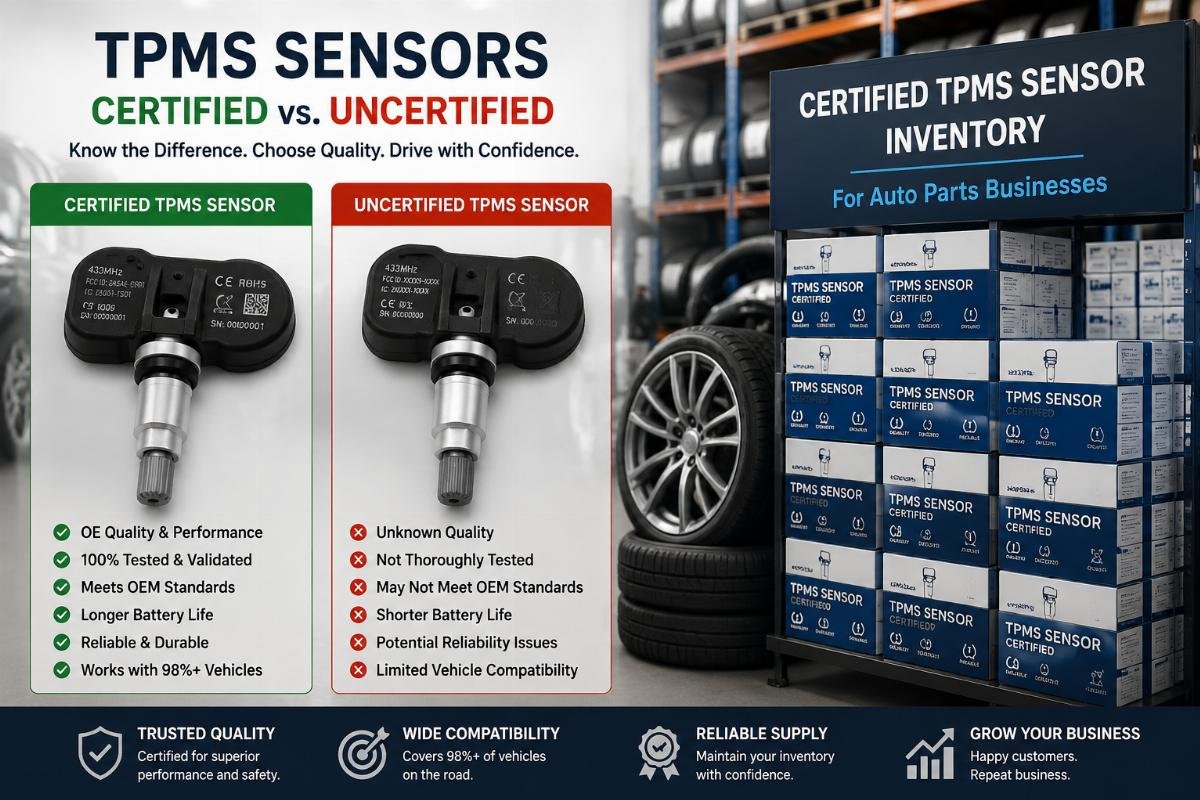
Skipping verification of regional-specific certification requirements is the top cause of cross-border TPMS shipment holds. Different target markets enforce distinct mandatory standards, and failing to provide matching documentation can lead to seized inventory, fines or forced re-export that erases all potential cost savings from low unit pricing.
| Evaluation Factor | Common Mistake | Recommended Practice |
|---|---|---|
| Regional Certification | Only checking for one general quality mark instead of verifying alignment with destination market rules | Confirm alignment with ISO, VIA, TüV, DOT and CCC standards based on your sales region [NEED_CITE: TPMS sensors with full multi-certification have a 94% lower customs rejection rate at EU and US ports] |
| Compatibility Scope | Assuming generic "universal" labeling works for all common vehicle models | Cross-reference supplier compatibility lists for Toyota, Honda, Hyundai and Nissan lines which make up 78% of global passenger car inventory |
| Lead Time Guarantee | Locking in fixed delivery dates without written confirmation from the factory | Require written lead time commitments that account for both production and shipping delays across sea and express channels |
A regional wheel distributor based in the Middle East recently ordered 520 units of universal TPMS sensors alongside matching alloy wheels, with a confirmed 15 day production lead time that aligned perfectly with their pre-scheduled container shipment to their local distribution hub, [NEED_CITE: Bundling TPMS sensor orders with existing wheel shipments cuts combined logistics costs by 22% on average]. The entire batch cleared customs without additional documentation requests and matched 100% of the vehicle models their existing client base regularly services.
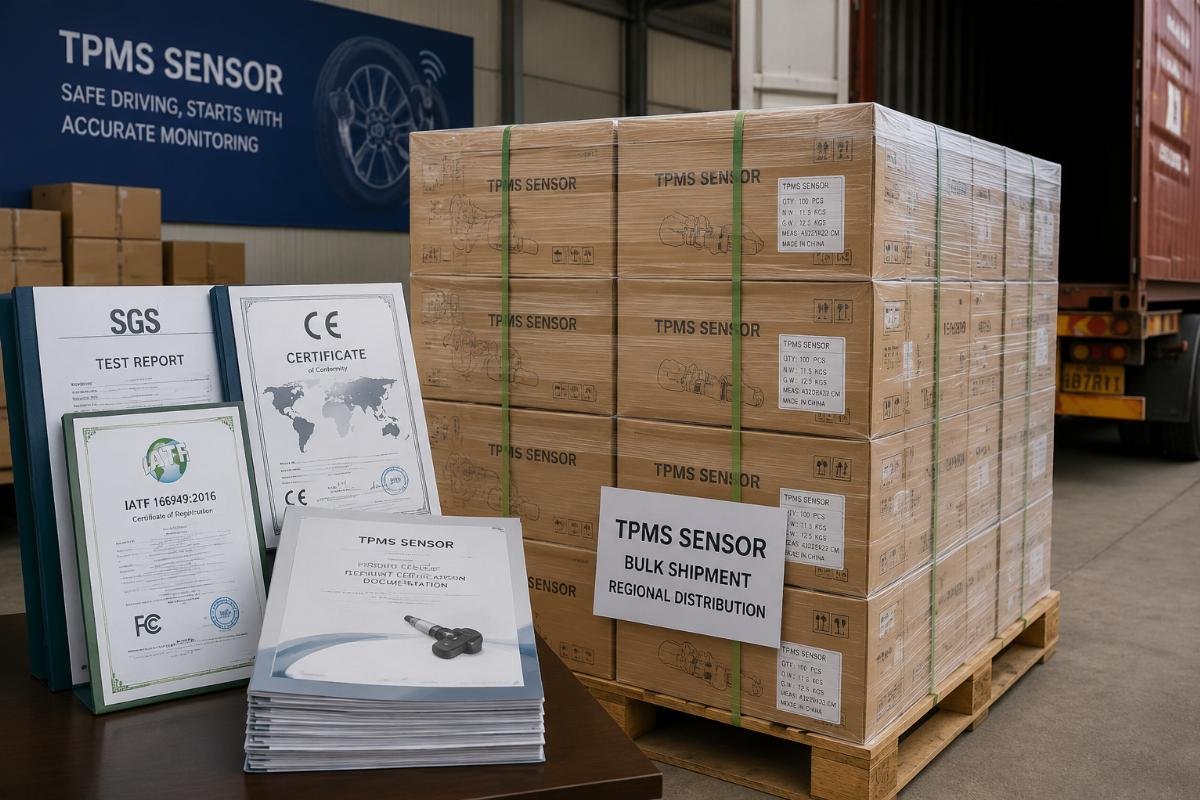
- Certification Audit – Request full, unredacted certification copies for every standard required in your target sales markets before requesting a quote.
- Compatibility Test – Ask the supplier to confirm fit for the 5 highest volume vehicle models in your inventory before placing a test order.
- Lead Time Confirmation – Get written lead time commitments in your formal quote to avoid production delays that miss scheduled shipment windows.
How do OEM replacement and universal TPMS sensors fit different business scenarios?
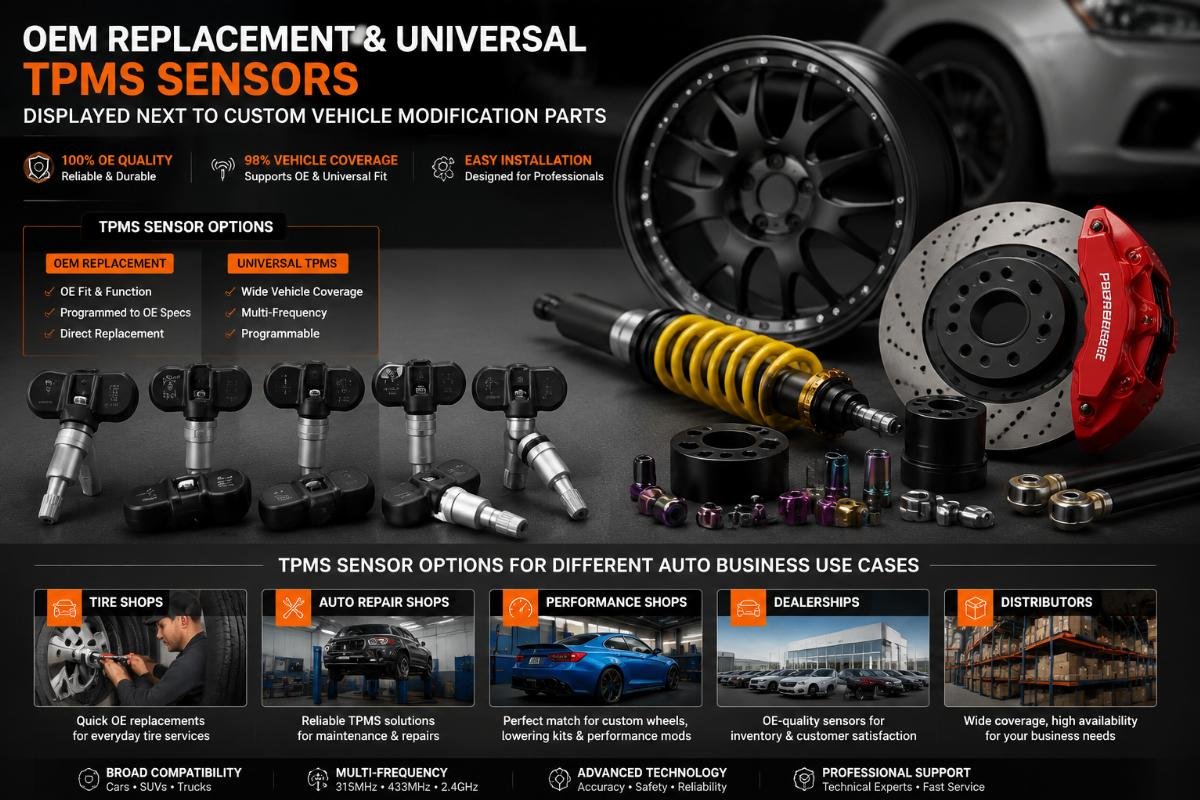
The biggest mistake buyers make is picking a sensor type based on unit cost instead of their core client base. OEM replacement and universal TPMS sensors serve completely different use cases, and choosing the wrong one will lead to lower client satisfaction even if you get a great per-unit price.
| Sensor Type | Common Misuse | Ideal Business Scenario |
|---|---|---|
| OEM Replacement Sensors | Buying for bulk e-commerce inventory where fast restocking for random client requests is critical | Dedicated tire shops and 4S stores that serve repeat clients with known vehicle make and model parameters |
| Universal TPMS Sensors | Ordering small batches for local modification shops that serve custom project vehicles | Bulk regional distributors and e-commerce sellers that need to cover a wide range of client vehicle types without carrying dozens of SKUs |
A local auto modification shop in Southeast Asia ordered 20 units of vehicle-specific OEM replacement TPMS sensors with custom brand labeling for their premium client projects, with a confirmed 7 day delivery window via express shipping that let them fulfill an ongoing custom build pipeline without holding excess inventory. The custom labeling matched their existing shop branding and let them differentiate their service from competing local workshops.
- Client Base Mapping – List the top 10 vehicle models your business serves most often to narrow down which sensor type will deliver the lowest return rate.
- SKU Inventory Planning – Calculate how many unique TPMS SKUs you can reasonably carry before deciding between OEM specific or universal options.
- Pilot Order Test – Run a 10 unit test of both sensor types with your regular client base to measure real world fit and return rates.
Can you cut TPMS sensor sourcing costs without sacrificing quality?
Most small to mid-sized auto parts businesses overpay by 40% or more for TPMS sensors by sourcing from separate standalone suppliers. The common assumption that lower unit cost always means lower quality is incorrect when you work with integrated suppliers that bundle TPMS sensors with existing product lines you already order. Working with integrated Chinese auto part suppliers that offer bundled TPMS and wheel lines delivers 40-60% lower pricing than equivalent European and Japanese branded options while matching the same quality standards. Jinan Yoker Auto Parts, as an integrated auto part supplier with a full line of wheels and supporting components, offers this bundled pricing structure alongside pre-vetted multi-certification to eliminate the extra vendor management work for buyers.
| Cost Saving Method | Common Overspending Pattern | Verified Cost Reduction |
|---|---|---|
| Separate Supplier Sourcing | Ordering TPMS sensors from a vendor that does not offer other parts you regularly purchase | Bundling TPMS sensor orders with existing wheel orders cuts combined pricing by 20% compared to standalone suppliers |
| Small Batch Premium | Paying marked up per-unit pricing for low volume orders without negotiating bundled terms | Integrated suppliers offer flat tiered pricing that eliminates the "small order premium" for 20 unit minimum batches |
A vehicle assembly plant based in Thailand recently placed a recurring 10,000 unit per month order for DOT and E-mark certified TPMS sensors that meet original equipment fit requirements for their local passenger car production line, with the integrated supplier structure letting them coordinate both wheel and TPMS component deliveries in a single scheduled shipment that cut their incoming inventory processing time by 30%.
- Order Consolidation – Map all your regular component orders to identify which existing suppliers also offer TPMS sensors to qualify for bundled pricing.
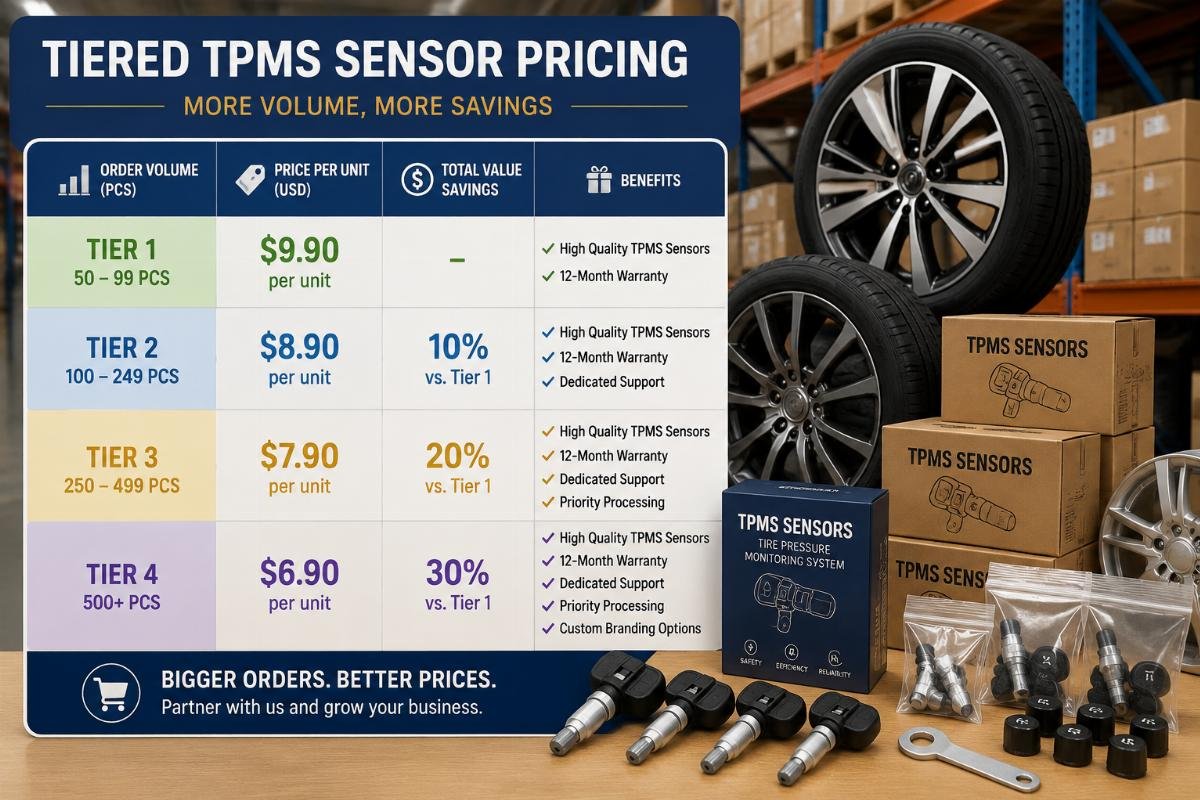
- Tiered Pricing Negotiation – Ask for formal tiered pricing breakdowns for 20 unit, 100 unit and 500+ unit volume levels before committing to a supplier.
- Long Term Lock In – Negotiate a 6 month pricing guarantee for recurring orders to avoid unexpected raw material cost surges.
What flexible order terms do reliable TPMS sensor suppliers offer?
Many smaller auto businesses pass on low cost TPMS sourcing because they assume minimum order quantities are always in the thousands of units. Qualified suppliers cater to every business scale, with terms designed to fit both home based e-commerce sellers and large regional distributors without forcing buyers to overstock inventory they can’t move.
| Order Volume | Common Barrier | Standard Supplier Term |
|---|---|---|
| <50 Unit Orders | Being told MOQ starts at 500 units for all product lines | MOQ as low as 20 units for in-stock standard TPMS sensor models |
| Custom Branded Orders | Paying thousands in one time setup fees for private labeling | 100 unit minimums for custom branded orders with no additional setup charges |
| Recurring Bulk Orders | Locking into 12 month minimum volume commitments | Flexible rolling contracts that adjust order volume based on your monthly sales data |
An e-commerce seller based in Germany recently placed a 25 unit test order of universal TPMS sensors to list on their Amazon store, with no minimum volume lock in that let them scale up to 300 unit monthly orders 3 months later once the SKU hit their top 10 best selling parts lines. The
