Buy OEM Replica Alloy Wheels for Audi | Wholesale China Factory
Replica does not mean “close enough”—it means a 1:1 match on every fitment parameter, or the wheel is scrap.
The single most critical factor when sourcing OEM replica Audi alloy wheels from China is not the visual design—it is whether PCD, ET offset, center bore, and diameter tolerances match factory specifications exactly. A deviation as small as a fraction of a millimeter in any of these parameters will cause high-speed vibration, premature bearing wear, and ultimately a full container return that wipes out your margin and then some.
I learned this the hard way years ago, shipping a full order of 19-inch gloss black Audi-style wheels to a modification shop in Riyadh. The photos looked perfect. The finish was flawless. Then the shop owner sent me a video: the steering wheel was shaking violently at highway speeds. The center bore tolerance was off by a fraction of a millimeter—just enough to prevent hub-centric seating. That entire batch came back. The freight, the customs re-entry, the mold rework—it cost several times what we saved on the unit price. Since that day, I never open a price negotiation without asking one question first: what fitment standard are you holding us to? [NEED_CITE: hub-centric mounting tolerance requirements per SAE J2530]
That experience reshaped how I approach every order of Buy OEM Replica Alloy Wheels for Audi. The visual design is the entry ticket. The fitment data is what keeps you in business.
What Exactly Is an OEM Replica Audi Alloy Wheel?
An OEM replica Audi alloy wheel is a wheel produced by an aftermarket manufacturer that replicates the original equipment design while matching the exact dimensional and fitment specifications of the genuine Audi wheel—without carrying the Audi trademark.
The distinction matters enormously in international trade. A true OEM replica is not a “look-alike” or a “style-inspired” product. It is engineered against the original wheel’s technical drawing, using the same PCD bolt pattern, the same ET offset, the same center bore diameter, and the same overall diameter and width. The mold is developed from reverse-engineered OEM data, and every production batch is verified against those baseline parameters. [NEED_CITE: OEM replica wheel manufacturing standards and IP compliance framework in aftermarket wheel industry]
Many buyers in the Middle East and Latin America initially assume that “replica” simply means the wheel looks like the original. That assumption is dangerous. I have seen containers of wheels arrive at port with the correct five-by-one-twelve bolt pattern on paper, but the actual drilled holes were off by a fraction of a millimeter per hole—enough to create lug nut stress concentration and eventual crack propagation under dynamic loading. The wheel looked right. It was not right.
The legitimate OEM replica market exists in a specific legal and technical space. The design language of a wheel—its spoke pattern, its face profile, its overall aesthetic—is protectable intellectual property in certain jurisdictions. Reputable manufacturers of Buy OEM Replica Alloy Wheels for Audi invest in mold development that captures the visual essence while operating within the legal boundaries of the destination market. They also invest in measurement infrastructure: coordinate measuring machines, dynamic balancing rigs, radial runout testers. These are not optional. They are the difference between a wheel that fits and a wheel that fails.
Which Fitment Parameters Must Match Factory Specs?
PCD, ET offset, center bore, and diameter—these four parameters must each match the original Audi specification within certified tolerance ranges, or the wheel will not perform safely on the vehicle.
This is not a theoretical discussion. Every parameter has a direct mechanical consequence. Let me walk through what each one does and what happens when it drifts.
| Parameter | Function | Consequence of Deviation |
|---|---|---|
| PCD (Pitch Circle Diameter) | Determines bolt hole alignment with vehicle hub | Lug nut cross-threading, clamp load imbalance, stud shear risk |
| ET (Offset) | Controls wheel positioning relative to hub mounting surface | Fender rub, suspension geometry alteration, bearing overload |
| Center Bore | Enables hub-centric mounting for vibration-free rotation | Hub gap causes eccentric mounting, high-speed vibration, bearing wear |
| Diameter | Matches tire sidewall and speedometer calibration | Speedometer error, ABS/ESP sensor mismatch, clearance interference |
[NEED_CITE: wheel fitment parameter tolerance standards per VIA and TÜV certification requirements]
I once worked with a Latin American distributor who was evaluating multiple factories for a trial container of Buy OEM Replica Alloy Wheels for Audi. He asked each factory for a fitment data sheet—PCD, ET, center bore, diameter, and the tolerance range for each. Only a small fraction could provide a document with verifiable tolerance ranges. The rest offered vague assurances like “standard size” or “same as original.” That distributor ultimately selected a supplier who could produce a parameter-by-parameter comparison table against the genuine Audi wheel drawing, with tolerance ranges explicitly stated. He later told me that document alone saved him from a costly mistake.
The center bore deserves special attention. This is the parameter that caused the Riyadh return I mentioned earlier. A hub-centric wheel relies on the center bore sitting flush against the hub pilot diameter. If the center bore is even slightly oversized, the wheel is no longer centered by the hub—it is centered only by the lug nuts, which is a lug-centric mount. Lug-centric mounting introduces microscopic eccentricity that amplifies at speed into visible and dangerous vibration. If the center bore is undersized, the wheel simply will not mount. Either outcome is unacceptable. [NEED_CITE: hub-centric versus lug-centric mounting vibration analysis per automotive engineering standards]
How to Verify a China Factory’s Replica Quality Before Ordering?
Require the factory to provide a certified fitment data sheet, a sample dynamic balancing report, and mold drawing confirmation before you commit to any production order of Buy OEM Replica Alloy Wheels for Audi.
Verification is not something you do after the goods arrive. It is something you do before you send a deposit. The factories that resist pre-production verification are the factories that will cost you the most.
Start with the fitment data sheet. This document should list every critical parameter—PCD, ET, center bore, diameter, width—and state the tolerance range for each. Compare it against the genuine Audi wheel specification for your target vehicle application. If the factory cannot produce this document, or if the tolerances are stated vaguely, walk away. [NEED_CITE: pre-shipment wheel quality verification documentation requirements in international trade]
Next, request a dynamic balancing report for a sample wheel. Dynamic balancing measures the mass distribution of the wheel and identifies heavy spots that require counterweight correction. A well-manufactured wheel will have minimal imbalance out of the mold. Excessive imbalance indicates poor casting or forging consistency—and it means every wheel in your container will require heavy counterweight correction, which is both a cosmetic and a performance issue.
Third, confirm the mold drawing. The factory should be able to share a technical drawing of the mold cavity, showing the exact dimensions used to produce the wheel. Compare this drawing against the OEM reference. This step catches design drift early—before metal is poured.
A Southeast Asian e-commerce seller I worked with adopted this three-step verification process for a private-label order of Buy OEM Replica Alloy Wheels for Audi. He required the factory to provide all three documents before authorizing production. The factory initially pushed back, saying their “standard process” did not include this level of documentation. He held firm. The factory eventually complied. The order shipped on schedule, passed inspection at destination, and became the foundation of a recurring annual framework. The verification step added a few days to the pre-production phase. It saved him from the alternative: receiving a container of wheels that did not fit.
What Are the Real Costs of Getting Fitment Wrong?
The total cost of a fitment failure—including return freight, customs re-entry, mold rework, and buyer compensation—typically dwarfs any per-piece price saving achieved by choosing a lower-cost factory.
Buyers often focus on the unit price when comparing factories. This is understandable, but it is incomplete. The true cost of a wheel order must include the risk-adjusted cost of failure. And fitment failure is not a rare event. It is a common one, particularly among factories that compete primarily on price.
Consider the components of a fitment failure. The return freight for a full container of wheels is a substantial sum—often exceeding the original ocean freight. Customs re-entry at the origin port incurs additional fees. The mold must be reworked or replaced, which interrupts production and delays the next order. The buyer may demand compensation for lost sales, damaged reputation, or contractual penalties with their own customers. When you add these together, the total loss from a single fitment failure can reach multiple times the original order value.
I have seen this pattern repeat across multiple markets. A Middle East modification shop accepted a lower-priced order of Buy OEM Replica Alloy Wheels for Audi from a factory that could not provide a fitment data sheet. The wheels arrived with center bore deviation. The shop installed them on customer vehicles. Complaints followed—vibration at highway speed, uneven tire wear. The shop had to recall the wheels, replace them at their own cost, and absorb the reputational damage. The per-piece saving on the original order was a small fraction of the total loss.
Contrast this with a buyer who insists on verification before production. The upfront cost is marginally higher—perhaps a slightly higher unit price from a factory that invests in measurement infrastructure and quality documentation. But the risk-adjusted cost is dramatically lower. The wheels fit. The customers are satisfied. The reorder happens on schedule. This is the economics of quality.
How to Place a Bulk Order for Audi Replica Wheels from China?
A structured procurement process—parameter confirmation, sample approval, production scheduling, and pre-shipment inspection—is the only reliable path to receiving a bulk order of Buy OEM Replica Alloy Wheels for Audi that meets your fitment requirements.
The process begins with parameter confirmation. You provide the factory with the exact fitment specification for your target Audi application: PCD, ET, center bore, diameter, width, and finish. The factory confirms whether their existing mold matches or whether a new mold is required. If a new mold is needed, confirm the mold development timeline and the cost. [NEED_CITE: OEM replica wheel mold development cycle and production lead time standards]
The next step is sample approval. The factory produces a sample wheel from the confirmed mold. You verify every fitment parameter against the OEM specification. You also verify the finish: color match, surface texture, clear coat quality. Approve the sample in writing before authorizing production. This sample becomes the contractual reference for the bulk order.
Production scheduling follows. A reliable factory will provide a written production timeline, typically measured in weeks from sample approval to shipment. During production, you have the right to request in-process inspection reports—dimensional checks, balancing reports, visual inspection records. A factory that welcomes these requests is a factory confident in its process. A factory that resists is a factory you should watch closely.
Pre-shipment inspection is the final gate. Either you travel to the factory, you hire a third-party inspection service, or you request a comprehensive inspection report with photographs and measurement data. Verify a statistically significant sample of wheels from the production batch against the approved sample. Confirm fitment parameters, finish quality, and packaging integrity.
A buyer from the African market followed this process precisely for an order of Buy OEM Replica Alloy Wheels for Audi. He confirmed parameters, approved a sample, received weekly production updates, and hired a third-party inspector for the final check. The inspector found a minor finish inconsistency on a subset of wheels—less than a full container, but enough to warrant sorting at the factory before shipment. The factory corrected the issue at their cost. The order shipped clean. That buyer has since placed multiple reorders, each following the same process.
Conclusion
Visual accuracy is the minimum standard. Fitment precision is the real standard. Every PCD, every ET, every center bore, every diameter must match the OEM specification—or the wheel is a liability, not an asset. The factories that invest in measurement, documentation, and process discipline are the factories that will keep your business running. The factories that compete on price alone are the factories that will cost you the most. Choose accordingly.
Applications covered in this article
Parts mentioned
Products in this article
Each part below is supplied source-direct by Jinan Yoker, matched by OE number and checked through full-process inspection.
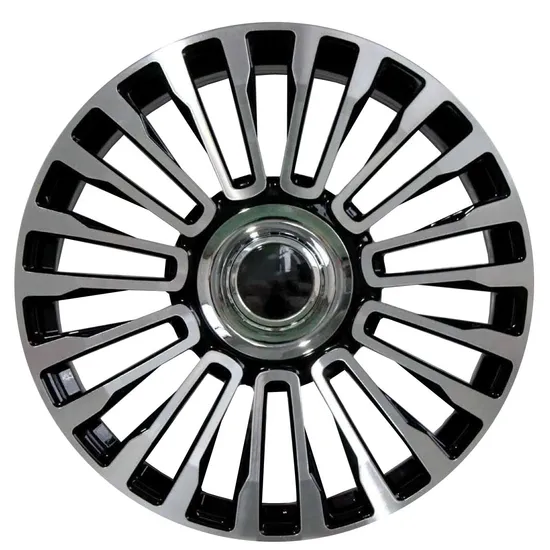 01
WHEEL RIM/HUB
20inch Double Color Replica Alloy Wheels OEM ODM Factory
Product Introduction20-inch replica alloy wheels with intricate designs and double color finishes, crafted from high-quality aluminum. Customizable in size (12-25"),…
View Specifications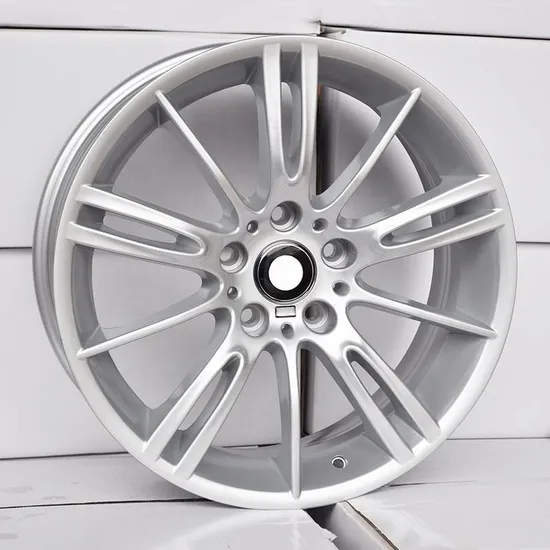 02
WHEEL RIM/HUB
18 Inch 5X120 Alloy Wheel Rims OEM Replica Wholesale
Product IntroductionFactory wholesale OEM replica alloy wheel rims, 18-inch size with 5X120 bolt pattern. Made of aluminum, black finishing, customizable…
View Specifications 03
WHEEL RIM/HUB
Replica 17-18 Inch OEM-Inspired Car Alloy Wheels Rims
Product IntroductionReplica Alloy Wheels with OEM-inspired styling, available in 17-18 inches (customizable 12-25"). Made of high-quality aluminum with customizable finishing…
View Specifications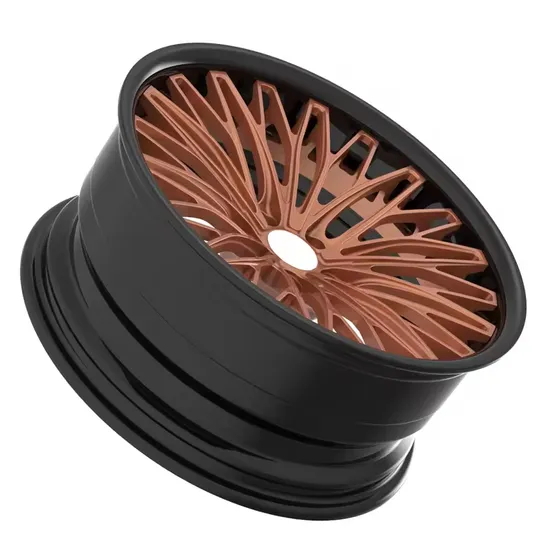 04
WHEEL RIM/HUB
Replica Alloy Wheels for Pickup Trucks Van OEM ODM Racing Rims
Product IntroductionReplica alloy wheels designed for pickup trucks, vans, and racing passenger cars, offering OEM/ODM/customization services. High-quality aluminum construction with…
View Specifications