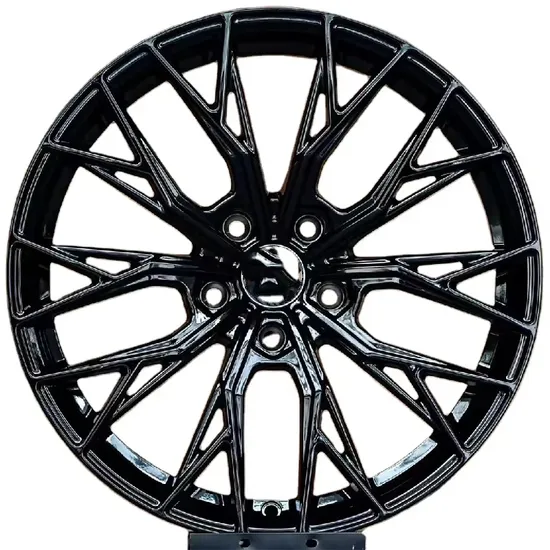
Buy OEM Car Rims 12″-24″ Wholesale Supplier Factory Direct Price
Size is just the starting point. A rim that “looks right” on paper can still fail to mount if the bolt pattern, offset, or center bore is wrong.
When sourcing OEM car rims wholesale, matching PCD, CB, ET, and load index to the target vehicle platform matters far more than chasing the lowest unit price. Certifications like JWL, VIA, TUV, and DOT are not optional extras—they are mandatory for customs clearance in regulated markets. The right OEM car rims wholesale supplier factory direct price partner must pass verification on specification alignment, certification compliance, and production flexibility before a single purchase order is placed.
I still remember a trade show in Las Vegas where a buyer from the West Coast walked past our booth, lured by a competitor’s quoted price that looked impossibly low. He ordered a full container of 18-inch machined-face rims for a popular Japanese SUV platform. Weeks later, the container sat at the Port of Los Angeles. The center bore was off by a fraction, and the offset pushed the wheel into the brake caliper on the front axle. Not a single rim could be mounted. The return freight, port storage, and resale-at-loss wiped out the savings many times over [NEED_CITE: total landed cost impact of specification mismatch in wheel importation]. That is the kind of lesson you only learn once—and only if you are willing to count the real loss.
Over the years, moving between factory floors in Shandong and exhibition halls across Europe and North America, I have watched buyers repeat the same mistakes. The root cause is almost always the same: treating wheel sourcing as a price-and-size exercise, when it is actually a precision engineering and regulatory compliance exercise.
Let me walk you through what actually determines whether an OEM rim order succeeds or fails.
What Specifications Must Match When Buying OEM Rims?
A rim only fits a vehicle when four parameters align simultaneously: bolt pattern, center bore, offset, and load index. Getting the diameter and width right is necessary but not sufficient.
Many buyers assume that if the diameter matches—say, 18 inches—the wheel will fit. This is a dangerous oversimplification. The bolt pattern must match the hub exactly; even a single millimeter of deviation means the wheel cannot be bolted on. The center bore must match or exceed the vehicle hub diameter, with hub rings used only as a secondary solution, not a design fix. The offset determines how the wheel sits relative to the suspension and body line; too much positive offset causes caliper interference, too much negative offset causes fender rub and alters scrub radius. The load index must meet or exceed the vehicle’s gross axle weight rating.
| Parameter | What It Defines | Consequence of Mismatch |
|---|---|---|
| Bolt Pattern (PCD) | Lug hole arrangement | Wheel cannot be mounted |
| Center Bore (CB) | Hub-to-wheel centering | Vibration, improper seating |
| Offset (ET) | Wheel positioning relative to hub | Caliper interference or fender contact |
| Load Index (LI) | Maximum weight capacity per wheel | Structural failure under load |
| Width & Diameter | Tire compatibility and stance | Tire bead seating failure |
[NEED_CITE: SAE J2530 wheel fitment specification standards for passenger vehicles]
I once reviewed a case where a modification shop ordered deep-concave rims for a European luxury sedan. The diameter and PCD were correct, but the offset was pushed too far inward to achieve the concave look. The result was direct contact between the wheel spoke and the brake caliper at full steering lock. The entire batch had to be reworked, and the ET tolerance window was narrower than a few millimeters [NEED_CITE: offset tolerance range for caliper clearance in low-profile wheel designs].
The takeaway is simple: before you request a quotation from any OEM car rims wholesale supplier factory direct price source, compile a complete fitment sheet for every SKU you intend to order. Diameter alone tells you almost nothing.
Which Certifications Are Required for Different Markets?
Certification is not a marketing badge—it is a customs and legal requirement. Without the correct marks, your shipment will be held at the port or recalled after distribution.
Different regions enforce different wheel certification standards, and these are not interchangeable. A rim certified for one market may be completely unsellable in another, regardless of its physical quality.
| Market | Required Certification | What It Covers |
|---|---|---|
| Japan | JWL / VIA | Structural integrity, impact, fatigue |
| Germany / EU | TUV | Dynamic radial, lateral, impact testing |
| United States | DOT | Compliance with FMVSS standards |
| China | CCC | Mandatory for domestic market access |
| Middle East / Africa | Varies by country, often CCC or local equivalent | Import compliance |
[NEED_CITE: international wheel certification requirements by import market]
I have seen containers held at European ports because the TUV paperwork was missing or the certificate number did not match the casting markings on the wheels. In the United States, DOT compliance is non-negotiable for any wheel sold for road use. A buyer from the Middle East once placed a large order without confirming the CCC requirement for re-export documentation, and the shipment was delayed at origin because the factory lacked the proper filing.
When evaluating an OEM car rims wholesale supplier factory direct price offer, the first question should never be “what is the price per piece.” It should be “which certifications do you hold, and can you provide the original test reports for my target market?” A legitimate supplier will have the documentation ready and verifiable. A questionable one will offer vague assurances.
How to Verify a Supplier’s OEM Capability?
A quotation sheet tells you what a supplier wants you to believe. A factory audit, certification originals, and reference cases tell you what the supplier can actually deliver.
The gap between a supplier’s claims and their real capability is where most procurement failures originate. I have sat across tables at trade fairs and heard impressive promises, only to discover later that the supplier subcontracted production to a smaller workshop with no quality control infrastructure.
Here is what I look for when evaluating an OEM car rims wholesale supplier factory direct price partner:
- Certification originals, not photocopies. Ask to see the actual TUV, JWL, or DOT test reports with matching product codes. Verify the certificate number against the issuing body’s database [NEED_CITE: how to verify wheel certification authenticity through issuing body databases].
- Production capacity and equipment. Flow-forming or low-pressure casting lines, X-ray inspection stations, dynamic balance testing rigs—these are not optional for consistent OEM output. A supplier who cannot show you their production floor, even virtually, is a risk.
- MOQ flexibility. A reliable OEM partner should accommodate small trial orders for new SKU validation. Locking a buyer into a massive minimum order before fitment and finish are confirmed is a red flag.
- Reference cases and export track record. Ask which markets they currently ship to, and whether they can provide anonymized references from buyers in your region.
- Lead time consistency. Promised delivery windows mean nothing if they are routinely missed. Ask for historical on-time delivery data, not just the best-case scenario.
I worked with an e-commerce seller who needed to validate packaging integrity, SKU-level fitment data, and finish consistency before committing to a full container. We started with a small trial batch—just enough to test the entire chain from production to warehouse receipt. Once the data confirmed everything was in order, the follow-up order was a full container, placed with confidence. That trial-to-repeat cycle is exactly how responsible buyers should operate [NEED_CITE: best practices for trial order validation in wheel importation].
What Are the Real Costs of Choosing the Wrong Supplier?
The unit price difference between suppliers is almost always smaller than the hidden cost of getting it wrong.
Buyers who select a supplier purely on per-piece cost are making a calculation error. The true cost of a bad supplier includes return freight, port storage fees, customs penalties, customer complaints, warranty claims, and lost reputation. These costs compound quickly and can dwarf the original savings.
Consider the scenarios I have witnessed:
- Specification mismatch at destination. A container arrives, the wheels do not fit the target vehicles, and the buyer faces return shipping or deep-discount resale to a different market. The financial damage includes freight in both directions, port demurrage, and inventory write-downs.
- Certification failure at customs. The shipment is held or rejected. Storage fees accumulate daily. The buyer must either source emergency replacement stock at a premium or face empty shelves and cancelled customer orders.
- Load index non-compliance in the field. Wheels pass visual inspection but fail under real-world loading conditions. The result is warranty claims, potential liability exposure, and in severe cases, product recalls. The cost of a recall dwarfs any per-piece savings [NEED_CITE: financial impact of wheel product recall due to load rating failure].
- Finish quality degradation. Chrome plating that peels within months, machined faces that corrode without proper clear-coating, or powder coat that chips under normal use. The buyer absorbs replacement costs and brand damage.
A buyer from a Latin American distribution network once shared that their cheapest supplier quote ended up costing several times more than a properly vetted alternative, once all the hidden costs were tallied. The lesson was expensive but permanent.
When you compare an OEM car rims wholesale supplier factory direct price quotation, build a total cost model that includes freight, duties, potential rework, warranty exposure, and reputational risk. The supplier with the slightly higher unit price but verified certifications, correct specifications, and proven track record will almost always be the cheaper option in reality.
Conclusion
OEM rim procurement is an engineering and compliance exercise, not a price comparison spreadsheet. Matching PCD, center bore, offset, and load index to the target vehicle platform eliminates the majority of fitment failures. Holding the correct certifications for your destination market prevents customs seizures and recalls. Verifying supplier capability through documentation, production evidence, and trial orders protects against the gap between claims and reality. The real cost of a bad supplier always exceeds the apparent savings on the quotation.
Parts mentioned
Products in this article
Each part below is supplied source-direct by Jinan Yoker, matched by OE number and checked through full-process inspection.
 01
BRAKE DISC/DRUM
China OEM Car Front Rear Rotor Disc Pad Wholesale Price
Product IntroductionHot sale rotor disc pad for cars, manufactured by Chinese OEM factory with ISO14001, IATF-16949, ISO9001 certifications. Suitable for…
View Specifications 02
BRAKE DISC/DRUM
China OEM Car Disc Pads Front Rear Wholesale Hot Sale
Product IntroductionHot sale front disc pad for series cars, manufactured by Chinese OEM factory with wholesale price. Made of iron,…
View Specifications 03
BRAKE DISC/DRUM
2026 China OEM Brake Rotor Disc Pad Front Rear Car Series
Product IntroductionHigh-quality front brake disc made of iron, certified by ISO14001, IATF-16949, and ISO9001. Ideal for auto wholesale, with a…
View Specifications 04
BRAKE DISC/DRUM
Popular Disc Pad Brake for Series Cars Cast Iron OEM Hot Sale
Product IntroductionHigh-quality front disc brake designed for series cars, made of durable cast iron. Certified by ISO14001, IATF-16949, and ISO9001,…
View Specifications