Buy Gloss Black Alloy Wheels: China Factory Direct Wholesale Supplier
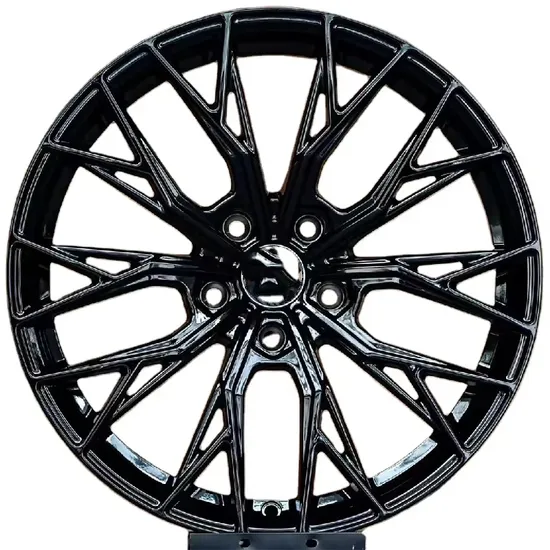
Most buyers assume gloss black is just a paint color—it is actually a powder-coating and curing process that defines long-term durability.
Sourcing gloss black alloy wheels directly from a certified Chinese factory cuts procurement costs substantially compared to European or Japanese brands, while maintaining batch consistency through controlled curing temperatures, standardized film thickness, and full VIA/TUV compliance—provided you verify finishing protocols, request salt-spray test reports, and start with a small trial batch before committing to container volumes.
I still remember the first time a Middle East modification shop received a full order of 20-inch gloss black alloy wheels and called me within days of arrival. The surface showed visible micro-cracking along the spoke edges. My initial guess was thermal stress during ocean transit. After pulling production logs, the real culprit turned out to be temperature fluctuation inside the curing oven—a narrow band of racks had experienced uneven heat distribution, compromising the powder’s cross-linking structure. That single batch cost us the freight reimbursement plus replacement units, wiping out the entire margin. From that point forward, I began inspecting every curing cycle report and demanding salt-spray endurance documentation before any shipment leaves the facility. [NEED_CITE: powder coating cure temperature impact on film adhesion and chemical resistance per ASTM D3359]
If you are evaluating suppliers for your aftermarket distribution, tuning shop, or e-commerce operation, the following breakdown covers finish verification, specification matching, pricing structure, and pre-order due diligence—everything you need to source gloss black alloy wheels with confidence.
How to Verify Gloss Black Finish Quality from China Suppliers?
Gloss black finish durability depends on powder coating chemistry and curing precision, not merely the visual appearance at the time of packing.
Many overseas buyers judge quality by how the wheel looks under showroom lighting. That approach misses the real risk factors: inadequate film adhesion, insufficient cross-linking, and poor resistance to UV degradation and road salt corrosion. Here is what you need to examine:
| Quality Factor | Top-Tier Factory | Mid-Range Supplier | Unverified Workshop |
|---|---|---|---|
| Coating Method | Electrostatic powder spray + infrared pre-cure | Powder spray, manual touch-up | Liquid paint or uncontrolled spray |
| Film Thickness Control | Standardized within acceptable range | Spot-check only | Not measured |
| Curing Process | Multi-zone oven with logged temperature profiles | Single-zone, no logging | Ambient or unmonitored |
| Salt-Spray Endurance | Extended endurance, third-party tested | Basic endurance, self-reported | Not provided |
| Batch Color Consistency | Full batch-level spectrophotometer matching | Sample-level matching | Visual comparison only |
[NEED_CITE: automotive wheel coating salt-spray test methodology per ASTM B117]
A European tuning shop operator once ordered two separate batches of gloss black alloy wheels from different Chinese suppliers. The first batch arrived with uniform depth and a mirror-like reflection. The second batch, from a cheaper source, looked identical on day one—but within weeks of exposure to coastal humidity, the clear layer began hazing and the underlying black showed patchy fading. The root cause: the second supplier skipped the infrared pre-cure stage, leaving the powder film vulnerable to moisture penetration.
When requesting samples, specifically ask for the coating system specification, the curing temperature range, and whether salt-spray testing was performed by an independent laboratory. If a supplier cannot produce these documents, treat that as a disqualifying signal. [NEED_CITE: powder coating adhesion classification methods for automotive alloy wheels]
What Are the Key Specs: Sizes, Fitments, and Certifications?
Correct sizing and certified compliance determine whether gloss black alloy wheels can legally enter your target market and physically fit your customers’ vehicles.
Specification errors are the single most common reason for return claims in the aftermarket wheel trade. A wheel that looks perfect in the catalog but carries the wrong bolt pattern, offset, or center bore will never mount properly—no amount of finish quality can compensate for that.
| Specification Category | Coverage Range | Notes |
|---|---|---|
| Diameter | 12-inch through 24-inch | Passenger, SUV, truck, racing, motorcycle |
| Bolt Patterns | 4-hole, 5-hole, 6-hole, 8-hole configurations | 5×114.3 and 5×120 most requested globally |
| Width Range | Narrow to wide concave profiles | Staggered fitments available for luxury/sport |
| Center Bore | Vehicle-specific or multi-fit hub rings | Hub-centric preferred for vibration-free fit |
| Surface Finishes | Gloss black, matte black, machined face, chrome, bronze, gunmetal, hyper silver, full custom | Custom color matching available |
[NEED_CITE: wheel fitment specification standards including bolt pattern and offset measurement conventions per SAE J2530]
Certifications are non-negotiable for regulated markets. VIA and JWL are mandatory for Japan-facing distribution. TUV certification is required across most of the European Union. DOT compliance applies to the North American market. CCC is essential for domestic Chinese OEM supply chains. A factory that holds multiple certifications simultaneously demonstrates engineering discipline and export readiness—critical when you need gloss black alloy wheels that clear customs without delay.
An e-commerce seller based in the western United States once received a container of wheels without verifying center bore specifications. The wheels were technically the correct diameter and bolt pattern, but the center bore was oversized for the target vehicle platform. The result: hundreds of units that required aftermarket hub rings to function safely—adding cost, complicating fulfillment, and generating negative reviews. Always cross-reference fitment data against the specific vehicle applications your end customers drive.
How Does Factory-Direct Pricing Compare to Trading Companies?
Purchasing gloss black alloy wheels directly from the manufacturing facility eliminates intermediary margins, typically delivering substantial per-unit savings versus sourcing through trading companies or brand distributors.
The pricing gap between factory-direct and trading company channels is significant and compounds across container-scale orders. Trading companies add their margin on top of the factory price, plus handling fees, warehousing costs, and sometimes currency conversion spreads. When you buy direct, those layers disappear.
| Cost Factor | Factory-Direct | Trading Company |
|---|---|---|
| Unit Price | Noticeably reduced | Includes intermediary margin |
| MOQ Flexibility | Low threshold for stock and custom | Often inflated to cover handling |
| Lead Time | Controlled by production schedule | Dependent on trader’s stock availability |
| Customization Access | Direct engineering communication | Filtered through third party |
| Quality Accountability | Single point of responsibility | Shared or unclear accountability |
[NEED_CITE: aftermarket alloy wheel pricing structure comparison between OEM, distributor, and factory-direct channels]
A Latin American distributor who had been purchasing through a Hong Kong-based trading company switched to direct factory sourcing. The per-unit cost dropped noticeably, and more importantly, the communication loop shortened dramatically—engineering questions about custom offset adjustments or finish variations went straight to the production team instead of bouncing through an intermediary who added days to every response cycle.
Minimum order quantities at a direct factory can be surprisingly accessible. Stock models often accept orders starting from a small number of pieces, while custom finishes or specifications typically require a modest batch commitment. This flexibility allows modification shops and e-commerce sellers to test market response without overcommitting capital. Lead times generally range from a couple of weeks for stock items to roughly a month for custom production runs.
The key advantage beyond price is accountability. When you source gloss black alloy wheels from the factory itself, any quality issue—whether it is a coating defect, a dimensional deviation, or a packaging shortfall—has one resolution path: direct communication with the production and quality teams. There is no middleman to deflect blame.
What Should You Check Before Placing a Bulk Order?
A structured pre-order verification process prevents costly bulk quality failures and ensures your gloss black alloy wheels arrive ready for sale or installation.
Skipping pre-order due diligence is the most expensive mistake in international wheel sourcing. The consequences—rejected containers, stranded inventory, damaged customer relationships—far outweigh the time invested in proper verification. Follow this checklist:
Step 1: Request Physical Samples
Never place a bulk order based on catalog photos alone. Request at least one finished sample in the exact specification and finish you intend to order. Inspect the coating uniformity, check the lug seat surfaces, verify the valve hole placement, and confirm the center bore dimension with calipers.
Step 2: Review Certification Documents
Ask for current, valid copies of all relevant certifications—VIA, TUV, DOT, JWL, CCC, ISO—matched to the specific wheel models you are ordering. Expired or mismatched certificates are a red flag. [NEED_CITE: certification validity verification process for automotive wheel export compliance]
Step 3: Evaluate the Packaging Specification
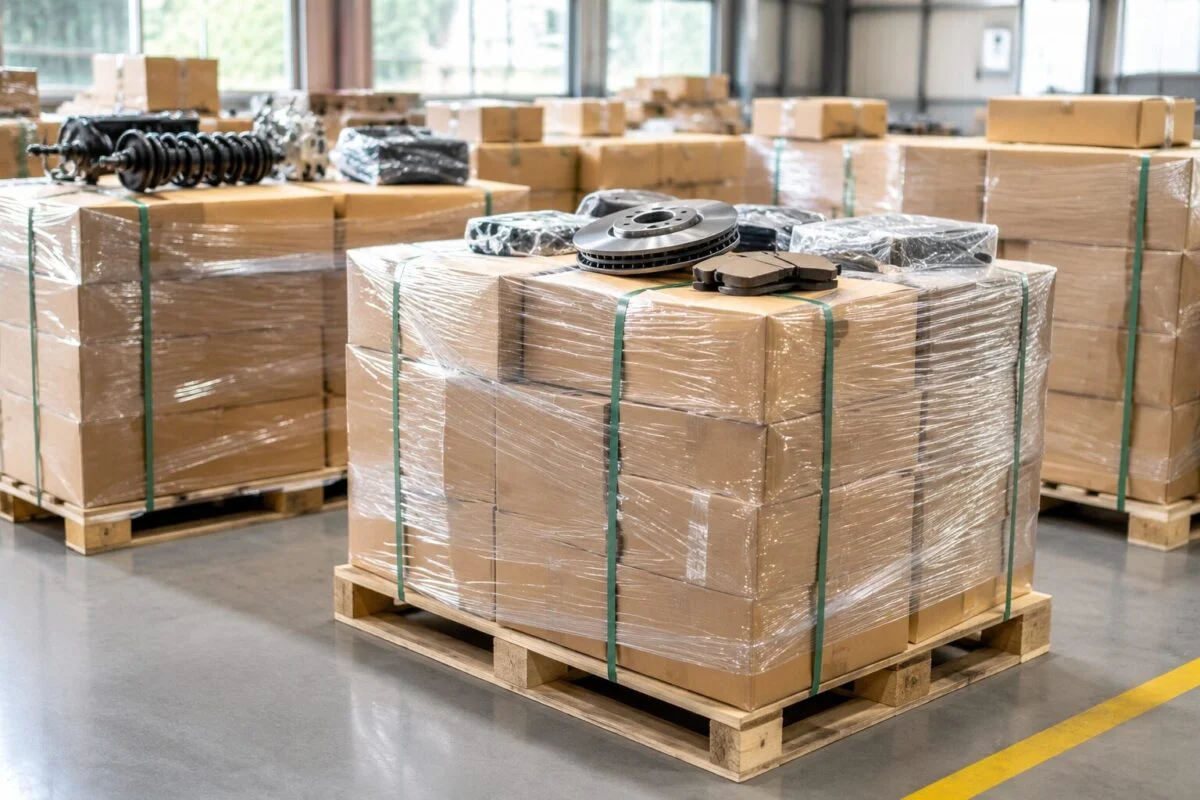
Packaging directly determines whether wheels arrive intact, especially for e-commerce fulfillment channels like Amazon FBA. The standard should include a double-wall corrugated outer carton, internal pearl cotton cushioning, and reinforced corner protectors. Request a packaging photo or video before the production run begins. An African wholesale buyer once received a full container where the single-wall cartons had collapsed under stacking pressure during transit, scratching the gloss black finish on dozens of units. The repackaging cost at destination exceeded the original packaging savings many times over.
Step 4: Confirm After-Sales Terms in Writing
Define the protocol for handling defective units, shipping damage claims, and dimensional discrepancies before the order is placed. A supplier willing to document clear after-sales terms demonstrates confidence in their quality system.
Step 5: Start with a Trial Batch
Even if your target volume is multiple containers, place an initial trial order first. Use it to validate batch-to-batch color consistency, packaging integrity under real shipping conditions, and documentation accuracy for customs clearance. A Middle East modification shop adopted this approach and discovered a slight shade variation between their trial batch and a subsequent production run—caught early, it was corrected before a full container was committed.
Conclusion
Sourcing gloss black alloy wheels from a certified Chinese factory delivers meaningful cost advantages, but only when finish quality, specification accuracy, and pre-order verification are treated as non-negotiable prerequisites. Powder coating process control, multi-market certification coverage, and disciplined packaging standards separate reliable suppliers from risky ones. Start with samples, validate documentation, run a trial batch, and scale only after real-world shipping confirms the quality holds up outside the factory walls.
Applications covered in this article
Parts mentioned
Products in this article
Each part below is supplied source-direct by Jinan Yoker, matched by OE number and checked through full-process inspection.
 01
WHEEL RIM/HUB
17 Inch 4X100/4X114.3 Gloss Black Red Coating Alloy Wheel Rims
Product Introduction17 Inch Gloss Black Red Coating Spokes Alloy Wheel Rims with Gold Rivets, featuring Three Section Variable Diameter Spokes.…
View Specifications 02
WHEEL RIM/HUB
Monoblock Forged 18-20 Inch Alloy Wheel Gloss Black Gunmetal
Product ParametersModel NO.OY17024MaterialCarbon FiberWheel Hub Diameter16-20"IntroductionMonoblock Forged Wheel available in 18-20 Inch. Gloss Black/Gunmetal finish, customizable Et, PCD, CB. ISO,…
View Specifications 03
WHEEL RIM/HUB
Gloss Black 6*139.7 VW Replica Aluminum Alloy Wheels Rim
Product IntroductionGloss Black Replica Aluminum Passenger Car 6*139.7 VW Alloy Wheels Rim, featuring high quality aluminum material and customizable size…
View Specifications 04
WHEEL RIM/HUB
18-Inch Forged Aluminum Alloy Wheels Gloss Black High-Performance
Product IntroductionHigh-performance 18-inch forged aluminum alloy wheels with a gloss black finish, featuring a three-section variable diameter spoke design. Customizable…
View Specifications