Car Rims Supplier for Russia: China Factory Direct
Lowest unit price rarely wins the Russia wheel game—hidden costs from paint failure, customs delays, and dead inventory quietly devour margins.
Finding a reliable car rims supplier for Russia means prioritizing surface finish durability under extreme temperature swings, verified EAC certification for clean customs clearance, and factory-direct packaging engineered for long-haul maritime transit—not just chasing the cheapest quote.
I still remember the call from a Moscow buyer after a container of 18-inch matte black wheels arrived at Vladivostok. The finish had orange-peel texture across the spoke faces. The paint film had contracted and expanded through repeated temperature shifts during the sea voyage, creating micro-stress fractures in the clear coat. We traced it back to insufficient thermal buffering in the packaging and a paint curing cycle that prioritized throughput over cross-link density. That single shipment taught me more about what makes a car rims supplier for Russia truly capable than any spec sheet ever could. [NEED_CITE: thermal cycling effects on automotive powder coat adhesion per ISO 12944]
Most buyers open negotiations by asking for the per-piece price. Smart ones start by asking how the factory handles the gap between Jinan summer humidity and a minus-thirty Siberian winter.
Why Does the Russia Market Require Specialized Wheel Supplier Screening?
Russia’s climate extremes and logistics corridors impose physical demands on alloy wheels that standard export specifications simply do not cover.
The country spans eleven time zones and multiple climate bands. Wheels shipped to Novosibirsk or Yekaterinburg face winter road salt concentrations that dwarf most Western European markets, while summer UV exposure at southern latitudes accelerates clear-coat degradation. A car rims supplier for Russia must demonstrate that their surface treatments survive this full spectrum, not just pass a generic salt-spray test. [NEED_CITE: Russian automotive aftermarket corrosion environment classification per GOST standards]
Maritime logistics add another layer. Most containers bound for Russian ports transit through humid tropical chokepoints before reaching northern latitudes. The temperature differential between a container sitting on a Singapore quay and one crossing the Sea of Japan in January can exceed forty degrees Celsius. Paint films that cure too quickly or lack adequate flexibility will develop micro-cracks during this thermal journey. I have seen batches that looked flawless at the factory gate arrive with spider-web crazing on the lip edges.
Road infrastructure also matters. Pothole impact frequency on regional highways remains substantially higher than in Western Europe, meaning structural integrity under repeated low-speed impact is a real-world requirement, not a lab curiosity. Wheels that meet only minimum VIA load ratings without additional safety margin tend to show bend cracks within a single season on poorly maintained roads.
A distributor in St. Petersburg once showed me a warehouse full of returned wheels from a regional retail chain. The complaint was not price or style—it was that the machined faces had oxidized within months because the clear coat lacked sufficient UV stabilizer for the local summer conditions. The supplier had never asked which Russian cities the wheels would serve. That oversight cost the distributor a full season’s margin. [NEED_CITE: UV degradation mechanisms in automotive clear coats per SAE J2527]
How Do You Evaluate a Chinese Factory’s Surface Treatment and Packaging Capability?
Request process parameter documentation and ask for delivery records to high-latitude destinations—any car rims supplier for Russia worth serious consideration will have both ready.
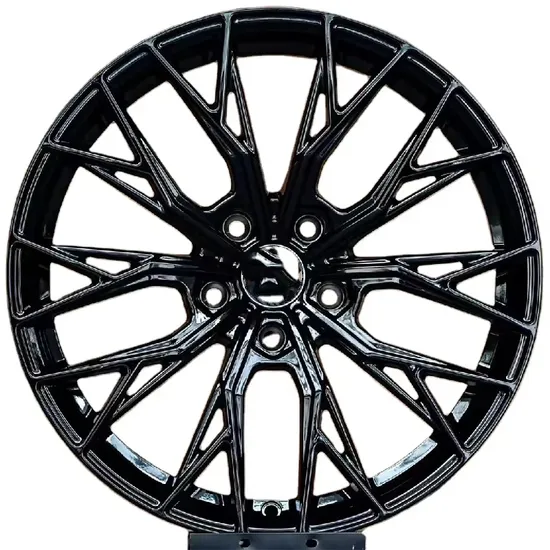
Surface treatment is where factories separate themselves. The mainstream finishes for the Russian market include machined face with clear coat, matte black, gunmetal gray, and hyper silver. Each requires a different curing profile and clear-coat formulation. Machined faces need a clear coat with high flexibility to accommodate the slight flex of the bare aluminum lip under impact. Matte black powders demand controlled film thickness to avoid the orange-peel effect that becomes visible under northern-angle sunlight.
When evaluating a factory, ask three specific questions:
- What is the clear-coat cross-link density target, and how is it verified batch to batch?
- Can you provide salt-spray and thermal cycling test reports for the exact finish you are ordering?
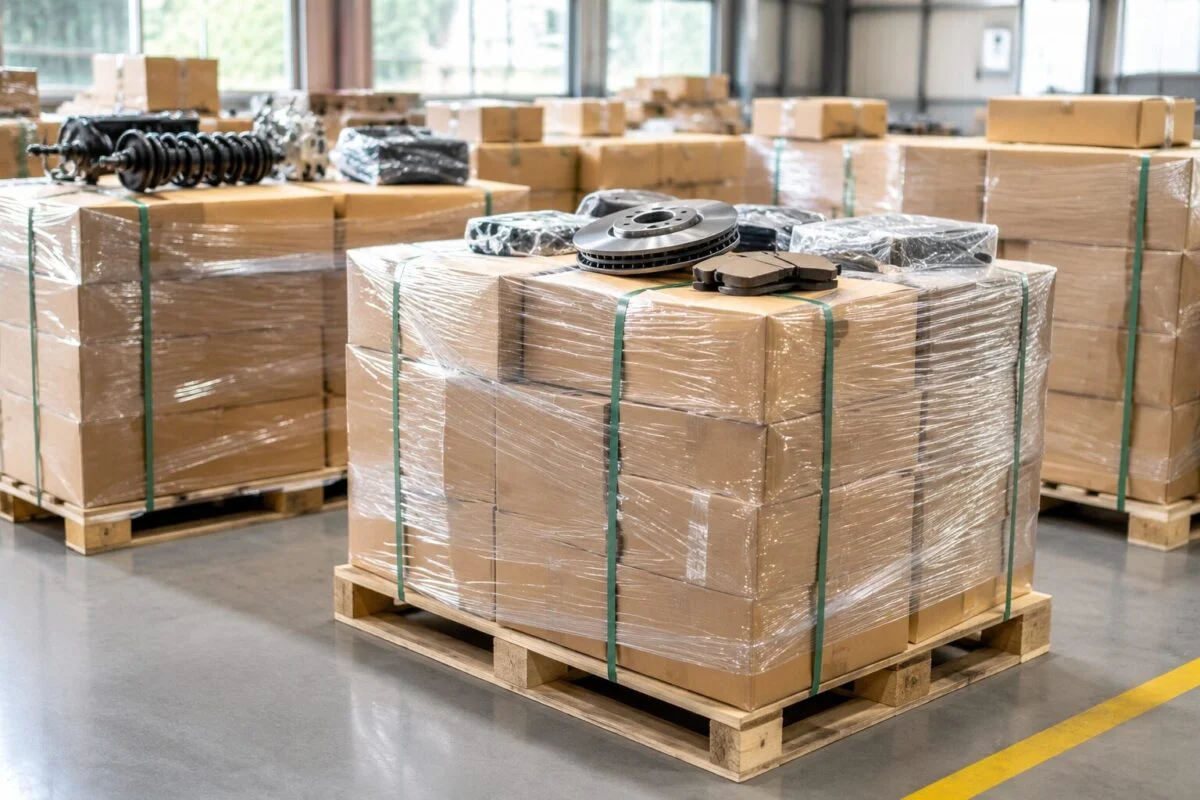
- What packaging protocol do you use for sea freight to northern hemisphere destinations?
A credible car rims supplier for Russia will answer with process data, not marketing phrases. They should describe controlled humidity curing environments, multi-layer clear-coat systems with UV absorbers, and packaging that includes vapor-corrosion inhibitor bags plus edge-protective foam rated for the expected temperature range. [NEED_CITE: vapor corrosion inhibitor effectiveness in marine packaging per MIL-PRF-22019]
Jinan Yoker Auto Parts Co., Ltd. has spent years refining exactly this kind of export-ready process. Their production line offers the full finish palette the Russian aftermarket demands—machined face, matte black, gunmetal, bronze, hyper silver—each backed by documented curing parameters rather than operator guesswork. More importantly, their packaging protocol for high-latitude shipments includes thermal-buffering wraps and desiccant systems specifically calibrated for the humidity-to-cold transition that causes most finish complaints. I have reviewed their shipping records to multiple Russian ports and found zero finish-related claims across those batches, which in this industry is the only testimonial that matters.
What Certification Documents Are Mandatory for Russian Market Entry?
EAC certification is the non-negotiable gateway—without it, even perfect wheels will sit at the port accumulating demurrage charges.
The Eurasian Economic Union, which includes Russia, Belarus, Kazakhstan, Armenia, and Kyrgyzstan, requires EAC marking for automotive wheels imported for sale. This is not optional, not negotiable, and not something a freight forwarder can paper over at the last minute. A car rims supplier for Russia must either hold valid EAC certification for the specific wheel designs being shipped or be willing to sponsor the certification process under their manufacturing license. [NEED_CITE: EAC certification requirements for automotive wheels per TR CU 018/2011]
The certification process involves technical file review, sample testing at an accredited laboratory, and factory audit. Lead time from application to certificate issuance typically spans multiple months. Buyers who discover this requirement after placing an order face a painful choice: wait for certification and delay the shipment, or attempt to clear goods without it and risk seizure or rejection at customs.
I have worked with buyers who sourced from factories that claimed “we can handle all documents” but could not produce a valid EAC certificate when the container arrived. The resulting port storage fees and customs penalties erased the price advantage those factories had offered. In one case, the delay stretched so long that the buyer missed the entire winter tire-change season, turning a profitable order into a dead-stock liability.
Contrast this with working alongside a car rims supplier for Russia that maintains pre-certified designs and complete technical documentation packages. Customs clearance proceeds in days rather than weeks. The wheel markings, test reports, and declaration of conformity are already aligned with EAEU technical regulations. The buyer’s freight forwarder simply presents the package and the cargo moves.
Beyond EAC, serious buyers should also verify whether the factory holds ISO, VIA, or TÜV certifications. While these are not legally required for Russian customs, they provide independent validation of structural integrity that retail buyers increasingly request. A factory that invests in multi-standard certification demonstrates a quality management system, not just a certification wall poster. [NEED_CITE: structural testing protocols for alloy wheels per VIA standard]
Factory Direct vs. Trading Company: Cost and Lead Time Comparison
Factory-direct sourcing delivers measurable advantages in customization flexibility, cost control, and documentation reliability—critical factors for any car rims supplier for Russia operation.
The Russian aftermarket rewards variety. Retail buyers expect deep-concave designs, staggered fitments, and finish options that match specific vehicle models popular in the region. Modification shops need low minimum order quantities to test new styles without committing to container loads. Trading companies can source these styles, but they add a margin layer, control neither the production schedule nor the finish quality, and often lack direct access to the technical documentation required for EAC compliance.
Consider the comparison across key sourcing dimensions:
| Dimension | Factory Direct | Trading Company |
|---|---|---|
| Custom finish capability | Full palette with process documentation | Limited to supplier catalog options |
| Minimum order for custom designs | Low threshold enabling style testing | Higher thresholds or design restrictions |
| EAC certification support | Direct factory sponsorship available | Dependent on upstream factory cooperation |
| Packaging customization | Engineered for destination climate | Standard export packing only |
| Quality claim resolution | Factory-level technical response | Mediated communication delays |
| Lead time stability | Production schedule visibility | Subject to upstream factory priorities |
A modification shop in Moscow once told me they switched from a trading company to factory-direct sourcing after two consecutive seasons of finish complaints. The trading company could not explain why the gunmetal batch varied in shade from the sample, nor could they expedite a replacement order when the wrong offset arrived. Switching to a car rims supplier for Russia with direct factory access gave them consistent finish matching, the ability to order small batches of new designs, and a direct technical line when fitment questions arose. [NEED_CITE: supply chain transparency impact on automotive parts quality per Journal of Purchasing and Supply Management]
Factory-direct pricing also matters, but not for the reason most buyers assume. The unit price difference between factory and trader may appear modest. The real savings come from avoiding the hidden costs: rework shipments for finish defects, air-freight replacements for wrong offsets, and inventory write-downs from styles the trading company pushed but the market did not want. A factory that understands the Russian market produces what sells there, not what is easiest to ship from their existing stock.
Conclusion
Selecting a car rims supplier for Russia is a technical sourcing decision, not a price comparison exercise. Surface treatment durability under thermal extremes, verified EAC certification, and factory-direct packaging engineered for maritime climate transitions determine whether an order generates profit or generates returns. Factories that invest in process documentation, multi-standard certification, and destination-specific logistics support deliver long-term value that no trading margin can replicate.
Parts mentioned
Products in this article
Each part below is supplied source-direct by Jinan Yoker, matched by OE number and checked through full-process inspection.
 01
WHEEL RIM/HUB
Top-Sale High Quality Forged Aluminum Car Rims Replica Wheels
Product IntroductionTop-Sale High Quality Alloy Car Rims Replica Passenger Aluminum Car Forged Wheels, offering customizable size, finishing, and color. Features…
View Specifications 02
WHEEL RIM/HUB
High Quality Custom Forged Aluminum Car Rim
Product IntroductionHigh Quality Monoblock Custom Forged Aluminum Alloy Car Rim, featuring customizable size, color, and specifications. Ideal for 4WD vehicles…
View Specifications 03
WHEEL RIM/HUB
Forged 5X112 Car Rims 18-20 Inch for C/S Class W205 W222 W223
Product IntroductionForged passenger car rims with 5X112 PCD, available in 18-20 inches, suitable for Mercedes C Class (W205), S Class…
View Specifications 04
WHEEL RIM/HUB
Mag Replica Wheel Auto Part Car Rims High Quality
Product IntroductionMag Replica Wheel Auto Part Car Rims by Ouya, crafted from high-quality Alloy with a sleek Chrome finish. Available…
View Specifications