Wheel Rims Supplier for Pakistan: China Factory Direct OEM Wholesale
The lowest FOB price on a quotation sheet is rarely the lowest landed cost in Karachi.
Sourcing wheel rims from a reliable wheel rims supplier for Pakistan requires more than comparing unit prices; it demands a transparent breakdown of mold amortization, certification allocation, port surcharges, and ocean freight into per-piece landed cost, paired with a factory-direct partner holding multi-standard certifications and flexible MOQ to build long-term trust across Lahore, Karachi, and Islamabad distribution channels.
I still remember a shipment that sat at Port Qasim for weeks because the VIA sticker on the rim didn’t match the batch number on the certificate. The buyer, a distributor in Lahore, had picked the cheapest wheel rims supplier for Pakistan he could find and assumed the paperwork would sort itself. It didn’t. By the time the mismatch was resolved, demurrage had eaten the margin he’d spent weeks negotiating. [NEED_CITE: Pakistan Customs clearance requirements for automotive alloy wheel imports]
That kind of pain doesn’t come from the product; it comes from treating the wheel rims supplier for Pakistan relationship as a one-off price transaction instead of a cost-architecture conversation.
Let’s walk through what actually matters when you’re buying rims from China for the Pakistani market.
What Kind of Wheel Rims Supplier for Pakistan Does the Market Actually Need?
A capable wheel rims supplier for Pakistan must combine multi-standard certification coverage, flexible minimum order quantities, and complete customs-document readiness—not merely the lowest per-piece quote.
Pakistan’s aftermarket wheel market is fragmented. You have fleet operators running Toyota Corollas and Honda Civics on steel rims through rough rural roads, modification shops in Lahore fitting deep-concave alloy wheels on modified Suzuki cultures, and tire retailers in Karachi upselling hyper-silver finishes alongside new tire sets. Each segment has different expectations of a wheel rims supplier for Pakistan. [NEED_CITE: Pakistan automotive aftermarket size and wheel rim demand segmentation]
The common mistake is selecting a supplier based purely on catalog breadth. A factory that lists every size from twelve to twenty-four inches may cast them all, but that doesn’t mean every size carries the certification your specific end-market requires. For Pakistan, the relevant standards typically include ISO quality management baseline, and if your buyer resells to customers with Japanese-vehicle preferences, JWL becomes a trust signal. If you’re also serving Middle East-adjacent buyers through Pakistani ports, TÜV and DOT expand your addressable market.
I’ve seen distributors in Faisalabad reject an entire container because the supplier’s CCC certificate was listed but the actual rim markings didn’t carry the corresponding factory code. The wheel rims supplier for Pakistan they chose had the paper; they lacked the traceability discipline to match paper to product. [NEED_CITE: Importance of certification-to-product batch traceability in automotive wheel imports]
What the market actually needs, broken down:
| Capability Area | What a Basic Supplier Offers | What a Reliable Wheel Rims Supplier for Pakistan Delivers |
|---|---|---|
| Certification Scope | Single standard, generic certificate | Multi-standard coverage with batch-level traceability |
| MOQ Flexibility | Fixed high minimums across all SKUs | Tiered MOQ accommodating trial orders and full-container runs |
| Documentation Readiness | Certificate PDFs on request | Pre-verified document packages matched to HS codes and port requirements |
| Surface Finish Range | One or two stock colors | Full custom palette with transparent surcharge breakdown |
The difference between these two tiers isn’t just product quality; it’s whether your goods clear customs or sit in a bonded warehouse accumulating daily charges.
What Does the Real Landed Cost of Wheel Rims from China to Pakistan Actually Include?
The genuine per-piece cost of importing rims from a wheel rims supplier for Pakistan extends well beyond the FOB unit price and must be decomposed into mold amortization, certification allocation, domestic port charges, ocean freight, and import duty to reveal the true landed figure.
Here’s the formula I use when a buyer asks me why my quote looks different from a competitor’s:
FOB unit price + mold cost amortized over order quantity + certification fee amortized over order quantity + inland freight to Chinese port + ocean freight per container divided by pieces loaded + Pakistan import duty and clearance charges = real per-piece landed cost. [NEED_CITE: Standard cost decomposition methodology for automotive wheel imports from China to South Asia]
Most buyers stop at the FOB number. That’s where the trap sits.
Let me give you an example. A buyer in Multan wanted a custom matte-black finish on fifteen-inch steel rims, a relatively straightforward request. The wheel rims supplier for Pakistan he initially engaged quoted an attractive FOB price. What wasn’t disclosed was that the matte-black powder coating required a separate production line setup, and the color-matching trial consumed an entire shift. Those costs were absorbed into the unit price through a hidden markup on subsequent orders. By the third shipment, the buyer realized his effective per-piece cost had climbed noticeably while the invoice line item stayed flat.
Contrast that with a transparent approach:
| Cost Component | Hidden-Cost Scenario | Transparent-Breakdown Scenario |
|---|---|---|
| Mold / Setup Fee | Buried in unit price, recovered over time | Listed separately, amortized clearly over order volume |
| Certification Allocation | Not mentioned until customs flags it | Pre-calculated per-piece allocation disclosed upfront |
| Port & Handling | Estimated loosely, actuals charged later | Fixed or tightly bounded with supporting invoices |
| Color-Matching Surcharge | Absorbed into future order markups | One-time line item with工时 breakdown |
When I work with a buyer on a cost structure like this, the initial reaction is sometimes resistance—the itemized quote looks higher than a competitor’s single-line number. But once the buyer runs the math on his second and third orders, the transparent model consistently wins. The hidden-cost model front-loads attractiveness and back-loads pain. The transparent model front-loads honesty and back-loads predictability. [NEED_CITE: Total cost of ownership analysis in automotive parts procurement from China]
The wheel rims supplier for Pakistan who refuses to break costs down is typically the one who needs opacity to protect margin.
Steel Rims vs. Alloy Wheels: How Should Pakistani Buyers Choose?
The choice between steel rims and alloy wheels for the Pakistan market should be driven by end-vehicle type, road-condition severity, and target retail price point—not by a blanket preference for the cheaper option.
Pakistan’s road infrastructure varies dramatically. Urban centers like Lahore and Islamabad have paved highways where alloy wheels perform well and look the part. Rural and semi-rural routes, particularly in Balochistan and interior Sindh, punish wheels with potholes, unpaved stretches, and overloaded vehicles. That reality shapes what a wheel rims supplier for Pakistan should recommend to different buyer segments.
Steel rims dominate the commercial and fleet segment for good reason. They bend rather than crack under impact, they’re repairable in most local workshops, and they carry a lower replacement cost. For a tire shop in Rawalpindi selling to Toyota HiAce van operators, steel is the default conversation.
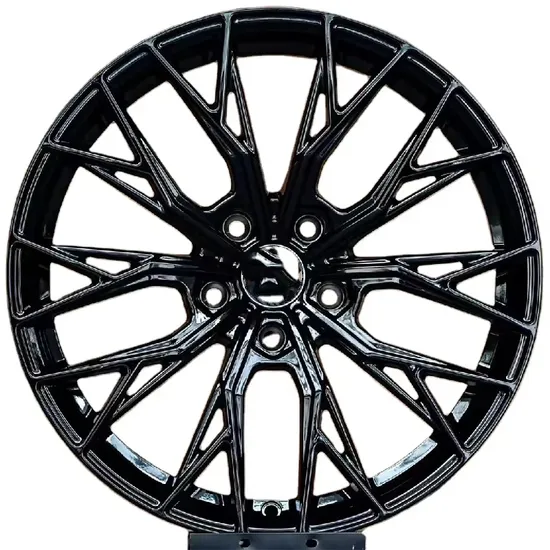
Alloy wheels own the passenger-car modification and premium-retail segment. A Suzuki Swift owner in DHA Lahore isn’t looking for repairability; he’s looking for a deep-concave, machined-face, or hyper-silver finish that transforms the vehicle’s stance. The margin per piece is higher, but the SKU complexity is also higher—multiple fitments, staggered widths, and custom color requests become routine.
Here’s how the two categories compare across the dimensions that matter to a Pakistani buyer:
| Dimension | Steel Rims | Alloy Wheels |
|---|---|---|
| Impact Resistance on Poor Roads | Substantially higher; bends and is repairable | Lower; prone to cracking under severe impact |
| Weight | Noticeably heavier | Substantially lighter, improving fuel economy perception |
| Surface Finish Options | Limited; typically black or silver paint | Extensive; machined, chrome, matte, gloss, custom colors |
| Retail Price Point | Budget to mid-range | Mid-range to premium |
| Typical Buyer Segment | Fleet operators, commercial vehicles, rural markets | Passenger-car enthusiasts, modification shops, urban retailers |
| MOQ Expectation from Supplier | Higher per SKU due to production batching | Flexible, with many suppliers offering low-MOQ stock programs |
A wheel rims supplier for Pakistan serving both segments needs casting capability for alloy and rolling/welding capability for steel, plus the surface-treatment infrastructure to handle everything from basic black electrostatic coating to multi-layer chrome. Not every factory covers both. Buyers who source steel from one supplier and alloy from another lose consolidation leverage and incur double the documentation overhead.
I’ve worked with distributors who started by ordering only steel rims for their fleet clients, then added alloy wheels once their modification-shop relationships grew. The key was finding a single wheel rims supplier for Pakistan who could handle both without forcing the buyer to manage two separate supply chains. [NEED_CITE: Material selection criteria for automotive wheels in developing-market road conditions]
How Can Small-Batch OEM Orders Avoid Becoming a Loss for Both Sides?
Small-batch OEM orders for the Pakistan market survive only when the wheel rims supplier for Pakistan and the buyer jointly agree to itemize color-matching fees, line-changeover labor, and certification allocation into the quotation before production begins.
This is where I learned the hardest lesson. Years ago, a buyer in Lahore asked for two hundred pieces of fifteen-inch steel rims in a custom哑光黑 finish. I quoted him as if it were a standard production run. The matte-black required a powder-coating line changeover that consumed most of a shift for a two-hundred-piece batch. The color-matching trial ate into production time. By the time the rims were packed, the labor and setup costs had erased the margin entirely. I absorbed the loss to preserve the relationship, but the experience changed how I handle every small-batch OEM inquiry from South Asia.
The problem isn’t the buyer’s expectation. It’s the industry norm of quoting a single per-piece price that implicitly assumes large-batch efficiency. When the batch shrinks, the per-piece efficiency assumption collapses, and someone pays—either the supplier through eroded margin or the buyer through degraded quality as the factory cuts corners to stay within the quoted number.
A better approach, which I now apply systematically:
- Separate the setup cost from the unit cost. Color-matching, line changeover, and any custom packaging setup should appear as distinct line items. The buyer sees exactly what the small batch costs him in fixed terms.
- Amortize certification fees transparently. If the order requires a specific test report or certification mark, that fee should be allocated across the batch quantity and shown separately.
- Define the economic batch threshold. Both parties should understand the quantity at which the per-piece price drops noticeably. This gives the buyer a clear incentive to consolidate orders.
- Lock the specification before production. Once the color sample is approved and signed off, any subsequent change triggers a re-quote. This protects the wheel rims supplier for Pakistan from scope creep.
When I present a quotation structured this way, the buyer’s initial reaction is sometimes surprise—the total looks higher than a single-line quote from a less disciplined factory. But the reaction shifts when he compares his second and third orders. The transparent model keeps the per-piece price stable because there are no hidden costs to recover. The opaque model drifts upward as the supplier quietly rebuilds margin.
Trust in this part of the world isn’t built on the lowest number; it’s built on the number that stays consistent. [NEED_CITE: Best practices for small-batch OEM pricing transparency in automotive aftermarket supply chains]
What Happens When Customs Documentation Doesn’t Match the Shipment?
Customs clearance failures at Pakistani ports stem not from missing certificates but from mismatches between certificate details, product batch markings, and factory identification codes—verification must occur before the container leaves China.
I mentioned the Port Qasim incident earlier. Let me expand on it, because this is the single most expensive mistake a buyer can make when working with a wheel rims supplier for Pakistan.
The buyer had received the supplier’s VIA certificate, a JWL test report, and the commercial invoice. Everything looked complete on paper. But when Pakistan Customs inspected the shipment, the officers noted that the VIA mark embossed on the rim spokes corresponded to a different factory code than the one listed on the certificate. The supplier had used a certificate from a sister factory that shared the same parent company but operated under a different production license.
The result: the entire container was held. Re-export or re-documentation would have taken weeks and cost a mid-five-figure sum in demurrage and storage. The buyer eventually negotiated a partial release by providing supplementary correspondence from the supplier’s parent company, but the delay disrupted his supply commitments to his own retail clients. [NEED_CITE: Pakistan Customs documentation verification procedures for imported automotive wheel rims]
The lesson is straightforward but frequently ignored: certification is not a PDF you attach to an email. It’s a traceability chain that must run from the certificate, through the factory’s production records, to the physical markings on every rim in the container.
A disciplined wheel rims supplier for Pakistan should provide the following documentation package before shipment:
- Commercial invoice and packing list matched to the container’s actual contents by SKU, size, offset, and finish
- Certificate copies where the factory name, address, and production license number exactly match the markings on the product
- Bill of lading with HS codes consistent with the invoice and the destination-country tariff schedule
- Any destination-specific compliance declarations required by Pakistan’s automotive import regulations
The buyer’s responsibility is to verify these documents against the physical product before the container departs the Chinese port. Once the goods arrive in Karachi or Qasim, correcting a mismatch is exponentially more expensive than catching it during a pre-shipment inspection.
I now include a pre-shipment document-and-marking verification step in every order bound for Pakistan. It adds a day to the timeline and costs nothing meaningful, but it eliminates the risk of a container sitting in a bonded warehouse while lawyers and agents try to reconcile a factory code discrepancy. [NEED_CITE: Pre-shipment documentation audit checklist for automotive wheel exports to South Asia]
Conclusion
Choosing the right wheel rims supplier for Pakistan is an exercise in cost transparency, certification traceability, and specification discipline—not a search for the lowest unit price. Break down the landed cost into its real components, match material and finish to your end-market reality, itemize small-batch surcharges openly, and verify every certificate against every physical marking before the container leaves the port. The suppliers who resist this level of scrutiny are the ones you should avoid; the ones who embrace it are the ones worth building a long-term supply relationship with.
Parts mentioned
Products in this article
Each part below is supplied source-direct by Jinan Yoker, matched by OE number and checked through full-process inspection.
 01
WHEEL RIM/HUB
5 Holes Silver Machined Face Black Aluminum Car Wheel Rim
Product IntroductionDurable black car wheel rim with silver machined face, made of aluminum alloy. 5 holes design, suitable for 4WD…
View Specifications 02
WHEEL RIM/HUB
20 22inch 5X112 Concave Aftermarket Alloy Sport Wheel Rim
Product Introduction20 22inch Aftermarket 5X112 Concave Alloy Wheel Sport Wheels Rim, made of Aluminum with Black finishing. Customizable style and…
View Specifications 03
WHEEL RIM/HUB
17-18inch 5*100/5*120 Aftermarket Alloy Wheel Rims
Product IntroductionAftermarket alloy wheels available in 17-18 inches, featuring 5*100 and 5*120 PCD options. Crafted from high-quality alloy with chrome…
View Specifications 04
WHEEL RIM/HUB
5 Holes Flow Formed Alloy Car Wheel Rims Silver Machined Face
Product IntroductionNew Design Flow Formed Alloy Car Wheel Rims with 5 Holes, featuring a silver machined face. Crafted from high-quality…
View Specifications