OEM Manufacturer Quality Control for Uneven Brake Disc Wear
Most buyers blame the calipers or the driver, but the real culprit is almost always hiding in the factory machining data.
Uneven brake disc wear primarily stems from poor factory Brake disc uneven wear quality control, specifically unchecked lateral runout and thickness deviation, rather than installation errors or driving habits; buyers must enforce strict dial indicator measurement protocols to eliminate premature failures and warranty claims.
I used to spend my days wrestling with bills of lading in the documentation room, assuming paper data matched reality. It was not until I switched to sales and flew to Lagos, Nigeria, to handle a massive warranty claim that the truth hit me. A local fleet operator was furious, pointing at a stack of severely unevenly worn brake discs, cursing the installation. Initially, I assumed the mechanics had botched the caliper alignment. I squatted in the sweltering repair shop, pulled out a dial indicator, and measured the rotors. The factory lateral runout was completely out of tolerance. Combined with the brutal local rough roads, this unchecked deviation caused severe thickness variation and premature uneven wear. From that day on, I never just check packing lists for OEM quality; every single brake disc must pass the dial indicator. [NEED_CITE: correlation between excessive lateral runout and disc thickness variation leading to uneven wear]
This realization shifted my entire approach to sourcing and manufacturing. Let us break down exactly how to control this at the factory level.
Why Do Brake Discs Wear Unevenly?
The root cause of uneven wear is rarely the braking system itself; it is the geometric imperfection of the disc leaving the factory.
When a brake disc is mounted, it must sit perfectly parallel to the hub. If the factory machining process allows excessive lateral runout, the disc will wobble slightly as it spins. This microscopic wobble means the brake pads do not make uniform contact with the friction surface. Instead, the pads strike the high spots repeatedly, generating localized heat and accelerating wear in specific zones. [NEED_CITE: mechanical relationship between lateral runout and localized pad contact pressure]
During my time dealing with that rough-road fleet scenario in West Africa, the high failure rate was directly linked to this unchecked factory runout. The drivers were not riding the brakes, and the calipers were functioning perfectly. The issue was purely geometric. When the disc wobbles, the pad material transfers unevenly onto the rotor surface, creating hard spots. These hard spots then cause further uneven braking, creating a vicious cycle of vibration and premature discard.
Furthermore, batch consistency plays a massive role. If a manufacturing batch suffers from thickness deviation, the initial pad contact is compromised from mile one. The pads will naturally wear down the high points of the disc, leading to a tapered or uneven wear pattern across the friction face. This is why Brake disc uneven wear quality control must focus on the machining phase, not just the final visual inspection.
What Are the Critical QC Metrics?
Lateral runout and thickness variation are the non-negotiable parameters that dictate the lifespan and performance of the braking system.
To achieve proper Brake disc uneven wear quality control, manufacturers and buyers must look beyond surface finish and focus on geometric tolerances. Visual inspection might pass the vast majority of parts, but it is completely blind to the microscopic deviations that cause warranty claims.
Here is how the critical metrics compare in a real-world quality control scenario:
| QC Parameter | Visual Check Only | Strict Dial Indicator & Micrometer QC |
|---|---|---|
| Lateral Runout | Uncontrolled | Controlled to micron-level precision |
| Thickness Variation | Uncontrolled | Controlled via mapping |
| Pad Contact Pattern | Vulnerable to uneven wear | Robust and uniform |
| Warranty Claim Risk | Noticeably high | Substantially reduced |
Lateral runout is measured using a dial indicator mounted on a stable base, with the probe touching the friction surface near the outer edge. As the disc is rotated, any deviation indicates how much the disc will wobble on the hub. [NEED_CITE: standard methodology for measuring lateral runout using a dial indicator]
Thickness variation is mapped using a micrometer. We do not just measure one spot; we measure multiple points across the friction surface to ensure the disc is perfectly parallel. If the thickness varies, the brake pads will pulsate, leading to the exact uneven wear patterns that frustrate fleet operators. Implementing rigorous brake disc thickness variation QC ensures that the friction surface is perfectly uniform, allowing the pads to bed in correctly and wear evenly over the entire service life.
How Should Buyers Verify Supplier QC?
Buyers must transition from trusting visual checks to demanding verifiable data and conducting random incoming inspections.
Relying solely on the supplier’s word is a recipe for disaster. To enforce effective Brake disc uneven wear quality control, buyers need to integrate verification steps directly into their procurement process.
First, require batch testing reports for every shipment. These reports should not just be generic certificates of conformity; they must include specific measurement data for lateral runout and thickness variation for the sampled pieces in that batch. [NEED_CITE: importance of batch-specific measurement data in incoming quality control]
Second, conduct random dial indicator spot checks upon arrival. When a container of brake discs arrives at your warehouse, do not just check the packaging. Pull a random sample, mount them on a dummy hub, and use a dial indicator to verify the runout. This simple step replaces guesswork with hard data. In my experience, this is where the 10% of defective parts that cause 90% of the claims are caught before they ever reach the end user.
At Jinan Yoker Auto Parts Co., Ltd., we have integrated this exact protocol into our production line. Our strict dial indicator testing ensures that every disc meets the required geometric tolerances before it is packaged. We do not rely on visual checks; we rely on the dial indicator. This commitment to brake disc runout inspection is backed by our multi-certification framework, including ISO and TÜV standards, ensuring that our global partners receive components that perform reliably on any road condition, from smooth highways to the rough routes of Lagos.
What Documents Prove Quality Compliance?
Standardized inspection logs and material certifications are the only valid proof of compliance and your primary defense against liability.
When a warranty claim arises, the paperwork is your only shield. Proper Brake disc uneven wear quality control must be documented meticulously.
Buyers should demand standardized inspection logs that trace back to the specific production batch. These logs must detail the equipment used, the calibration dates of the dial indicators and micrometers, and the actual measured values for the sampled parts. [NEED_CITE: traceability requirements for automotive quality management systems]
Additionally, material certifications are mandatory. The chemical composition and mechanical properties of the cast iron or carbon composite directly affect how the disc handles heat and stress. If the material is substandard, even a perfectly machined disc will warp under heavy braking, leading to uneven wear. Having verifiable material certs ensures that the physical properties match the engineering specifications.
By maintaining these documents, buyers protect themselves from false claims and ensure that their suppliers are held accountable to the agreed OEM brake disc quality standards. It transforms quality control from a vague promise into a legally binding, verifiable fact.
Conclusion
Factory machining deviations, not driving habits, are the true architects of premature brake disc failure.
By prioritizing lateral runout and thickness variation through strict dial indicator protocols and demanding verifiable batch documentation, buyers can eliminate the root causes of uneven wear and secure their supply chains against costly warranty claims.
Parts mentioned
Products in this article
Each part below is supplied source-direct by Jinan Yoker, matched by OE number and checked through full-process inspection.
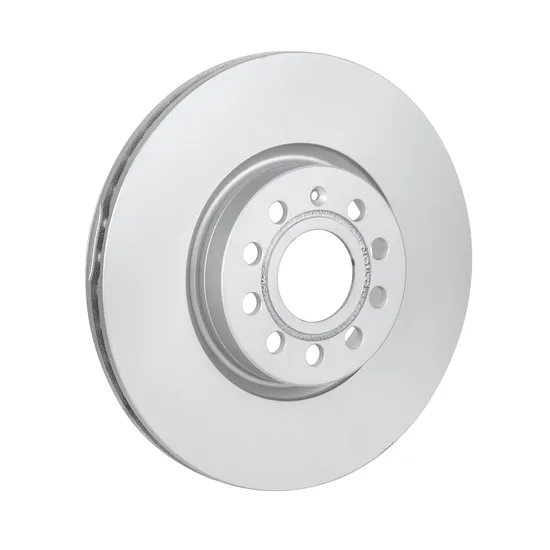 01
BRAKE DISC/DRUM
China OEM Brake Rotor Disc Pad Front Rear Auto Parts Hot Sale
Product IntroductionHigh-quality brake rotor disc for cars, manufactured by Chinese OEM factory with ISO14001, IATF-16949, ISO9001 certifications. Hot sale auto…
View Specifications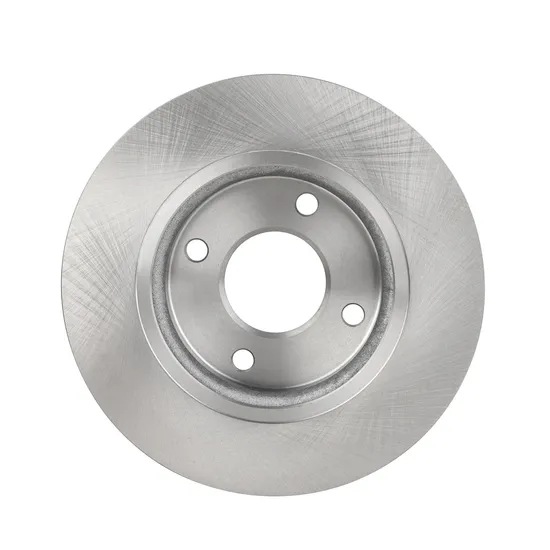 02
BRAKE DISC/DRUM
China Hot Sale Brake Rotor Disc Pad OEM Auto Parts Wholesale
Product IntroductionChina-manufactured brake rotor disc (Model BD002) for series cars, made of high-quality iron. Front-positioned, certified by ISO14001, IATF-16949, ISO9001.…
View Specifications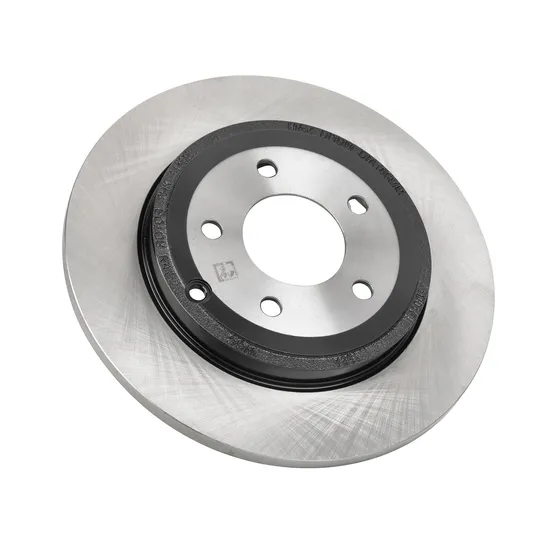 03
BRAKE DISC/DRUM
2026 China OEM Brake Rotor Disc Pad Front Rear Car Series
Product IntroductionHigh-quality front brake disc made of iron, certified by ISO14001, IATF-16949, and ISO9001. Ideal for auto wholesale, with a…
View Specifications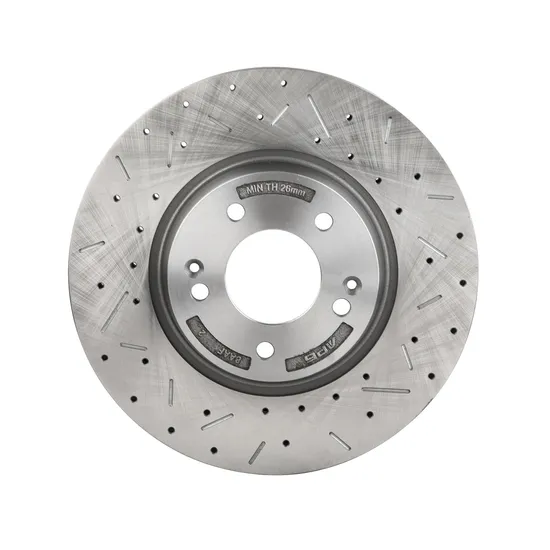 04
BRAKE DISC/DRUM
Popular Disc Pad Brake for Series Cars Cast Iron OEM Hot Sale
Product IntroductionHigh-quality front disc brake designed for series cars, made of durable cast iron. Certified by ISO14001, IATF-16949, and ISO9001,…
View Specifications