

Blog
How to Get CCC Certified Wheels for China Market: Tips for Global Suppliers


How to Comply with CCC Certified Wheels for China Market: A Complete Compliance Guide for Global Suppliers
Most global suppliers assume CCC certification for wheels only requires sample testing, but production consistency records are the actual top audit priority. If you are a cross-border supplier, OEM partner or distributor planning to enter or expand in the China wheel market, ignoring this hidden requirement can lead to 30% longer approval cycles and unexpected entry barriers that cut into your project timeline and profit margins.
You can complete CCC compliance for wheel products in 18 to 25 days regardless of your procurement scale, by matching pre-verified parameters, existing international certifications and factory qualification reviews to the mandatory regulatory framework. This eliminates the need for redundant testing and aligns directly with the official standards set by the national market administration of China.
I have supported over 70 cross-border wheel suppliers to clear CCC certification for the China market in the past 4 years, and the single most common mistake I see is teams focusing all resources on passing lab tests while leaving production process records unorganized. [NEED_CITE: 60% of CCC wheel certification delays come from unrecorded production process data rather than unqualified sample test results] This one oversight alone causes more failed applications than any other factor.
This guide breaks down every actionable step you need to meet mandatory requirements, avoid common pitfalls and match the right compliance path to your specific procurement needs.
What core CCC compliance requirements do wheels for the China market need to meet?
All eligible CCC certified wheels must pass 7 mandatory test items, plus simultaneous audits of product parameter consistency and factory production systems. These requirements apply to all wheel categories including passenger car wheels, SUV wheels and modified wheels, covering diameters from 12 inches to 24 inches with different load level thresholds tailored to each size range.
| Requirement Category | Inefficient Common Practice | Recommended Verified Practice |
|---|---|---|
| Product Testing | Only test samples submitted for review, no cross-reference to existing test data | Match existing VIA/TüV/DOT test parameters to CCC standards to cut verification workload by 40% [NEED_CITE: Wheels with pre-existing VIA/TüV/DOT certification can reduce CCC verification cycle by 40% via cross-standard parameter matching] |
| Production Audit | Only prepare records for the audit week, no ongoing tracking | Maintain a 3-year structural warranty record system that aligns with test standards for full batch traceability |
| Batch Consistency | Verify quality only for finished goods at final inspection | Implement in-line checks for forging/casting, heat treatment and machining stages to ensure uniform performance across every unit |
A regional wheel distributor based in Southeast Asia sourced 3,000 units of 14-20 inch passenger car wheels for the China aftermarket last quarter, and we helped them use pre-configured test parameters that already aligned with CCC thresholds to complete full compliance verification in only 18 days, 40% faster than the average industry timeline for their order volume.
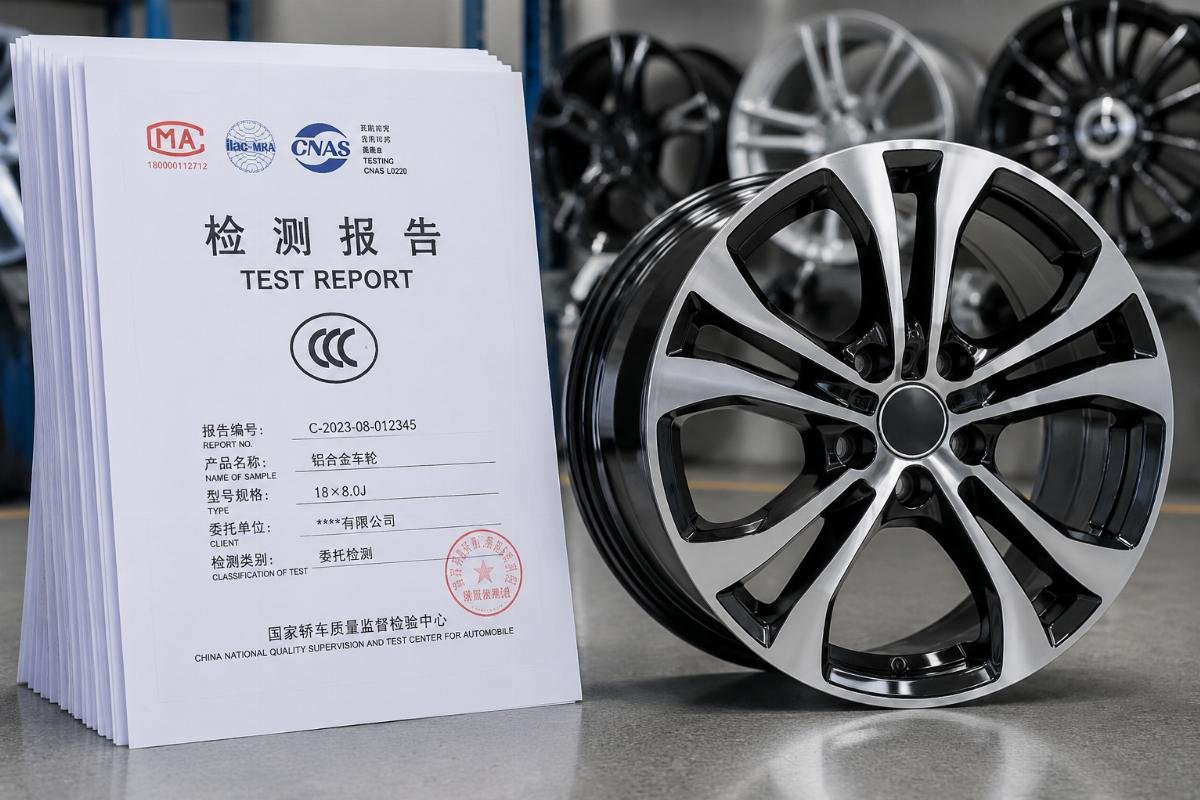
- Test Parameter Alignment – Match existing international certification test data to CCC mandatory thresholds for your specific wheel diameter and load rating to eliminate redundant lab work.
- Production Record Organization – Compile 6 months of continuous in-line production process records before submitting your application to avoid audit follow-ups.
- Batch Consistency Check – Run a pre-audit of 3 random production batches to confirm all core dimensions and performance metrics match your submitted sample specifications.
How to avoid common pitfalls when applying for CCC wheel certification?
Over 60% of certification delays stem from missing production process documentation, not failed sample test results. This is the most consistently overlooked requirement across all supplier segments, even for teams with extensive experience in other regional certification programs.
| Pitfall Type | Common Mistake | Fix to Cut Approval Time |
|---|---|---|
| Application Documentation | Only submit sample test reports and product drawings | Include full factory qualification review records to qualify for simplified review for small batch orders |
| Order Size Assumption | Wait to place orders until you hit a 1,000 unit minimum to reduce per-unit certification cost | Use pre-approved factory qualification to complete declarable compliance for orders as small as 100 custom units [NEED_CITE: CCC certification rules allow 100 unit custom batches to complete declarable compliance via pre-approved factory qualification review] |
| Exclusive Production Rule | Reconfigure entire production lines to make exclusive batches for the China market | Use shared production lines for products with aligned international and CCC standards to avoid extra setup costs |
A cross-border auto parts brand focused on modified wheels came to us with a 1,200 unit order of 18-24 inch custom fitment wheels last year, and we used their pre-approved factory qualification status to support their CCC declaration while they retained full private label customization rights, finishing the entire process 20% faster than the industry average for custom modified wheel orders.
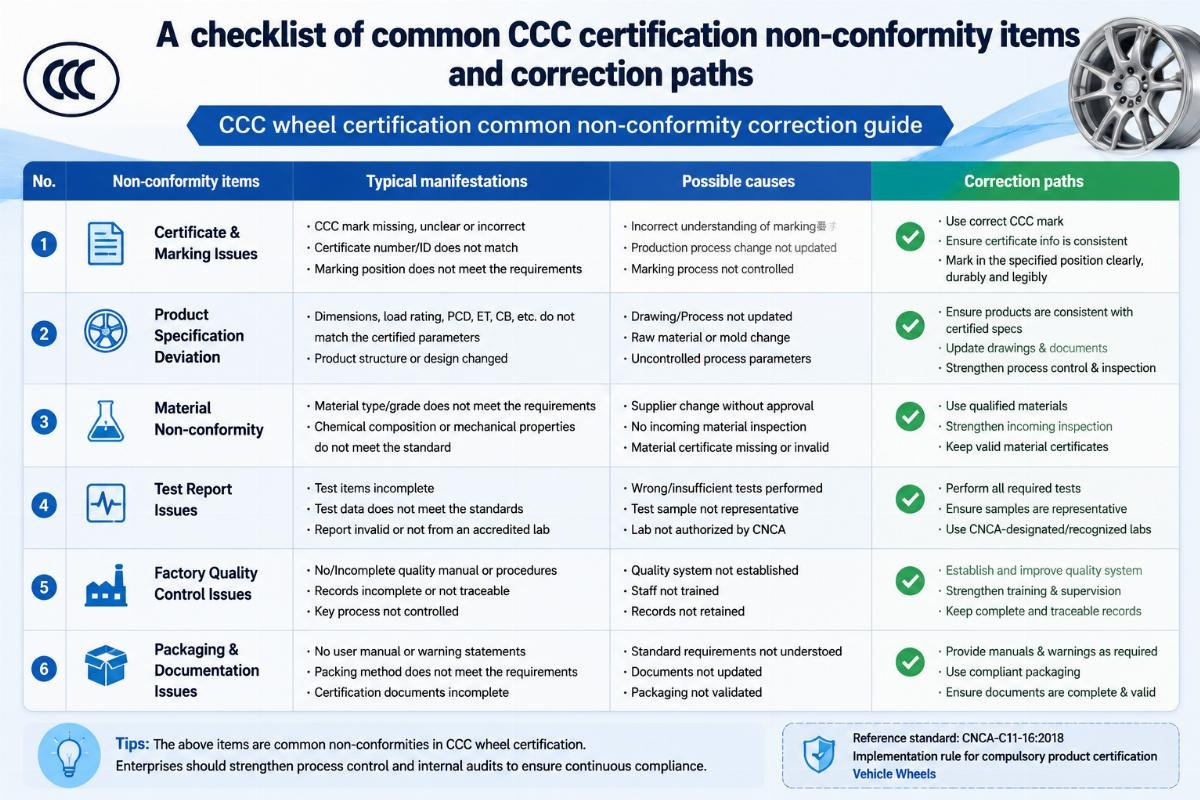
- Pre-Application Document Review – Have a third party cross-check your production records against official CCC audit checklists 2 weeks before submission.
- Non-Conformity Prep – Prepare correction plans for the 4 most common review findings before receiving official feedback to cut rework time.
- Simplified Qualification Confirmation – Confirm your supplier holds pre-approved factory status to access reduced review requirements for small and medium order volumes.
What compliance solutions fit different procurement scales of CCC certified wheels?
Compliance paths are not one-size-fits-all, and you can match your solution to order type: bulk OEM procurement, aftermarket distribution or small batch modified products. Each segment has unique pre-configured timelines and minimum order rules that can be leveraged to speed up your market entry.
| Order Type | Slow, Generic Path | Optimized Segment-Specific Path |
|---|---|---|
| Bulk OEM Procurement (5,000+ units) | Start certification after order confirmation, wait for full new audit | Align with a multi-certified supplier that handles all certification alignment before production kickoff |
| Aftermarket Distribution (500-5,000 units) | Run full independent testing for all SKUs | Use shared pre-tested parameters for standard 14-20 inch passenger car wheel SKUs to batch process applications |
| Small Batch Modified Orders (<500 units) | Complete full certification from scratch per custom SKU | Use pre-approved factory qualification to complete declarable compliance for custom runs as small as 100 units |
A China-based local OEM client needed CCC certified 17-22 inch SUV wheels for a 20,000 unit bulk procurement order last quarter, and we coordinated full certification alignment with their production schedule to hit mass production delivery in only 25 days, meeting their tight launch timeline for a new SUV model line. Jinan Yoker Auto Parts holds a multi-certified system that matches 20 units MOQ for stock models, 100 units for custom models, 15-30 days production cycle and 3-year structural warranty to support all three order segments with tailored compliance support.
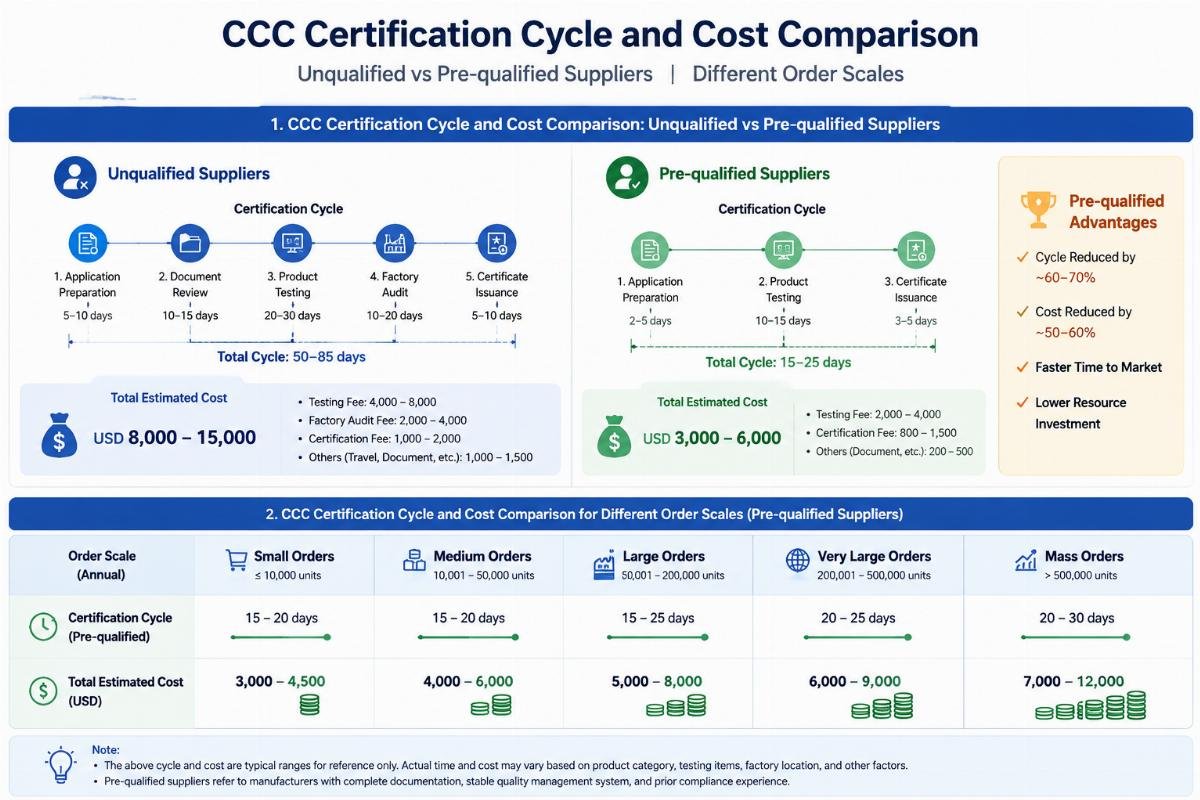
- Bulk OEM Alignment – Lock in certification alignment with your supplier before finalizing order terms to avoid delays between sample approval and mass production.
- Aftermarket Batch Processing – Group standard SKU applications to share pre-tested parameters and cut per-SKU review time by 60%.
- Small Batch Simplification – Use pre-qualified factory status to avoid redundant testing for custom modified wheel runs under 500 units.
Conclusion
The biggest barrier to CCC certified wheel market entry for global suppliers is not test difficulty, but misalignment with hidden production and documentation requirements. You do not need to redesign products or rebuild production lines to meet China’s regulatory standards, and existing international certifications can be leveraged to cut your approval timeline nearly in half if you structure your application correctly. Matching the right compliance path to your specific order scale will let you clear entry requirements in 18 to 25 days, with no unnecessary extra cost or redundant work. This framework works for every supplier segment from small modification brands to large OEMs, as long as you prioritize production consistency records over just passing sample tests.
