Custom Paint Alloy Wheels Bulk Order Wholesale Supplier for Sale
The thicker the clear coat, the worse the adhesion on forged alloys under thermal cycling.
For a custom paint alloy wheels bulk order, volume discounts hinge on three variables: the MOQ tier you hit, the paint process complexity, and whether you consolidate multiple SKUs into one container. Matching the paint system to your end-user’s climate matters far more than chasing the lowest per-piece quote—wrong-spec finishes double warranty claims within the first season.
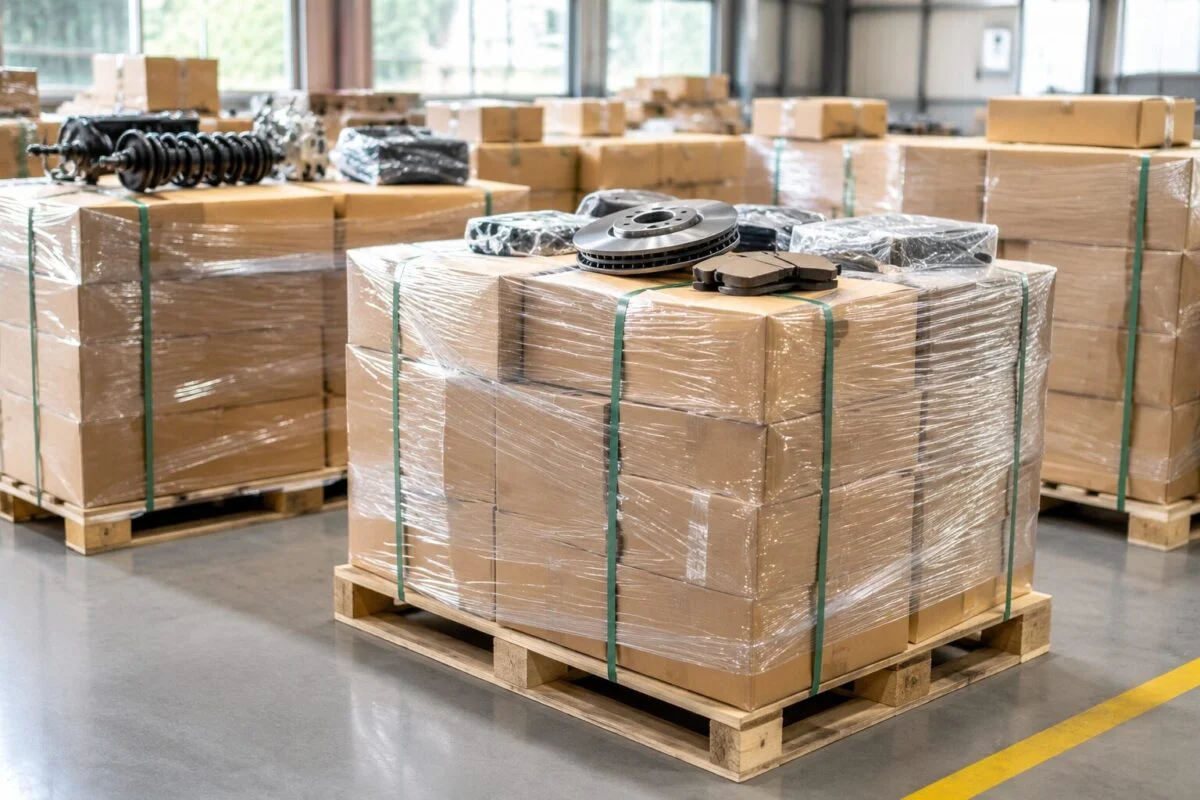
I still remember standing on the loading dock in Jinan, watching a full container of 18-inch matte-black forged wheels get shrink-wrapped for a Middle East buyer. Every single piece had passed our in-house salt-spray test. Two months later, photos came back: clear-coat peeling and micro-cracking across the spoke edges. The lab’s controlled 48-hour neutral salt-spray cycle had nothing in common with 45-degree desert heat, airborne silica dust, and zero rainfall washing away contaminants [NEED_CITE: correlation between accelerated lab tests and real-world desert degradation on automotive coatings]. That shipment taught me to ask one question before discussing any color code: what road does the car actually drive on?
If you are sourcing custom paint alloy wheels for wholesale distribution, modification shop supply, or e-commerce fulfillment, the rest of this guide breaks down exactly how pricing, finish durability, sampling, and lead times work on the factory floor.
What Factors Determine Custom Paint Alloy Wheel Bulk Pricing?
Unit price drops in阶梯 tiers, but multi-SKU small-batch consolidation can erase the discount through color-change waste and line downtime.
When buyers request a custom paint alloy wheels bulk order, the first instinct is to push for the lowest per-piece quote. In reality, the factory’s cost structure is driven by powder consumption, booth purging time, and curing-oven scheduling. A single-color, high-volume run keeps the powder feed hopper loaded and the oven at steady-state temperature. Switching from gloss black to hyper silver mid-shift means purging the spray booth, cleaning the guns, and running test panels until the color matches—waste that gets amortized across fewer pieces when the batch is small [NEED_CITE: powder coating line changeover cost factors in automotive wheel manufacturing].
Consider a North American modification shop that ordered three SKUs—matte gunmetal, satin bronze, and hyper silver—each in quantities of 50 pieces across mixed 19- and 20-inch diameters. The per-piece price landed noticeably higher than a buyer who ordered 500 pieces of a single matte-black SKU, even though the total container volume was similar. The color-change loss rate on powder alone ran into double-digit percentages, and the oven had to stabilize three separate times.
| Pricing Factor | Single-Color High Volume | Multi-SKU Small Batch |
|---|---|---|
| Powder waste per changeover | Noticeably reduced | Substantially extended purge cycles |
| Oven thermal stability | Controlled steady-state | Uncontrolled cycling |
| Color matching labor | Minimal | Significant per SKU |
| Per-piece discount tier | Highest bracket | Mid or entry bracket |
The takeaway: if your catalog demands multiple finishes, consolidate orders by color rather than by destination. Grouping all gunmetal pieces—regardless of diameter—into one production block cuts waste sharply and unlocks the better pricing tier.
Which Paint Finish Holds Up in Extreme Climates?
Powder base coat plus UV clear suits high-heat, high-sand environments; electro-deposition primer suits high-salinity coastal zones. Choosing the wrong system doubles field-failure rates.
The paint system is a stack, not a single layer. The typical architecture on a quality alloy wheel is: electro-deposition (E-coat) primer, powder color coat, and liquid or powder clear coat. Each layer does a different job, and skipping or thinning one to save cost creates a predictable failure mode down the line [NEED_CITE: multi-layer automotive wheel coating architecture and failure mode analysis].
For desert and arid inland markets—think the Gulf states, North Africa, or the Australian outback—the critical threat is thermal cycling combined with abrasive dust. A powder base coat with a UV-resistant clear coat handles both: the powder layer provides film build and chip resistance, while the UV clear prevents chalking and gloss loss under sustained solar exposure. I have seen wheels finished with liquid base coat and standard clear coat arrive in Riyadh looking perfect, then fade to a chalky gray within a single summer.
For coastal and tropical markets—Southeast Asia, the Caribbean, West Africa—the enemy is chloride ion penetration. Here, a thicker E-coat primer layer matters more than any topcoat gloss level. The E-coat reaches into every recess of the wheel barrel and behind the spoke roots, where powder coverage can be thin. Without that primer barrier, subsurface corrosion starts at the bead seat and spreads outward, lifting the color coat from underneath.
| Climate Threat | Recommended Base | Clear Coat Priority | Failure Risk if Mismatched |
|---|---|---|---|
| High heat, sand, UV | Powder color coat | UV-stable clear essential | Chalking, gloss loss, micro-cracking |
| High salinity, humidity | Thick E-coat primer | Standard clear sufficient | Subsurface corrosion, bead-seat lifting |
| Cold-salt road de-icing | E-coat plus powder | Chemical-resistant clear | Pitting, edge peel-off |
A wholesale buyer in Latin America once reordered a batch of machined-face wheels with only a basic clear coat for a coastal city market. Within months, the machined aluminum edges developed white oxidation spots. The fix required stripping, re-priming, and repainting—cost several times the original savings from skipping the upgraded primer spec.
How Does the Custom Color Sampling Process Work?
From Pantone or RAL reference to signed approval sample, the cycle runs one to two weeks when the color code is provided upfront; without a code, expect the timeline to stretch.
Custom color requests are where most lead-time surprises originate. The sampling workflow on a professional wheel production line follows a fixed sequence: the buyer submits a Pantone or RAL reference, the lab formulates a powder batch and sprays test panels, the panels go into the curing oven, and the finished samples ship for buyer approval. Only after the signed sample returns does mass production begin [NEED_CITE: automotive wheel custom color sampling workflow and approval protocol].
The bottleneck is almost never the spraying itself—it is the color formulation and the buyer’s review cycle. If the buyer sends a physical reference part instead of a standardized color code, the lab must spectrophotometer-match it, which adds formulation iterations. Metallic and pearl finishes require extra steps because the flake orientation under different lighting angles must be agreed upon.
A European tuning shop wanted a specific “Nardo gray” variant with a subtle blue pearl shift. They sent a photo taken under showroom LED lighting. The first sample looked flat under daylight. The second sample, adjusted for D65 standard illuminant, matched. That back-and-forth added roughly a week to the timeline. When the same shop later provided a RAL Design code upfront, the first sample passed immediately.
Risk checklist for custom color sampling:
- Always provide a Pantone, RAL, or automotive OEM code rather than a photograph alone.
- Request samples on the actual wheel profile, not a flat test panel—curvature affects perceived color depth.
- Approve samples under both daylight and warm artificial light to catch metamerism.
- Keep the signed sample on file at the factory for batch-matching reference on all future reorders.
What MOQ and Lead Time Should Bulk Buyers Expect?
Standard finishes ship from a hundred-piece MOQ in roughly two to three weeks; custom colors require a slightly higher threshold and a longer cycle due to powder batching and line scheduling.
For a custom paint alloy wheels bulk order, the minimum order quantity and the production lead time are inseparable from the finish type. Standard finishes—matte black, gloss black, machined face, hyper silver—use pre-compounded powders that the factory keeps in stock. Production can slot these into existing oven runs with minimal disruption. Custom colors require dedicated powder batching, booth purging, and color-matching validation before the first production piece rolls off the line.
Jinan Yoker’s production structure reflects this reality. Stock models in standard finishes accept orders starting from a low threshold, while custom paint and custom offset configurations begin at a hundred-piece MOQ per SKU. Lead times run from roughly two weeks for standard finishes to a month for custom colors, depending on the production queue and the complexity of the finish [NEED_CITE: alloy wheel manufacturing lead time variables by finish type].
A Southeast Asian e-commerce seller preparing for a peak-season restock ordered matte black and gunmetal in mixed 17- and 18-inch sizes, totaling several hundred pieces. Because both colors were standard finishes, the entire batch cleared production and quality inspection well within the shorter lead-time range, hitting the FBA inbound deadline comfortably. By contrast, a simultaneous order of a custom bronze pearl finish for the same seller’s premium line required the full custom-color timeline.
Practical planning guidance:
- Place custom-color orders at least a month before your target ship date to absorb any sampling iteration.
- Standard finishes can be reordered on shorter notice, but always confirm oven availability during peak production months.
- If your catalog mixes standard and custom finishes, stagger the orders so the custom-color batch does not hold up the entire container.
How to Avoid Color Inconsistency Across Batches?
Lock in a signed reference sample, enforce same-batch same-tank spraying, and agree on a measurable color-tolerance threshold before production begins.
Batch-to-batch color variation is the single most common complaint from e-commerce sellers and retail distributors who reorder custom-paint alloy wheels over multiple production runs. The root cause is almost never intentional deviation—it is powder lot variation, ambient humidity shifts in the spray booth, and curing-oven temperature drift [NEED_CITE: root causes of batch-to-batch color variation in powder-coated automotive wheels].
The factory-side controls that minimize variation are straightforward but must be contractually specified. First, the signed approval sample stays on the production floor as the visual master. Second, all pieces for a single order are sprayed from the same powder batch lot and cured in the same oven cycle. Third, both the factory and the buyer agree on a color-tolerance threshold, typically expressed as a Delta-E value measured by spectrophotometer, so that disputes are resolved by data rather than subjective visual judgment.
A US-based online retailer once received a reorder of custom matte-gunmetal wheels that looked slightly warmer than the original batch. Under warehouse fluorescent lighting, the difference was barely noticeable. Under outdoor daylight, the tone shift was obvious when a customer mounted one old wheel and one new wheel on the same axle. The resolution required a spectrophotometer reading against the original signed sample, and the factory reproduced the batch using the original powder lot formulation.
Prevention protocol for repeat orders:
- Retain the signed approval sample at the factory indefinitely, not just for the duration of one order.
- Specify the Delta-E tolerance in the purchase agreement before production starts.
- Request the powder batch lot number on the packing list so reorders can reference the same formulation.
- Inspect incoming goods under daylight-equivalent lighting, not only under warehouse fluorescents.
Conclusion
A custom paint alloy wheels bulk order succeeds when the paint system matches the end-user’s climate, the MOQ structure aligns with your SKU mix, and color consistency is locked by signed samples and measurable tolerances. Volume discounts are real, but they come from smart order consolidation and process discipline—not from squeezing the factory on price alone. Get the finish specification right for your market, plan the sampling timeline honestly, and the wheels will stay on the car looking the way they left the production line.
Applications covered in this article
Parts mentioned
Products in this article
Each part below is supplied source-direct by Jinan Yoker, matched by OE number and checked through full-process inspection.
 01
WHEEL RIM/HUB
5X100 Gold Paint Rims 4pcs for Vintage Custom Vehicles
Product IntroductionSleek New Design 5X100 Gold Paint Rims, a set of 4, perfect for vintage and customized vehicles. Crafted from…
View Specifications 02
WHEEL RIM/HUB
Black Chrome Forged Alloy Rim Wheels 15-19inch 5X100 5X112
Product IntroductionHigh quality forged aluminum alloy car wheels with customizable size (12-24"), finishing, color and style. Features equal diameter spokes,…
View Specifications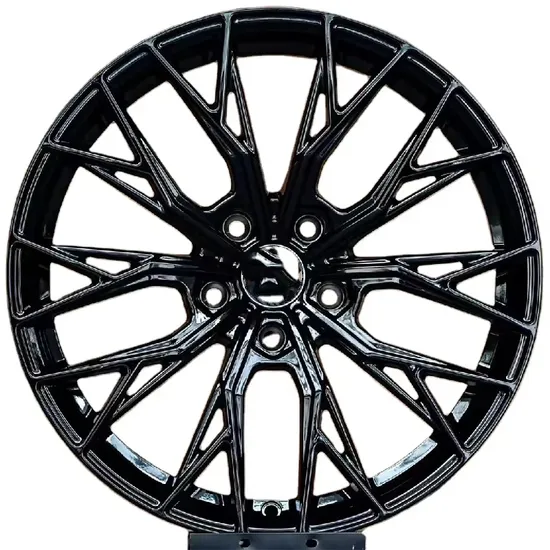 03
WHEEL RIM/HUB
20inch 5*114.3 Black Machine Face Forged Alloy Wheels
Product IntroductionCustomized 20-inch multispoke aluminum forged alloy passenger car wheels with black machine face. Features 5*114.3 PCD, available in silver/hyper…
View Specifications 04
WHEEL RIM/HUB
Hot Sell Brand Car Wheel 14-24inch Rim 5-10 Hole PCD 5*112/120/139.7
Product IntroductionHot Sell Brand Car Wheel Hub with 14-24inch size, available in 5/6/8/10 holes and PCD options like 5*112, 5*120,…
View Specifications