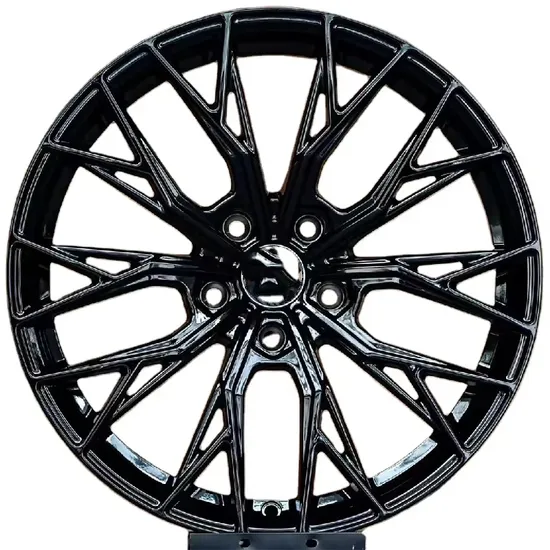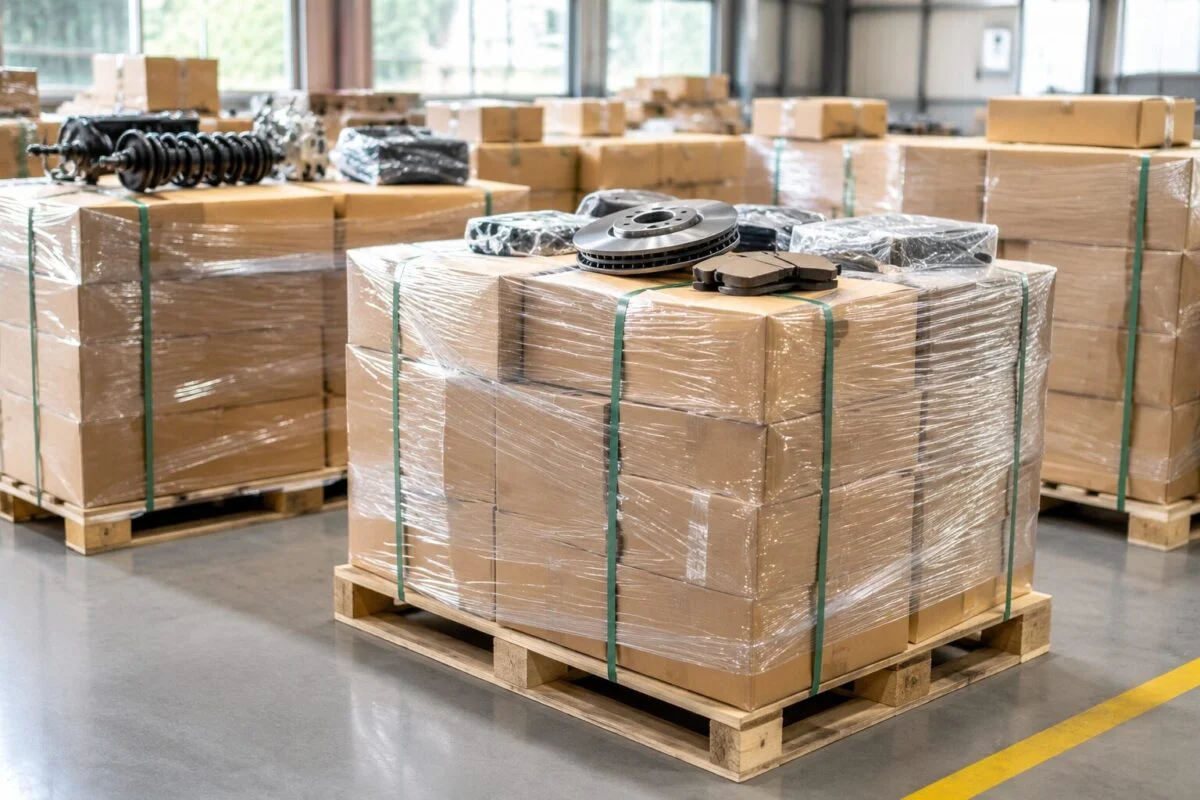
Buy 19 Inch Alloy Wheels OEM Custom Wholesale Supplier
Low unit price on 19 inch alloy wheels often masks missing X-ray inspection and abbreviated salt-spray cycles, turning a seemingly good deal into a port-side nightmare.
When sourcing custom 19 inch alloy wheels from an OEM supplier, the decisive factors are surface-finish compatibility with destination-market regulations, exact bolt-pattern and offset matching to vehicle suspension geometry, and batch-level certification documentation—not the quoted per-piece cost alone.
I still remember a container of matte-black 19 inch deep-concave wheels bound for Manzanillo. The consignee’s broker filed the customs declaration under a generic “aluminum road wheel” code, ignoring the JWL stamp requirement that Mexican authorities cross-check against DOT paperwork. The shipment sat at the terminal for weeks, and the demurrage invoice ended up dwarfing the original cargo value. From that point on, I stopped treating certification as a paperwork afterthought and started treating it as the first line item in any quotation. A reliable OEM supplier of 19 inch alloy wheels will flag these mismatches before production begins, not after the container is sealed. [NEED_CITE: Mexican customs wheel import documentation requirements]
Getting the paperwork right is only the starting line; the physical specifications must align just as precisely, or the wheels will not bolt on regardless of how clean the documents look.
What Specifications Matter Most When Ordering 19 Inch Custom Wheels?
Diameter alone tells you almost nothing; width, offset, center bore, and bolt pattern together determine whether a 19 inch wheel clears the brake caliper and sits correctly within the fender.
A common mistake among first-time buyers is to lock in the diameter and then treat the remaining dimensions as flexible. In reality, even a few millimeters of offset deviation can push the wheel into the strut body or leave it sunken behind the fender line, ruining both handling geometry and aesthetics.
| Specification | Role in Fitment | Risk if Mismatched |
|---|---|---|
| Bolt Pattern | Determines lug alignment | Wheel physically cannot mount |
| Offset (ET) | Controls inboard-outboard position | Caliper rub or fender interference |
| Center Bore | Matches hub diameter for hub-centric seating | Vibration at highway speed |
| Width | Affects tire stretch and caliper clearance | Tire bead unseating or brake contact |
| Load Rating | Must exceed axle weight | Structural failure under cornering load |
[NEED_CITE: relationship between wheel offset and suspension scrub radius]
I worked with a modification shop in Santiago that ordered a batch of 19 inch mesh-style wheels for a popular Japanese SUV platform. The supplier had the correct five-lug pattern but shipped an offset that pushed the wheel roughly half an inch further outboard than the OEM figure. The wheels cleared the calipers, but at full steering lock the tire contacted the inner fender liner. The shop had to machine custom spacers for every set, erasing any cost advantage the direct purchase was supposed to deliver. A competent 19 inch alloy wheels OEM custom wholesale supplier will request the vehicle’s factory offset range and confirm caliper clearance before quoting, rather than shipping a catalog default. [NEED_CITE: wheel offset impact on steering geometry and bearing load]
How to Verify OEM Certification and Quality Standards?
Request batch-specific X-ray reports and salt-spray test records tied to the heat number, not a laminated certificate on the factory wall.
Global markets rely on overlapping but distinct standards: JWL and VIA for Japan, DOT for the United States, TÜV for much of Europe, and CCC for China domestic production. Each standard prescribes its own impact, radial fatigue, and dynamic cornering fatigue test protocols. [NEED_CITE: comparison of JWL VIA TÜV dynamic test protocols]
The verification process should follow a clear sequence:
- Ask for the current, unexpired certificate in the exact product category (passenger car, SUV, or light truck).
- Cross-reference the certificate number against the issuing body’s public database.
- Request the X-ray inspection report for the production batch, confirming absence of internal porosity in the spoke-to-rim junction.
- Obtain the salt-spray test report showing hours completed without red-rust propagation beyond rated thresholds.
- Confirm that the marking on the wheel back pad matches the certificate in load rating, size, and manufacturing date code.
[NEED_CITE: X-ray inspection acceptance criteria for cast and forged alloy wheels]
A distributor in São Paulo once received a container where the wheels carried a legitimate-looking TÜV sticker, but the back-pad engraving showed a different load index than the certificate referenced. When the distributor asked the factory for the batch-level X-ray film, the supplier could only provide a generic sample report from a different production run. The entire lot had to be held in a bonded warehouse while an independent lab performed radiographic inspection, at a cost that exceeded the original freight bill. Working with an established 19 inch alloy wheels OEM custom wholesale supplier eliminates this risk because the factory maintains traceable records from molten alloy to finished packing, and can produce batch-linked documentation on demand. [NEED_CITE: alloy wheel back-pad marking requirements per international standards]
Custom Paint vs. Machined Face: Which Finish Suits Your Market?
Surface finish is not a cosmetic choice; it determines salt-spray endurance, UV resistance, and the type of certification marking that survives destination-port inspection.
Different regions show strong finish preferences shaped by climate, road conditions, and local taste. High-gloss chrome and gunmetal remain popular across Latin America and the Middle East, where bright finishes signal premium modification. Matte black dominates the North American and European tuning scene, while machined-face with clear coat is a staple for OEM-adjacent replacement programs.
| Finish | Salt-Spray Endurance | UV Stability | Best-Suited Market |
|---|---|---|---|
| High-Gloss Chrome | Substantially extended | Robust | Middle East, Latin America |
| Matte Black | Standard | Vulnerable without UV topcoat | North America, Europe |
| Machined Face + Clear | Noticeably reduced if clear coat is thin | Moderate | OEM replacement, Asia |
| Gunmetal | Standard | Robust | Latin America, global aftermarket |
[NEED_CITE: automotive wheel coating salt-spray and UV test methodology]
The critical point buyers often miss is that a matte-black wheel without a proper UV-resistant clear topcoat will chalk and fade within a single summer season in high-sunlight markets. Conversely, a chrome wheel that skips the copper undercoat stage will show peeling after exposure to road salt. The cross-cut adhesion test, which measures how well the paint layers bond to the aluminum substrate, is a more reliable predictor of field durability than the initial visual gloss reading. [NEED_CITE: cross-cut adhesion test standard for automotive wheel coatings]
I recall a tuning shop in Guadalajara that reordered a popular 19 inch deep-concave design in matte black. The first batch looked perfect on arrival, but after a few months of parking outdoors, the flat surfaces developed a hazy gray cast while the recessed spokes stayed dark. The original supplier had applied the matte clear coat too thinly to survive the local UV index. When the shop switched to a manufacturer that runs a full multi-layer paint system with controlled film thickness and verified UV endurance, the color complaints dropped to zero. Jinan Yoker, as a 19 inch alloy wheels OEM custom wholesale supplier operating under the Ouya trademark, covers the entire 12 to 24 inch range with full custom paint capability, backed by ISO and TÜV certification, and offers a structural warranty that gives buyers confidence the finish is matched by lasting wheel integrity. [NEED_CITE: automotive paint film thickness and UV resistance correlation]
What Is the Real Cost of Low-MOQ Customization?
A low minimum order does not mean low risk; it means the factory must absorb setup costs somewhere, and the question is whether those costs appear in the unit price or in your defect rate.
Many buyers assume that ordering a small trial batch of custom wheels is inherently more expensive per piece than a full container of catalog stock. That is true at the surface level, but the calculation changes when you factor in inventory risk, fitment accuracy, and the cost of dead stock that never sells because it fits only one vehicle platform the local market does not use.
| Factor | Full Catalog Stock | Low-MOQ Custom Run |
|---|---|---|
| Unit Price | Noticeably lower | Moderately higher |
| Fitment Match | Limited to popular platforms | Exact match to target vehicle |
| Mold Cost | None | Absorbed by manufacturer |
| Inventory Risk | Substantially extended if platform declines | Noticeably reduced |
| Brand Differentiation | None | Full private-label capability |
[NEED_CITE: inventory carrying cost impact on wheel importers]
An e-commerce seller based in California wanted to test a new six-spoke 19 inch design on a major online marketplace before committing to a large order. The seller needed SKU-level fitment data covering bolt pattern, offset, center bore, and backspacing for each supported vehicle, plus packaging that could pass the standard drop-test protocol for heavy parcels. The manufacturer provided a complete fitment spreadsheet and engineered the carton with internal foam cradles rather than simple cardboard dividers. The trial batch sold through within weeks, and the seller reordered in container-load quantities with confidence that the data and packaging would not generate returns. A responsive 19 inch alloy wheels OEM custom wholesale supplier treats a small trial order as a relationship investment, not a nuisance, and provides the same engineering support as a full production run. [NEED_CITE: e-commerce packaging drop-test standard for heavy automotive parts]
Conclusion
Successful 19 inch wheel procurement hinges on specification precision, verifiable certification, finish-market alignment, and realistic MOQ economics rather than unit price alone.
Buyers who treat fitment data, batch-level test reports, and coating durability as non-negotiable inputs will avoid the port delays, field failures, and dead-stock losses that quietly erase any apparent savings from a cheaper quote. The right manufacturing partner makes those inputs routine rather than exceptional.
Applications covered in this article
Parts mentioned
Products in this article
Each part below is supplied source-direct by Jinan Yoker, matched by OE number and checked through full-process inspection.
 01
WHEEL RIM/HUB
18 Inch 5X120 Alloy Wheel Rims OEM Replica Wholesale
Product IntroductionFactory wholesale OEM replica alloy wheel rims, 18-inch size with 5X120 bolt pattern. Made of aluminum, black finishing, customizable…
View Specifications 02
WHEEL RIM/HUB
18 Inch Chrome Aluminum Alloy Wheel Rims OEM Auto Parts
Product IntroductionHigh-quality 18-inch aluminum alloy wheels with customizable style and color, suitable for 4WD vehicles. Meet ISO, VIA, DOT certifications,…
View Specifications 03
WHEEL RIM/HUB
17-19 Inch OEM Replacement Alloy Wheels Rims Oy17101 New
Product IntroductionOEM replacement alloy wheels with 17-19 inch size, made of carbon fiber material and chrome finishing. Customizable ET, PCD,…
View Specifications 04
WHEEL RIM/HUB
Oy17109 19/20 Inch 5X112 Alloy Wheel Rim OEM Design
Product IntroductionOEM Alloy Wheel with customizable PCD, ET, CB. Available in 17-19 inch size, Carbon Fiber material, Chrome finishing. Ideal…
View Specifications