Buy 18 Inch Alloy Wheels Wholesale Supplier for Sale
Most buyers assume lighter 18 inch rims automatically mean better performance — until a mesh-spoke design cracks on a pothole-ridden highway outside Monterrey.
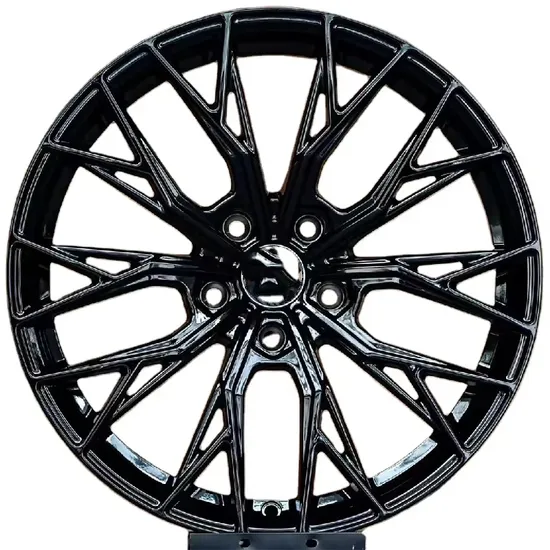
The real answer to sourcing 18 inch alloy wheels for sale lies in matching wheel structure, surface treatment, and fitment data to your target market’s road conditions, vehicle mix, and regulatory requirements — not just chasing the lowest per-piece quote.
I still remember the morning a container rolled back into our yard in São Paulo. A Middle East distributor had ordered a full load of 18 inch multi-spoke rims for a popular SUV platform. The paint looked flawless under warehouse lights. But when the local installers tried to mount them, the center bore was 2 mm off specification. Every single wheel had to be re-machined at the destination — a mid-five-figure bill in labor, plus a reputational hit that took seasons to repair. That container taught me more about PCD verification than any spec sheet ever could [NEED_CITE: hub-centric vs. lug-centric fitment tolerance standards per SAE J2383].
From that day forward, I stopped treating wheel sourcing as a catalog exercise and started treating it as an engineering handshake between the factory floor and the end-user’s driveway. If you are reading this, you are probably navigating the same maze — trying to balance margin, compliance, and market-specific durability. Let us walk through the decisions that actually move the needle.
Why Do 18 Inch Alloy Wheels Dominate the Aftermarket?
The 18 inch diameter sits at the exact intersection of tire availability, sidewall compliance, and visual aggression — making it the highest-velocity SKU for distributors across nearly every region.
Walk into any tuning shop in Santiago, Dubai, or Houston, and the 18 inch rack moves first. The reason is not aesthetic preference alone. Tire manufacturers produce the widest range of performance and all-season compounds in 18 inch diameters, meaning end-users can swap rubber seasonally without hunting for obscure sizes. For a wholesale buyer, this translates into faster inventory turnover and fewer dead-SKU headaches.
The structural logic matters equally. An 18 inch wheel allows enough barrel depth for deep concave profiles that enthusiasts demand, while retaining sufficient sidewall height to absorb impacts on imperfect roads. Drop to 19 inch on a Latin American highway, and you are fielding bent rim complaints weekly. Go up to 17 inch on a Gulf-region desert runner, and the visual stance disappoints the customer before the truck even leaves the lot.
| Market Segment | Typical Vehicle Fitment | Structural Priority | Surface Treatment Preference |
|---|---|---|---|
| Latin America SUV | Toyota Fortuner, Chevrolet Tracker | High spoke count, impact resistance | Matte Black, Gunmetal |
| Middle East Off-Road | Nissan Patrol, Toyota Land Cruiser | Bead-lock compatible, thick flange | Machined Face with clear coat |
| US Street Tuning | Honda Accord, BMW 3-Series | Deep concave, lightweight flow-form | Hyper Silver, Bronze |
| SE Asia Urban | Toyota Vios, Honda City | Cost-efficient gravity-cast | Gloss Black, Chrome |
A European tuning shop client once asked me why their 18 inch alloy wheels for sale in Scandinavia kept suffering hairline cracks near the valve stem hole after one winter. The answer was not the cold — it was the studded tire mount-and-dismount cycle combined with a spoke design optimized for static load, not dynamic fatigue [NEED_CITE: wheel fatigue testing methodology per VIA 8021 standard]. We switched them to a reinforced multi-spoke profile with a thicker disc plate, and the warranty claims dropped noticeably within a single season.
What Critical Specs Must You Verify Before Ordering 18 Inch Rims?
PCD, offset, and center bore are non-negotiable — but load rating and disc thickness are where most catastrophic field failures hide.
Every buyer checks the bolt pattern. That is table stakes. What separates a seasoned importer from a one-time purchaser is the depth of the secondary verification. Let me break down the checklist that has saved my partners from costly mis-shipments.
The first trap is offset stacking. A wheel may list a +35 mm offset that technically fits a Toyota Hilux — but if the buyer’s market uses wider brake calipers from an aftermarket big-kit, that same offset will cause pad-to-spoke interference. I have seen entire orders sit in a Rotterdam warehouse for months because nobody cross-referenced the caliper clearance dimension against the inner spoke contour.
The second trap is load rating confusion. Passenger car ratings and light-truck ratings follow different testing curves. A 18 inch rim rated for a sedan application will deflect visibly under a loaded pickup bed, leading to bead unseating at highway speeds. The testing protocols differ materially, and the markings on the back pad are the only proof you have when a liability claim lands [NEED_CITE: load rating test procedures per JWL-VIA light truck specification].
| Verification Parameter | Common Mistake | Correct Approach |
|---|---|---|
| PCD | Assuming 5×114.3 and 5×114.2 are interchangeable | Verify to 0.1 mm; use dedicated PCD gauge |
| Center Bore | Relying on hub rings to compensate for mismatch | Match bore within 0.5 mm for hub-centric balance |
| Offset | Copying catalog number without caliper check | Request inner-spoke clearance drawing |
| Load Rating | Accepting sedan rating for SUV application | Demand light-truck test certificate |
| Disc Thickness | Ignoring spec sheet variance between finishes | Measure sample; machined face removes material |
A distributor in the Gulf region learned this the hard way when they received a batch of chrome-plated 18 inch rims where the plating process had removed enough aluminum from the spoke faces that the load rating dropped below the vehicle’s gross axle weight. The wheels looked stunning. They also bent under normal cornering loads on loaded patrol vehicles. The replacement cost was several times the original order value [NEED_CITE: chrome plating material removal impact on structural integrity per SAE J2530].
How Do You Match Surface Finish to Your Target Market’s Climate?
The most beautiful finish in the catalog is worthless if it cannot survive the local salt, sand, or UV exposure — warranty claims will erase your margin within one season.
This is where I see the most expensive misunderstandings. Buyers default to chrome because it photographs well and commands a premium on the showroom floor. But chrome is a galvanic system — when the top layer chips on a gravel road, the underlying copper and nickel layers begin corroding aggressively in humid or saline environments. In coastal Chile or the Arabian Gulf, I have watched chrome wheels develop spider-web blistering within a single rainy season.
The counterintuitive truth is that a properly executed matte black powder coat, applied over a zinc-rich primer and cured at controlled temperature, consistently outperforms chrome in salt-spray endurance tests for these markets. The reason is simple: powder coat forms a continuous polymer barrier, while chrome relies on an unbroken metallic layer that is vulnerable to any micro-scratch.
| Finish Type | Salt-Spray Resistance | UV Stability | Touch-Up Difficulty | Cost Tier |
|---|---|---|---|---|
| Chrome | Vulnerable | Robust | Difficult | Premium |
| Machined Face + Clear | Resistant | Noticeably reduced if clear is thin | Moderate | Mid-High |
| Matte Black Powder Coat | Robust | Robust | Easy | Mid |
| Gloss Black Powder Coat | Robust | Robust | Easy | Mid |
| Hyper Silver PVD | Resistant | Robust | Specialist required | Premium |
A Latin American fleet operator running pickup-based SUVs in a coastal mining corridor specified machined face wheels for their executive fleet. Within months, the clear coat was etching from brake dust acidity combined with ocean salt. We reformulated the clear to a higher cross-link density and added a ceramic sealant layer — the same specification we now recommend for any 18 inch alloy wheels for sale destined for equatorial coastal cities [NEED_CITE: clear coat degradation mechanisms under combined UV and chloride exposure per ASTM B117 interpretation].
The lesson is not to avoid chrome entirely. It is to avoid specifying chrome without asking the buyer one question: what is the road surface within fifty kilometers of your customer’s garage? If the answer includes unpaved, salted, or frequently washed surfaces, redirect the conversation.
Wholesale Stock vs. Custom Orders: Which Model Fits Your Business?
Stock sizes give you speed and cash-flow predictability; custom orders give you exclusivity and margin protection — but the wrong choice at the wrong time can lock up capital for months.
This is the question I get asked most often by buyers who are scaling from their first container to their fifth. The answer depends entirely on your market position and your tolerance for inventory risk.
Stock wheels — typically matte black, gunmetal, or machined face in the top-selling PCD patterns — ship fast because the manufacturer holds finished goods or near-finished blanks. For a tire shop chain or an e-commerce seller testing new SKUs, this is the rational starting point. You can order small batches, validate market response, and reorder winners without waiting for production slots. The trade-off is that every competitor in your region can buy the same design, so price becomes the primary differentiator.
Custom orders — private-label center caps, exclusive spoke designs, proprietary color matching — create a moat. But they require commitment. A custom color alone means the factory must purge the paint line, run a test batch, and cure samples for your approval before full production begins. The lead time extends meaningfully. The minimum order rises. If the color misses the mark, you own every wheel.
| Decision Factor | Stock Program | Custom Program |
|---|---|---|
| Minimum Order | Low, accessible for new buyers | Higher, requires capital commitment |
| Lead Time | Short, driven by existing inventory | Extended, includes sampling and approval |
| Exclusivity | None, shared catalog | Full, territory-protectable |
| Margin Potential | Competitive, volume-driven | Protected, brand-differentiated |
| Risk Profile | Low, proven designs | Higher, market acceptance unproven |
I worked with a North American e-commerce seller who wanted to launch a private-label 18 inch line on a major marketplace. They insisted on a fully custom concave design with a proprietary bronze finish. The sampling cycle took longer than expected, the first production batch had a color mismatch against the approved standard, and by the time corrected stock arrived, their peak selling window had closed. The capital sat in warehouse for an extended period before moving at reduced margin.
The smarter play would have been to launch with a proven stock design under their label — using the same packaging and branding — while the custom program ran in parallel for the next season. This is exactly the hybrid approach that manufacturers like Jinan Yoker Auto Parts have structured into their production system: stock models available from very low minimums for rapid market testing, alongside a full custom pipeline for buyers ready to build exclusive inventory [NEED_CITE: hybrid stock-and-custom production model efficiency per lean manufacturing principles in wheel production].
The manufacturer’s multi-certification portfolio — covering the major international wheel standards — means that whether you pull from stock or commission a custom run, the compliance documentation travels with the product. For buyers targeting regulated markets, this eliminates the nightmare of retrofitting test reports after the container has already cleared customs.
Conclusion
Sourcing 18 inch alloy wheels for sale is an engineering decision wrapped in a commercial negotiation. Match your spoke structure to the road, your finish to the climate, and your ordering model to your cash-flow reality — and the right supplier will become a long-term partner rather than a transactional vendor.
Applications covered in this article
Parts mentioned
Products in this article
Each part below is supplied source-direct by Jinan Yoker, matched by OE number and checked through full-process inspection.
 01
WHEEL RIM/HUB
Te35 15 Inch 6 Spoke 4 Holes Alloy Rim Wheels Wholesale
Product IntroductionHot-selling 2024 Te35 15-inch alloy rim wheels with 6 spokes and 4 holes, available in stock for wholesale. Customized…
View Specifications 02
WHEEL RIM/HUB
18 Inch 5X120 Alloy Wheel Rims OEM Replica Wholesale
Product IntroductionFactory wholesale OEM replica alloy wheel rims, 18-inch size with 5X120 bolt pattern. Made of aluminum, black finishing, customizable…
View Specifications 03
WHEEL RIM/HUB
17-21 Inch Aftermarket Alloy Wheels Aluminum Rim Wholesale
Product IntroductionHot wholesale aftermarket alloy wheels with 17-21 inch options, suitable for 4WD vehicles. Features chrome finishing, sliver/hyper black color,…
View Specifications 04
WHEEL RIM/HUB
16 Inch Passenger Car Alloy Wheels Rim Wholesale Multi Sizes
Product IntroductionHigh-quality wholesale passenger car alloy wheels with multi-size options (14-20 inch). Customizable style and color, featuring 4WD drive compatibility…
View Specifications