Buy 14 Inch Alloy Wheels Bulk Order Wholesale Supplier
The cheapest per-piece quote on a 14 inch alloy wheel order is almost never the real cost.
When sourcing a bulk order of 14 inch alloy wheels, the decisive factor is not the unit price but matching surface treatment standards to the destination port’s climate, locking in a universal PCD/ET/CB fitment matrix, and treating packaging, ocean freight, and customs clearance as equal partners to the wheel itself. A wholesale supplier who only competes on price will silently cut corners on salt-spray protection and structural balance, turning your margin into a return claim.
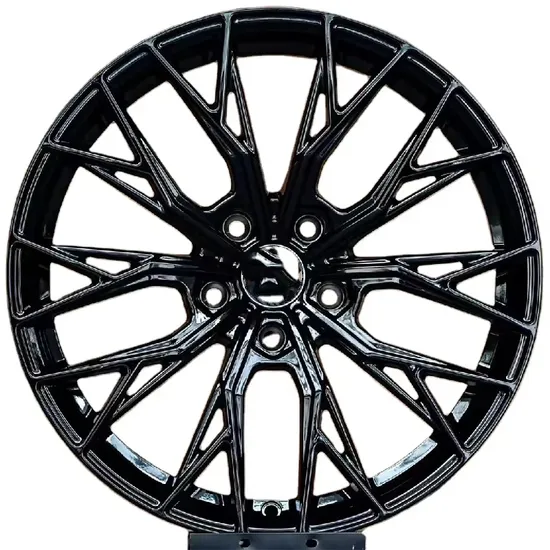
I still remember a container that sat in a West African port for weeks before being rejected outright. The buyer had ordered a full shipment of matte black 14 inch alloy wheels. The wheels looked perfect on the production line. What nobody wrote into the contract was the salt-spray endurance requirement for a high-humidity, high-salinity coastal climate. By the time the containers were opened, white oxidation spots had already bloomed across the matte surface, and the entire lot had to be shipped back. The return freight alone cost several times what anyone had saved by choosing the lowest quote. That order taught me one thing I have never forgotten: in a 14 inch alloy wheels bulk order, the contract must specify the exact surface treatment standard tied to the destination climate, not a vague line about corrosion resistance. [NEED_CITE: correlation between coastal humidity levels and salt-spray test hour requirements per ASTM B117]
Let me walk you through how a seasoned buyer actually structures a 14 inch alloy wheels bulk order, what specs really matter, where the hidden costs hide, and how to verify a supplier before you commit a full container.
What Are the Critical Specs for 14 Inch Alloy Wheels in Bulk?
The right PCD, ET, and CB combination can cover the majority of high-volume passenger car platforms across Asia, Africa, and Latin America with a single SKU matrix.
When you are placing a 14 inch alloy wheels bulk order for aftermarket distribution, you are not buying for one car model. You are buying for a region. The mistake most new distributors make is ordering too many niche fitments and ending up with dead stock. The smart move is to lock in the two universal bolt patterns that dominate the 14 inch segment globally.
| Fitment Parameter | 4×100 Configuration | 4×114.3 Configuration |
|---|---|---|
| Typical Vehicle Coverage | Toyota Vios, Hyundai Accent, Kia Rio, Chevrolet Spark | Honda City, Toyota Corolla older gen, Nissan Almera, Mitsubishi Lancer |
| Regional Demand Density | High across Southeast Asia, parts of Latin America | High across Middle East, South Asia, Africa |
| ET Range Commonly Stocked | ET35 to ET45 | ET38 to ET45 |
| Center Bore Standard | 54.1 mm / 56.1 mm | 56.1 mm / 60.1 mm / 67.1 mm |
| Load Rating Suitability | Standard passenger load | Slightly higher load tolerance due to wider bolt circle |
[NEED_CITE: global aftermarket wheel fitment distribution data for 14 inch segment by region]
A retail chain in Southeast Asia once came to me with a warehouse full of unsold 14 inch wheels in unusual fitments. They had listened to a supplier who pushed custom PCDs for “differentiation.” The reality was that their walk-in customers drove Toyotas and Hondas. We restructured their next 14 inch alloy wheels bulk order around just three SKUs in 4×100 and two in 4×114.3, and their inventory turnover improved noticeably within one restocking cycle.
The key takeaway: a 14 inch alloy wheels bulk order should be built on a narrow, high-coverage fitment matrix, not a wide, low-coverage one. [NEED_CITE: inventory turnover benchmarks for aftermarket wheel distributors by SKU count]
How to Avoid Surface Treatment Failures in High-Salt Environments?
You must write the salt-spray test hour requirement and the destination climate zone directly into the purchase contract, and reject any supplier who offers only a generic “anti-corrosion coating” line.
This is where the real money disappears in a 14 inch alloy wheels bulk order. Surface treatment on alloy wheels follows a clear cost ladder: basic spray paint sits at the bottom, followed by baked powder coating, then electroplating, and finally matte or gloss finishes with a clear coat top layer for UV and salt protection. [NEED_CITE: surface treatment cost hierarchy and salt-spray endurance comparison for alloy wheel finishes]
The anti-common-sense truth here is this: matte black looks tough and hides dirt, but in a high-salinity environment, if the underlying primer and clear coat are not up to standard, white oxidation shows on matte surfaces far more visibly than on glossy ones, and it cannot be polished away. A glossy surface can sometimes be restored; a compromised matte surface is a write-off.
| Climate Zone | Recommended Minimum Salt-Spray Standard | Clear Coat Requirement |
|---|---|---|
| Northern Europe, Inland North America | Standard baked coating | Optional |
| Southern US, Mediterranean, Middle East Coastal | Extended salt-spray endurance | Mandatory clear coat |
| West Africa, Southeast Asia Coastal, Caribbean | Highest salt-spray endurance tier | Mandatory dual-layer clear coat |
| Inland arid regions (Central Asia, Northern Africa) | Basic coating sufficient | Not required |
[NEED_CITE: ASTM B117 salt-spray test hour recommendations by coastal climate classification]
I have seen buyers in the Middle East receive wheels that passed a basic indoor visual inspection, only to have the paint peel within one summer season near the Gulf coast. The supplier had technically delivered what was written in the contract, but the contract only said “painted black.” No test standard, no clear coat clause, no climate reference. The buyer absorbed a mid-five-figure loss in warranty replacements.
When you place a 14 inch alloy wheels bulk order with a reliable wholesale supplier, ask them to specify the exact salt-spray test hour their finish achieves, and cross-reference it with the destination port’s climate data. If the supplier cannot provide this, walk away. [NEED_CITE: ISO 9227 correlation with real-world coastal corrosion rates]
What Is the Real Cost Structure of a Bulk Order?
The unit price of the wheel typically accounts for a minority of the total landed cost; packaging, ocean freight, customs documentation, and potential return logistics form the real cost iceberg beneath the surface.
Most first-time buyers fixate on the per-piece FOB price and treat everything else as an afterthought. This is a structural error. In a 14 inch alloy wheels bulk order, the visible invoice is only the starting point.
Consider the cost layers:
- Wheel unit price: The number the supplier quotes. Important, but not dominant.
- Packaging engineering: A 14 inch wheel is heavy and its rim edge is vulnerable. Cheap carton packaging with minimal internal dividers will guarantee a noticeable damage rate by the time the container reaches the other side of the ocean. Reinforced carton with foam-molded separators costs more per unit but drops the damage rate to a minimal level. [NEED_CITE: packaging damage rate comparison for alloy wheels in standard vs reinforced carton during ocean freight]
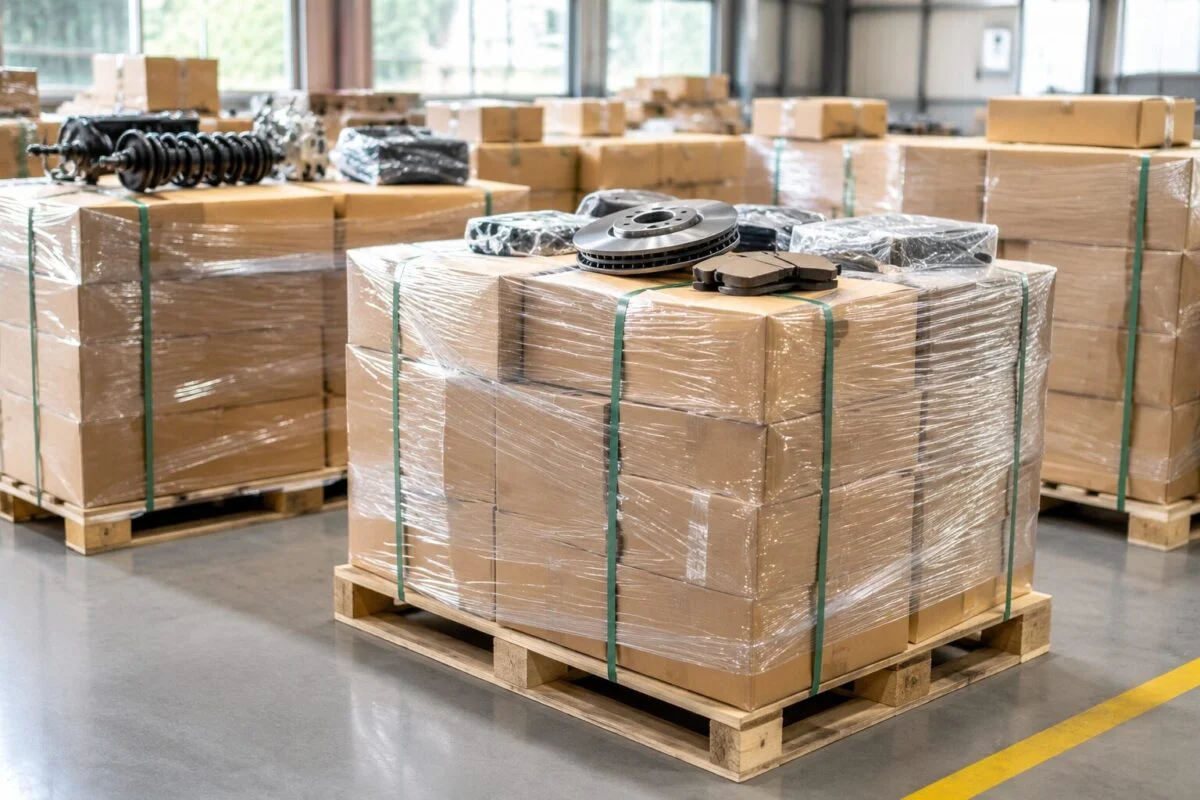
- Ocean freight and container loading: A 40HQ container has a fixed volume. Poor stacking design wastes space. A 14 inch alloy wheels bulk order that is not palletized or stacked with calculated density can cost noticeably more per piece in freight than a well-optimized load.
- Customs documentation: Missing or incorrect certificates of origin, material test reports, or conformity declarations can hold a container at port for weeks. Demurrage fees accumulate daily.
- Return and warranty exposure: If the wheels fail on arrival or within the first season, the return freight often exceeds the original product value. There is no economic recovery from this scenario.
A small e-commerce seller in Latin America once tested our 14 inch alloy wheels with a small trial batch. The first shipment used basic packaging, and the damage rate was noticeable. For the second shipment, we switched to reinforced carton with custom foam inserts. The damage rate dropped to a negligible level, and the seller’s return claims essentially disappeared. The packaging cost increase was a fraction of what they would have lost in refunds.
The lesson: when evaluating a 14 inch alloy wheels bulk order quote, ask the supplier to break down the packaging spec, the container loading plan, and the documentation package. A wholesale supplier who cannot show you this breakdown is hiding costs you will discover later. [NEED_CITE: total landed cost composition analysis for bulk alloy wheel imports]
How to Verify Supplier Reliability Before Placing a Container Order?
Demand third-party certifications, request inspection reports from existing clients in the same climate zone, and start with a small trial batch before committing a full container.
The 14 inch alloy wheels bulk order market is crowded with trading companies posing as factories and factories with inconsistent quality control posing as premium suppliers. Verification is not optional; it is the only shield against a catastrophic order.
The verification checklist should include:
- Third-party quality certifications: ISO 9001 for quality management is the baseline. For specific markets, VIA (Japan), JWL (Japan), TÜV (Europe), DOT (US), and CCC (China) certifications demonstrate that the supplier’s wheels have passed structural fatigue, impact, and radial runout tests under independent laboratory conditions. [NEED_CITE: scope and testing parameters of VIA/JWL/TUV alloy wheel certifications]
- Salt-spray test reports from independent labs: Not in-house reports. A report from an accredited third-party lab confirming the salt-spray endurance hour of the specific finish you are ordering.
- Client references in comparable climate zones: A supplier serving West Africa should be able to show you that their wheels have been in the field there without systematic finish failure. A supplier serving the Middle East should have verifiable track records in Gulf coastal cities.
- Trial batch feasibility: A reliable wholesale supplier will allow a small trial order to validate packaging integrity, finish consistency, and fitment accuracy before you commit to a full container.
I have worked with modification shops in Latin America that specialize in Toyota and Honda platforms. They started with a trial batch of a few dozen wheels across their top-selling 4×100 and 4×114.3 fitments, validated the packaging through a real shipping cycle, and then scaled to full container orders. Their restocking cycle shortened noticeably because they had already eliminated the unknowns.
When you are sourcing a 14 inch alloy wheels bulk order, the wholesale supplier who welcomes your verification questions and supports a trial batch is the one worth building a long-term relationship with. The one who pressures you to sign a full container contract on the first call is the one you should avoid. [NEED_CITE: best practices for alloy wheel supplier audit and trial order protocol]
Conclusion
A successful 14 inch alloy wheels bulk order is won on specification discipline, climate-matched surface treatment, and transparent cost structure, not on chasing the lowest unit price. Lock your fitment matrix to the universal PCDs that dominate your target market, write the salt-spray standard into the contract with the destination climate explicitly named, treat packaging and documentation as cost centers equal to the wheel itself, and verify every supplier claim with third-party certification and a trial batch before committing a container.
Parts mentioned
Products in this article
Each part below is supplied source-direct by Jinan Yoker, matched by OE number and checked through full-process inspection.
 01
WHEEL RIM/HUB
Monoblock Forged 18-20 Inch Alloy Wheel Gloss Black Gunmetal
Product ParametersModel NO.OY17024MaterialCarbon FiberWheel Hub Diameter16-20"IntroductionMonoblock Forged Wheel available in 18-20 Inch. Gloss Black/Gunmetal finish, customizable Et, PCD, CB. ISO,…
View Specifications 02
WHEEL RIM/HUB
Rep Design 17-19 Inch Alloy Rims 5X100-114.3 PCD Passenger Car Wheels
Product IntroductionRep Design alloy rims, available in 17-19 inches with 5X100/108/112/113/114.3 PCD bolt patterns, feature a chrome finish and equal…
View Specifications 03
WHEEL RIM/HUB
16 Inch Alloy Rim Wheel Replace Oy17104 Multi Spoke Forged
Product ParametersSize16 InchMaterialCarbon FiberModel NO.OY17104IntroductionAlloy Rim Wheel 16 Inch, model OY17104, crafted from Carbon Fiber with Chrome finishing. Features Equal…
View Specifications 04
WHEEL RIM/HUB
17-20 Inch Alloy Replica Car Wheels Top Quality Cheap Price
Product IntroductionTop Quality Replica Wheel Alloy Car Wheels with sizes 16-20 inches, available in Silver/Hyper Black. Made of alloy material,…
View Specifications