Alloy Wheels Wholesale Supplier: 12″-24″ Custom OEM Rims for Sale
Most buyers assume the heaviest wheel is the strongest. In reality, casting process and alloy composition determine structural integrity — low-pressure cast wheels weigh noticeably less than gravity cast equivalents while delivering higher tensile strength.
The retail price of alloy wheels in South Africa carries a significant markup over factory-direct FOB pricing. Buyers who source directly from a certified alloy wheels wholesale supplier and optimize their ocean freight and customs clearance pipeline can reduce per-piece landed cost to a fraction of local wholesale rates.
I learned this the hard way. Years ago, I shipped a batch of 18-inch machined-face wheels to a Middle East client. The packaging failed during transit, moisture breached the cartons, and by the time the container cleared customs, nearly a full pallet showed surface oxidation. The client rejected the lot, I absorbed the freight loss, and the reorder went to a competitor. Since that day, I inspect packaging specs, monitor container humidity levels, and triple-check customs documentation before any shipment leaves the warehouse. [NEED_CITE: common failure modes in alloy wheel international shipping]
Let me walk you through what the real pricing landscape looks like, how to calculate true landed cost, which sizes move fastest off the shelf, and how to pick a supplier that will not cost you more in hidden losses than you save on the invoice.
What Is the Real Price Range for Alloy Wheels in South Africa in 2026?
Retail pricing for 15-inch through 22-inch alloy wheels in South Africa spans a wide band, with markups layered at every stage from importer to distributor to retail shelf.
The gap between what a Johannesburg改装店 pays at a local wholesaler and what that same wholesaler paid FOB at a Chinese factory is substantial — typically enough to justify direct import even for relatively small trial orders. Local retail prices for mainstream passenger-car sizes (15-17 inch) often sit at multiples of the factory-direct unit cost once you factor in the intermediary margins.
| Size Range | Typical Retail Position | FOB Factory-Direct Position | Margin Layer Count |
|---|---|---|---|
| 15-16 inch (popular fitments) | High volume, moderate margin | Noticeably lower base cost | Multiple intermediaries |
| 17-18 inch (mid-range) | Balanced volume and margin | Competitive factory pricing | Fewer intermediaries possible |
| 20-22 inch (SUV/modification) | Low volume, high per-piece margin | Higher unit cost but still discounted vs. local | Specialized niche markup |
A tire retail shop in Durban that restocks 15-17 inch wheels for Toyota and Hyundai applications told me their inventory turnover for these sizes is tight — they need reliable replenishment within a short cycle. When they compared local wholesaler quotes against a direct inquiry to an alloy wheels wholesale supplier, the per-piece difference was large enough to cover ocean freight and still leave meaningful savings. [NEED_CITE: South Africa alloy wheel import volume and retail markup structure]
The key insight: you do not need to order a full container on the first try. Stock models from a qualified alloy wheels wholesale supplier can start at small quantities, letting you test fitment demand before committing to volume.
How Do You Calculate the True Landed Cost of Imported Alloy Wheels?
FOB price is only a portion of what you actually pay per wheel once it arrives at your warehouse. Ocean freight, import duties, VAT, and clearance fees complete the cost picture.
Many first-time importers focus exclusively on the per-piece FOB quote and assume the rest is negligible. That assumption is where margins disappear. Here is the cost chain you need to model:
- FOB unit price — the factory-direct cost per wheel, which varies by size, finish, and casting method. Low-pressure cast wheels carry a different price point than gravity cast equivalents due to equipment and cycle-time differences. [NEED_CITE: low-pressure casting vs. gravity casting cost and performance comparison]
- Ocean freight allocation — a standard container holds a specific number of wheels depending on size and packaging configuration. You divide the total freight cost by the piece count to get the per-unit freight allocation.
- Import duty — South Africa applies a tariff rate under the relevant HS code for alloy wheels. This is calculated on the CIF value, not the FOB value alone. [NEED_CITE: South African Revenue Service tariff classification for alloy wheels under HS 8708.70]
- Value-Added Tax — levied on the sum of CIF value plus duty. This is a cash-flow item that registered businesses can claim back, but it still affects your working capital requirement.
- Clearance and port handling fees — agent charges, terminal handling, rail or road transport from port to your warehouse.
| Cost Component | Share of Total Landed Cost | Notes |
|---|---|---|
| FOB unit price | Roughly half or slightly above | Varies by size, finish, order volume |
| Ocean freight | Moderate allocation | Depends on container utilization rate |
| Import duty | Calculated on CIF | Fixed rate per SARS schedule |
| VAT | Applied on CIF + duty | Recoverable for registered entities |
| Clearance and inland transport | Smaller but non-negligible | Port congestion can inflate this |
A regional wholesaler in South Africa who placed a full-container order of 20-inch SUV wheels walked me through their landed-cost breakdown. The FOB price was the single largest line item, but the combined duty, VAT, and port charges added a layer that many buyers overlook in initial comparisons. When they compared the final per-piece landed cost against local wholesale quotes, the direct-import route still delivered a clear advantage — but only because they had mapped every component beforehand. [NEED_CITE: DDP vs. CIF vs. FOB trade term cost structure for wheel imports]
Which Sizes and Styles Sell Best in the South African Market?
The 16-18 inch range in clean multi-spoke designs适配 Toyota, Hyundai, and Ford platforms dominates volume sales, while 20-22 inch modification wheels carry higher margins but turn more slowly.
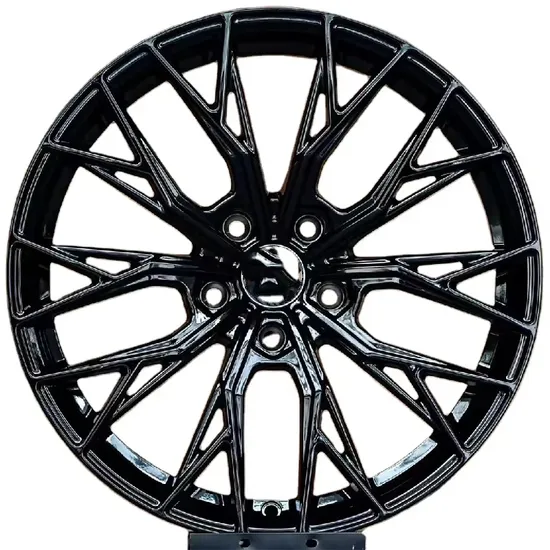
Understanding which sizes and styles move quickly versus which sit in storage is critical for cash-flow management. A modification shop in Johannesburg that specializes in 18-inch multi-spoke gloss-black wheels told me their customers care about visual impact and fitment precision — deep concave profiles and staggered setups are frequent requests. But these are lower-volume, higher-SKU-complexity orders.
For tire shops and general retailers, the bread-and-butter inventory consists of:
- 15-16 inch — high demand from older-model Toyota and Hyundai passenger cars, price-sensitive buyers, fleet replacements. Simple five-spoke or six-spoke designs in silver or hyper silver finish move fastest.
- 17 inch — the sweet spot for mid-range sedans and compact SUVs. Machined-face and gloss black are the two most requested finishes. Fitment compatibility with a broad vehicle parc makes this the safest stock category.
- 18 inch — popular with modification enthusiasts and newer-model SUVs. Multi-spoke and mesh designs in matte black or bronze attract premium pricing but require more careful inventory planning.
- 20-22 inch — niche, high-margin, slow-turn. Typically ordered to specific customer specifications rather than stocked in depth.
| Size | Volume Characteristic | Margin Profile | Recommended Stock Approach |
|---|---|---|---|
| 15-16 inch | High volume | Moderate | Keep broad size coverage |
| 17 inch | Balanced volume | Balanced | Core stock category |
| 18 inch | Moderate volume | Higher | Selective styles and finishes |
| 20-22 inch | Low volume | High | Order-to-project basis |
The practical takeaway: when you engage an alloy wheels wholesale supplier, start by identifying which vehicle platforms dominate your customer base. A supplier with a broad fitment catalog covering Japanese, Korean, and American nameplates will let you consolidate orders and simplify SKU management. [NEED_CITE: South Africa vehicle parc composition and wheel size demand distribution]
How to Choose a Reliable China-Based Alloy Wheel Supplier?
Certification coverage, flexible minimum order, moisture-resistant packaging, and complete customs documentation are the four non-negotiable filters when evaluating a supplier.
I have seen buyers get burned on every one of these four points. Let me break down what each one actually means in practice.
Certification. International wheel certifications — VIA, TUV, DOT, JWL — are not marketing decorations. They are engineering compliance documents that customs authorities and discerning buyers may request. A supplier holding multiple certifications demonstrates that their production process meets recognized structural and dimensional standards. [NEED_CITE: VIA and TUV certification requirements for alloy wheel structural integrity]
Minimum Order Quantity. Not every buyer needs to commit to thousands of pieces upfront. A reliable alloy wheels wholesale supplier should allow small-batch trial orders on stock models — enough to test fitment, finish quality, and customer response before scaling. This is especially important for modification shops and e-commerce sellers testing new SKUs.
Packaging and Moisture Control. Ocean transit from China to Durban or Cape Town takes weeks, during which container temperatures fluctuate and condensation forms. Wheels with machined or chrome finishes are particularly vulnerable to water spotting and oxidation if packaging lacks adequate moisture barriers. I insist on seeing the packaging specification — inner plastic wrap, desiccant placement, carton wall thickness, and pallet strapping — before confirming any order. [NEED_CITE: best practices for alloy wheel packaging and moisture prevention during ocean freight]
Customs Documentation. Missing or incorrect paperwork does not just delay clearance — it can trigger inspections, storage fees, and in worst cases, cargo rejection. A supplier experienced in exporting to your market should provide a complete document set: commercial invoice, packing list, bill of lading, certificate of origin, and any market-specific compliance certificates.
| Evaluation Criterion | What to Verify | Red Flag |
|---|---|---|
| Certification | VIA / TUV / DOT / JWL validity | Self-reported only, no verifiable certificates |
| MOQ Flexibility | Small-batch trial availability | Rigid high-MOQ policy on all items |
| Packaging Spec | Moisture barrier, desiccant, carton grade | Generic carton with no moisture protection |
| Documentation | Complete export document package | Vague promises, history of missing papers |
When I work with buyers evaluating suppliers, I always ask them to request a sample shipment first — a small quantity of the exact finish and size they plan to order at volume. The sample reveals packaging quality, finish consistency, and the supplier’s responsiveness on documentation. It is a low-cost step that prevents expensive surprises later.
What Are the Common Pitfalls When Importing Alloy Wheels to South Africa?
Surface oxidation from moisture ingress, packaging damage from improper stacking, and customs delays from incomplete documentation are the three most frequent — and most preventable — problems.
Let me address each one with the kind of detail that only comes from having dealt with the consequences firsthand.
Surface Oxidation. Machined-face and chrome-finish wheels are essentially bare aluminum or thin chromium layers exposed to the environment. If the inner packaging allows humidity to reach the surface during a multi-week ocean voyage, water spots and oxidation appear — sometimes across an entire pallet. The fix is straightforward: sealed polyethylene wrapping per wheel, desiccant packs placed inside the carton, and container humidity monitoring during stuffing. [NEED_CITE: aluminum wheel surface oxidation causes and prevention methods]
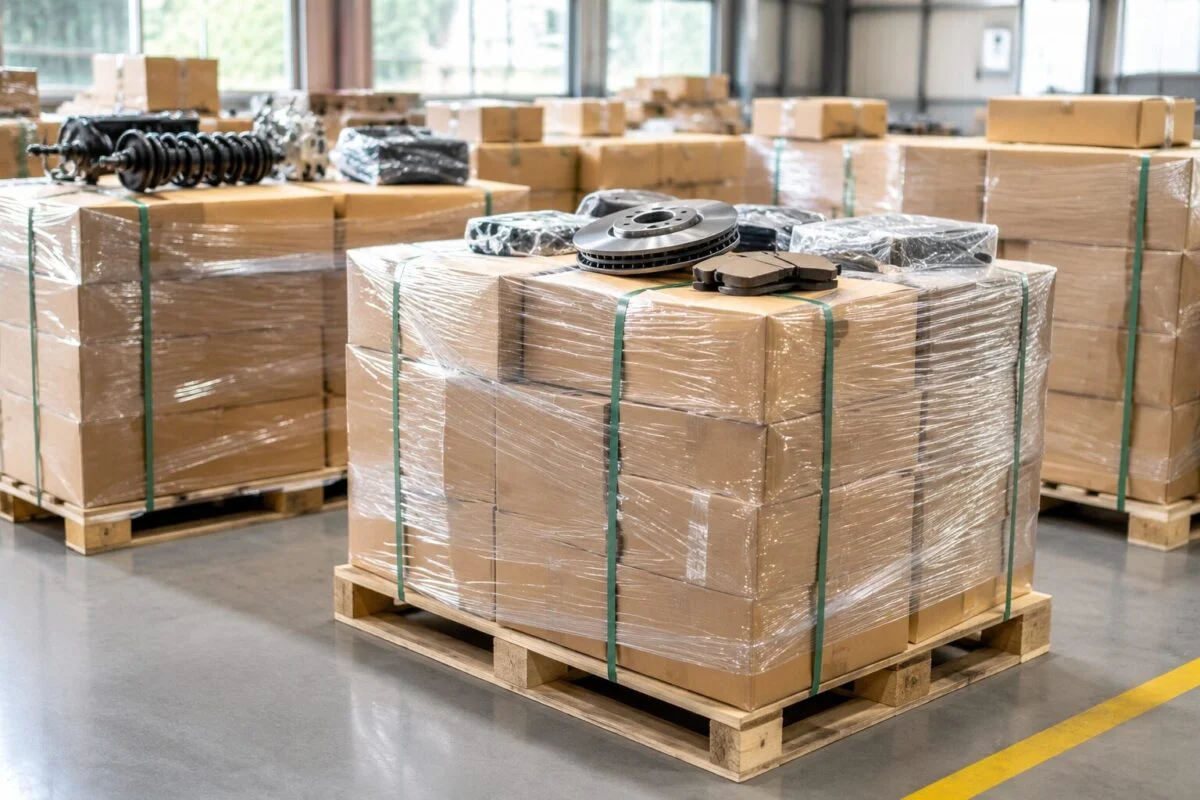
Packaging Damage. Wheels are heavy, and the edges of multi-spoke designs create concentrated pressure points. If cartons are not stacked correctly on pallets, or if the carton material lacks sufficient burst strength, the wheels shift during transit and damage each other. I have opened containers where the outer cartons looked intact but the inner wheels had spoke-edge impressions pressed into the faces of the wheels below them. Proper palletization — wheel orientation, carton partition inserts, and strapping tension — eliminates this.
Customs Documentation Gaps. South African customs is particular about paperwork completeness. A missing certificate of origin, an inconsistent weight declaration between the packing list and the bill of lading, or an absent compliance certificate can trigger a physical inspection. That inspection adds days — sometimes weeks — to your clearance timeline, during which your cargo sits in a bonded terminal accruing storage charges. [NEED_CITE: South African customs clearance documentation requirements for automotive parts imports]
| Pitfall | Root Cause | Prevention Measure |
|---|---|---|
| Surface oxidation | Moisture ingress during ocean transit | Sealed wrapping, desiccants, humidity control |
| Packaging damage | Improper stacking, weak carton material | Correct palletization, reinforced cartons |
| Customs delays | Incomplete or inconsistent paperwork | Pre-shipment document audit by supplier |
The pattern across all three pitfalls is the same: the cost of prevention is a fraction of the cost of remediation. A supplier who treats packaging and documentation as afterthoughts will eventually cost you more in claims, delays, and lost customer trust than you saved on their initial quote.
Conclusion
Direct sourcing from a certified alloy wheels wholesale supplier, combined with disciplined attention to landed-cost calculation, packaging integrity, and customs compliance, compresses your per-piece cost well below local wholesale levels.
The South African market rewards buyers who stock the right sizes, vet their suppliers on substance rather than price alone, and invest in prevention before problems occur at the port.
Parts mentioned
Products in this article
Each part below is supplied source-direct by Jinan Yoker, matched by OE number and checked through full-process inspection.
 01
WHEEL RIM/HUB
15-17 Inch Forged Alloy Steel Wheel Rims Auto Parts
Product IntroductionThese forged aluminum alloy rims, model OY17002, feature a multi-spoke design with a matte black finish. Available in 15-17…
View Specifications 02
WHEEL RIM/HUB
High Quality 15-17 Inch 5X114.3 Hyper Black Car Alloy Wheel Rim
Product IntroductionHigh Quality Car Alloy Wheel, available in 15-17 Inch sizes with PCD 5X114.3, features a hyper black finish and…
View Specifications 03
WHEEL RIM/HUB
Golden Wheels 15-17inch Forged Custom Rims Vehicle Fit
Product IntroductionGolden Wheels Color Customized Rims, available in 15/16/17 inches, are forged aluminum wheel hubs suitable for various vehicle models.…
View Specifications 04
WHEEL RIM/HUB
15-17inch Hyundai Wheel Rim CB67.1/54.1-73.1 Passenger Car
Product IntroductionAluminum wheel rim suitable for 15-17inch passenger cars, compatible with Hyundai models. Features customizable size, finishing, color and style,…
View Specifications