Alloy Wheels Supplier for UAE: China Factory Direct OEM
The cheapest quote you receive is rarely the one that costs you the least.
Sourcing from a China-based alloy wheels supplier for UAE buyers requires verifying specification alignment (offset, J-value, center bore), confirming real certification coverage (VIA/JWL/ISO), and calculating landed cost including logistics, customs, and rejection risk—not just comparing FOB unit prices.
Working the floor in Jinan’s auto parts industrial zone, I once watched a 20-foot container of custom deep-concave wheels sit rejected at Jebel Ali port for three weeks because the ET value on the packing list did not match the engineering drawing the buyer had approved months earlier. The wheels themselves were perfectly made. The paperwork was not. That single mismatch cost the buyer warehousing fees, re-export handling, and a damaged relationship with his改装 shop clients in Dubai. [NEED_CITE: Jebel Ali port customs rejection statistics for automotive parts]
This is the reality of importing from an alloy wheels supplier for UAE operations. Let me walk you through what actually matters.
What Are the Unique Specification Preferences in the UAE Wheel Market?
Large diameters, deep concave profiles, and bright surface finishes dominate demand, requiring suppliers with proven mold and coating capabilities.
The UAE market is not a volume game of basic silver painted wheels. Buyers here—whether running a tuning shop in Al Quoz or a wholesale warehouse in Deira—expect visual impact that matches the region’s car culture. SUV fitments in 20, 22, and even 24 inches move consistently. Passenger car buyers request staggered setups with aggressive concavity. Surface preferences lean toward machined face with gloss lip, chrome, or hyper silver rather than the matte black that dominates European aftermarket trends.
| Specification Factor | Standard Aftermarket | UAE Market Preference |
|---|---|---|
| Diameter Range | 16-19 inches | 19-24 inches dominant |
| Concave Profile | Mild to medium | Deep to extreme concave |
| Surface Finish | Matte black, silver | Machined face, chrome, hyper silver |
| Load Rating | Passenger standard | SUV/Light truck reinforced |
| Center Bore Tolerance | Standard ±0.2mm | Tight ±0.1mm for hub-centric fit |
A tuning shop client in Dubai once ordered a batch of 22-inch deep concave wheels for a luxury SUV platform. The first sample looked perfect. The second batch, produced six months later, showed a noticeably different lip angle because the mold had been re-cut without updating the drawing. The shop owner had to explain to his clients why their cars no longer matched the brochure photos. [NEED_CITE: mold lifecycle management standards in alloy wheel manufacturing]
When evaluating an alloy wheels supplier for UAE projects, ask specifically about mold maintenance logs and coating batch consistency. The visual difference between a wheel from the first production run and one from the fiftieth run can be subtle to an untrained eye but obvious to a customer paying premium prices.
How Do You Verify a Chinese Factory’s OEM Credentials and Certification Authenticity?
Request certificate validity periods, scope coverage for specific wheel sizes, and third-party test reports—not just scanned PDFs of front pages.
Certification in this industry is not a paper game, though many suppliers treat it that way. A VIA or JWL certificate does not mean every wheel rolling off the line meets that standard. It means the factory’s production system, quality control process, and testing equipment have been audited to that standard. The gap between “certified factory” and “certified wheel” is where most import problems originate.
Here is what I check when a buyer asks me to verify credentials:
- Certificate Scope: Does the VIA/JWL/ISO certificate explicitly cover the diameter, width, and PCD range you are ordering? Many certificates only cover a subset of sizes.
- Validity Period: Are the certificates current, or did they expire last year? Renewal lapses happen more often than buyers realize.
- Test Report Traceability: Can the factory provide a specific test report linked to your order batch, showing radial fatigue, impact, and salt-spray results?
- Equipment Calibration: When was the dynamic balance machine last calibrated? When was the salt-spray chamber last verified?
| Credential Check | Basic Supplier | Verified OEM Supplier |
|---|---|---|
| Certificate Scope | Generic “all sizes” claim | Explicit size/PCD coverage listed |
| Test Reports | Sample reports only | Batch-linked reports available |
| Third-Party Audit | Self-reported | SGS/TÜV/Bureau Veritas on file |
| Equipment Calibration | Not documented | Calibration logs verifiable |
A Middle East distributor once showed me a JWL certificate his supplier provided. The certificate was real. The problem was that it covered wheels up to 18 inches. The distributor was ordering 22-inch wheels for a popular SUV. The factory had simply not updated the certificate scope after expanding its product line. [NEED_CITE: VIA/JWL certification scope limitations for large-diameter wheels]
When you work with an alloy wheels supplier for UAE deliveries, insist on seeing the full certificate package before placing an order. A factory that hesitates to share complete documentation is usually hiding something—either an expired certificate, a scope gap, or a reliance on subcontracted production that voids the certification entirely.
What Hidden Costs Exist Behind Factory-Direct Pricing?
Logistics, customs clearance delays, rejection rates, and warranty claims must be included in total cost calculations—factory-direct pricing advantages can be erased by poor risk management.
The headline price from a China-based alloy wheels supplier for UAE buyers typically runs substantially below Japanese or European brand equivalents. This is real. Factory-direct sourcing eliminates distributor margins, brand licensing fees, and regional markup layers. But the gap between FOB price and landed cost in Dubai is where margins disappear.
Consider these cost components that rarely appear in initial quotes:
- Ocean Freight Volatility: Container rates from Chinese ports to Jebel Ali fluctuate significantly. A quote locked in January may be meaningless by March.
- Customs Documentation: Missing or incorrect certificates of origin, packing lists, or conformity declarations can hold a container for weeks. Storage fees at Jebel Ali accumulate daily.
- Rejection and Rework: If a batch fails incoming inspection, return shipping to China is economically impossible. Local rework (painting, machining) costs more than the original finishing.
- Warranty Claims: A structural failure in the field triggers replacement shipping, customer compensation, and reputational damage.
| Cost Component | Typical Risk Level | Mitigation Approach |
|---|---|---|
| Ocean Freight | High volatility | Lock rates or use forwarder contracts |
| Customs Delays | Moderate to high | Pre-verify all documentation |
| Quality Rejection | Low to moderate | Incoming inspection protocol |
| Warranty Claims | Low if certified | Structural warranty from supplier |
A wholesale buyer in Dubai once calculated that his “cheap” wheels from an unverified supplier actually cost him more per unit than premium options once he factored in a seven percent rejection rate, two containers held at customs for documentation errors, and warranty replacements for three wheels that cracked under normal use. The initial savings were completely consumed. [NEED_CITE: total cost of ownership analysis for imported alloy wheels]
Working with an established alloy wheels supplier for UAE operations means getting a partner who understands export documentation, provides complete certification packages, and stands behind structural integrity with a multi-year warranty. The price premium is real, but so is the risk reduction.
How Do You Balance MOQ and Lead Time for Small Custom Orders Versus Bulk Purchases?
Tuning shops need low MOQ flexibility with fast turnaround; wholesalers need batch consistency across container loads; both require different production scheduling strategies from the same supplier.
The UAE market splits into two distinct buying patterns, and a capable alloy wheels supplier for UAE clients must accommodate both without compromising either.
Tuning shops and modification garages typically order in small batches—sometimes as few as twenty to fifty pieces per SKU. They want custom colors, specific fitments, and fast delivery because their customers expect cars back within days, not weeks. They are willing to pay a premium per unit for this flexibility.
Wholesalers and distributors order in container loads—thousands of pieces of popular sizes like 18, 20, and 22 inches for Toyota, Nissan, and Land Cruiser fitments. They need consistent quality across the entire batch, competitive per-unit pricing, and reliable lead times that align with their inventory planning.
| Buyer Type | Typical MOQ | Lead Time Expectation | Priority Concern |
|---|---|---|---|
| Tuning Shop | 20-100 pieces | 20-30 days | Customization, speed |
| Wholesaler | 500-5000 pieces | 30-45 days | Batch consistency, cost |
| OEM Partner | 5000+ pieces | 45-60 days | Certification, engineering |
The challenge for any alloy wheels supplier for UAE projects is that these two order types compete for the same production capacity. A factory that promises both twenty-piece custom runs and five-thousand-piece bulk orders with the same lead time is either lying or running its production line inefficiently.
A modification shop in Sharjah once placed an order for forty pieces of custom bronze wheels in a staggered fitment. The factory promised delivery in twenty days. The wheels arrived thirty-five days later because the production schedule kept getting pushed by larger bulk orders. By then, the shop had already lost two customers who could not wait. [NEED_CITE: production scheduling conflicts in alloy wheel manufacturing]
The solution is transparency. A reliable supplier will give you realistic lead times based on current production load, will not promise impossible delivery dates just to win the order, and will communicate proactively if delays occur. For custom orders, ask about the production queue and whether your order will be grouped with similar specifications to minimize changeover time.
How Do You Ensure Batch Consistency and After-Sales Support?
Quality traceability systems and multi-year structural warranty commitments separate serious suppliers from opportunistic traders.
Batch consistency is the silent killer of reputation in the wheel business. A tuning shop that installs wheels on a customer’s car expects the next set they order to look identical—same color, same finish, same dimensions. When a new batch shows visible color variation or slightly different spoke profiles, the shop looks incompetent to its customers.
This is not a cosmetic issue. It is a business survival issue.
A capable alloy wheels supplier for UAE operations maintains several systems to ensure consistency:
- Color Matching Protocols: Paint batches are mixed to specific formulas and test panels are approved before full production runs.
- Mold Maintenance Schedules: Molds are inspected and re-machined at regular intervals to prevent dimensional drift.
- In-Process Inspection: Wheels are checked at multiple stages—after casting, after machining, after painting—not just at final inspection.
- Traceability Systems: Each wheel can be traced back to its production date, mold cavity, paint batch, and quality inspector.
| Consistency Factor | Uncontrolled Production | Controlled Production |
|---|---|---|
| Color Matching | Visual approximation | Formula-based with test panels |
| Mold Maintenance | Reactive (after defects appear) | Preventive (scheduled intervals) |
| Inspection Points | Final only | Multiple stages |
| Traceability | Batch level only | Individual wheel level |
A distributor in Abu Dhabi received a complaint from a retail client about wheels that showed slight color differences between front and rear axles. The distributor traced the issue back to two different paint batches used in the same order. The supplier had run out of the original paint mid-production and substituted a “close match” without informing the buyer. The wheels were technically within specification, but the customer could see the difference in certain lighting conditions. [NEED_CITE: paint batch consistency standards in alloy wheel finishing]
When evaluating an alloy wheels supplier for UAE partnerships, ask specifically about their traceability system and warranty terms. A supplier confident enough to offer a multi-year structural warranty—and willing to put it in writing—has already built the quality systems necessary to honor that commitment. A supplier who hesitates or offers vague verbal assurances is signaling that they do not control their production process tightly enough to guarantee consistency.
Conclusion
Specification alignment, certification verification, and total cost analysis determine import success—not just unit price.
Sourcing from a China-based alloy wheels supplier for UAE buyers requires looking beyond the initial quote to understand specification matching, certification scope, hidden logistics costs, production scheduling realities, and batch consistency systems. The factories that succeed in this market are those that treat certification as a production discipline rather than a paperwork exercise, that maintain transparent communication about lead times, and that stand behind their products with verifiable warranty commitments. The price gap between verified OEM suppliers and unverified traders is real, but so is the risk gap—and in the UAE market where reputation travels fast, that risk gap is worth every dirham.
Applications covered in this article
Parts mentioned
Products in this article
Each part below is supplied source-direct by Jinan Yoker, matched by OE number and checked through full-process inspection.
 01
WHEEL RIM/HUB
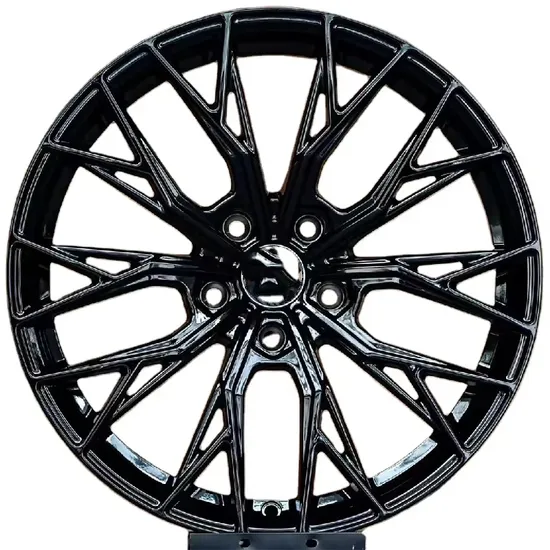
20inch 5*114.3 Black Machine Face Forged Alloy Wheels
Product IntroductionCustomized 20-inch multispoke aluminum forged alloy passenger car wheels with black machine face. Features 5*114.3 PCD, available in silver/hyper…
View Specifications 02
WHEEL RIM/HUB
18 Inch 4X110 4X114 Car Alloy Wheels Rims Oy17186
Product ParametersModel NO.OY17186MaterialAluminumSize16-20 InchDescriptionFactory wholesale 18 Inch car alloy wheels rims, made of aluminum with chrome finishing. Customizable ET, PCD,…
View Specifications 03
WHEEL RIM/HUB
Red Forged 17 Inch Car Alloy Wheels Rims
Product DescriptionRed Forged Car Alloy Wheels Rims, 17 Inch, feature Aluminum material with Black Machined Face finishing. Customizable color and…
View Specifications 04
WHEEL RIM/HUB
17-19 Inch Lightweight Forged Alloy Wheels Et30/35/42 Stability
Product IntroductionLightweight forged alloy wheels with 17-19 inch sizes and multi-ET options (ET30/35/42) for enhanced stability. Customizable size (12-25"), finishing,…
View Specifications