Alloy Wheels Price in Philippines: 2026 Wholesale Supplier Guide
Most buyers assume bigger wheels always cost more—the real cost driver is finishing complexity, not diameter.
Alloy wheels price in Philippines for 2026 typically ranges from budget-tier 13-15 inch units at the lowest end, through mainstream 16-18 inch flow-formed wheels in the mid-band, up to 20-24 inch fully machined or chrome-plated pieces at the premium tier. Factory-direct sourcing from China undercuts Manila-based distributor pricing by a substantial margin, but only when hub bore, offset, and certification paperwork are locked before the PI is signed.
I still remember a container that sat at the Manila International Container Terminal for nearly three weeks because the customs broker could not match the commercial invoice to the actual hub bore specs on the packing list. The wheels were physically correct, but the paperwork lagged behind the physical goods, and the demurrage bill ended up eating a meaningful chunk of the per-piece savings the buyer had negotiated. That kind of mismatch is exactly what separates a smooth import cycle from a costly one when you are evaluating alloy wheels price in Philippines across multiple sourcing channels [NEED_CITE: Philippine Bureau of Customs classification rules for aluminum alloy road wheels].
Let me walk you through how the actual pricing layers stack up, where the hidden costs hide, and why factory-direct sourcing behaves so differently from buying through a local distributor.
What Factors Determine Alloy Wheel Prices in the Philippines?
Four variables dominate the final landed cost: wheel diameter, surface finishing process, certification tier, and import duty structure.
Diameter is the most visible factor, but it is far from the only one. A 17 inch machined face wheel and a 17 inch deep concave multi-spoke wheel can sit in completely different price bands even though they share the same diameter, because the deep concave design requires additional machining passes, more complex mold tooling, and tighter runout control during finishing.
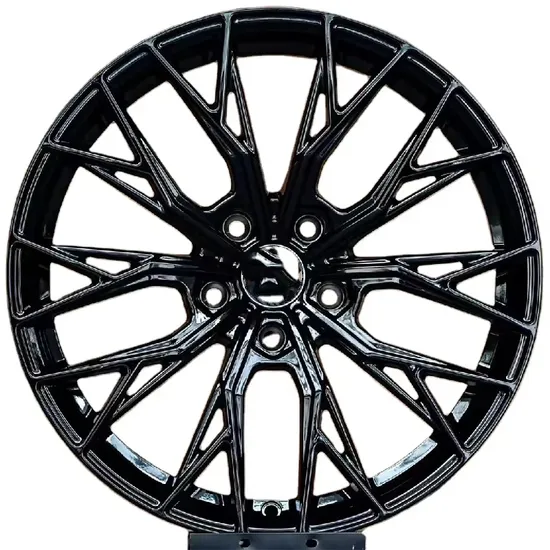
Surface finishing is where a lot of buyers get surprised. Basic gloss black or matte black finishes sit at the entry level. Machined face with clear coat adds a CNC turning step. Chrome plating involves multiple chemical baths and longer cycle times. Hyper silver or brushed bronze finishes push into the premium tier because they demand stricter environmental controls during coating and higher rejection rates at QC.
Certification tier is the silent cost multiplier. Wheels produced only to internal factory standards sit at the lowest price point. Adding JWL or VIA certification for the Japanese aftermarket requires specific impact and dynamic radial fatigue testing per JASO standards [NEED_CITE: JWL/VIA testing protocol requirements for passenger car alloy wheels]. DOT compliance for any US-bound resale channel adds its own layer. Wheels carrying multiple certifications—ISO, VIA, DOT, JWL, TÜV—naturally carry higher per-piece costs, but they also open doors to markets that simply will not accept uncertified product.
Import duty structure in the Philippines applies a specific tariff rate under the ASEAN-China Free Trade Area framework, provided the correct Form E certificate of origin accompanies the shipment. Without it, the standard MFN rate kicks in, and the difference is not small [NEED_CITE: Philippine tariff heading for aluminum alloy road wheels under AFTA preferential rate vs MFN rate].
| Cost Factor | Entry Tier | Mid Tier | Premium Tier |
|---|---|---|---|
| Diameter Range | 13-15 inch | 16-18 inch | 19-24 inch |
| Surface Finish | Gloss/Matte Black | Machined Face, Gunmetal | Chrome, Hyper Silver, Full Custom Paint |
| Certification | Factory Internal Only | Single Certification (VIA or DOT) | Multi-Certification (ISO + VIA + DOT + JWL) |
| Batch Traceability | Self-Reported | Sample-Level | Full Batch-Level |
| Structural Warranty | Not Provided | Limited | Extended Coverage |
A tire shop owner in Quezon City once told me he switched from a local distributor to direct factory sourcing after realizing the distributor was marking up chrome-plated 20 inch wheels by a ratio that made the import paperwork effort look trivial by comparison. The alloy wheels price in Philippines through local channels simply could not compete once he understood the real cost breakdown.
How Do Wholesale Prices Compare Across Sizes and Finishes?
The 15-17 inch range delivers the strongest cost-to-demand ratio for Philippine retailers, while complex finishes like hyper silver add a noticeable premium regardless of diameter.
When you line up wholesale alloy wheels price Philippines quotes side by side, the pattern is consistent: mainstream sizes in basic finishes move fast and carry the tightest margins, while oversized or heavily finished wheels command wider margins but also move slower through inventory.
The 15 and 16 inch segment is dominated by replacement demand for Toyota Vios, Mitsubishi Mirage, and Hyundai Accent platforms. These wheels are typically gravity-cast or low-pressure cast in gloss black or silver, and the per-piece cost sits at the most accessible band. Volume buyers ordering full container loads see the steepest unit cost reduction here.
The 17 inch segment is the sweet spot for the modification and tuning market. Machined face finishes dominate this range, and the fitment list expands to include Toyota Altis, Honda Civic, and Nissan Sylphy. Deep concave designs start appearing here, and that is where the finishing complexity starts to separate pricing tiers within the same diameter.
The 18-20 inch segment serves the premium modification channel. Chrome plating and hyper silver finishes are concentrated here. The tooling cost for deep concave multi-spoke designs in these sizes is meaningfully higher, and the rejection rate at QC is also higher because larger diameters amplify any runout or coating inconsistency.
| Size Segment | Typical Vehicle Fitment | Dominant Finish | Price Tier |
|---|---|---|---|
| 13-15 Inch | Toyota Vios, Mitsubishi Mirage | Gloss Black, Silver | Entry |
| 16-17 Inch | Toyota Altis, Honda Civic | Machined Face, Gunmetal | Mid |
| 18-20 Inch | Toyota Fortuner, Ford Everest | Chrome, Hyper Silver | Premium |
| 21-24 Inch | Luxury SUV, Racing Application | Full Custom Paint, Brushed Bronze | Top Tier |
A modification shop in Cebu once placed a small trial order of deep concave 18 inch wheels in hyper silver finish. The first sample batch had a coating consistency issue that only showed up under warehouse lighting—the wheels looked fine under factory daylight. Catching that at the sampling stage saved the full order from a costly rejection. That is why requesting physical samples under multiple lighting conditions before committing to bulk alloy wheels price in Philippines negotiations is non-negotiable for any serious buyer.
Why Choose China Factory-Direct Over Local Distributors?
Factory-direct sourcing from China delivers a substantial per-piece cost advantage, but only when the buyer handles certification verification and specification lock-down before the first payment goes out.
The structural cost gap between factory-direct and local distributor pricing in the Philippine market is wide enough that even after adding ocean freight, import duty, and customs clearance fees, the landed per-piece cost still undercuts local distributor pricing by a meaningful margin. This is not a secret—every established importer in the Philippine aftermarket already knows this.
What separates successful importers from unsuccessful ones is not the price gap itself, but how they manage the specification and certification workflow. A distributor handles that workflow for you and bakes the cost into the unit price. When you source directly, that workflow becomes your responsibility.
I worked with a Southeast Asian modification shop that needed small-batch custom wheels in staggered fitments—different widths front and rear—for a specific Toyota platform. Their volume per design was modest, and most large factories would not have entertained the order. The factory they eventually partnered with accepted the small batch, produced the custom offsets, and delivered within a standard production cycle. The per-piece cost was still substantially below what a local distributor could offer for the same specification, even with the small-batch surcharge factored in.
The critical discipline here is parameter verification before the proforma invoice is issued. Center bore diameter, bolt pattern, offset, and load rating must all be confirmed in writing against the specific vehicle application. A hub bore mismatch discovered after the container arrives at Manila port turns a cost-saving decision into a costly lesson.
| Sourcing Channel | Per-Piece Cost | Specification Control | Certification Access | MOQ Flexibility |
|---|---|---|---|---|
| Local Distributor | Highest | Managed by Distributor | Pre-Verified | Low |
| Trading Company | Mid | Partial | Variable | Moderate |
| China Factory-Direct | Lowest | Buyer Responsibility | Direct from Manufacturer | Flexible |
The Ouya brand production line covers the full diameter range from 12 inch through 24 inch, with surface finishes spanning machined face, chrome, gloss and matte black, bronze, gunmetal, hyper silver, and full custom paint options. Multi-certification support across ISO, VIA, TÜV, DOT, JWL, and CCC standards means the buyer can match the exact certification requirement of the target market without sourcing from multiple factories. Minimum order quantities start at a level that allows modification shops and e-commerce sellers to test new designs without committing to container-load volumes.
What Hidden Costs Should Importers Watch For?
Import duty misclassification, documentation gaps, and specification errors can each add a meaningful cost layer that erases the factory-direct savings if left unmanaged.
The first hidden cost trap is tariff classification. Alloy wheels for motor vehicles fall under a specific HS code in the Philippine tariff schedule. If the commercial invoice describes the goods vaguely or uses an incorrect HS code, the Bureau of Customs will reclassify at the higher rate, and the buyer pays the difference plus penalties [NEED_CITE: Philippine Bureau of Customs HS code classification procedure for aluminum alloy wheels].
The second trap is the Form E certificate of origin. Under the ASEAN-China Free Trade Area, this document unlocks the preferential tariff rate. If the factory fails to issue it, or if it contains errors, the shipment defaults to the MFN rate. The differential between the AFTA preferential rate and the MFN rate is not trivial—it directly impacts the per-piece landed cost.
The third trap is specification error discovered post-arrival. A hub bore that does not match the vehicle application, an offset that causes fender rub, or a load rating that falls below the vehicle GVWR requirement—any of these turns a container of wheels into dead stock. The cost of air-shipping replacement wheels to cover immediate customer orders, combined with the cost of disposing or re-exporting the incorrect stock, can exceed the original per-piece savings entirely.
- Tariff misclassification leading to higher duty assessment
- Missing or incorrect Form E certificate of origin
- Hub bore, offset, or load rating mismatch with vehicle application
- Demurrage charges from customs documentation delays
- Air-freight cost for emergency replacement stock
- Disposal or re-export cost for incorrect inventory
A buyer in the Manila aftermarket once received a batch where the center caps did not match the wheel design—a seemingly minor issue until you realize that retail customers will reject the product on visual grounds. The cost of sourcing replacement center caps locally, shipping them to Manila, and repacking every single wheel ate into the margin to a degree that made the entire order barely break even.
How to Verify Quality Before Placing Bulk Orders?
Request certification documents, conduct physical sample inspection under multiple lighting conditions, and require batch-level traceability before committing to full production volume.
The first verification step is documentary. Ask the factory for current copies of all relevant certifications—ISO 9001 for quality management system, VIA or JWL for Japanese market compliance, DOT for US market compliance, TÜV for European market requirements. Verify that the certification is issued to the specific manufacturing entity, not a trading company, and that the scope covers the wheel diameter and finish you are ordering [NEED_CITE: ISO 9001 certification scope verification for alloy wheel manufacturing facilities].
The second step is physical sample inspection. Request at least two samples per design—one in the standard finish and one in the most complex finish you are ordering. Inspect them under daylight, warehouse fluorescent lighting, and direct sunlight. Coating inconsistencies, machining marks, and clear coat orange peel that are invisible under factory lighting often become obvious under different light sources.
The third step is dimensional verification. Measure the center bore diameter, bolt circle diameter, offset, and width against the specification sheet. Use a dial indicator to check lateral and radial runout. Any deviation beyond the acceptable tolerance range is grounds for rejection before the full order is produced.
The fourth step is batch traceability confirmation. Confirm that the factory assigns a unique batch number to each production run and that the batch number appears on the wheel back stamping. This allows you to trace any field issue back to the specific production date, material lot, and finishing batch.
| Verification Step | Key Action | Risk if Skipped |
|---|---|---|
| Documentary Check | Confirm certification validity and scope | Shipment rejected at port or by end customer |
| Sample Inspection | Physical inspection under multiple light sources | Coating defect discovered after full production |
| Dimensional Check | Measure hub bore, offset, runout | Fitment failure or vibration complaint |
| Batch Traceability | Confirm batch number on wheel back stamping | Unable to isolate production defect root cause |
A European modification shop sourcing through a China factory-direct channel established a protocol where they required pre-shipment photos of the first five pieces off the production line, under both daylight and warehouse lighting, before authorizing the full batch to proceed. That simple step caught a clear coat adhesion issue early enough to rework the batch before it was packed, saving the cost of return freight and replacement production.
Conclusion
Alloy wheels price in Philippines is shaped by diameter, finish complexity, certification tier, and import documentation accuracy—not by any single factor alone. Factory-direct sourcing from China offers a clear structural cost advantage, but that advantage only materializes when the buyer manages specification verification, certification documentation, and customs compliance with discipline. The buyers who win in this market are not the ones who find the lowest quoted unit price—they are the ones who understand the full landed cost equation and build their sourcing process around it.
Applications covered in this article
Parts mentioned
Products in this article
Each part below is supplied source-direct by Jinan Yoker, matched by OE number and checked through full-process inspection.
 01
WHEEL RIM/HUB
Black Machine Face 13-15 Racing Mag Wheels PCD 98-100 4/5 Hole Alloy
Product IntroductionBlack Machine Face Car Racing Mag Wheels, designed for 13-15 inch models with 4/5 holes, feature durable Aluminum construction…
View Specifications 02
WHEEL RIM/HUB
Aluminum Custom Wheels Rims 13-15 Inch 4-5 Holes PCD100/114.3 CB73.1
Product IntroductionCustom aluminum alloy wheels with various sizes (13-20 inch), multiple PCD options (100/114.3), and customizable CB, ET. Available in…
View Specifications 03
WHEEL RIM/HUB
16-18 Inch Japanese Tuning Wheels 5X100 Et40 CB67.1 Heat-Resistant
Product IntroductionHigh-quality Japanese tuning wheels with heat-resistant and durable design, ideal for racing and modified vehicles. Features a three-section variable…
View Specifications 04
WHEEL RIM/HUB
16-18 Inch Multi-Spoke Flow Forming Alloy Car Rims
Product IntroductionThese aftermarket alloy flow forming wheels feature a multi-spoke design, ideal for passenger cars. Crafted from high-quality aluminum, they…
View Specifications